


French Empire Gueridon Table
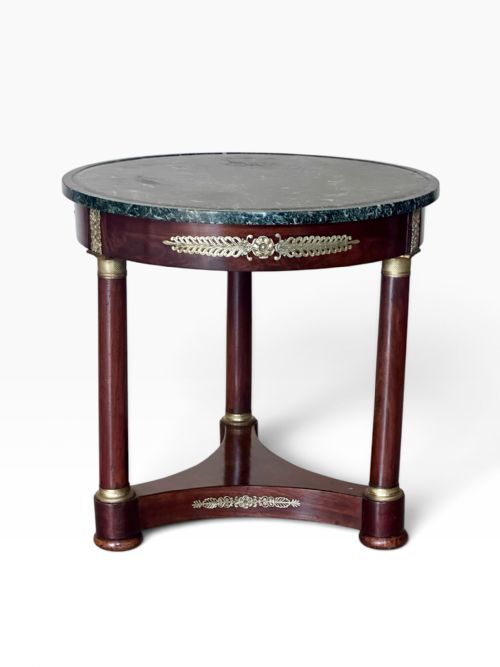
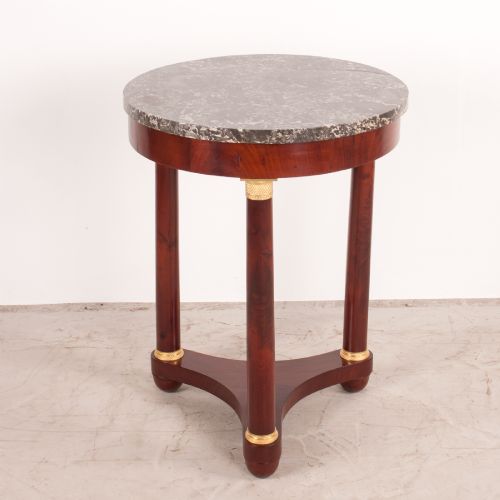
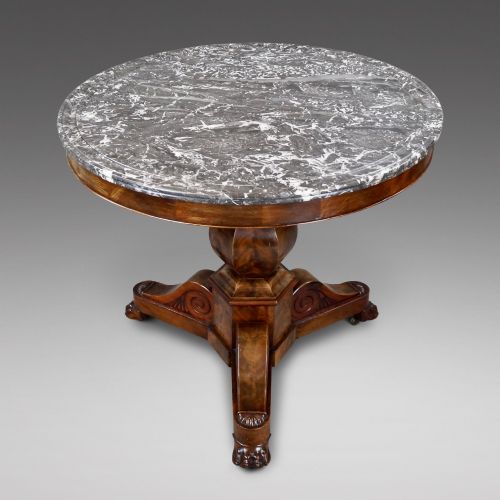
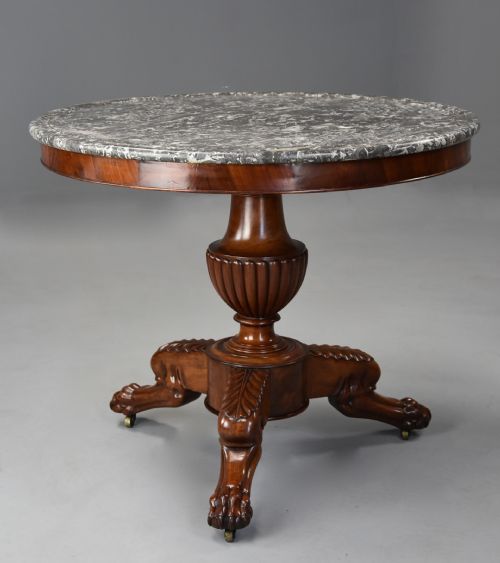
A French Empire gueridon table brings classical symmetry and striking timber into a room, serving primarily as a functional centrepiece.
Understanding French Empire gueridon tables
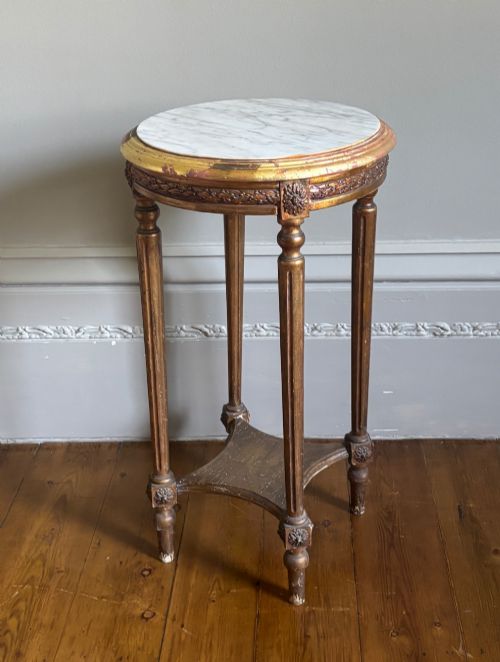
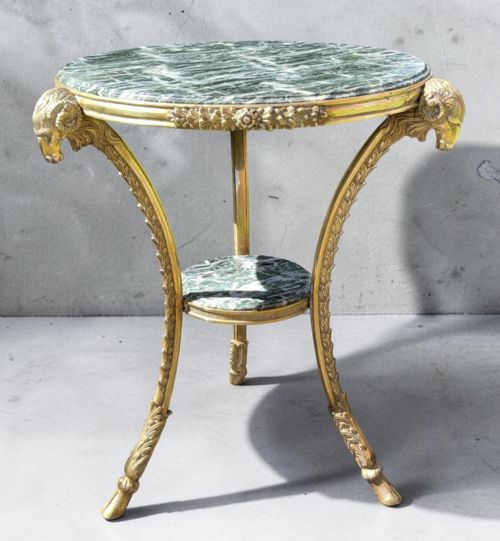
A french empire gueridon table stands as a distinct type of circular freestanding furniture, designed primarily to anchor a room as a centre table or side table. Buyers encounter these pieces in forms spanning the nineteenth century, including specific dates around eighteen hundred, eighteen twenty, and eighteen fifty.
The aesthetic leans heavily on grand regency and classic french empire influences. These round tables frequently function as wine tables, occasional tables, or prominent centre tables within formal spaces.
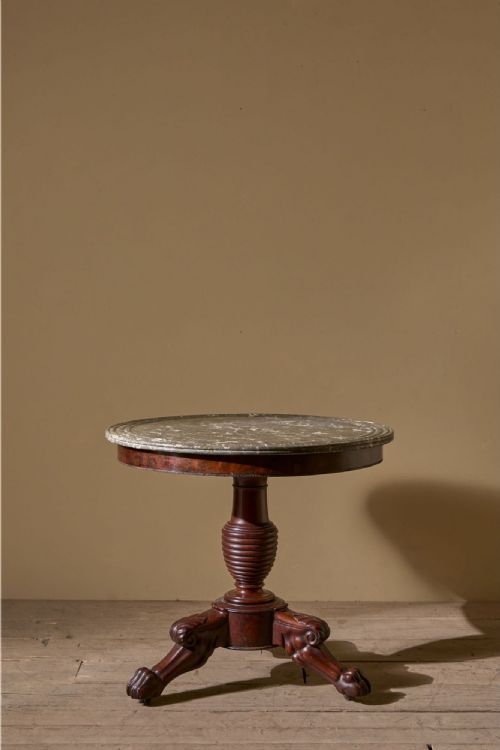
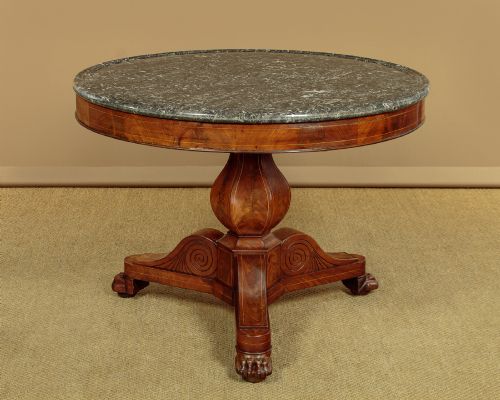
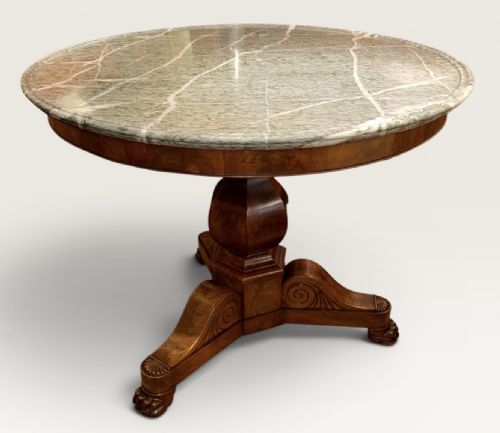
Originating predominantly from French workshops, these tables showcase the formal geometry characteristic of the period. The silhouette relies on a central pedestal base supporting a circular top, making them adaptable as both centre and side tables.
Materials and construction
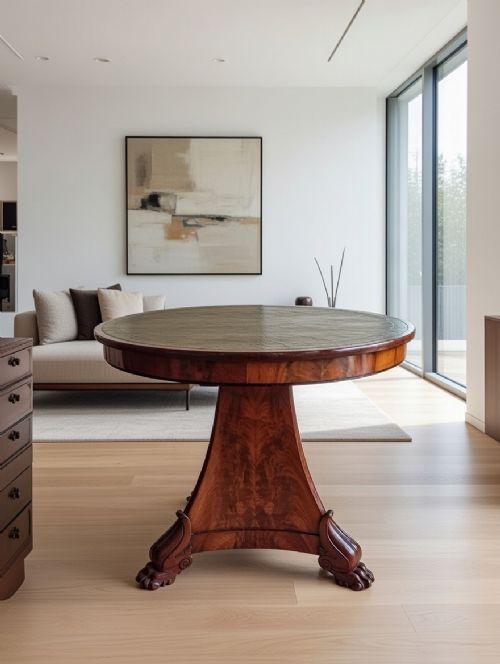
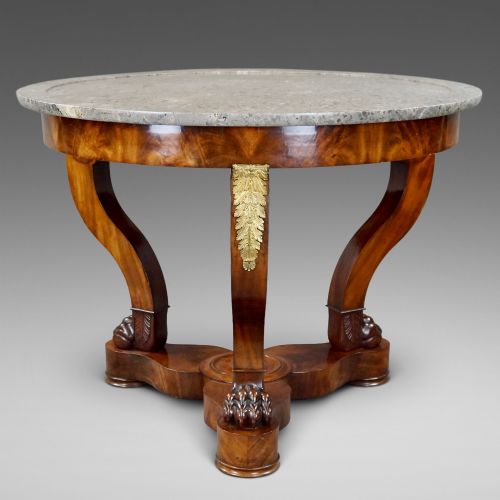
Cabinetmakers utilised rich timbers such as mahogany, flame mahogany, and burr wood to construct the core structure. These primary woods provide a deep, warm background for the overall design.
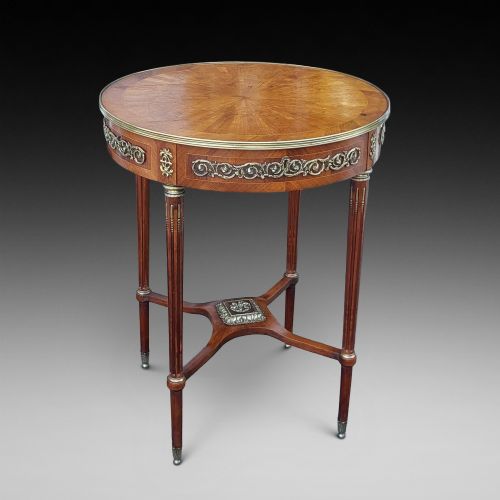
Surfaces frequently feature heavy white or red marble slabs inset into the top, alongside occasional examples finished in leather. Decorative enrichment comes from gilt bronze and ormolu mounts, paired with carved swan decoration on the base.
Retail Price Guide 2026
Typical UK retail prices for french empire gueridon table, calculated from the Sellingantiques database of over a million retail prices indexed since 2003. This retail price guide relies exclusively on Sellingantiques data; no external sources or auction records are used, so the figures do not describe the wider market.
Carved wooden swans often peer out from the pedestals, keeping a permanent watch over your wine.
Distinctions in quality
The standard of carving on elements like swan mounts dictates the sculptural refinement of the piece. Crisp detailing in the timber and cast metal elevates the overall presence.
The choice and figuring of the timber, particularly flame mahogany and burr wood, alongside the selection of marble for the top, separates standard examples from exceptional ones.
The French Empire Gueridon Table Glossary
- Gueridon
- A small circular table designed to stand freestanding in the middle of a room or beside a wall. This form became particularly popular during the nineteenth century.
- Ormolu
- Gilded bronze used for decorative mounts and accents on furniture. It provides a bright metallic contrast against dark mahogany surfaces.
- Flame mahogany
- Timber cut to display a distinctive flickering grain pattern resembling flames. Cabinetmakers selected this veneer for its highly decorative visual impact.
- Specimen marble
- A composite stone top assembled from multiple distinct coloured marbles. This technique creates geometric or patterned surfaces of notable visual complexity.
Frequently Asked Questions
What is a french empire gueridon table?
A french empire gueridon table is a round freestanding piece of furniture designed for the centre of a room or as a side table.
These tables typically feature a central pedestal base and incorporate materials like mahogany, marble, and ormolu mounts.
Where do you put a gueridon table?
A gueridon table sits well in the middle of a room as a centre table where people can walk entirely around it.
Alternatively, smaller proportions function effectively as side tables or occasional wine tables against a wall.
What woods were used for these tables?
Cabinetmakers primarily constructed these tables using mahogany, often selecting figured varieties like flame mahogany and burr wood.
These rich timbers provided a dark, contrasting backdrop for gilt bronze and ormolu decorative mounts.
How do you identify a french empire table?
Identification relies on observing classical design motifs, circular tops, and central pedestal supports dating from the nineteenth century.
Specific decorative elements such as carved swans and marble inserts further point to this distinct stylistic period.