

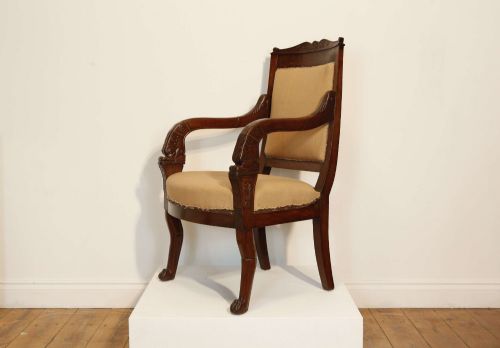
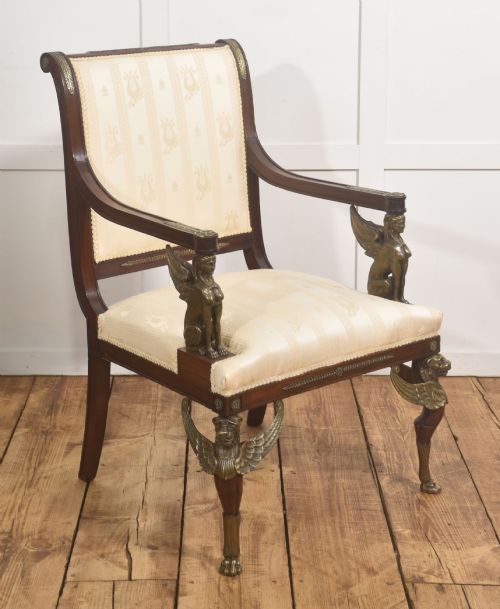
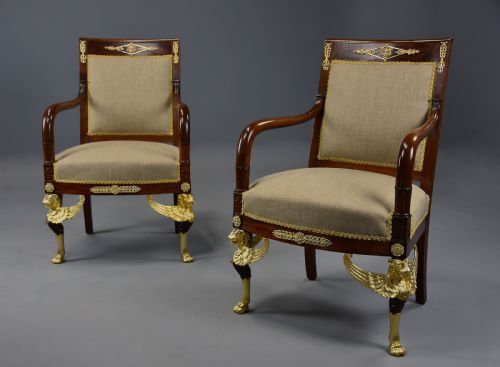
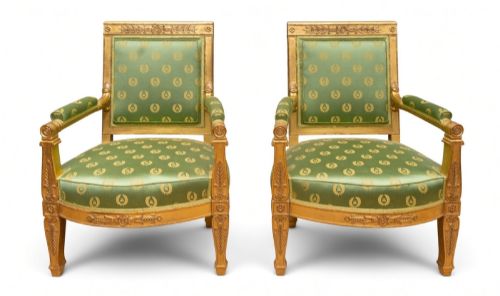



French Empire Fauteuils
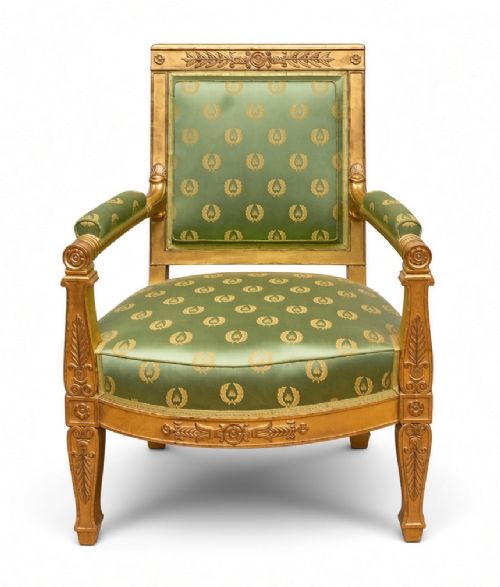
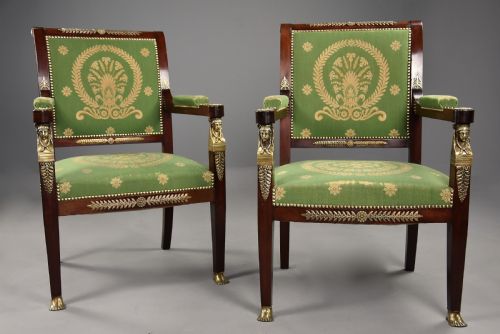
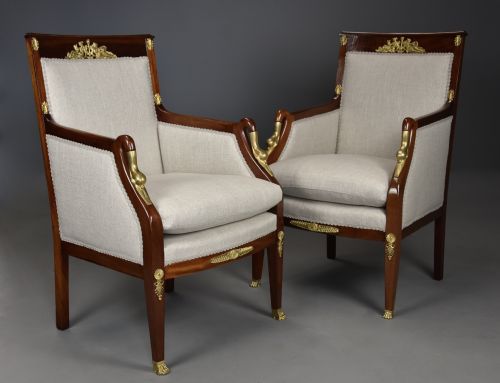
These French empire fauteuils deliver architectural presence and classical authority to a room, offering the bold lines of nineteenth-century seating.
French Empire Fauteuils
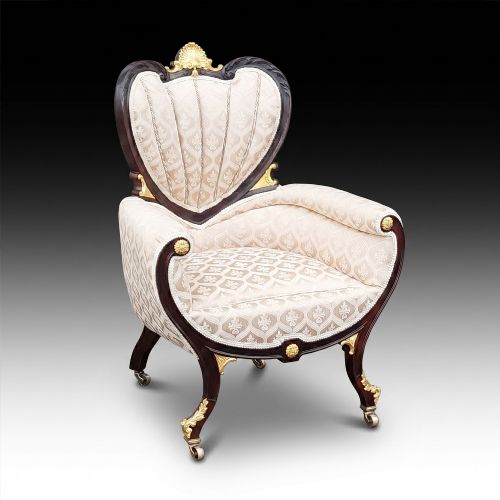
When you search for french empire fauteuils, you encounter open armchairs and desk chairs originating from the nineteenth century alongside later revival pieces. The forms span periods from the Consulate and Directoire through the Restauration and into Empire Revival iterations dating towards the early twentieth century.
The selection here encompasses individual seating, pairs, and salon suites designed for formal interiors. You meet mahogany frameworks, giltwood finishes, and painted surfaces styled with classical proportions.
Many examples adhere strictly to the vocabulary of the nineteenth century, whilst others reflect the historicism of later decades. The core type remains an open armchair with distinct structural framing and classical mounts.
Materials and construction
Makers built these chairs primarily using mahogany, giltwood, and painted timber frameworks. Timber selection dictated the structural integrity of the open armchair frame.
Mounts in ormolu and brass decorate the timber components, adding metallic contrast to the polished wood or gilded surfaces. Upholstery utilises fabric, leather, silk, and linen across the seats and backs.
French Empire Fauteuils Retail Price Guide 2026
Typical asking prices for french empire fauteuils among the pieces listed under this phrase on Sellingantiques today, from the lower quarter to the upper quarter. They describe what is for sale here now, not the wider market.
Palais de Tuileries provenance hints at courtly seating where chairs witnessed more state plotting than actual lounging.
Assessing quality
Quality rests in the precision of the timber carving and the weight of the ormolu or gilt bronze mounts. Finer seating displays crisp casting and secure attachment of metal elements to the mahogany or giltwood body.
The integrity of the original frame construction and the subtlety of the classical proportions determine the standing of each armchair. Period pieces from the early nineteenth century compare differently against later revival interpretations based on the depth of hand-craftsmanship.
Jacob-Desmalter
The French Empire Fauteuils Glossary
- Fauteuil
- An open-framed upholstered armchair originating in France, characterised by exposed wooden arms. These chairs typically feature padded armrests and a wide seat designed for formal interior use.
- Ormolu
- Gilt bronze mounted upon furniture pieces, providing decorative metallic highlights. This technique involves applying a gold-mercury amalgam to bronze.
- Restauration
- A stylistic period bridging the fall of the Empire and the July Monarchy. The design language softens classical severity while retaining structural formality.
- Directoire
- A transitional style period preceding the full Empire aesthetic, notable for simplified classical motifs and clean linear forms. Pieces from this era lean towards restrained neoclassical geometry.
- Giltwood
- Timber covered with a thin layer of gold leaf or gold powder applied over a prepared ground. This finish creates a brilliant reflective surface on the frame.
French Empire Fauteuils: Frequently Asked Questions
What defines a french empire fauteuil?
These pieces are formal open armchairs defined by classical proportions, exposed wooden frames, and architectural symmetry. They draw on classical antiquity for their decorative vocabulary.
Makers frequently incorporated mahogany or giltwood, often finishing the frames with cast metal mounts. The resulting seating combines upright posture with decorative presence.
How do I date a french empire fauteuil?
Dating relies on examining the timber, the construction joints, and the style of the metal mounts. Early nineteenth-century pieces show period-specific joinery and hand-chased ormolu.
Later revival examples from the late nineteenth or early twentieth century often display heavier mechanical finishing and standardised hardware. Comparing the secondary woods helps establish the timeframe.
Where were these chairs used historically?
Historically, these armchairs occupied formal salons, libraries, and state apartments. Their imposing stature suited reception rooms and bureaucratic desk spaces.
Desk chairs, or fauteuils de bureau, served specific writing functions in private studies. Salon suites provided unified seating arrangements for entertaining guests.
How do I live with a french empire fauteuil?
Integrating these chairs into a modern interior involves placing them as focal points in a sitting room or study. Their strong architectural lines complement both traditional and contemporary surroundings.
Upholstery can be updated to suit personal tastes while preserving the historic timber frame. Regular dusting and careful placement away from direct heat protect the wood and gilt finishes.
What is the difference between empire and revival pieces?
Original pieces date from the early nineteenth century during the Napoleonic era and the immediate aftermath. They reflect the contemporary taste of the period.
Revival pieces date from later decades, such as the late nineteenth century, when makers deliberately copied earlier classical styles. These later pieces replicate the form with different manufacturing tolerances.