


French Empire Chest of Drawers
A French empire chest of drawers brings monumental classical proportion and rich timber into a room, combining architectural dignity with deep utility.
French Empire Chest of Drawers
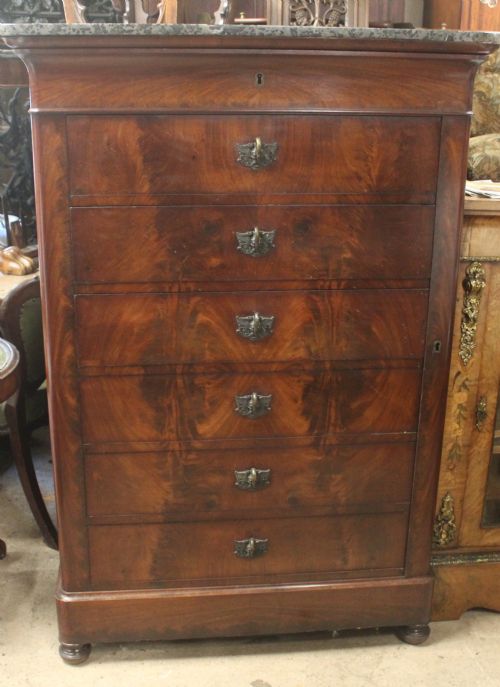
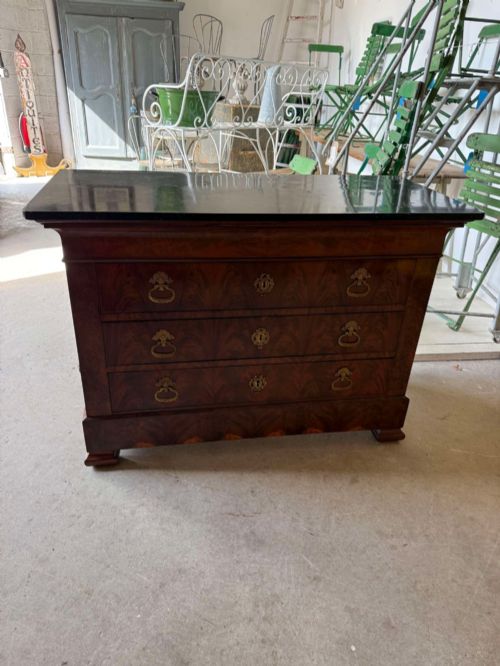
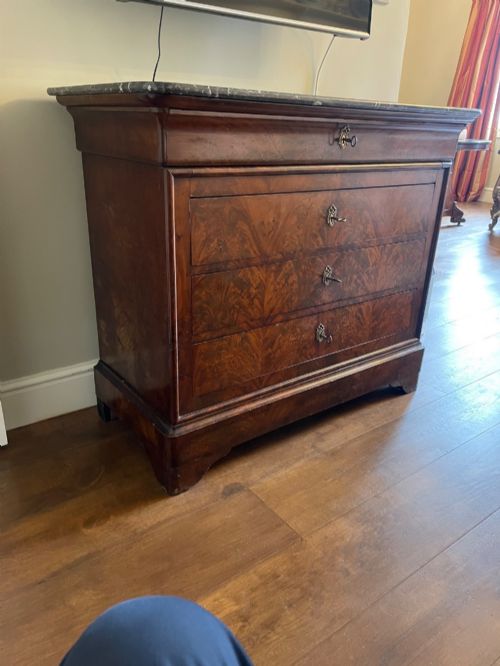
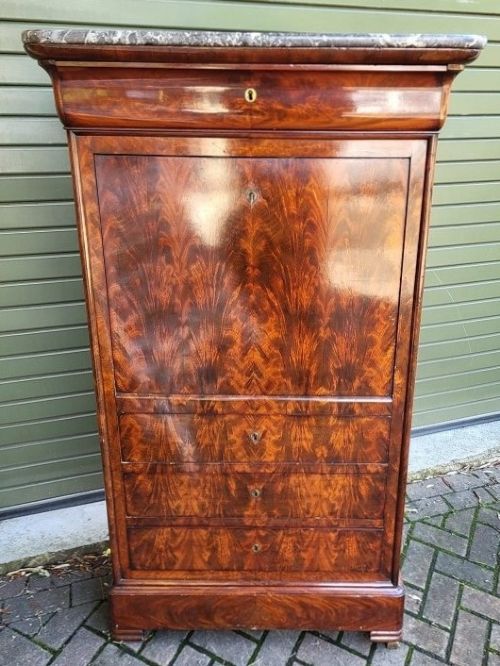
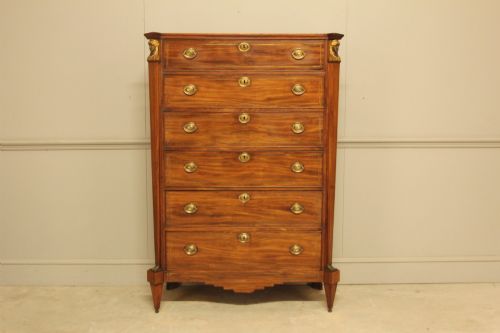
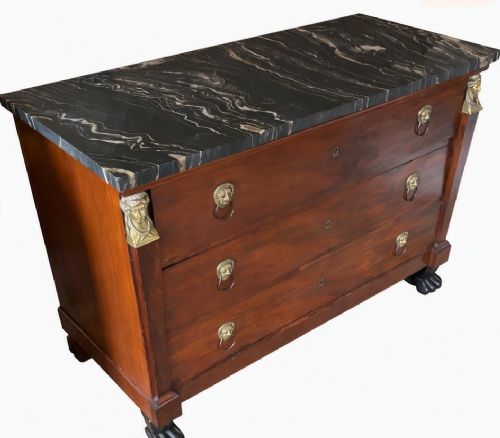
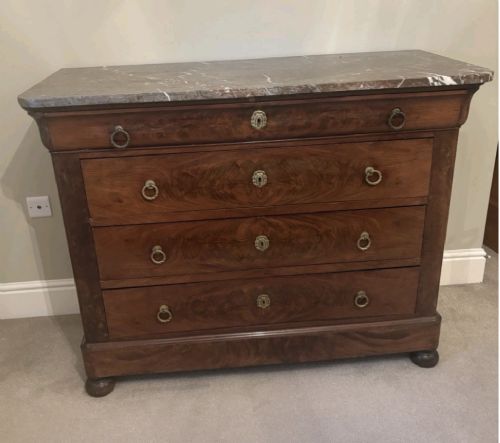
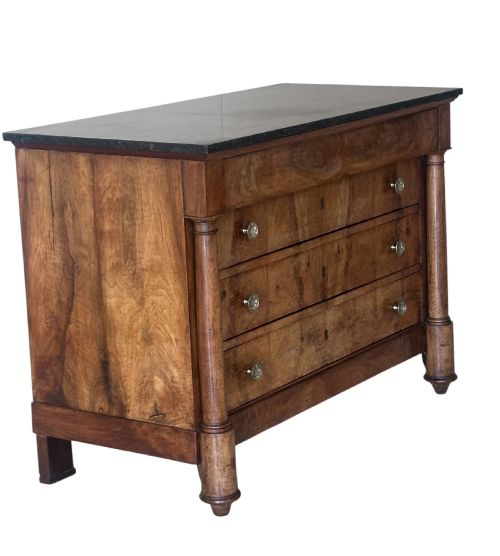
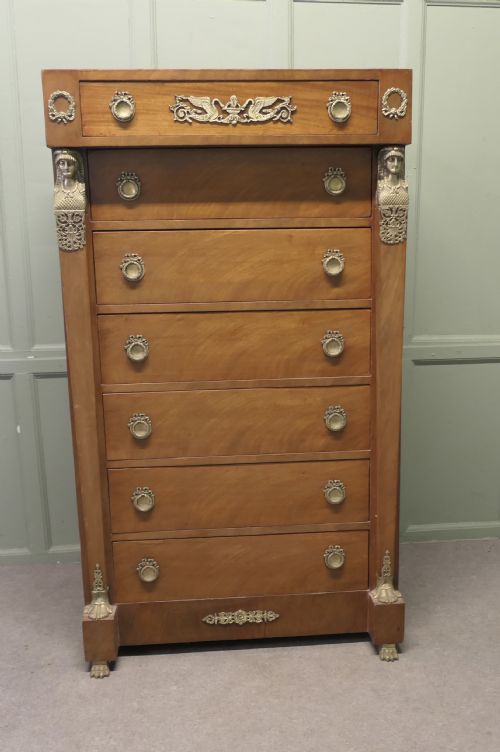
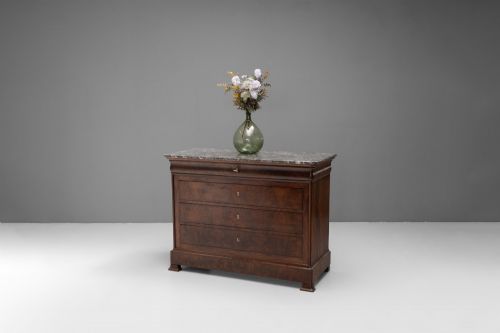
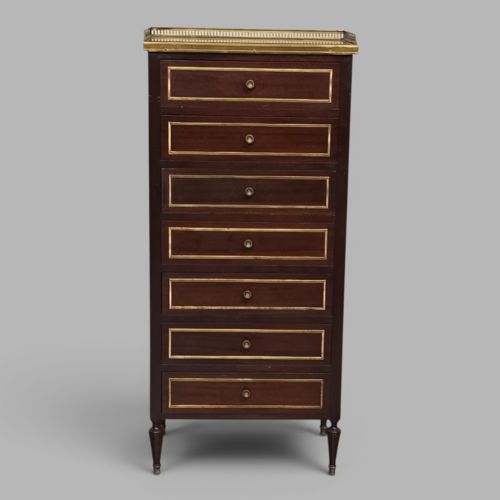
A French empire chest of drawers typically takes the form of a commode or a tall semainier, built with a strong rectangular carcass and clean vertical lines. These pieces reflect the neoclassical taste of the 19th century and subsequent revival periods, often following the formal vocabulary of French Directoire and Charles X designs.
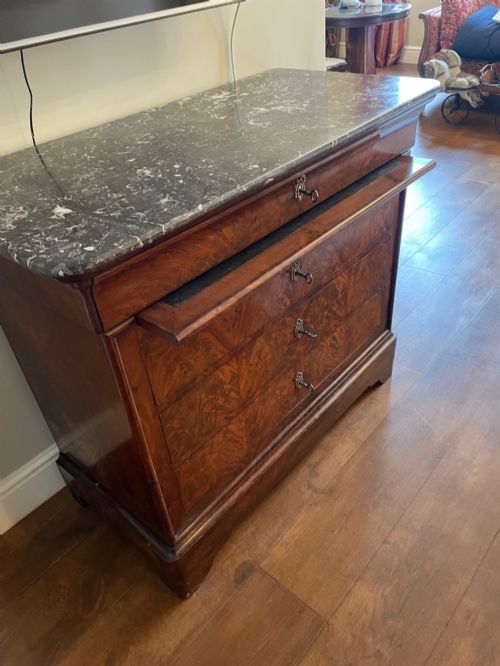
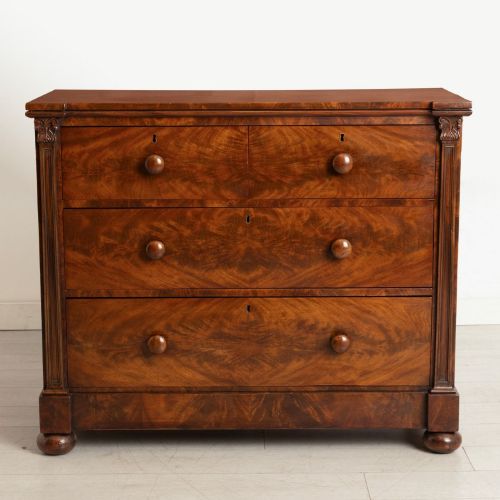
The versions most commonly met on this page include mahogany, walnut, and cherry commodes, frequently finished with a contrasting marble top. Alongside these standard four-drawer and six-drawer chests, buyers encounter bedside cabinets, tall pharmacy chests, and pairs of matched pieces originating from the 1800s onwards.
How They Were Made
Cabinet makers constructed these carcasses using timber such as mahogany, walnut, oak, and cherry, often selecting figured veneers like flame mahogany or burr elm for the primary facade. These wooden structures were then paired with heavy natural stone slabs, specifically marble and fossil marble, to form the working surface on top of the commode.
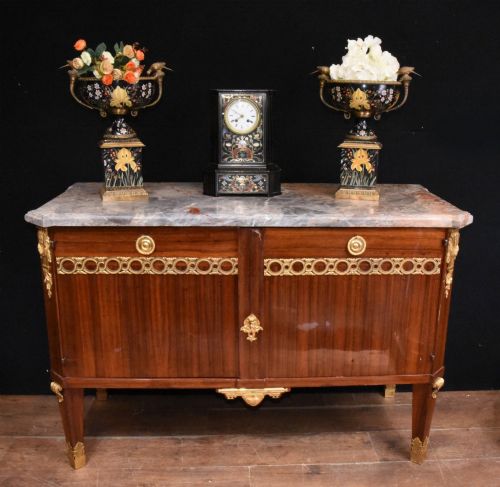
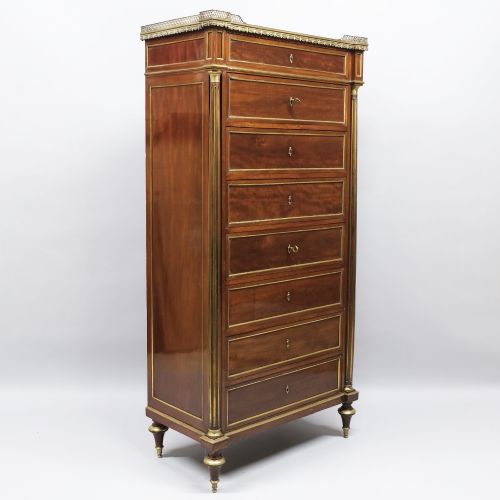
Metal ornamentation played a defining role in the construction, utilising cast brass, ormolu, and gilt bronze mounts fixed to the drawer fronts and corners. Details such as bookmatched grain patterns and marquetry inlay required precise hand carpentry to align the timber across multiple drawers.
French Empire Chest of Drawers Retail Price Guide 2026
Typical asking prices for french empire chest of drawers among the pieces listed under this phrase on Sellingantiques today, from the lower quarter to the upper quarter. They describe what is for sale here now, not the wider market.
Several tall chests originated directly from 19th-century French pharmacies before finding a second life holding domestic linens.
What Varies in Quality
The standard of a French empire chest of drawers rests upon the crispness of its cast metal mounts and the selection of its wood veneers. Superior examples display finely chased ormolu and meticulously matched timber grain across the entire front elevation rather than simpler turned wood handles and plain panels.
Construction methods also separate standard utility items from finer chamber furniture, seen in the internal drawer framing, the thickness of the marble slab, and the integration of lock mechanisms. Pieces that retain their original heavy stone tops and cohesive hardware demonstrate a higher grade of period craftsmanship.
The French Empire Chest of Drawers Glossary
- Commode
- A low chest of drawers or cabinet designed for domestic use, frequently topped with marble in French classical furniture. This form serves as the standard body style for much of the period.
- Semainier
- A tall chest of seven drawers, traditionally associated with holding a week's worth of linen or garments. These slender vertical pieces save floor space while offering substantial storage.
- Ormolu
- Gilt bronze ornamentation applied to furniture, cast and finished to provide bright metallic contrast against dark timbers like mahogany. It forms a primary decorative element on classical case pieces.
- Bookmatched
- A technique where two adjoining veneer surfaces are mirrored to create a symmetrical pattern across the drawer fronts. Cabinet makers utilised this method to highlight natural timber grain.
- Directoire
- A transitional French design style preceding the full Empire period, characterised by restrained neoclassical geometry and simpler structural lines. Pieces from this era bridge 18th-century forms and 19th-century monumentalism.
French Empire Chest of Drawers: Frequently Asked Questions
How do I care for a marble top?
Wipe the stone surface using a damp cloth and mild, neutral soap, avoiding acidic cleaners that can etch the polish. Dry the marble thoroughly to prevent water rings and protect the finish from staining.
Lift heavy objects rather than sliding them across the stone to prevent scratching. Periodic application of a suitable stone wax helps maintain the natural sheen.
What is the difference between a commode and a semainier?
A commode is a broad, low chest of drawers designed with a wide footprint, typically featuring three to four main drawers beneath a stone slab. It functions well as a focal point in a reception room or bedroom.
By contrast, a semainier is a tall, narrow chest built with seven individual drawers. This vertical format was traditionally used for daily organisation and fits easily into more confined spaces.
Where should I place a tall chest?
Tall chests and semainiers suit bedrooms, dressing areas, or hallways where vertical storage is required without consuming excessive floor space. Their architectural height draws the eye upward, balancing lower furniture arrangements.
Ensure the piece stands on a level floor, and utilise appropriate wall-anchoring hardware if the weight distribution requires extra stability, particularly with heavy marble components.
How do I identify the wood types used?
Examine the grain patterns and colour variations across the drawer fronts and sides, noting whether the surfaces feature straight mahogany, figured flame veneers, or rich walnut. Secondary timbers like oak often appear inside the drawer construction.
Closer inspection under good lighting reveals whether the finish is polished timber or a painted or ebonised treatment applied to the base wood.