



French Draught Screen
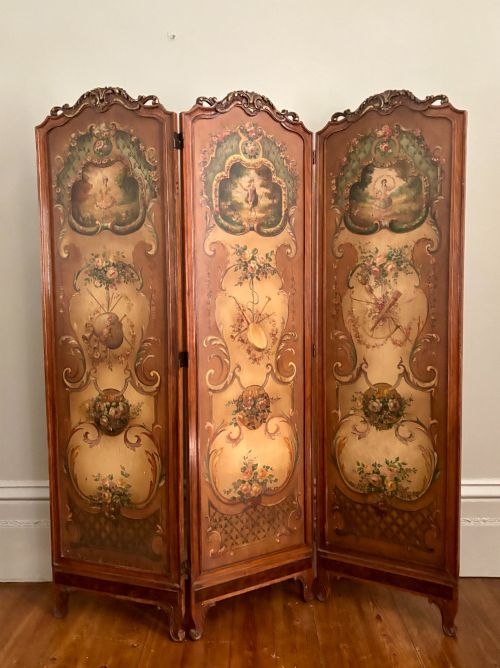
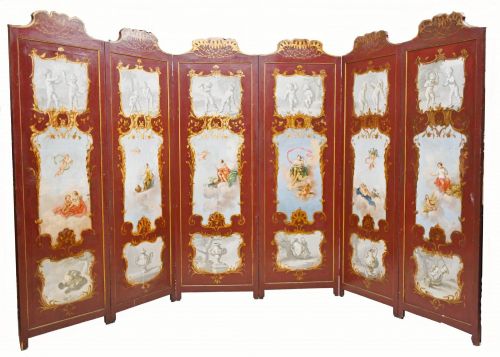
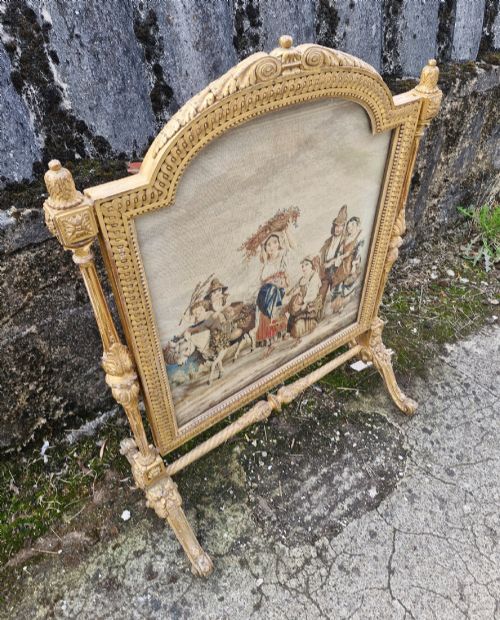
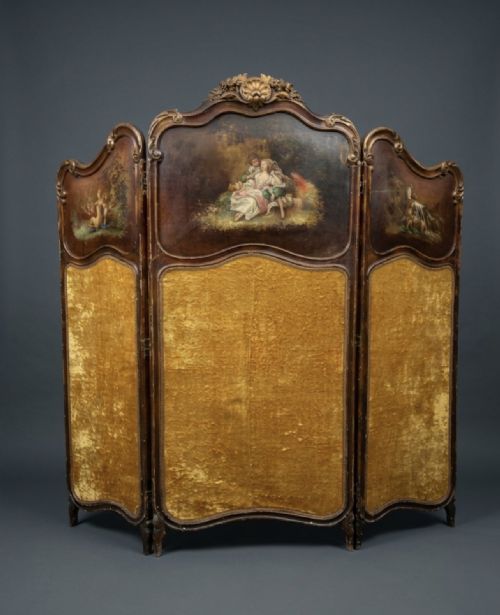
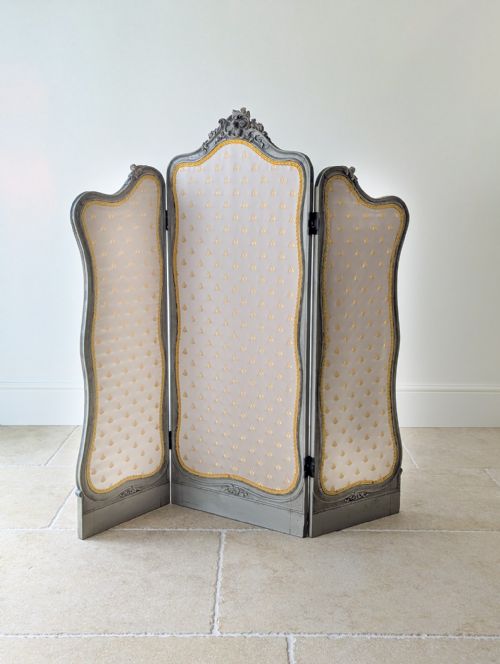
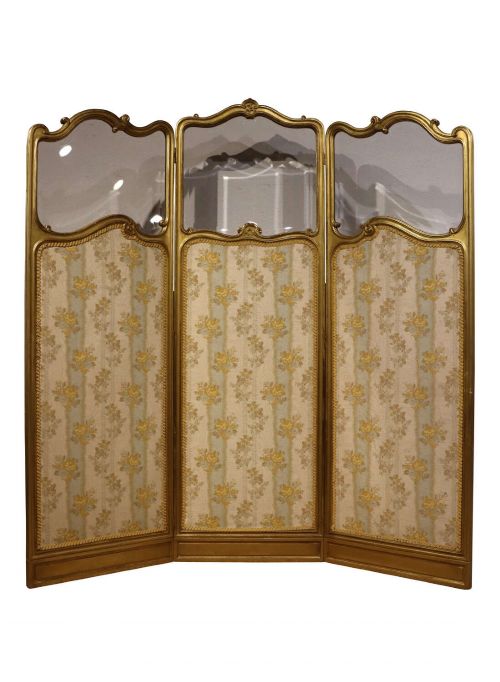
These French draught screen examples divide rooms and shield fires with folding wooden frames, glass panels, painted leather, and rich silk.
French Draught Screen
A french draught screen divides large rooms and shields occupants from sudden chills, appearing in forms ranging from low fire guards to tall multi-fold room dividers. Buyers hunting for a french draught screen encounter folding structures built with three, four, or six hinged sections designed to alter interior spaces.
Origins stretch across classic aesthetic movements, showing Louis XVI style, Napoleon III periods, and Rococo Revival influences alongside Art Nouveau curves. Walnut, giltwood, and painted wood form the primary structural backbones supporting decorative infills.
Materials and construction
Frames rely on sturdy timbers such as walnut and carved giltwood, shaped to form rigid multi-fold skeletons joined by hinges. Artisans applied layers of gilt leaf and paint directly onto wooden surfaces to achieve ornate decorative finishes.
Infill materials define the character of each screen, incorporating bevelled glass, hand-painted leather, and woven silk panels. Many examples feature detailed pictorial works including pastoral scenes and Chinoiserie motifs executed on fabric or paper grounds.
French Draught Screen Retail Price Guide 2026
Typical asking prices for french draught screen among the pieces listed under this phrase on Sellingantiques today, from the lower quarter to the upper quarter. They describe what is for sale here now, not the wider market.
The selection encompasses Victorian and Napoleon III periods alongside Louis XVI style and Art Nouveau designs.
Distinctions in quality
Quality rests upon the execution of the frame carving and the integrity of the original gilt leaf or paintwork. Superior examples display crisp detail in moulded woodwork and robust joinery that sustains the weight of multiple folding leaves.
The artistic merit of the infill panels separates standard room dividers from exceptional works. Hand-painted pastoral scenes, intact Aubusson tapestry elements, and bevelled glass inserts elevate a piece beyond simple utilitarian furniture.
Paul Sormani
The French Draught Screen Glossary
- Giltwood
- Wood coated with gold leaf or a gold-coloured finish. This technique highlights carved details on nineteenth-century frames.
- Modesty screen
- A low freestanding panel placed before a fireplace or seating area. It shields occupants from excessive heat.
- Chinoiserie
- European artistic style reflecting Chinese motifs and decorative patterns. This aesthetic appears on painted panels within nineteenth-century room dividers.
- Bevelled glass
- Glass panes featuring angled edges ground down to a thinner border. This treatment catches light and adds depth to glazed screen sections.
- Aubusson
- Traditional tapestry weave originating from French workshops. Such textiles frequently form the decorative panels of period screens.
French Draught Screen: Frequently Asked Questions
What is a french draught screen?
A french draught screen is a hinged, multi-panel barrier traditionally used to block cold air currents or create private zones within large rooms.
These pieces use folding wooden frames decorated with painted leather, silk, or glass to serve both practical and ornamental purposes in historic interiors.
How do I use a room divider?
Room dividers stand freely across open floor spaces to section off dining areas, create dressing nooks, or soften vast architectural proportions.
Position the hinged panels at gentle angles so the structure remains stable while blocking sightlines or directing foot traffic through a space.
What is a fire screen?
A fire screen is a low single or multi-fold barrier placed in front of an unlit or low-burning hearth to mask the fireplace opening.
These smaller screens protect occupants from lingering drafts and shield rooms from residual ash or soot while the fireplace is not in active use.
How do I date a nineteenth-century screen?
Dating relies on examining the underlying construction techniques, hinge types, and stylistic indicators such as Napoleon III or Art Nouveau ornament.
Material choices like walnut or giltwood, combined with the style of painted pastoral scenes or glazed panels, help narrow the period of manufacture.