





French Decorative Bronze Bowls
French decorative bronze bowls combine cast metal with porcelain, marble, and crystal to form centrepieces and tazzas.
French Decorative Bronze Bowls
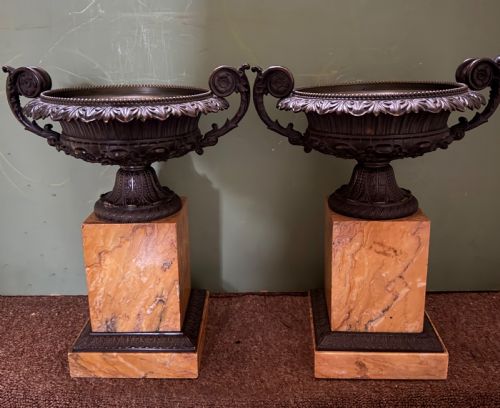
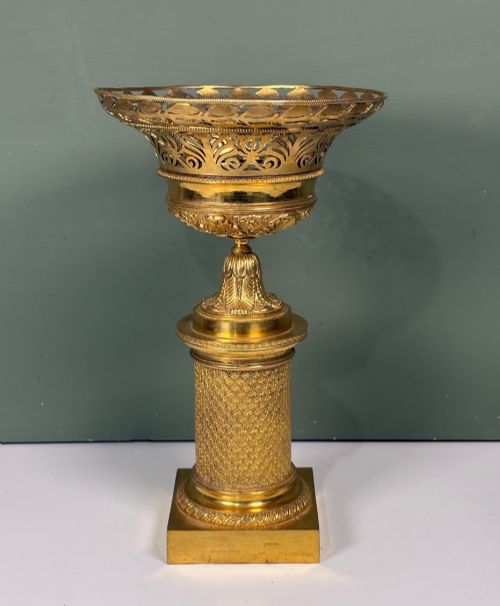
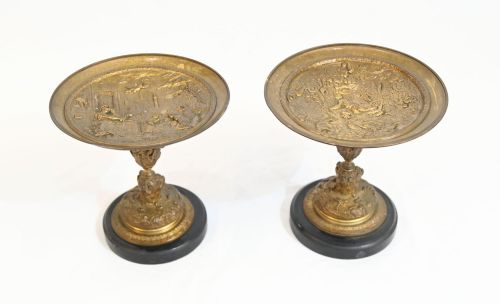
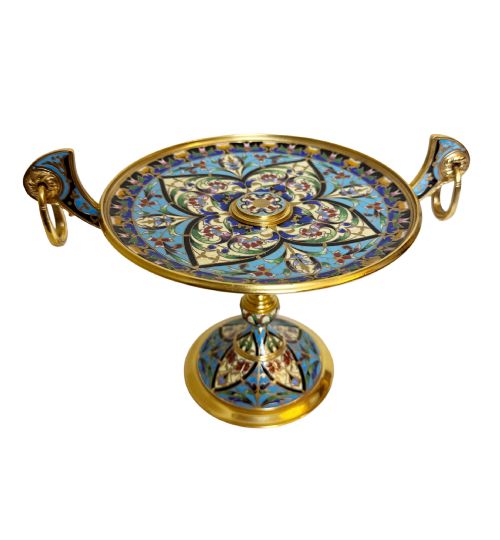
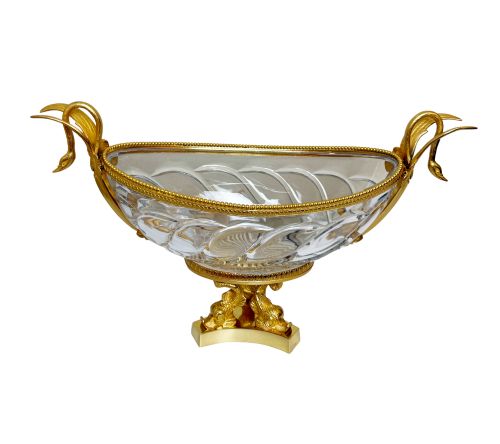
These pieces are ornamental vessels shaped as tazzas, centrepiece bowls, and comports originating from nineteenth-century France. Buyers encounter formal shapes reflecting the Empire, Neoclassical, and Rococo Revival styles.
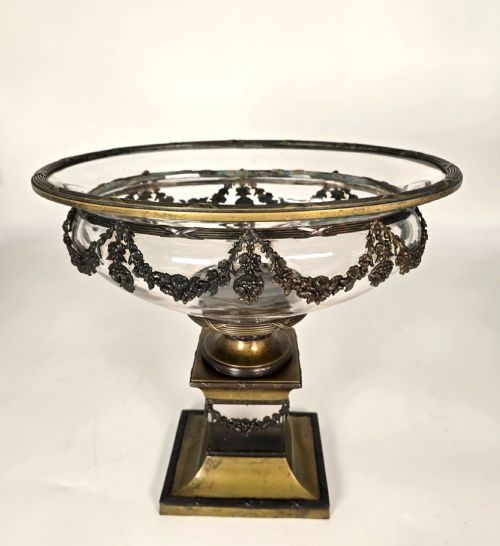
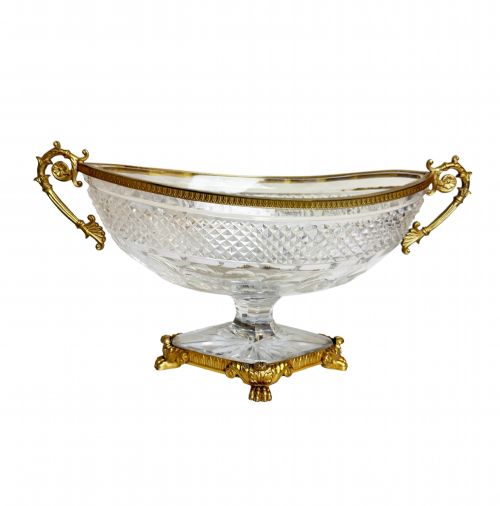
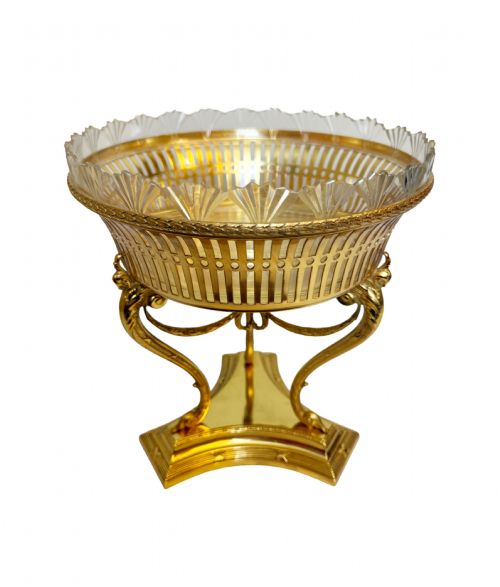
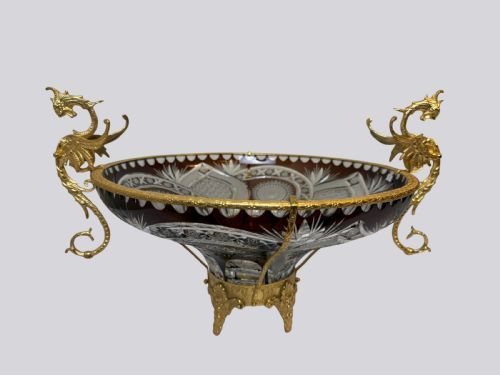
Many examples combine cast bronze or ormolu with contrasting materials such as Siena marble bases, cut glass inserts, or Sevres style porcelain dishes. Others incorporate champleve enamel, cloisonne, and mother-of-pearl.
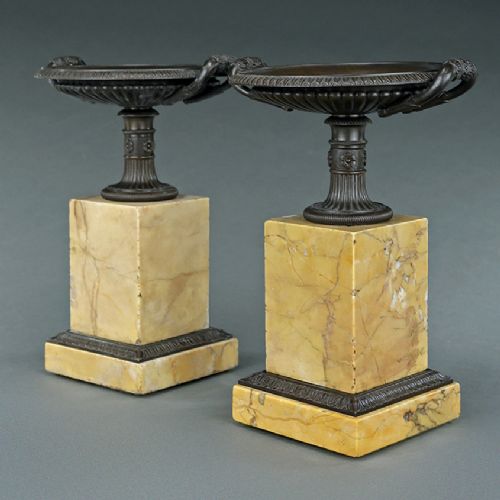
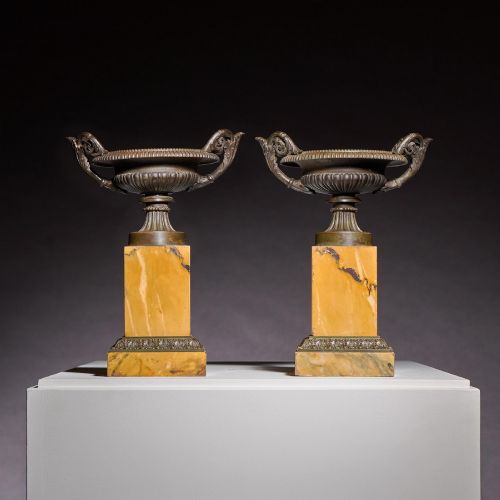
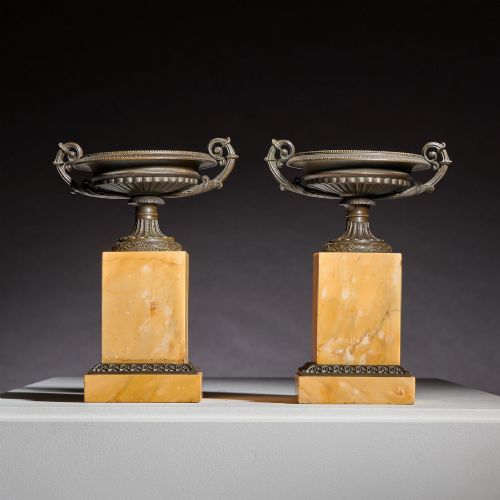
The category spans library tazzas, pedestal bowls, and large centrepieces designed for display on tables or mantelpieces. Pairs mounted on marble block plinths appear frequently among the listings.
Materials and Construction
Foundries utilised bronze, patinated bronze, and gilded ormolu for the structural mounts, handles, and figurative elements like winged cherubs. These metal components were cast and chased before assembly.
Makers integrated natural stones including Siena marble, malachite, and Blue John for plinths and bases. Vessels often feature inserts of cut crystal, coloured glass, or porcelain painted with enamel details.
French Decorative Bronze Bowls Retail Price Guide 2026
Typical asking prices for french decorative bronze bowls among the pieces listed under this phrase on Sellingantiques today, from the lower quarter to the upper quarter. They describe what is for sale here now, not the wider market.
Listings span the nineteenth century, featuring styles from French Empire and Neoclassical to Rococo Revival and Japonesque.
Assessing Quality and Execution
Quality rests in the crispness of the bronze chasing and the weight of the cast components, particularly on handles and mounts. Finer pieces display sharply defined ornamentation without softness in the casting.
The selection of secondary materials distinguishes standard production from superior examples, such as solid Siena marble blocks versus lesser stones, or hand-painted porcelain plaques by named makers.
Louis Pierre Malpass
The French Decorative Bronze Bowls Glossary
- Tazza
- A shallow bowl or vase set upon a stem and foot, originating from classical forms. These serve as prominent centrepieces in nineteenth-century dining and drawing rooms.
- Ormolu
- Gilt bronze created by applying finely ground gold mercury amalgam to a bronze base. This technique produces a durable golden finish seen on French decorative mounts.
- Champleve
- An enamelling technique where troughs or cells are hollowed out of the metal surface and filled with vitreous enamel. The piece is then fired and polished smooth.
- Comport
- A shallow dish raised on a standard or base, used historically for serving fruit or sweets. They appear frequently in glass and porcelain with bronze mounts.
- Siena marble
- A yellow decorative marble with dark grey or purple veins, quarried in Italy. It provides substantial heavy plinths for Grand Tour bronze tazzas.
French Decorative Bronze Bowls: Frequently Asked Questions
What is a tazza?
A tazza is an open, shallow vessel raised on a central stem and foot. Nineteenth-century examples often sit on heavy marble bases.
These pieces functioned as decorative centrepieces on dining tables and sideboards during the Victorian era.
How do I style a centrepiece bowl?
Large bronze and glass centrepieces suit placement on dining tables, large consoles, or entrance hall surfaces. Their scale commands attention within a room.
They can remain empty to showcase cut crystal and ormolu mounts, or hold seasonal fruit and decorative spheres.
What is the difference between bronze and ormolu?
Bronze is an alloy of copper and tin that yields a dark patinated metallic surface. Ormolu refers specifically to bronze that has been gilded with gold leaf or mercury gilt.
Both materials frequently appear together on single items, where patinated figures support bright ormolu bowls.
How are periods identified?
Periods are determined through stylistic indicators such as Empire symmetry, Rococo Revival curves, or Grand Tour classical motifs. Materials like Siena marble and champleve enamel help narrow down dates.
Construction methods and mounting techniques also provide clues to whether a piece dates to the early nineteenth century or the 1890s.