
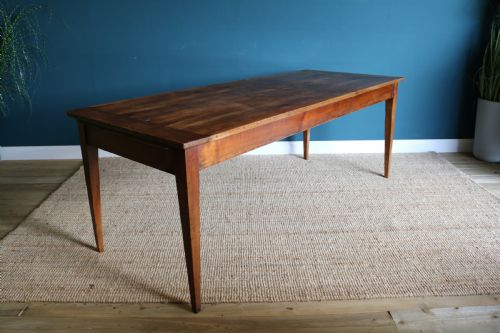
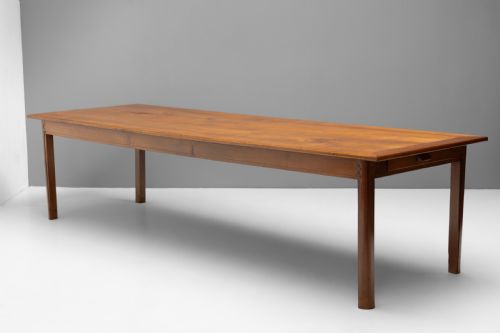


French Country Farm Table
A french country farm table brings solid timber craft and everyday utility into a room, shaped by centuries of provincial dining.
French Country Farm Table
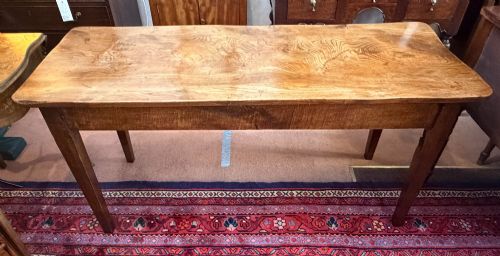
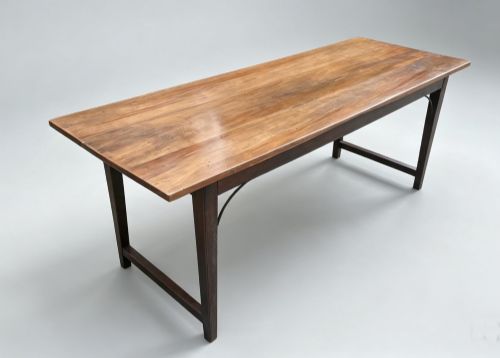
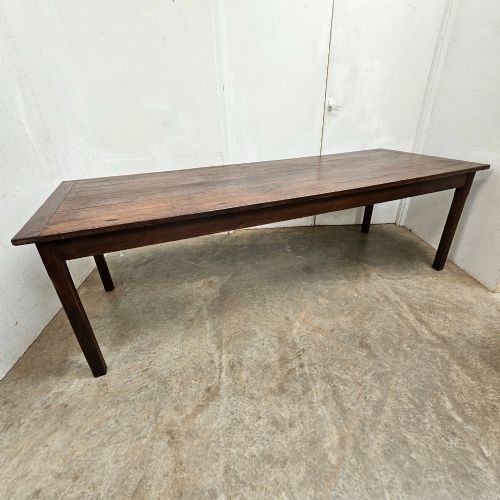
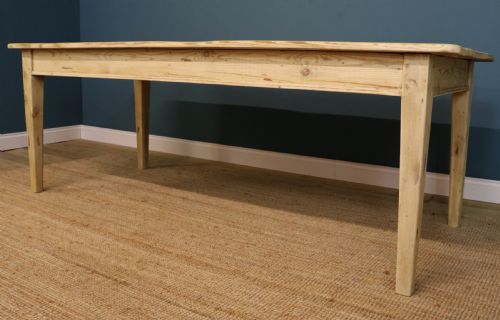
A french country farm table is a utilitarian dining surface designed for large kitchens and communal spaces in provincial homes. These tables appear most frequently as nineteenth century oak, fruitwood, and pine pieces built for heavy daily use.
Forms span standard dining formats, refectory styles, and trestle bases, occasionally including smaller coffee tables or specific elm and cherrywood constructions. The primary function remains straightforward hospitality, offering generous lengths to seat multiple guests comfortably.
Assessing Quality and Character
Quality rests in the choice of primary timber, the integrity of the original joints, and the depth of surface patina achieved through honest age. Desirable pieces combine heavy hardwood tops with stable underframes that retain their original proportions and structural balance.
Lighter pine or secondary woods occupy the simpler end of the domestic spectrum, whilst substantial seventeenth to nineteenth century oak, walnut, or figured fruitwood examples demonstrate superior timber selection and enduring craftsmanship.
Recorded periods span the eighteenth century, nineteenth century, and early twentieth century up to the 1930s.
The French Country Farm Table Glossary
- Refectory table
- A long dining table traditionally built for communal dining halls and large country kitchens. These forms provide ample legroom and substantial length.
- Trestle table
- A table featuring a horizontal beam supported by two vertical feet or frames at either end. This design maximises seating capacity along the sides.
- Fruitwood
- Timber harvested from fruit-bearing trees such as cherry, pear, or apple. It yields a warm hue and tight grain popular in provincial cabinetmaking.
- Parquetry
- Geometric mosaic woodwork used for decorative surface patterns on tabletops. This technique showcases precise carpentry skills.
- Scrubbed finish
- A wood surface cleaned repeatedly with water and a brush to lift old finishes and expose the pale, raw timber underneath.
French Country Farm Table: Frequently Asked Questions
How do I clean a wood farm table?
Wipe the surface with a damp cloth and mild soap, avoiding harsh chemical sprays that strip the aged finish.
Dry the timber thoroughly afterwards to prevent moisture damage to the grain.
Can I use these tables daily?
These pieces were built for heavy domestic use in working kitchens and dining spaces. Their robust construction handles daily meals and gatherings with ease.
Use coasters and mats to protect vulnerable historic surfaces from excess heat and moisture.
How do I date a farm table?
Examine the timber species, joinery methods, and the tool marks left on the underside of the top planks. Hand-sawn boards and pegged joints usually indicate older nineteenth century or earlier origin.
Compare the base style and wear patterns against documented provincial forms from similar periods.
Are these tables good for small rooms?
Most provincial tables are substantial in length and width, designed specifically for large farmhouse kitchens. Selecting a narrow trestle format helps fit tighter spaces without sacrificing surface area.
Check precise room dimensions against the table length before placing.