


French Corbeille Style Bed
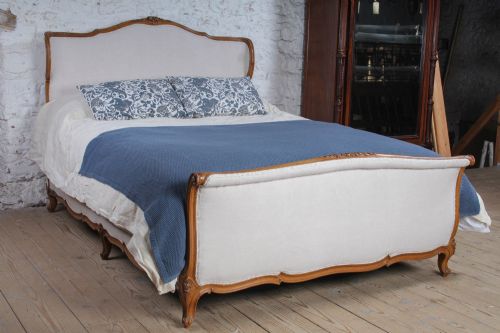
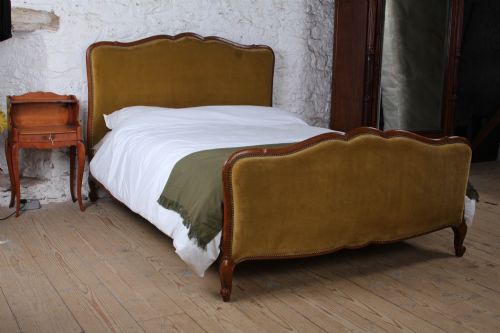
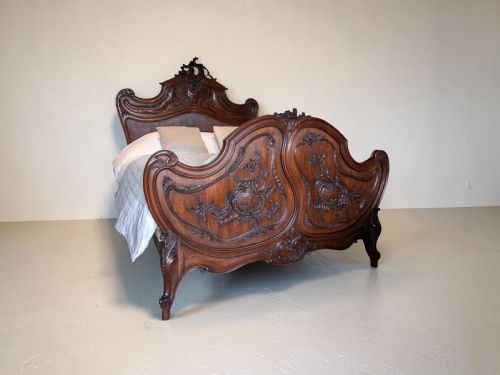
A french corbeille style bed brings dramatic basket-shaped curves and traditional upholstery to a bedroom, offering a distinct silhouette rooted in continental design.
French Corbeille Style Bed
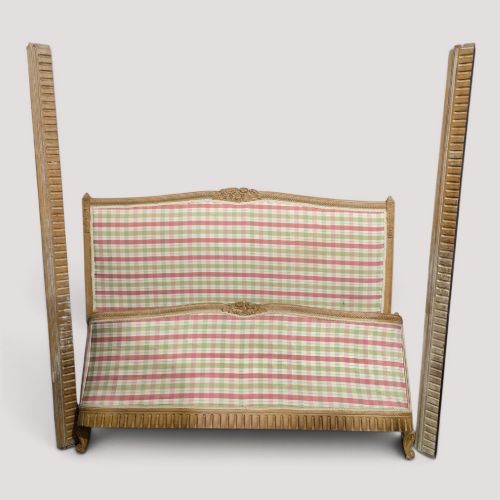
When you search for a french corbeille style bed, you encounter distinct frames defined by curving, basket-like headboards and footboards designed to wrap around the sleeper. These pieces emerge primarily in Louis XV and Louis XVI styles, alongside broader French Chateau and Provincial aesthetic traditions.
The selections available here span periods from the late Victorian era and Edwardian decades through the early twentieth century, specifically drawing from years like 1890, 1900, 1910, 1920, and 1930. Forms range from single beds and daybeds to expansive double, king, and super king dimensions.
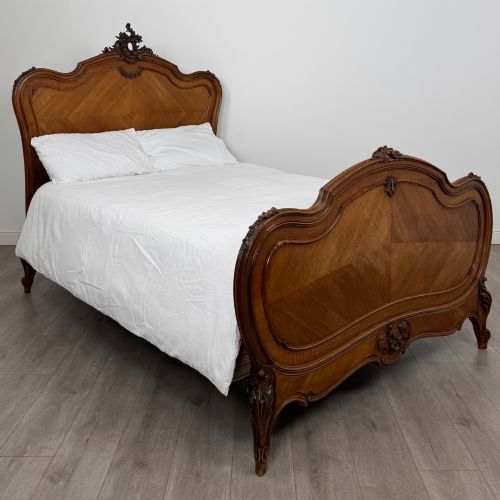
Most examples rely on classical stylistic influences such as French Rococo Revival, featuring organic lines and substantial curved timber. Buyers frequently find both painted finishes and exposed wood variants ready to anchor a bedroom scheme.
Materials and Construction Methods
Cabinetmakers constructed these frames using solid hardwoods like beech, walnut, and rosewood, alongside general timber and painted wood surfaces. These dense woods provided the structural integrity required to carve the deep, sweeping curves characteristic of the corbeille silhouette.
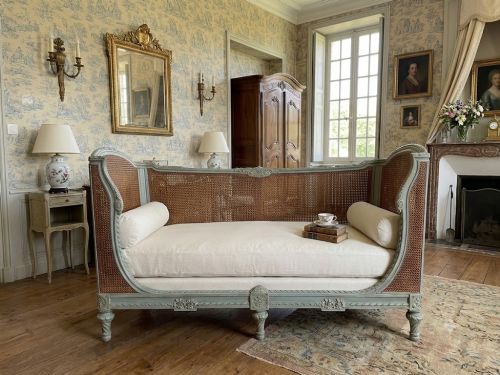
Cane work appears frequently alongside textile upholstery, incorporating woven panels into the curved wooden frameworks. Textiles such as linen and specialised bedding fabrics cover the padded elements, often secured with traditional methods matching the period of manufacture.
Materials across these listings include walnut, beech, rosewood, brass, and textiles like linen, paired with painted or polished wood finishes.
Distinctions in Quality
The calibre of a piece rests heavily on the depth and crispness of the carved woodwork, where hand-carved walnut or rosewood displays sharper relief than simpler timber mouldings. Heavier, more substantial frames generally reflect higher initial manufacture standards during their respective periods.
The integrity of the curved framework and the execution of integrated caning or specialised upholstery determine the overall finish. Pieces retaining original structural proportions alongside well-preserved or sympathetically renewed textiles demonstrate superior surviving condition.
The French Corbeille Style Bed Glossary
- Corbeille
- Basket shape in French, describing a bed with curved, enveloping head and footboards that resemble a basket. This defining geometry creates a cocooning effect for the mattress.
- Louis XV Style
- An aesthetic marked by asymmetry, curved lines, and scrollwork derived from mid-eighteenth-century French design. This vocabulary informs many of the sweeping contours found on these beds.
- Louis XVI Style
- A neoclassical design approach prioritising straight lines, symmetry, and geometric proportions. Pieces adopting this style temper the dramatic curves with restrained classical detailing.
- Caned
- Woven rattan or similar material stretched across openings in the wooden frame. This technique lightens the visual weight of large headboards and footboards.
- Daybed
- A multipurpose piece of furniture functioning as a seat during the day and a bed at night. Variants like the canapé corbeille integrate the signature basket curves into this format.
French Corbeille Style Bed: Frequently Asked Questions
How do I choose the right size?
Sizes range from single beds and daybeds to double, king, and super king formats. Consider the sweeping profile of the curved ends, which can extend further into a room than a flat headboard.
Measuring the available floor space ensures the curved woodwork sits comfortably within the bedroom layout.
What periods do these beds come from?
The available pieces predominantly date from the late nineteenth century through the early decades of the twentieth century, including Victorian and Edwardian examples.
Design influences draw heavily on earlier French periods like Louis XV and Louis XVI, reinterpreted during the 1900s to 1930s.
Are these beds suitable for modern mattresses?
Many historical frames accommodate standard contemporary mattress dimensions, though internal supports may require adjustment depending on the specific build.
Checking the exact internal measurements listed for each bed ensures proper compatibility with modern bases.