
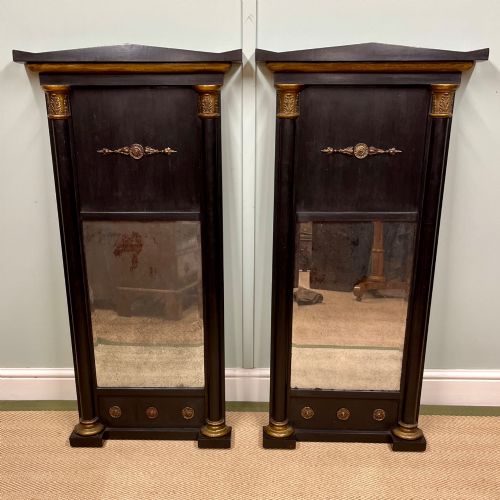


French Column Wall Mirror
These french column wall mirror selections bring architectural framing and reflective depth into a room through classical structural uprights.
French Column Wall Mirror
A french column wall mirror uses upright architectural supports flanking the glass to create a formal decorative presence on a room's wall. These pieces draw on neoclassical and empire design traditions, placing structural columns at the sides of the plate.
You will encounter these mirrors across several nineteenth century periods, including distinct pieces from eighteen sixty up to the nineteen hundreds. The forms range from tall overmantels and pier mirrors to wall-hung and dressing variations.
Origin details in this group span both English interpretations of classical styles and direct French pieces. Many examples incorporate painted wood, carved wood, or gilt finishes alongside the central glass plate.
How they were made
Construction relies heavily on carved wood and moulded gesso surfaces to build up the ornate frames and structural column details. Craftsmen applied paint or gold leaf over these wooden foundations to achieve the finished metallic or painted appearance.
Materials like mahogany, oak, and burr walnut provide sturdy timber foundations for both French and English workshops. These woods support the heavy glass plates and allow for precise shaping of the side columns and upper crests.
Materials across these listings include glass, gesso, giltwood, painted wood, mahogany, and burr walnut.
What varies in quality
The sophistication of the carved wood and gesso ornamentation dictates much of the visual depth in these architectural frames. Crisp detailing on the column capitals and flanking mouldings separates standard production from finer work.
The choice of primary timber and the application of parcel gilding or paint layers influence the character of each piece. Heavier woods like mahogany and burr walnut offer substantial structure compared to simpler painted pine alternatives.
The French Column Wall Mirror Glossary
- Pier mirror
- A tall glass designed specifically to hang on the wall space between two windows. These pieces often feature columns and match console tables placed below them.
- Overmantel mirror
- A wide glass created to sit directly above a fireplace mantelpiece. They frequently incorporate extended column frames and shaped tops.
- Gesso
- A plaster-based mixture applied to wood frames before gilding or painting. This material allows artisans to carve intricate relief details and sharp architectural edges.
- Giltwood
- Timber that has been coated with a thin layer of gold leaf. It catches light and enhances the classical column details.
- Empire style
- A neoclassical design movement originating in nineteenth century France. It emphasises military and classical architectural motifs, including prominent side columns.
French Column Wall Mirror: Frequently Asked Questions
How do I identify a French piece?
French examples often utilise native timbers like burr walnut or oak alongside specific carved column proportions associated with nineteenth century Parisian workshops.
Comparing the framing style and decorative motifs to documented neoclassical designs helps clarify the regional origin.
Are these mirrors very heavy?
Due to the dense timber frames, carved gesso layers, and large glass plates, these pieces possess substantial weight.
Proper wall fixings anchored directly into structural studs or masonry are essential for safe installation.
What rooms suit an overmantel mirror?
Overmantel versions find their traditional home above living room and dining room fireplaces where the wide frame anchors the hearth below.
Their substantial scale also works well on blank dining room walls to reflect light across the table.