

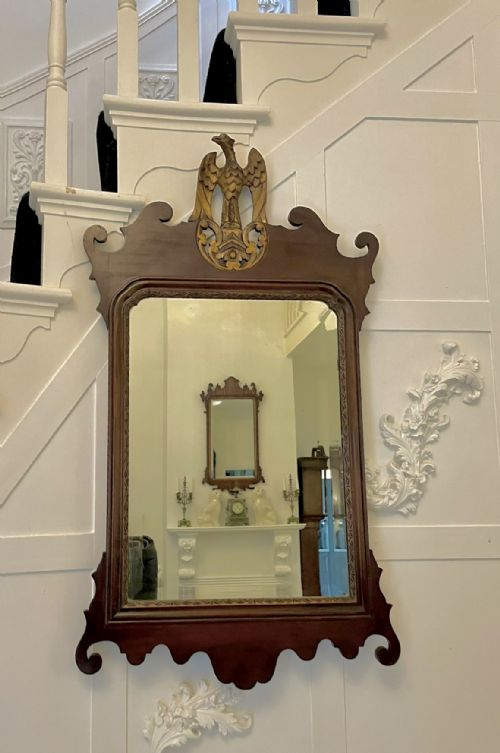


Dark Mahogany Pier Mirror
A dark mahogany pier mirror sits tall between windows, catching the daylight to brighten panelled rooms.
Dark Mahogany Pier Mirror
A dark mahogany pier mirror is a vertical hanging glass designed specifically to occupy the narrow wall space between two windows. These pieces emerge across Georgian, Regency, Victorian, and Edwardian periods, often pairing rich timber frames with tall proportions.
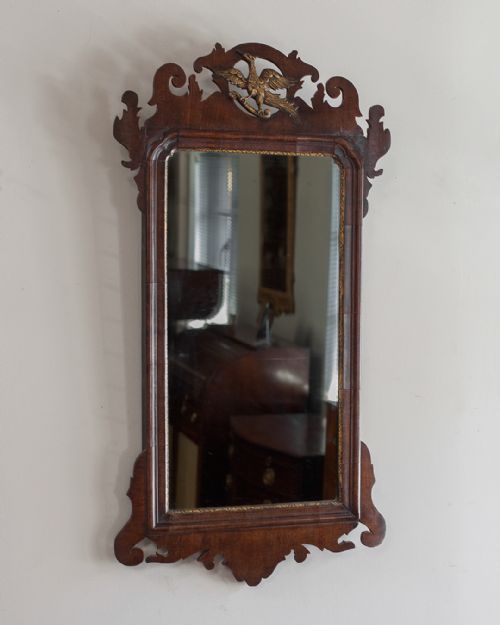
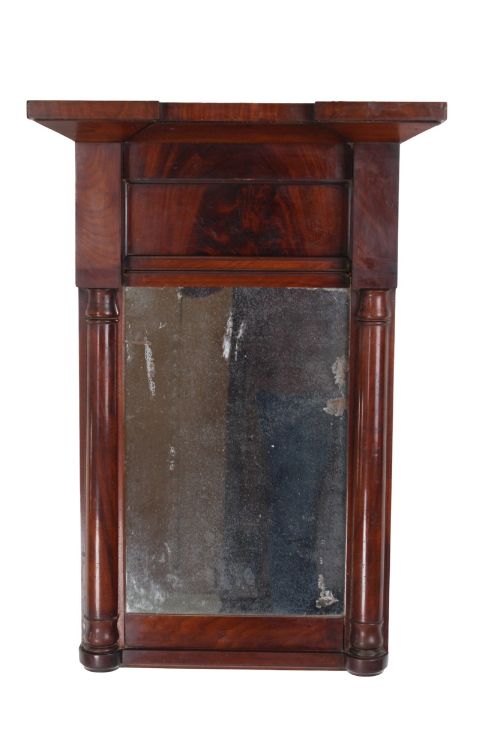
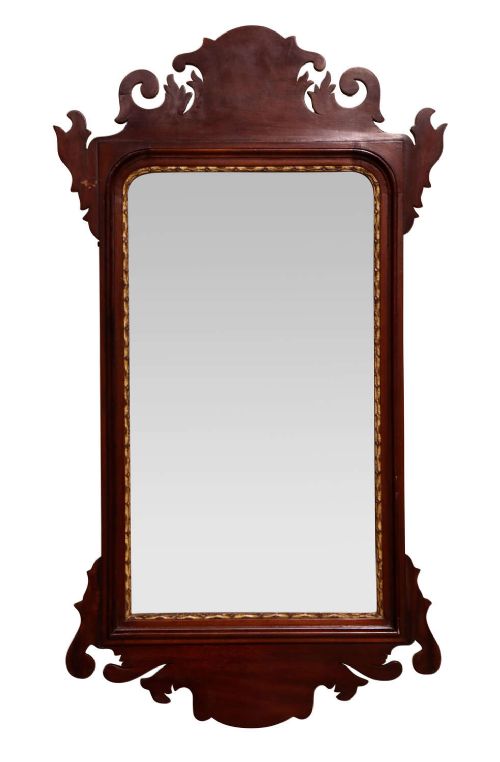
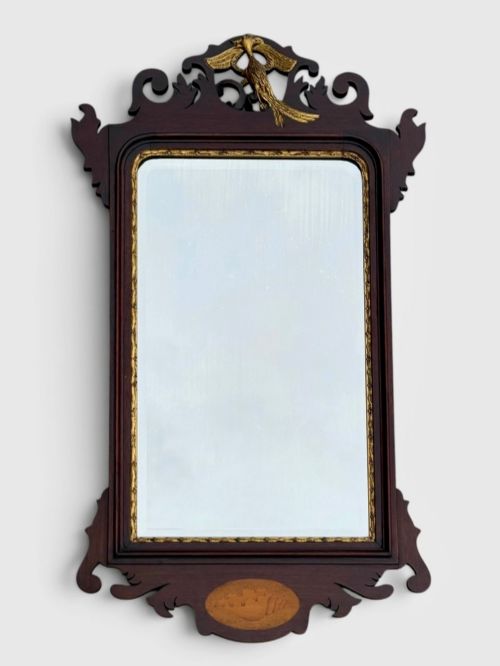
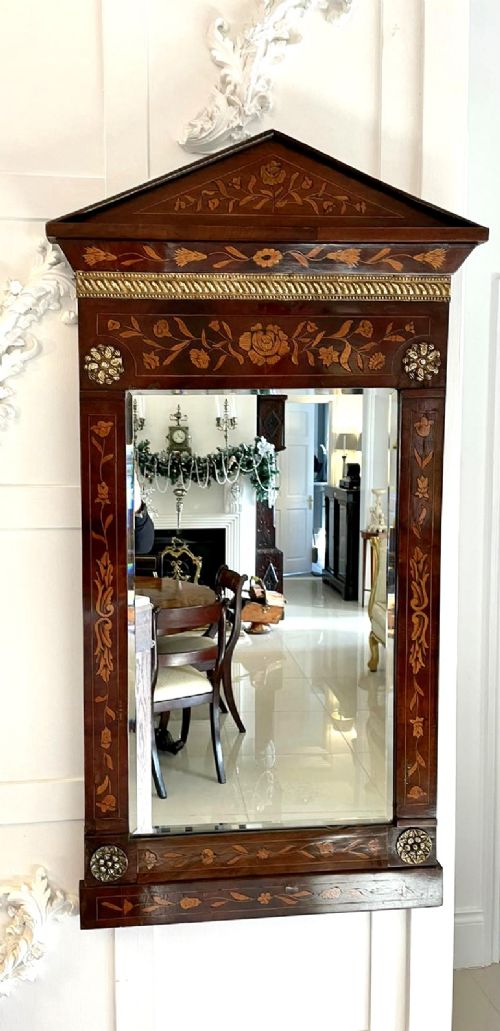
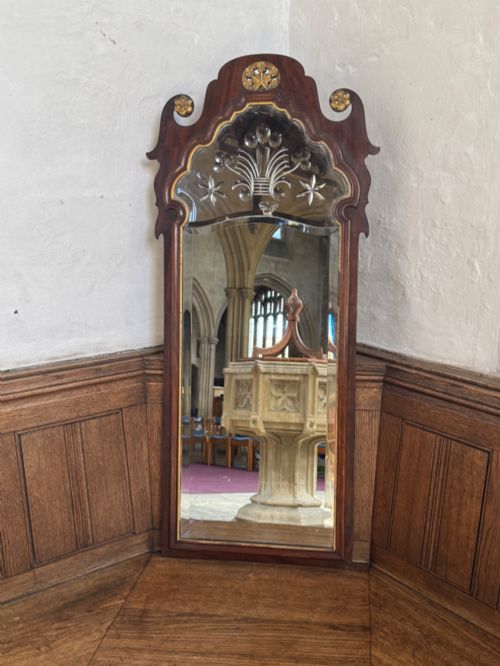
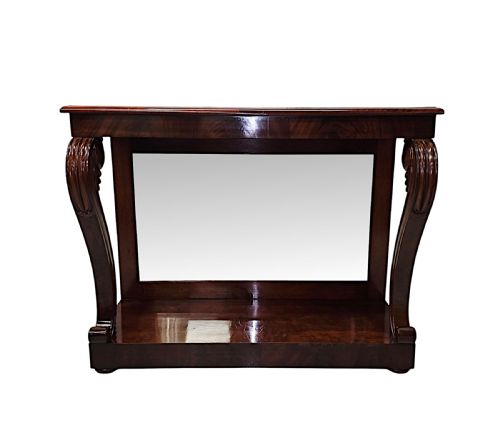
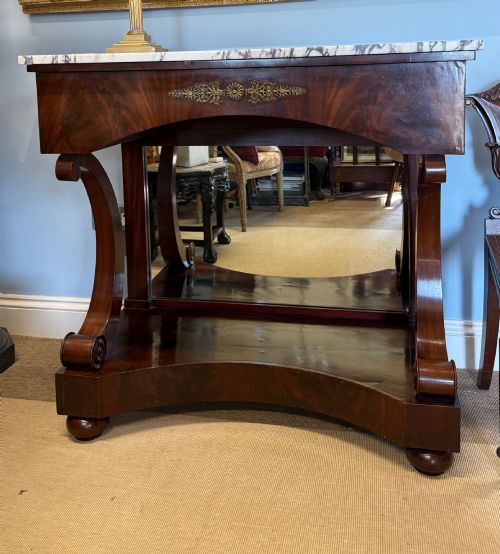
The selections here span simple fretwork frames from the eighteenth century to substantial nineteenth-century examples with parcel gilt decoration and half columns. Wall mirrors, overmantels, and console tables with mirror backs also appear in the current selection, reflecting how pier furniture evolved to furnish formal drawing rooms.
Materials and Construction
Cabinet makers utilised dense mahogany, frequently enhanced with flame mahogany veneer or Dutch marquetry inlay to create depth across the wooden surfaces. Frames often incorporate parcel gilt details, brass accents, and carved motifs such as ho ho birds or fretwork.
Mirrors utilise early mercury plate or reverse cut glass, set within pine or hardwood carcases. Tables and cabinets associated with these glasses feature marble tops and solid mahogany structures built by hand.
Watch for carved wooden birds gazing perpetually from the crests of eighteenth-century frames.
Assessing Quality
Quality rests upon the crispness of the timber carving and the depth of the mahogany grain. Pieces displaying hand-cut fretwork or precise parcel gilding demonstrate superior workshop skill compared to later machine-cut interpretations.
The retention of original mirror glass and untouched surface patination elevates an example. Subtle details such as reverse cut plates and well-figured veneer distinguish finer Georgian and Regency works from standard revival pieces.
Gillingtons of Dublin
The Dark Mahogany Pier Mirror Glossary
- Pier glass
- A tall mirror made to hang on the narrow wall space between windows. These pieces often sat above a matching pier table or console.
- Parcel gilt
- A surface treatment where selected carved details are partially covered in gold leaf while the surrounding wood remains visible. This technique highlights mouldings and decorative motifs.
- Fretwork
- Openwork ornamentation cut into thin boards of mahogany using a fretsaw. Eighteenth-century makers used this technique to create intricate geometric and scroll patterns.
- Mercury plate
- An early mirror glass manufacturing method involving a tin and mercury amalgam poured onto glass sheets. This process produces a characteristic dark, mottled reflection.
- Vauxhall plate
- A historical term for bevelled mirror glass produced in England. These plates often show slight distortion and hand-bevelled edges.
Dark Mahogany Pier Mirror: Frequently Asked Questions
What is a pier mirror?
A pier mirror is a tall, narrow glass built to hang on the wall space between two windows. They were traditionally positioned above low console tables or pier cabinets to reflect light into darker corners of formal rooms.
Over time, these mirrors became central decorative fixtures in Georgian and Regency interiors, combining carved mahogany frames with ornate crests or parcel gilt accents.
Where should I hang a dark mahogany pier mirror?
These mirrors suit narrow wall spaces, hallways, or between living room windows where their vertical proportions fit naturally. Placing them opposite a light source maximises illumination in the room.
Ensure the wall structure can support the weight of a solid timber and glass frame, particularly for larger nineteenth-century examples with marble consoles.
How do I identify a Georgian pier mirror?
Georgian examples often feature hand-carved mahogany fretwork frames, parcel gilt decoration, and motifs like the ho ho bird. The timber displays a deep, rich colour developed through age and wax polishing.
Later Victorian and Edwardian revival pieces generally exhibit heavier construction, machine-cut fretwork, or differences in the backing boards and screw types used.
Did pier mirrors come with tables?
Many pier mirrors formed part of matched suites with console tables, pier tables, or small side cabinets placed directly beneath them. Some surviving pieces integrate the mirror back directly into the console structure.
You will also find standalone wall mirrors and overmantels listed under this furniture category.