




French Coastal Landscape Painting
When you search for a french coastal landscape painting, you enter a world of shifting tides, sunlit harbours, and rugged northern cliffs.

French Coastal Landscape Painting
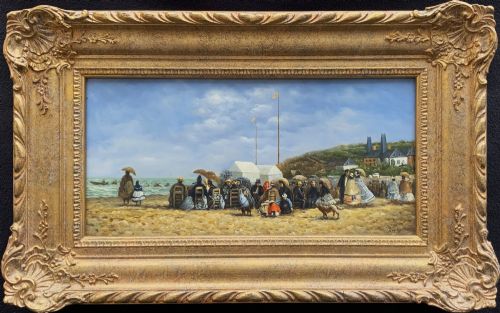
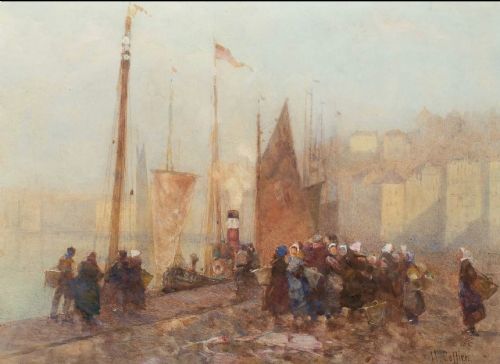
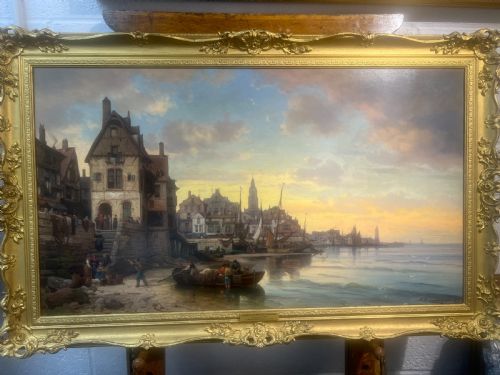
A french coastal landscape painting captures the maritime character, bustling ports, and dramatic shorelines of regions from Normandy to the Côte d'Azur. Buyers seeking this genre encounter works ranging from nineteenth-century realism to mid-century impressionism, capturing harbours, cliffs, and beach scenes.
The pieces available span from the late nineteenth century through the 1960s, reflecting changing artistic movements including post-impressionism and fauvism. Works frequently depict specific locations such as Brittany, Normandy, and Mediterranean fishing ports.
Oil on canvas and wood panel dominate the selection, alongside watercolours on paper and textured print boards. Framed presentation is standard, preserving the historic integrity of these maritime views.
Materials and technique
Artists utilised oil paint applied to canvas, wood panels, or boards to build textured surfaces that captured the intense glare of southern light or the muted greys of northern seas. Watercolour on paper offered a lighter medium for capturing swift impressions of coastal weather and atmosphere.
Techniques varied from tight academic realism in the nineteenth century to looser post-impressionist brushwork and dynamic modernist applications in the twentieth century. Frames made of wood, often period-specific, complete the construction of these artworks.
Several paintings capture holidaymakers rubbing shoulders with fishermen, proving that even a serious seascape loves a good day at the beach.
Evaluating quality
The distinction between ordinary decorative works and superior examples lies in the artist's handling of light, atmosphere, and spatial depth. Stronger pieces demonstrate confident brushwork and a sophisticated understanding of coastal illumination rather than rigid adherence to topography.
Condition of the painted surface and originality of the framing contribute significantly to a piece's standing. Works that retain their original pigment vibrancy and historic support structures command greater appreciation among collectors.
Paul Bret·Hector Caffieri·Charles Euphraisie Kuasseg·Erich Mercker·Raymond Moritz·Louis Suire·Gustave Vidal·Jean-Baptiste Olive·Raymond Picque·William Lee Hankey·Cecil Rochfort D'Oyly-John·Charles Malfroy·Roger de la Corbiere·Edward Henry Holder·Henri Ottman·Yves Brayer·Augustus William Enness·Charles Eyres Simmons
The French Coastal Landscape Painting Glossary
- Post-Impressionism
- An art movement developing roughly from the last impressionist exhibition that extended impressionism while rejecting its limitations. Artists emphasised symbolic content and heavier brushwork.
- Côte d'Azur
- The Mediterranean coastline of the southeast corner of France. This sun-drenched region frequently inspired vibrant marine and landscape paintings.
- Brittany
- A cultural region in northwestern France known for its rugged coastline and fishing ports. It served as a primary subject for maritime artists seeking dramatic tides and traditional harbour life.
- Provenance
- The chronology of the ownership of a work of art. Documented history aids in verifying the authenticity and age of a painting.
French Coastal Landscape Painting: Frequently Asked Questions
What defines a french coastal landscape painting?
These artworks depict maritime scenes, harbours, and shores along the French coastline, executed primarily in oil or watercolour.
They record the distinct light and topography of regions ranging from the rocky cliffs of Normandy to the bright waters of the Mediterranean.
How do I date these maritime paintings?
Dating relies on stylistic evidence, artist signatures, framing methods, and stretcher construction.
Twentieth-century examples often adopt freer brushwork and modernist palettes, while nineteenth-century pieces tend toward traditional academic realism.
Where were these coastal scenes typically painted?
Popular painting grounds included the rugged ports of Brittany and Normandy in the north, alongside sunlit Mediterranean harbours in the south.
Artists gathered in these coastal communities to capture local fishing fleets, tides, and daily maritime life.
How should I care for an antique oil painting?
Display paintings away from direct sunlight, extreme temperature fluctuations, and high humidity to protect the canvas and pigments.
Avoid using water or chemical cleaners on the paint surface; consult a professional conservator for cleaning.