


French Classical Table Lamps
French classical table lamps bring grand architectural presence and patinated metalwork into a room, drawing on centuries of neoclassical design.
French Classical Table Lamps
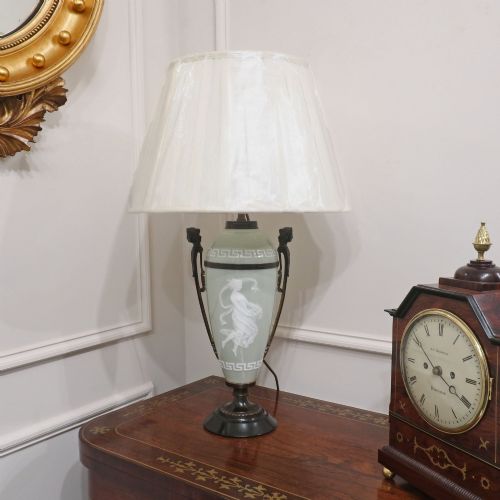
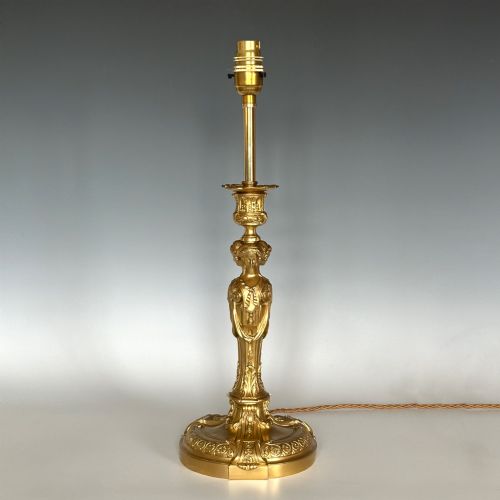
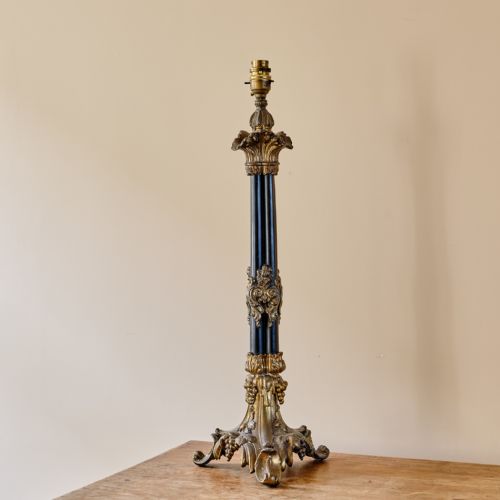
French classical table lamps unite antique lighting fixtures with classical motifs drawn from periods spanning the nineteenth century into the early twentieth century. These pieces frequently manifest as converted candelabra, urns, and columns rooted in French Neoclassical, Empire, and Louis XVI styles.
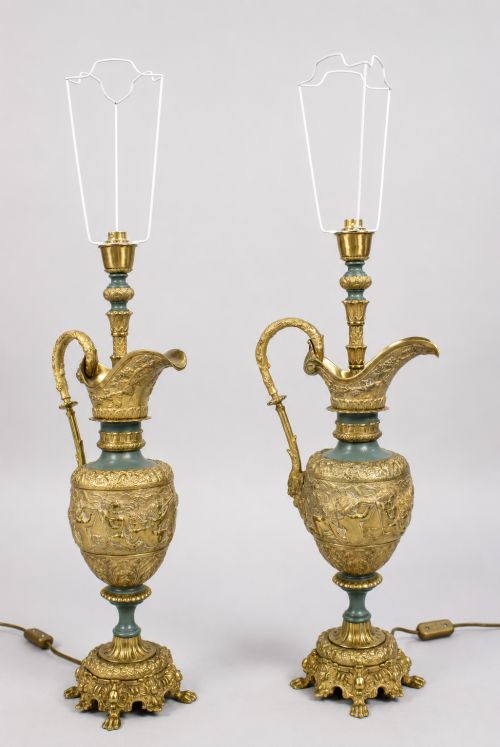
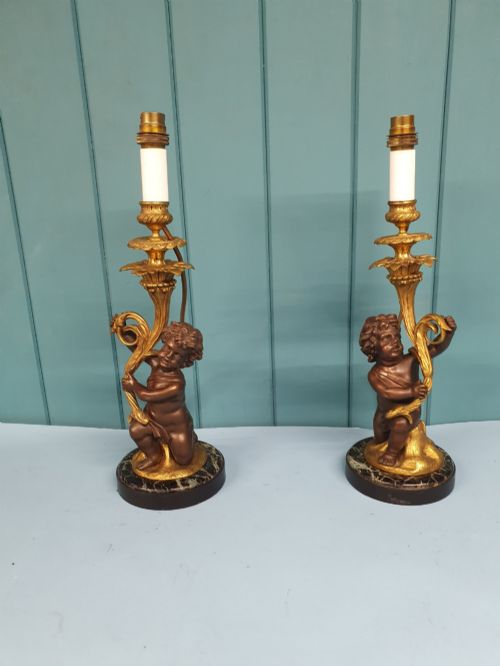
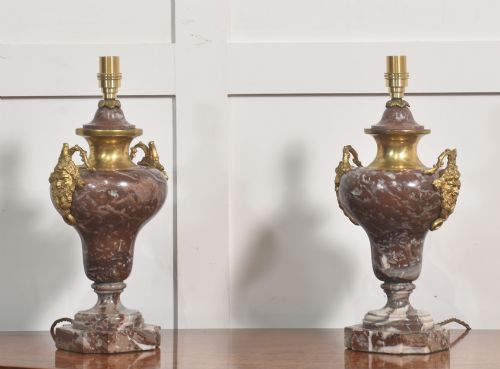
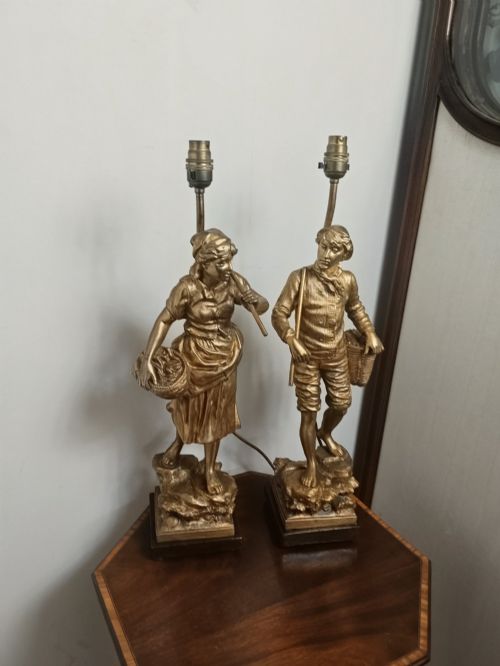
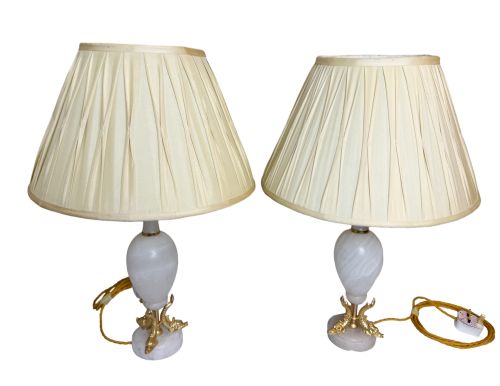
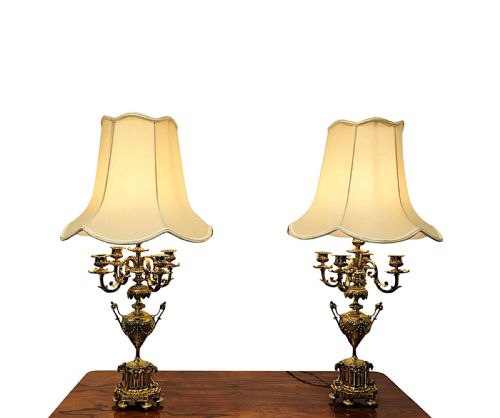
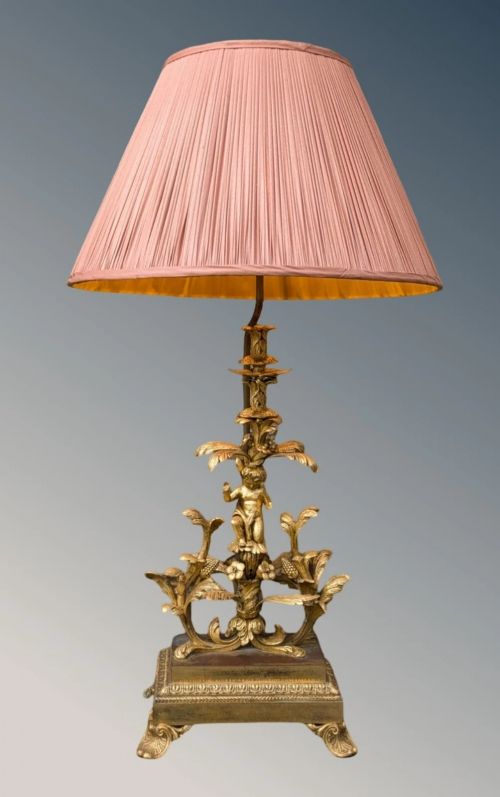
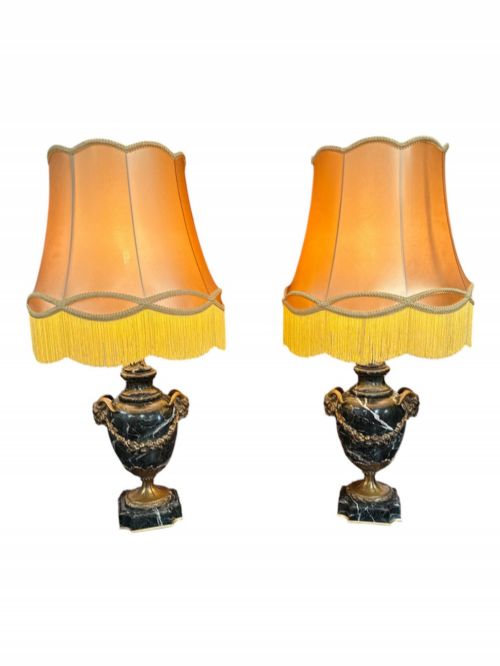
The versions most commonly met on this page include pairs of metal-mounted marble urns, bronze cherub figures, and gilded brass pillars. Many originate from nineteenth-century workshops utilising architectural forms adapted for domestic illumination.
Makers and designers also drew inspiration from eighteenth-century models, producing restrained column designs alongside exuberant figurative pieces. Buyers encounter both single lamp bases and matched pairs designed for placement on side tables or consoles.
Materials and Construction
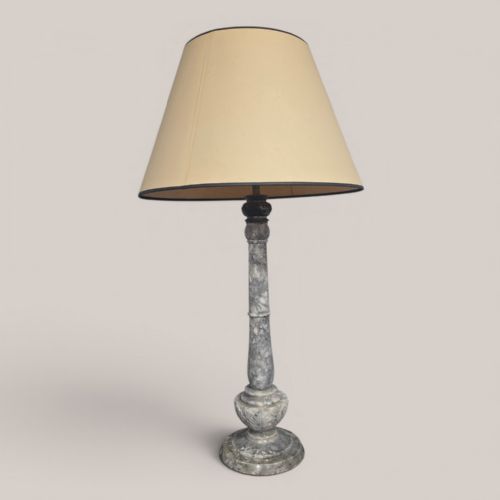
Foundational structures combine cast metals such as bronze, brass, and ormolu with natural stones including rouge marble and onyx. Artisans frequently mounted gilt metal mounts onto polished stone bodies to create contrasting textures.
Surface decoration relied on traditional gilding, patination, and hand-carved detailing on timber or stone components. Many pieces began as oil lamps, candlesticks, or candelabra before later conversion to electrical table lights.
Periods represented across the inventory extend from Victorian and Grand Regency eras into early twentieth-century production.
Assessing Quality
Quality rests upon the crispness of the metal casting and the depth of the original gilding or patination. Finer examples display sharp chasing on ormolu mounts and carefully selected marble with rich natural veining rather than uniform composition.
The integration of components also separates standard production from superior work. Well-made pieces maintain balanced proportions between the stone body, metal mounts, and overall lighting form.
E Rousseau·L & F Moreau·Emile Picault·Dugourc
The French Classical Table Lamps Glossary
- Ormolu
- Gilded bronze produced through a mercury amalgamation technique during the eighteenth and nineteenth centuries. This process creates a rich, matte gold surface finish.
- Ewer
- A large jug with a wide spout traditionally used for water, often rendered in bronze or marble and later adapted into lamp bases. Their classical shapes suit columnar lighting forms.
- Cassolette
- A decorative vessel featuring a reversible lid that functions either as a solid vase or an incense burner. In lighting, these vessels form ornamental bodies for table lamps.
- Pate sur pate
- A ceramic decoration technique where liquid clay is applied in successive layers to create a low relief cameo effect against a contrasting background.
- Tole-peinte
- Painted sheet metal used to form decorative lamp columns and shades. This technique allows for applied colours and patterns on tin or iron bodies.
French Classical Table Lamps: Frequently Asked Questions
How do I wire antique lamps?
Professional rewiring ensures safety while preserving original components like weighted bases and old lampholders. Rewiring should adapt standard modern flex without damaging historical structure.
Qualified electricians can thread modern wiring through internal channels without altering the visible metalwork or stone body.
Are these lamps converted candlesticks?
Many examples on this market began life as oil lamps, candelabra, or candlesticks before receiving electrical fittings. Such adaptations were common practice during the electrification of older interiors.
Conversion methods vary, but skilled adaptations retain the original character of the bronze, brass, or marble structure.
How do I clean gilt bronze?
Gentle dusting with a soft brush preserves delicate gilt bronze and ormolu surfaces. Moisture and abrasive cleaners strip historic finishes from metalwork.
Maintaining these pieces requires avoiding chemical solvents that react adversely with nineteenth-century lacquers and patinas.
What styles dominate these listings?
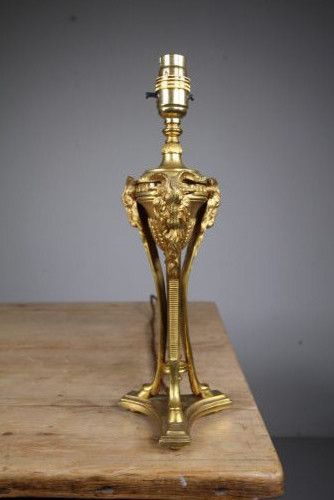
French Neoclassical, Louis XVI, and Empire styles form the primary aesthetic categories for these lamps. These designs utilise classical architectural orders and symmetrical ornamentation.
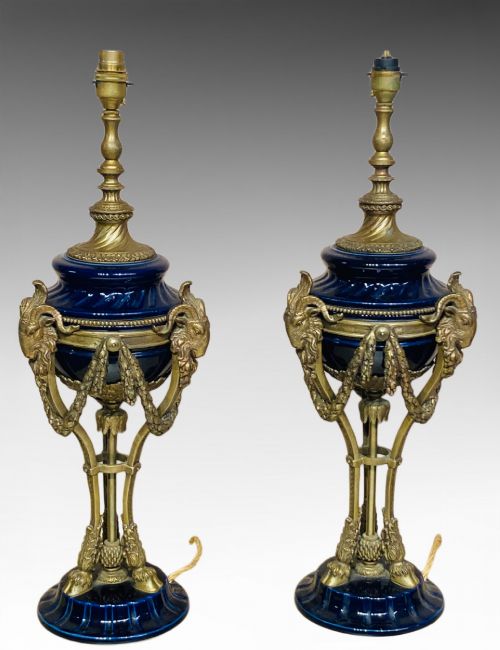
Details such as rams' heads, acanthus leaves, and fluted columns appear frequently across nineteenth-century examples.