




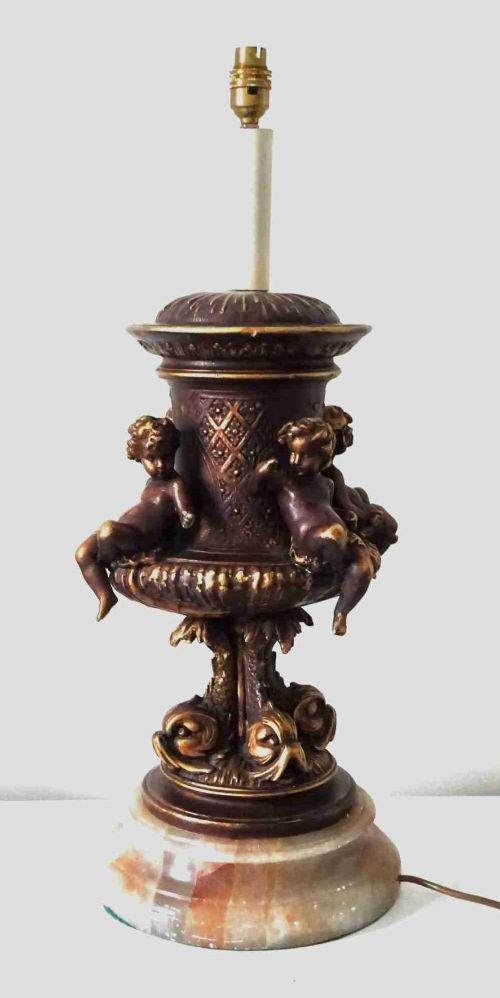
French Onyx Table Lamps
French onyx table lamps bring warm, banded stone and metallic mounts into a room, offering a bright touch of historical lighting.
French Onyx Table Lamps
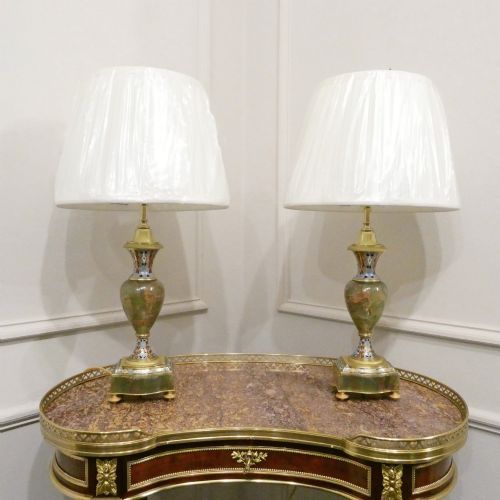
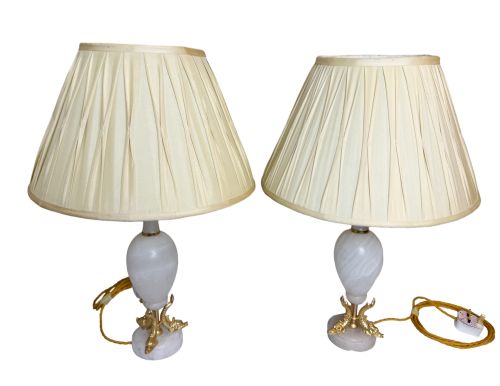
These french onyx table lamps combine natural stone columns with metal mounts, drawing from nineteenth century and early twentieth century aesthetic movements. You meet pairs and single pieces, often standing alongside occasional furniture sharing the same materials.
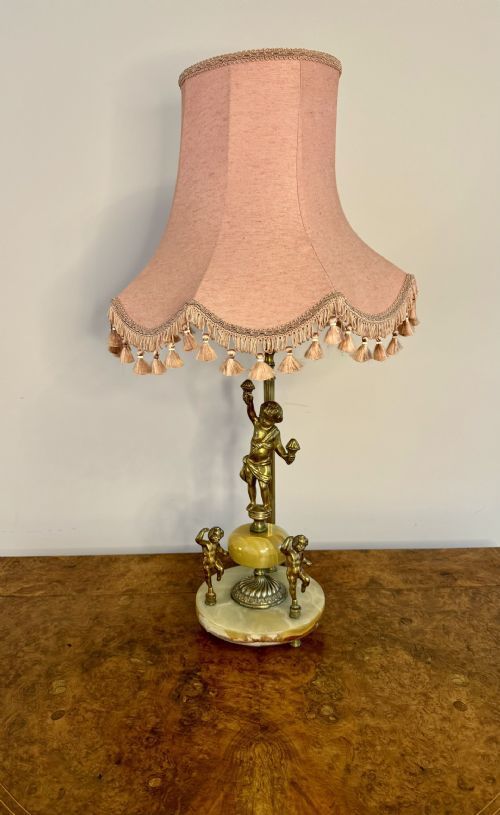
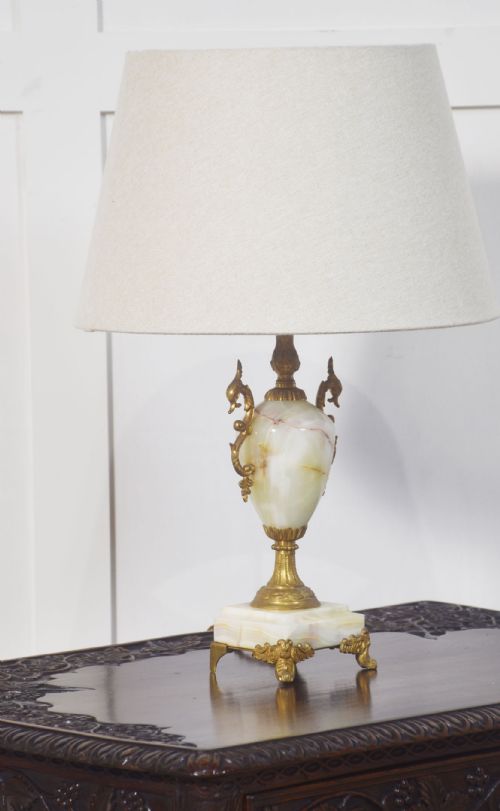
The selections span louis xvi revival designs and Edwardian interpretations, showcasing stone bases paired with gilt bronze or brass. Many examples integrate classical motifs like cherubs, dolphin supports, and paw feet into their metallic elements.
Materials and construction
Maker workshops turned and polished solid onyx or white onyx to form the central columns and bodies of these lights. Metal founders cast bronze, brass, and ormolu into decorative mounts, collars, and paw feet which were then gilded and fixed to the stone.
Makers integrated champlevé enamel or fabric shades to complete the lighting fixtures. Metal mounts were secured mechanically around the stone, anchoring structural columns and decorative handle details.
Listings feature onyx combined with brass, gilt bronze, and enamel across the nineteenth and early twentieth centuries.
Assessing quality and finish
Superior examples separate themselves through the crispness of the bronze or ormolu chasing and the richness of the stone's natural banding. Heavy metal mountings and deeply articulated details like cherubs or flower mouldings indicate higher workshop standards.
The integration between stone components and cast metal reveals the maker's hand, where tight joints and substantial weight elevate an object. Softer definition in cast ornament or plain settings points to more commercial production.
The French Onyx Table Lamps Glossary
- Onyx
- A banded variety of chalcedony quartz valued for its translucent layers and polished finish. It forms the primary shaft of these lamps.
- Ormolu
- A gilded bronze technique utilising mercury amalgamation to apply a rich gold finish onto cast bronze mounts. This treatment appears frequently on nineteenth century french pieces.
- Champlevé
- An enamelling technique where troughs are dug into a metal surface and filled with vitreous paste before firing. It decorates the metal collars of specific lamps.
- Louis XVI Revival
- A decorative style referencing eighteenth century French classical restraint, featuring symmetrical mounts and architectural lines. Many table lamps adopt these balanced proportions.
- Cassolette
- A decorative vessel that often functions as a lamp base, derived from classical urns designed to hold perfumes. These containers feature removable lids or mounts.
French Onyx Table Lamps: Frequently Asked Questions
How do I date an onyx lamp?
Dating relies on stylistic clues found in the metal mounts and the methods used to join stone to bronze. Revival pieces often mirror the architectural preferences of the late nineteenth and early twentieth centuries.
Examining the wiring ports, switch types, and base construction helps narrow down the period. Original components and fasteners provide the most reliable chronological markers.
Are these lamps usually found in pairs?
Makers produced both matched pairs and individual table lamps depending on their intended domestic placement. Pairs frequently served on mantelpieces or large sideboards where symmetry mattered.
Single lamps often emerged from larger furniture combinations or specific boudoir settings. Both configurations appear across historical inventories.
What is ormolu?
Ormolu refers to gilded bronze decorative elements cast and chased by metalworkers. It provides a bright golden contrast against the banded surface of polished onyx.
This technique protects the bronze base metal while adding decorative warmth to lighting fixtures. The quality of the chasing dictates the visual sharpness of the mount.
How do I clean the stone?
Maintenance requires gentle dusting with a soft, dry cloth to protect the polished surface of the onyx. Moisture can seep into unsealed stone joints or degrade historic gilt surfaces.
Harsh chemical cleaners should be avoided entirely to preserve the original patina on both the stone and the brass mounts.