


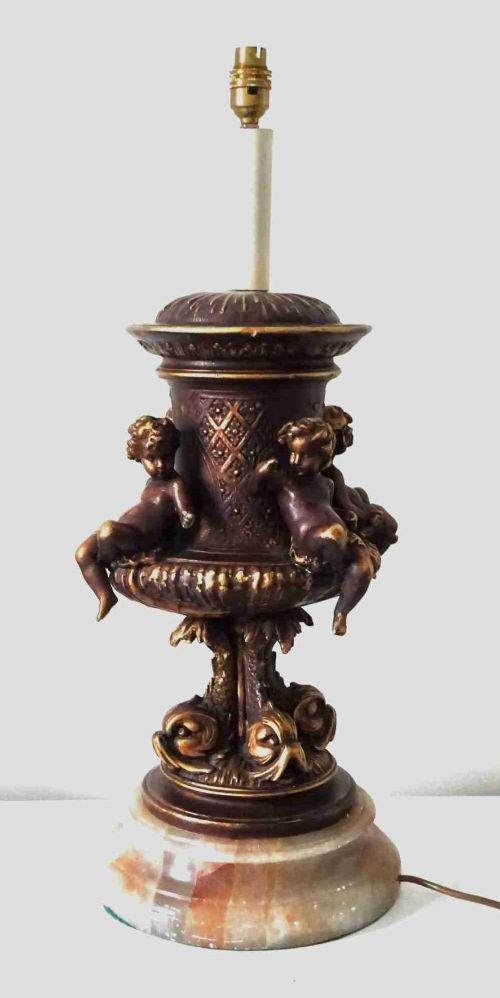
Onyx and Bronze Lighting
Onyx and bronze lighting pieces are substantial decorative fixtures combining carved stone with cast metal, highly sought after for bringing classical presence to an interior.
Onyx and Bronze Lighting
Onyx and bronze lighting encompasses a range of domestic illuminating objects and candleholders produced largely during the nineteenth and early twentieth centuries. When you examine this search phrase, you encounter table lamps, candlesticks, and candelabra that frequently pair natural stone with cast metal mounts.
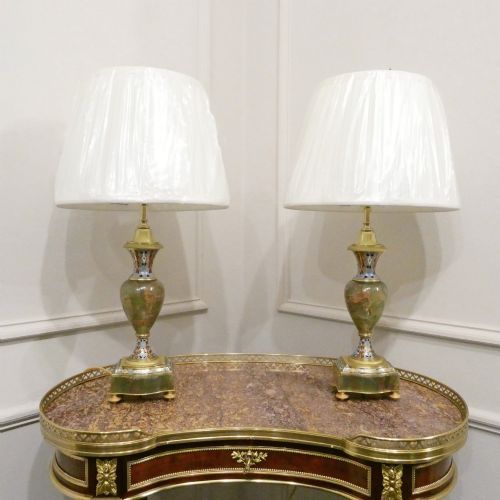
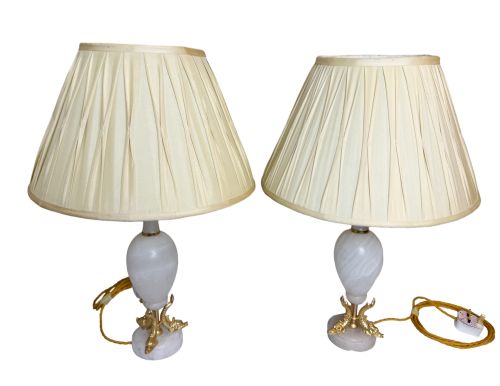
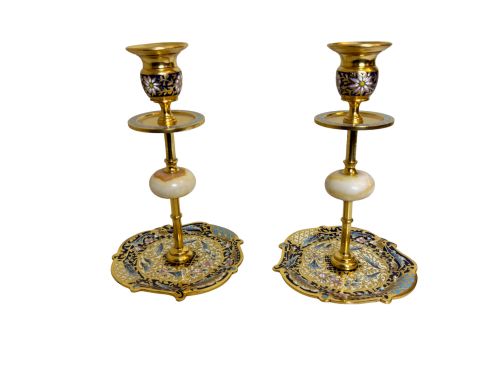
The objects available on this page lean heavily towards French origins, spanning decorative styles from French Neoclassical and Rococo Revival to Art Deco. Pairs of table lamps and candelabra dominate the selection, often incorporating gilt bronze, ormolu, or champlevé enamel alongside the characteristic banded stone.
How they were made
Makers shaped natural onyx and marble into columns, urns, and bases, turning the stone on lathes and finishing surfaces by hand. This stone body was then combined with cast bronze, brass, or ormolu mounts, secured with threaded metal rods running through the centre of the object.
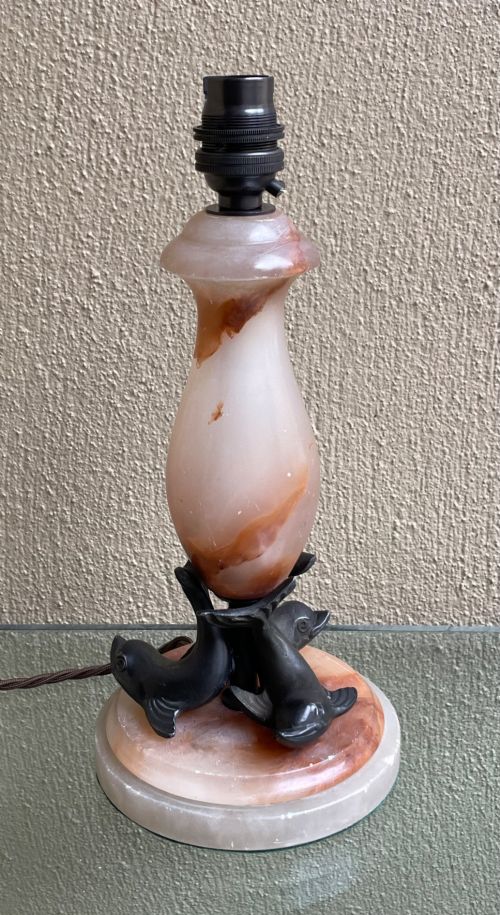
Metal components were cast using traditional methods, then chased and gilded or given a warm bronze patina. Decorative elements such as champlevé enamel or carved figures like cherubs and dolphins were integrated into the metalwork before final assembly.
Listings span periods from the 1860s Victorian era through to Art Deco designs of the 1930s, uniting stone and metal.
What varies in quality
Quality in these pieces rests primarily on the crispness of the metal casting and the depth of the stone. Finer examples show sharp chasing on ormolu mounts and rich, translucent banding in the onyx rather than flat, opaque surfaces.
The weight and integration of the materials also dictate the standard of the piece. Superior items demonstrate a tight, secure fit between the heavy stone sections and the bronze mounts, with harmonious proportions rather than clumsy assemblage.
The Onyx and Bronze Lighting Glossary
- Ormolu
- Gilded bronze, where a gold-mercury amalgam is applied to cast bronze and heated. This technique creates a durable, warm metallic finish common on nineteenth-century French pieces.
- Champlevé
- An enamelling technique where troughs or cells are hollowed out of the metal surface and filled with vitreous enamel powder before firing. It adds vibrant colour detail to bronze mounts.
- Candelabra
- A branched candlestick designed to hold multiple candles or fitted later for electricity. They often match the height and decorative vocabulary of accompanying table lamps.
- Cassolette
- A decorative vessel shaped like a vase, often featuring a reversible lid that functions as either a burner or a solid finial. These frequently form the bodies of finer table lamps.
Onyx and Bronze Lighting: Frequently Asked Questions
Are these lamps originally wired for electricity?
Most pieces originating from the nineteenth and early twentieth centuries were originally made for candles or oil, and were converted to electricity at a later date. Conversion methods vary, with some retaining older internal wiring paths while others have been updated for modern safety standards.
Buyers should inspect the cord exit points and socket assemblies to understand how the conversion was executed. Professional rewiring is often undertaken to ensure the fixtures meet contemporary electrical requirements.
How do I clean onyx and bronze?
Onyx is a relatively soft and porous stone that can be damaged by acidic cleaners, alcohol, or excessive water. Dusting with a soft, dry cloth is usually sufficient for regular maintenance.
Bronze and ormolu mounts should likewise be kept free of moisture and harsh polishes that can strip the original patination or gilding. A gentle wipe with a dry microfibre cloth protects both the metal surfaces and the adjacent stone.
Can I find matching pairs?
Pairs are a common feature in this category, particularly among French candelabra and table lamps produced for grand salons. Matching sets share identical casting moulds, stone turning profiles, and decorative mounts.
Checking the dimensions and minor casting variations helps confirm that two pieces originated as a dedicated pair. Even so, slight hand-finished differences are normal in antique metalwork and stone.
How do I identify French pieces?
French production from periods such as the Second Empire or the Third Republic is typically recognised through specific stylistic markers and foundry techniques. The use of elaborate ormolu mounts, champlevé enamel, and classical motifs like Corinthian columns point directly to French workshops.
Additionally, the choice of materials - pairing translucent onyx with finely chased gilt bronze - aligns closely with Parisian decorative arts of the nineteenth century.