


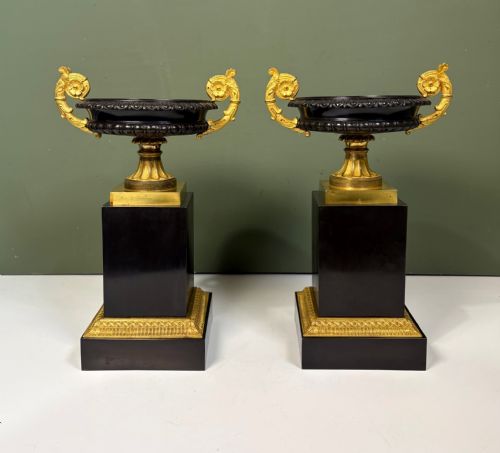


French Classical Centrepiece
A french classical centrepiece anchors a room with architectural dignity, bringing patinated bronze, marble, and gilt metal to a dining table or console.
French Classical Centrepiece
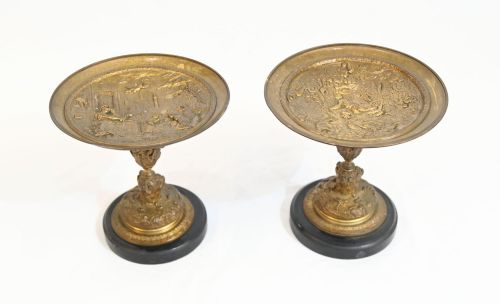
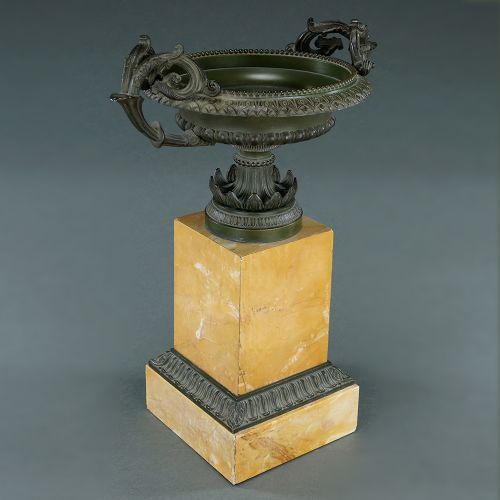
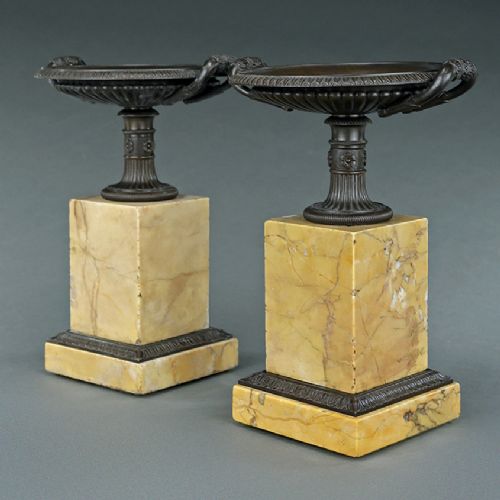
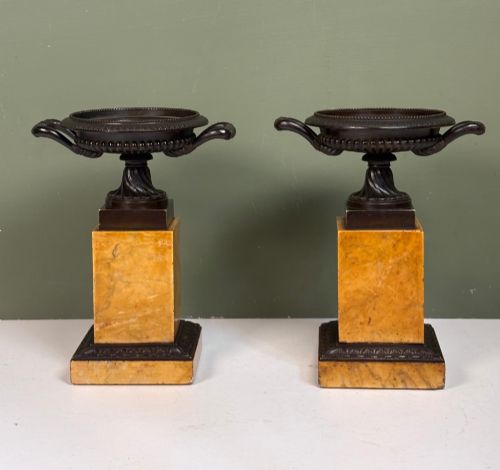
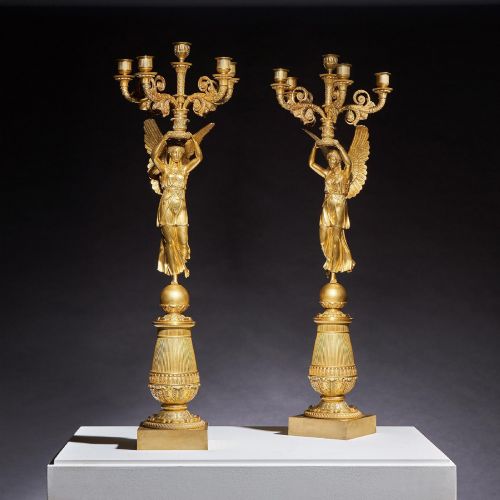
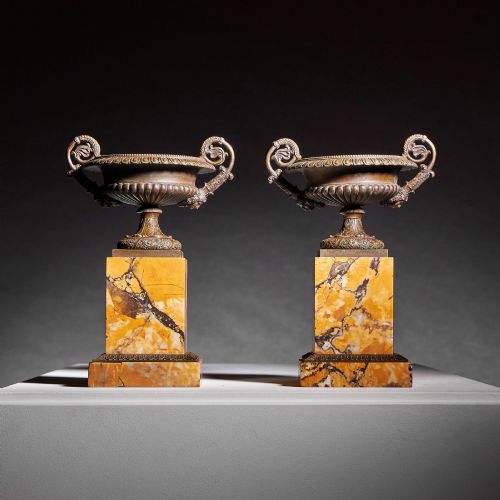
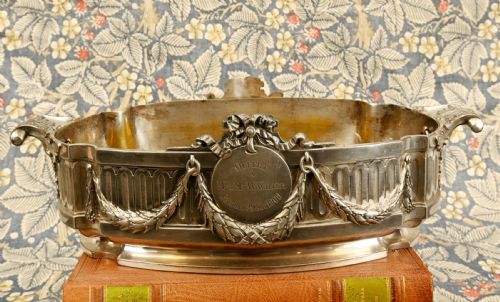
A french classical centrepiece brings together decorative vessels, candelabra, and figural groups shaped by nineteenth-century French tastes and Regency design. These pieces often take the form of tazzas, urns, jardinieres, and silver-plated planters designed to sit prominently in the middle of a room.
The versions most commonly met on this page span the nineteenth century, including Empire, Napoleon III, and later classical revivals. They frequently combine bronze and marble bases with porcelain, enamel, or glass elements.
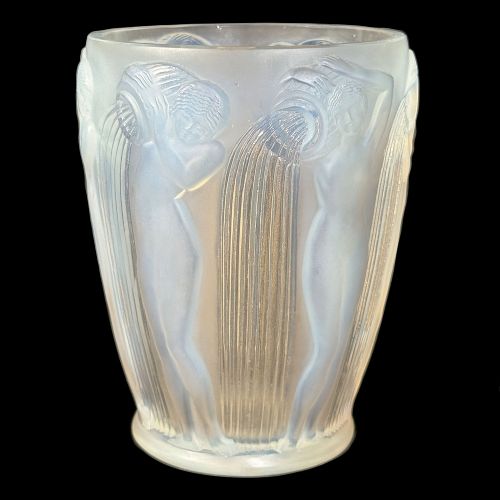
Makers and designers referenced in these works range from classical sculptors to established foundries and artists such as Pierre Philippe Thomire, Lerolle Freres, and R Lalique. Their creations draw heavily on mythological and architectural motifs from antiquity.
Materials and construction
Foundries cast bronze and brass into complex figural and decorative shapes, often applying fire gilt or ormolu to highlight specific details. Ormolu mounts and champleve enamel frequently accent porcelain and glass bodies.
Carved marble, Siena marble, alabaster, malachite, and blue John provide solid, heavy foundations for tazzas and candelabra. Cut glass, pressed glass, and opalescent glass form the bowls and vases of later twentieth-century works.
Listings feature nineteenth-century and early twentieth-century items, spanning the Regency era, Art Deco, and French Empire styles.
Assessing quality and execution
The crispness of the bronze chasing and the depth of the gilding set the standard for sculptural elements and mounts. Finer pieces retain sharp facial expressions and clean botanical motifs without softening from worn moulds.
The choice of stone foundation matters significantly, as dense marbles and inlaid mineral details such as malachite elevate the visual weight and cost of a piece. Original pairing and matching of components across pairs of tazzas or candelabra also determine their standing.
Pierre Philippe Thomire·Lerolle Freres·R Lalique·Sevres
The French Classical Centrepiece Glossary
- Tazza
- A shallow bowl or vase raised on a stem and foot, commonly used as a decorative vessel or centrepiece. They appear frequently in bronze and marble combinations.
- Ormolu
- Gilt bronze produced by applying a mercury and gold amalgam to a bronze object and heating it. This technique creates a durable, warm golden finish seen on nineteenth-century mounts.
- Champleve
- An enamelling technique where troughs or cells are sunk into the surface of metal and filled with vitreous enamel before firing. It decorates surfaces alongside gilt bronze mounts.
- Jardiniere
- An ornamental pot or stand designed to hold plants or floral arrangements, often executed in gilt bronze with cut glass liners.
- Bacchus
- A classical mythological figure associated with wine and revelry, whose imagery frequently inspires Bacchanalian groups and figural bronzes.
French Classical Centrepiece: Frequently Asked Questions
What is a french classical centrepiece used for?
These pieces served primarily as decorative focal points for dining tables, sideboards, and large salon rooms during the nineteenth century. They held fruit, floral displays, or simply stood as sculptural statements of wealth and classical taste.
Today, they function similarly in interior design, anchoring a large dining table, a heavy mahogany sideboard, or a marble fireplace mantel with period character.
How do I distinguish between Empire and later 19th-century pieces?
True Empire pieces reflect the strict military and classical aesthetic of the early nineteenth century, drawing directly on ancient Roman and Greek archaeology. Later nineteenth-century revivals, such as Napoleon III pieces, often combine these classical motifs with more eclectic ornamentation and heavier proportions.
Examining the casting technique, the style of the gilt bronze mounts, and any associated maker signatures helps clarify the exact period of manufacture.
Are these centrepieces always made of bronze?
While bronze and ormolu form the backbone of these listings, many pieces incorporate contrasting materials. You will find combinations featuring Siena marble, alabaster, cut glass, opalescent glass, Majolica porcelain, and champleve enamel.
Stonework and glass provide the structural bowls or bases, while metal components frame and support the primary vessel.
How should I care for ormolu and bronze?
Bronze and ormolu require gentle dusting with a soft, dry cloth to prevent the accumulation of dirt in recessed chasing. Avoid using metal polishes, abrasive cloths, or chemical cleaners, which can strip the thin layer of gold gilt from the surface.
If the piece incorporates marble or glass, clean those specific sections with appropriate non-abrasive solutions while protecting the surrounding metalwork.