
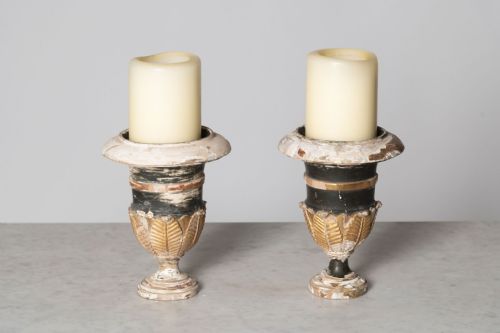
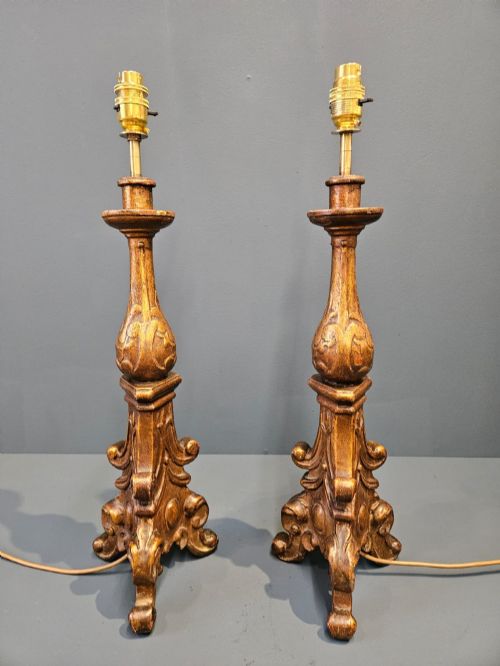


French Classical Candlesticks
French classical candlesticks bring formal symmetry and heavy metalwork to a room, catching candlelight across marble and gilt bronze.

French Classical Candlesticks
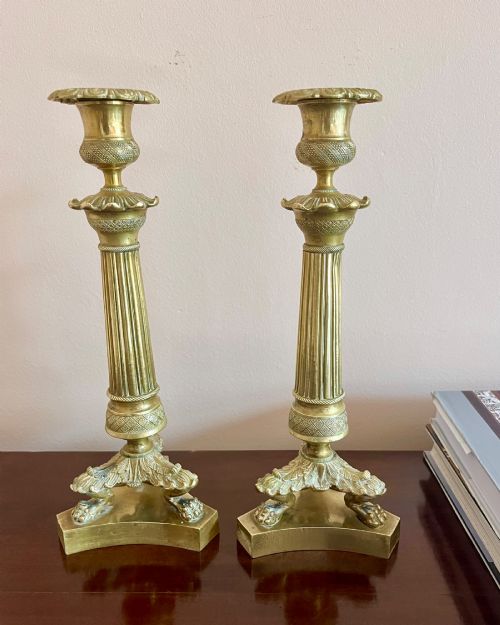
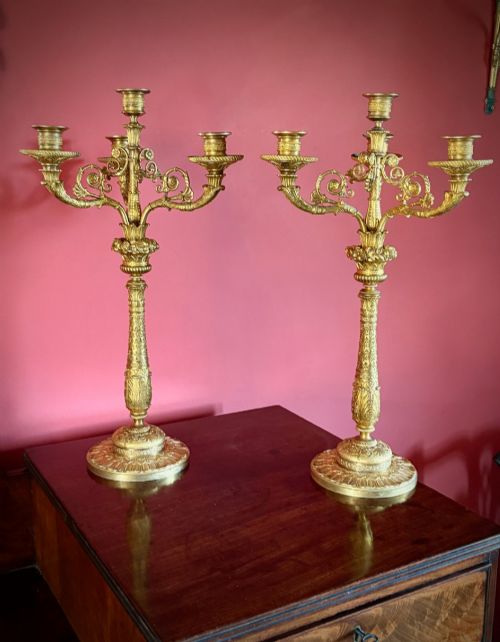
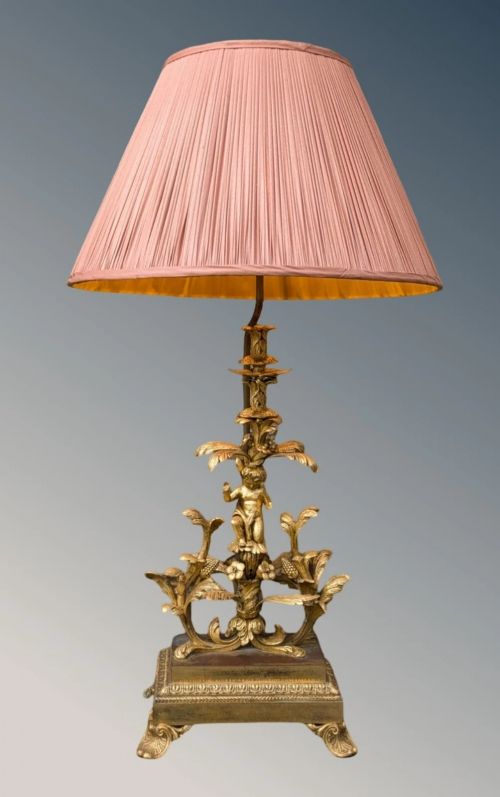
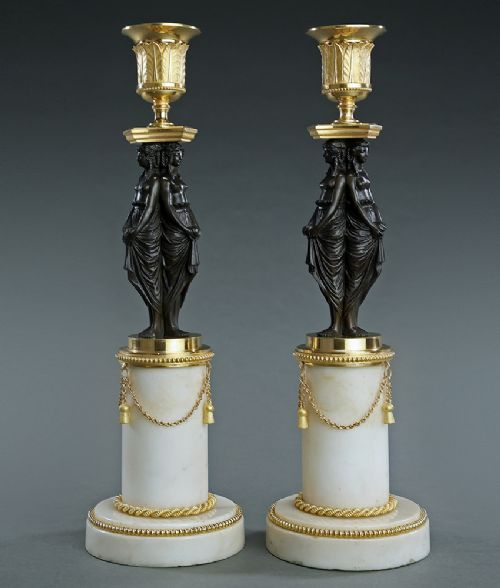
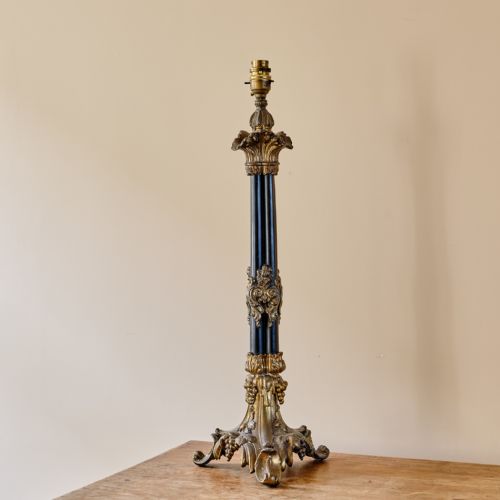
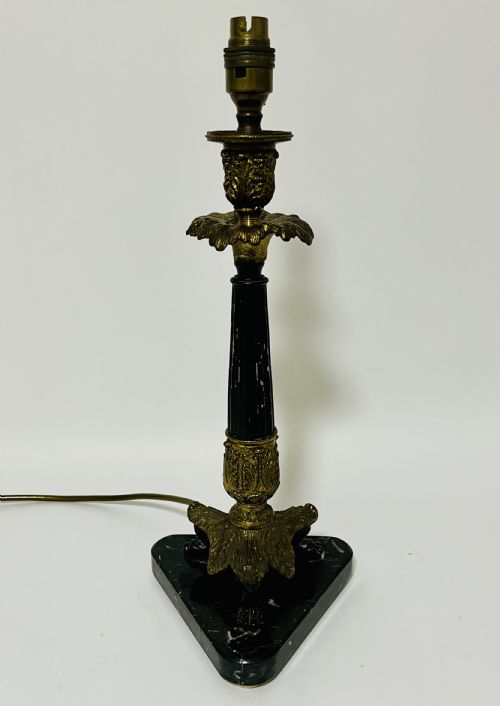
French classical candlesticks encompass heavy metal shaft forms designed to hold candles or adapt into table lamps, appearing frequently as matched pairs from the nineteenth century. Buyers examine pieces shaped by French Empire, Louis XVI, and Regency aesthetics, often featuring figural motifs like cherubs, caryatids, and puttis alongside column designs. These objects emerge from periods spanning the early eighteen hundreds through to the Victorian era and the early twentieth century.
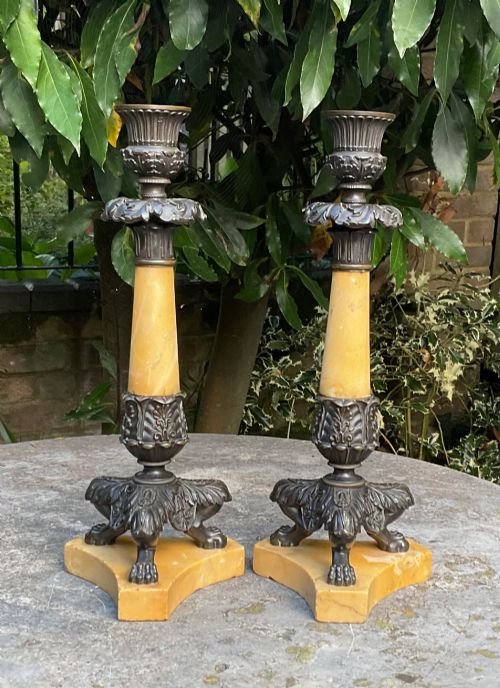
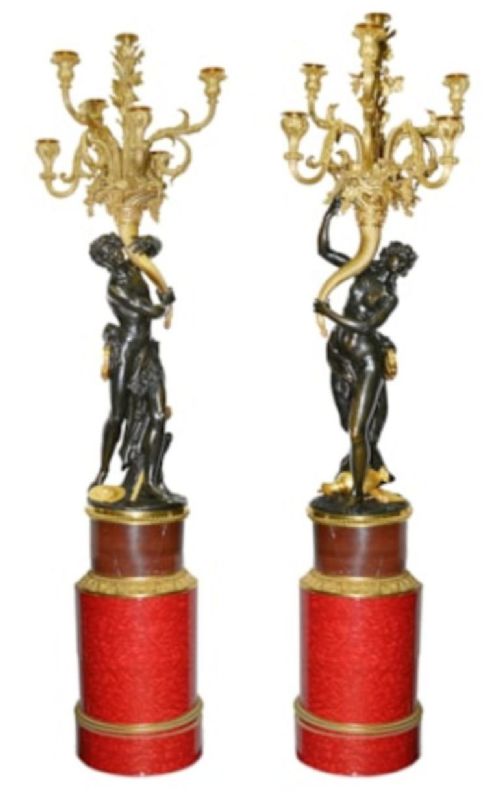
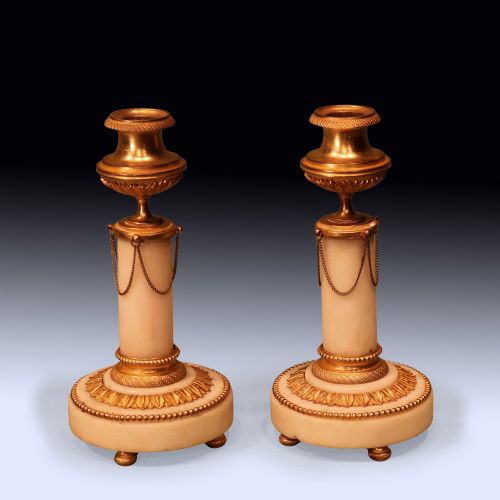
The objects take the form of standard single-light sticks, multi-branched candelabra, and column lamps mounted on solid bases. Many examples integrate stone elements like white marble or onyx beneath cast metal figures, reflecting the architectural taste of their period of origin. Continental workshops produced these items for domestic interiors and Grand Tour travellers, resulting in surviving pairings of patinated bronze and gilded brass.
Materials and construction
Maker workshops utilised metal casting techniques to form bronze, brass, and ormolu components, applying mercury gilding to achieve bright golden surface finishes. Patinated bronze sections provided dark contrast against polished gilt details, while carved giltwood and cast slate appeared in specific regional pieces. Chasing and hand-finishing defined the detailed relief work on figure shafts and drip pans.
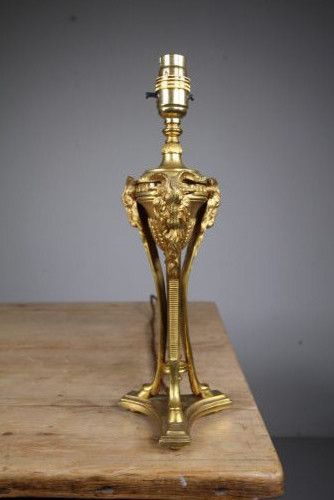
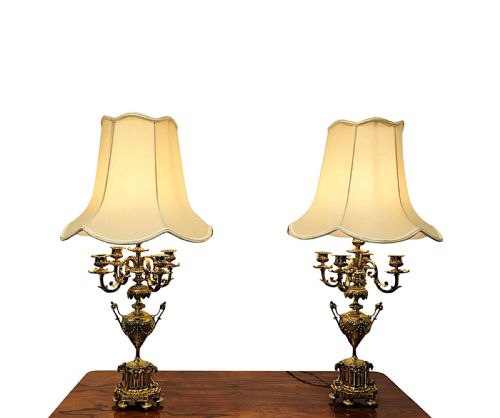
Casting combined with stone masonry to create hybrid supports, mounting metal figures directly onto turned marble or onyx bases. Artisans constructed multi-branch candelabra with removable nozzles and screw-threaded sections to facilitate cleaning and maintenance. Later conversions integrated electrical wiring through the central shafts of antique candleholders to serve as table lights.
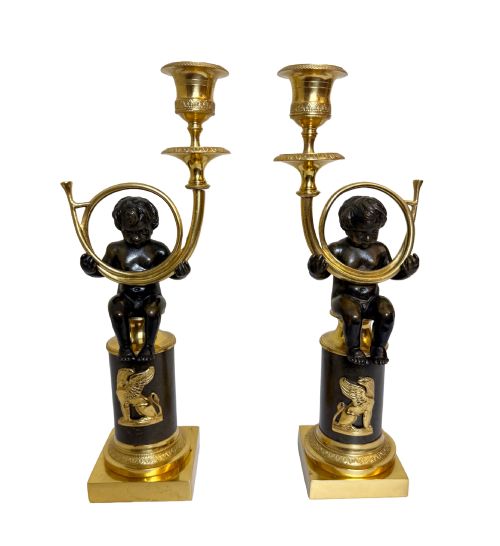
Several pairs feature small bronze puttis holding aloft candle sockets as if determined to light a room with muscular effort.
The standard of craftsmanship
The selection of supporting stone also separates standard items from exceptional ones, with dense white marble and banded onyx indicating higher production costs. Precision in the assembly of multi-part columns and balanced weight distribution demonstrate the skill of the original workshop.
Dugourc
The French Classical Candlesticks Glossary
- Ormolu
- Gilded bronze produced by applying a mercury and gold amalgam to a bronze base and firing it to drive off the mercury. This technique creates a durable, bright golden layer characteristic of fine period metalwork.
- Caryatid
- A sculpted female figure serving as an architectural support column. These figures frequently form the central shaft of classical candlesticks and lamp bases.
- Candelabra
- A branched candleholder designed to hold multiple candles simultaneously. They often feature removable upper branches that convert the piece into a single candlestick.
- Patinated bronze
- Bronze that has been chemically treated to produce a dark, uniform surface colour. This dark finish contrasts sharply with bright gilt bronze mounts.
- Grand Tour
- A nineteenth-century travel itinerary through continental Europe undertaken by affluent individuals. Travellers routinely acquired classical bronzes and architectural souvenirs during these journeys.
French Classical Candlesticks: Frequently Asked Questions
How do I wire a candlestick for a lamp?
Conversion typically involves passing a cord through the existing central aperture of the shaft without drilling new holes into the antique metal. Professional electricians use brass shade holders that fit securely into the original candle socket.
Retaining the original components ensures the piece can be returned to its non-electrified state if desired.
Are these pieces made of solid gold?
No, the golden surfaces consist of ormolu, which is a layer of gold applied to an underlying bronze or brass base through mercury gilding. This technique provided the visual richness of solid gold while utilising less precious materials.
Over the decades, careful cleaning preserves this delicate metallic layer without wearing away the gold.
How do I tell Empire style from Louis XVI?
Louis XVI pieces generally display lighter, straighter neoclassical lines with restrained floral and classical motifs. Empire designs tend to appear heavier and more monumental, incorporating military symbols and bold figural supports like caryatids.
Examining the base and the weight of the metal helps confirm the design vocabulary of the period.
Can I polish ormolu and bronze safely?
Aggressive metal polishes strip away thin layers of mercury gilding and ruin the historic surface of ormolu. Warm water and a soft cloth remove dust safely without harming the antique finish.
Preserving the natural age patina maintains the visual depth valued by collectors.