




French Church Lighting
French church lighting brings ecclesiastical grandeur into domestic interiors through centuries of devotional metalwork and carved timber.
French Church Lighting
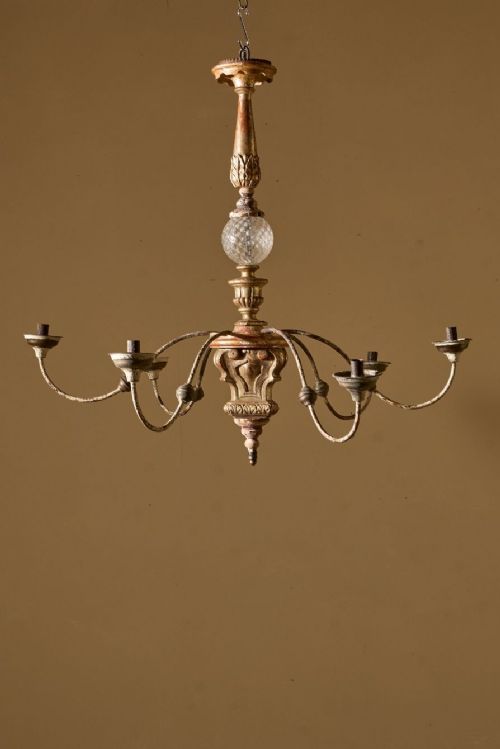
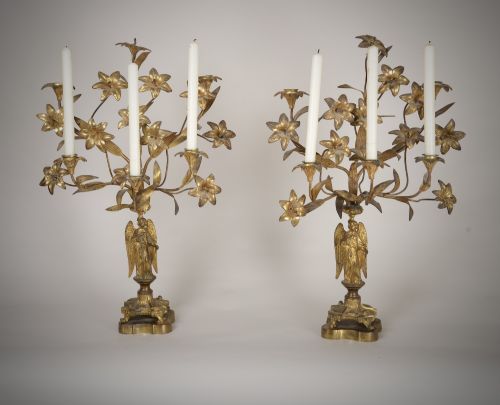
French church lighting encompasses altar lamps, pricket sticks, chandeliers, and candelabra designed for sacred spaces. These pieces span the eighteenth and nineteenth centuries, drawing on Gothic revival, baroque, and rustic European traditions.
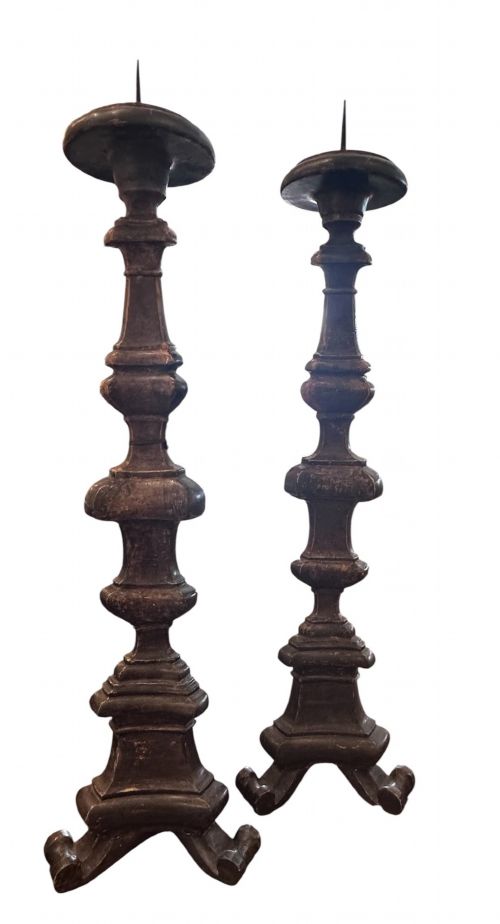
The most common forms on this page are candlesticks and table lamps adapted from liturgical prickets. They bring heavy ecclesiastical presence and sculptural height to residential settings.
How they were made
Metal items rely on brass, bronze, and silver plating formed into heavy altar pieces and pricket sticks. Many feature patinated surfaces that reveal decades of handling and liturgical use.
Wooden examples utilise carved timber, gesso, and giltwood or silver leaf application. Artisans shaped structural elements by hand, giving each piece distinct asymmetry and texture.
Several prickets still bear the faint, uneven drips of old wax left behind by midnight services centuries ago.
What varies in quality
Quality rests in the depth of the hand-carving on wooden supports and the substantial weight of the cast brass or bronze. Superior items retain their original gilding or silver leaf rather than later overpainting.
Proportion and structural integrity dictate the standing of a piece. Better examples maintain balanced silhouettes without excessive restoration to their prickets or bases.
The French Church Lighting Glossary
- Pricket
- A sharp metal spike on a candlestick designed to secure a candle by its base. This form is common on traditional altar pieces.
- Giltwood
- Timber treated with a thin layer of gold leaf or gesso and gold paint. It provides a luminous surface for ecclesiastical furnishings.
- Candelabra
- A branched candlestick holding multiple lights. These pieces often feature ornate arms and heavy bases.
- Altar lamp
- A hanging or standing lamp used in sanctuary spaces. They were designed to burn oil during religious services.
French Church Lighting: Frequently Asked Questions
How do I wire a church candlestick lamp?
Most converted lamps use discreet internal wiring running up through the central column. A professional electrician can ensure the fitting preserves the original timber or metal structure.
Placement requires careful consideration of the height. These pieces dominate a room and suit side tables or sideboards rather than small surfaces.
What is a pricket stick?
A pricket stick uses an upward-pointing spike instead of a socket to hold the candle. This design harks back to early liturgical customs.
Using these requires candles with a pre-drilled base or wide diameter. They sit firmly upon the metal point during burning.
How do I clean giltwood and brass?
Giltwood requires gentle dusting with a soft brush to protect the delicate leaf finish. Avoid moisture or chemical cleaners on antique surfaces.
Brass benefits from leaving its aged patina untouched. Heavy polishing destroys the historical character built up over generations.
Are these pieces strictly French in origin?
The selection centres primarily on French ecclesiastical styles, though continental influences appear across various listings. Regional workshops shared similar baroque and Gothic revival patterns.
Construction techniques help identify the origins through specific timber choices and casting methods. Each piece reflects the liturgical aesthetic of its period.