
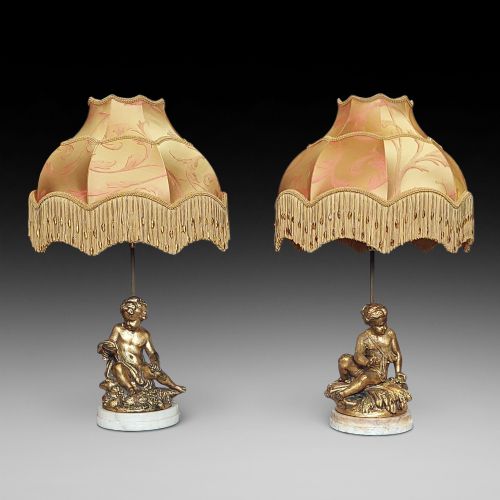


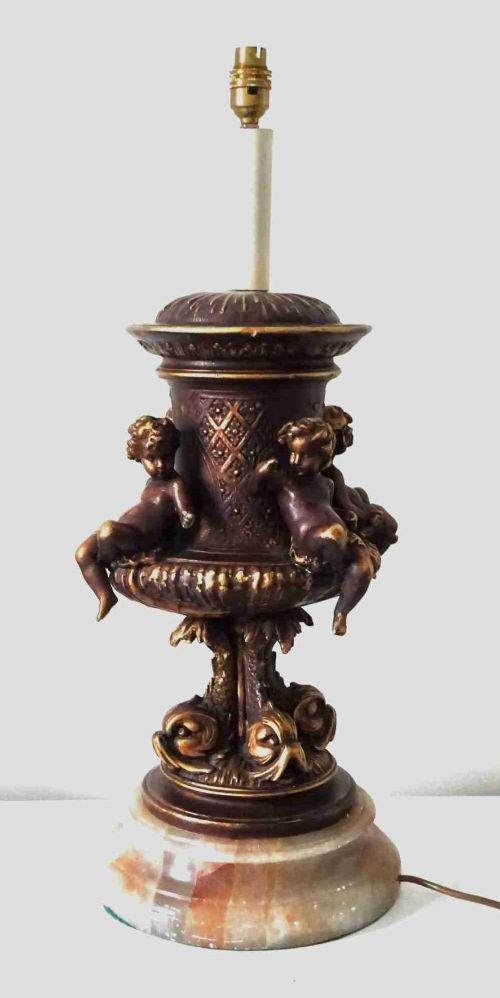

Gold Metal Lamp Base
A gold metal lamp base brings immediate warmth to a room, offering both sculptural presence and functional lighting through enduring metallic finishes.
Gold Metal Lamp Base
A gold metal lamp base provides a solid foundation for interior illumination, appearing across periods from the Victorian era into the early twentieth century. When searching for a gold metal lamp base, buyers encounter table lamps and lamp bases shaped by various historical revivals.
The selections available here span diverse regional origins and decorative vocabularies, including French Louis XVI and Rococo Revival designs. These pieces range from substantial classical urns to more intimate sculptural figures featuring cherubs and dolphins.
Victorian, Edwardian, and nineteen-twenties examples dominate the selection, often incorporating contrasting materials alongside the metallic structure. Buyers frequently find paired sets alongside singular statement objects suitable for side tables and desks.
How they were made
Constructed using traditional foundry and metalworking methods, these items utilise brass, bronze, or cast metals finished with gilding, ormolu, or pressed brass techniques. Artisans shaped these metallic components through casting and detailed chasing before applying surface treatments.
Many examples integrate natural stone bases, combining marble, onyx, or alabaster to add weight and visual contrast beneath the metalwork. Fabric elements occasionally complete the original assembly, though many survive as bases ready for modern shades.
Dolphins make an unexpected appearance alongside cherubs, swimming in gilded metal rather than the sea.
What varies in quality
Material combination and structural weight also differentiate the pieces, with solid cast bronze and heavy ormolu mounts sitting above lighter pressed brass constructions. The integration of high-grade marble or alabaster plinths further signals a higher standard of manufacture.
The Gold Metal Lamp Base Glossary
- Ormolu
- Gilded bronze, where a finely ground gold-mercury amalgam is applied to a bronze object and heated to drive off the mercury. This technique creates a durable, rich golden surface typical of fine French decorative arts.
- Gilt metal
- A base metal treated with a gold-coloured coating, leaf, or wash to simulate solid gold or heavy ormolu. It provides a bright metallic finish at a different manufacturing scale.
- Alabaster
- A fine-grained, translucent stone often used for sculptural elements and lamp bodies. It allows subtle light diffusion when positioned near illumination.
- Rococo Revival
- A nineteenth-century design movement favouring asymmetrical scrollwork, naturalistic curves, and ornate shell motifs. It draws inspiration from earlier eighteenth-century French decorative styles.
- Toleware
- Painted or lacquered sheet metal items, frequently finished in dark colours to contrast with gilt highlights. This material appears on specific neoclassical and empire-style lighting fixtures.
Gold Metal Lamp Base: Frequently Asked Questions
What periods do these lamps come from?
The available lighting spans from the nineteenth century through the Edwardian period and into the nineteen-twenties. These dates reflect popular revival styles current during those decades.
Manufacturing methods and decorative motifs generally align with the prevailing taste of each specific era, ranging from heavy Victorian bronze to lighter Edwardian pressed brass.
Are these lamp bases sold in pairs?
Certain listings offer matched pairs, while others consist of single standalone pieces. Pairs typically originate from grander domestic settings where symmetrical mantelpiece or sideboard lighting was preferred.
Single bases usually function effectively as accent lighting on smaller tables or desks.
What materials are combined with the metal?
Many designs incorporate stones such as marble, onyx, and alabaster to provide substantial weight and textural contrast. Fabric elements also appear on surviving examples.
These secondary materials complement the metallic structure and influence the overall visual balance of the object.
How do I identify a French style piece?
French influence often manifests through specific aesthetic movements such as Louis XVI, Empire, or Rococo Revival. These styles typically feature classical urn shapes, cherubic figures, or structured architectural mounts.
Ormolu finishes and finely chased bronze details also point directly toward continental European workshops of the nineteenth century.