






Ecclesiastical Candlestick Lamp
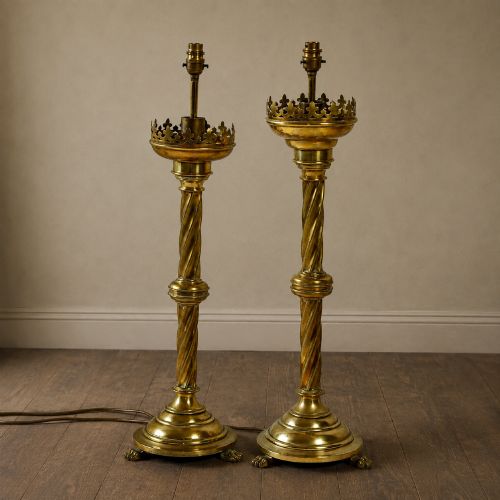
An ecclesiastical candlestick lamp brings devotional height and ritual presence into a room, fashioned from altar metalwork and carved wood.
Ecclesiastical Candlestick Lamp
When you search for an ecclesiastical candlestick lamp, you encounter repurposed church lighting spanning the eighteenth, nineteenth, and early twentieth centuries. These pieces originate from chapels and sanctuaries, carrying the formal weight of Gothic Revival, Baroque, and Neoclassical design into domestic interiors.
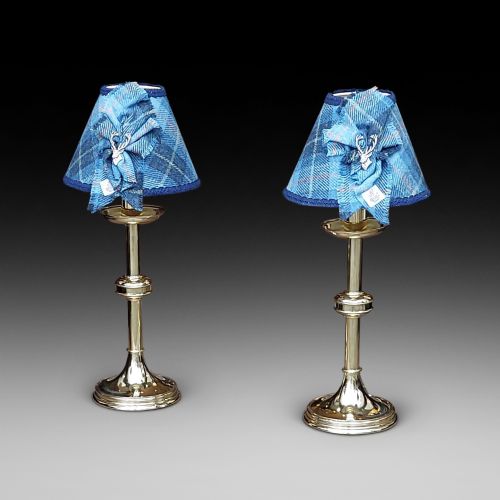
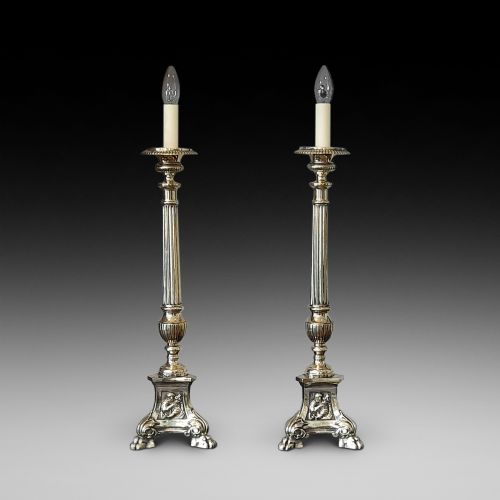
The most common examples on this page are heavy nineteenth-century brass and giltwood altar sticks adapted as table lamps. You also find silver-plated, bronze, and opaline glass variants, standing as single columns or matched pairs ready for modern wiring.
Formations include tall pricket sticks with spikes that once held large wax tapers, alongside grander candelabras and stepped candlestands. Their conversion from sacred vessels to functional lighting preserves centuries of religious metalwork and carving for everyday use.
Materials and construction
Foundries cast these pieces in heavy brass, bronze, and ormolu, often applying silver plating or gilding over gesso and wood. Giltwood altar pieces rely on carved timber foundations coated in gold leaf, showing hand-chiselled detail beneath the metallic surface.
Makers constructed structural elements in sections, threading stems onto weighted bases to support the vertical thrust of tall candlesticks. Later electrical conversions integrate discreet cord pathways through the original pricket spikes or central columns without destroying the historical fabric.
Some conversion lamps still retain faint traces of altar wax lodged deep inside the decorative drip pans from centuries of Sunday mass.
Evaluating quality and proportion
The distinction between ordinary and exceptional pieces lies in the crispness of the original casting and the depth of the gilding. Finer examples retain sharp architectural details in their Gothic tracery or Baroque scrolling, while lesser pieces show smoothed edges and blunt chasing.
Proportion and material integrity dictate the overall presence of a lamp, particularly in matched pairs where balance is essential. Heavy solid brass and deeply carved giltwood command attention through sheer heft and untouched surface patination.
The Ecclesiastical Candlestick Lamp Glossary
- Pricket stick
- A candlestick featuring an upward-facing metal spike designed to impale the base of a large wax candle. This form dominates early church altar lighting.
- Giltwood
- Timber that has been coated with a thin layer of gold leaf over a prepared gesso ground. It provides a luminous surface for Spanish and French altar pieces.
- Ormolu
- Finely chased and gilt bronze used primarily in decorative mounts and French ecclesiastical objects. The technique creates a rich, matte gold appearance.
- Gothic Revival
- An architectural and decorative style drawing on medieval ecclesiastical forms, featuring pointed arches and trefoils. It defines the majority of nineteenth-century brass altar pieces on this page.
- Altar candlestick
- A tall, stable lighting standard placed upon or near a church altar during liturgical services. Their substantial height makes them ideal for conversion into table lamps.
Ecclesiastical Candlestick Lamp: Frequently Asked Questions
How do I wire an antique candlestick lamp?
Most conversions utilise a brass adapter fitted neatly to the top pricket or socket without drilling through the primary antique metalwork. This preserves the structural integrity of the base while allowing safe modern routing.
Professional electricians can run internal cords through the central channel if the piece permits, or use discreet external wiring held with sympathetic clips along the back.
How do I date a brass altar lamp?
Dating relies on stylistic clues such as the severity of Gothic Revival tracery, the complexity of Baroque casting, and the construction methods visible beneath the base. Nineteenth-century pieces often display heavier sand-cast brass components and threaded joinery.
Examining the wear patterns on the metal or gilding helps separate nineteenth-century production from later twentieth-century revivals and adaptations.
Are these lamps sold as pairs?
Listings feature both individual altar sticks and matched pairs salvaged from church sanctuaries. Pairs are particularly sought after for balancing sideboards, mantels, or large console tables.
Single lamps usually originate from grander altar arrangements or multi-piece candelabras where survivors were separated over centuries of use.
How do I clean a giltwood lamp base?
Cleaning requires a soft, dry ostrich feather duster or a gentle microfiber cloth to remove surface dust without disturbing delicate gold leaf. Moisture and chemical solvents must be avoided entirely to prevent lifting the gesso and gilding.
Preserving the original aged patina ensures the antique surface retains its historical depth and character.