

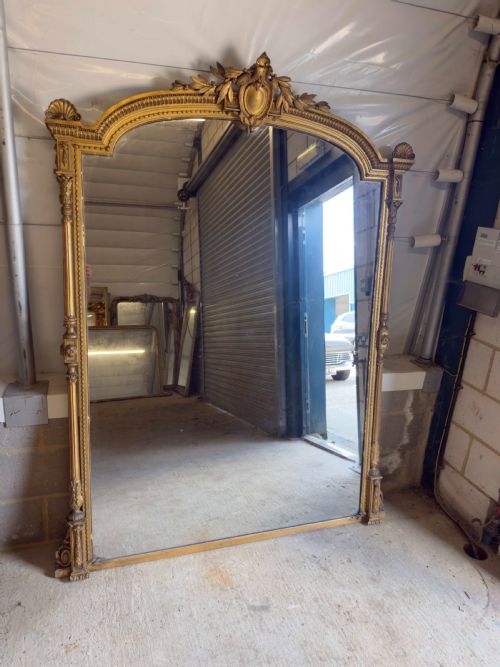
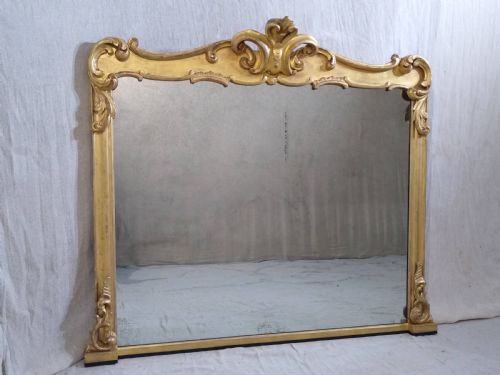


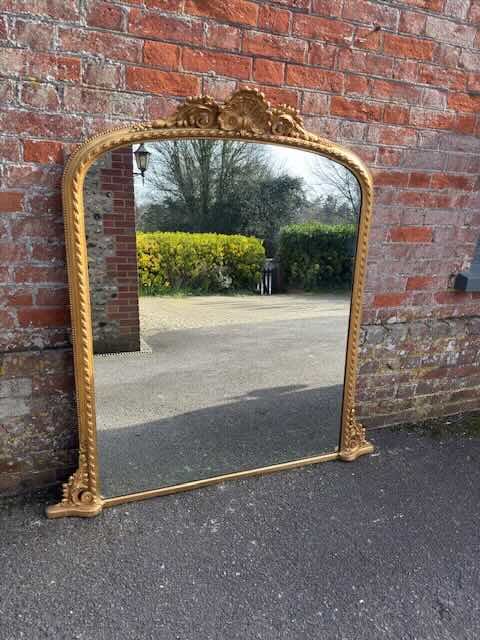


French Chimney Glass
These large architectural glasses, searched as french chimney glass, frame the domestic hearth with generous nineteenth-century scale and light.
French Chimney Glass
A french chimney glass typically takes the form of a substantial overmantle or wall mirror designed to sit directly above a fireplace opening. The pieces recorded here span the nineteenth century, including specific decades such as the eighteen-fifties, sixties, seventies, eighties, and nineteen-hundreds, alongside Victorian periods.
Most examples appear as large formats with arched tops, shaped crests, or rectangular frames intended to reflect light back into the room. Variations include giltwood, painted finishes, and decorative columns or rope-twist details within the framework.
Materials and construction
Carved wood provides the structural framework for these mirrors, frequently layered with gesso to build up delicate surface reliefs and mouldings. Artisans then applied gold leaf, metallic finishes, or paint directly onto the prepared wooden substrate.
Mirror glass is fitted within the heavy frames, sometimes accompanied by floral embossed details, etched sections, or composite ornamentation. Structural woods like oak also appear alongside softer timbers to support the substantial weight of the overmantle pieces.
Listings feature nineteenth-century dates ranging from eighteen-fifty to nineteen-hundred, alongside Victorian and French chateau styles.
Judging the execution
Quality rests in the crispness of the carved wood and gesso ornamentation, where deeply defined scrollwork and clean architectural lines distinguish superior work from softer castings. The preservation of the original gilding or paint surface heavily influences the integrity of the piece.
The weight and depth of the timber frame indicate the structural ambition of the maker, while the clarity and retention of the original mirror glass plate contribute to the overall visual balance.
The French Chimney Glass Glossary
- Overmantle
- A large mirror specifically proportioned to hang on the wall directly above a fireplace mantelpiece. These pieces frequently feature horizontal or vertical grandeur to dominate the chimney breast.
- Gesso
- A plaster-like mixture applied to wood frames to create a smooth surface for gilding or painting. It allows craftsmen to model intricate relief decorations and floral motifs.
- Giltwood
- Timber that has been coated with gold leaf or metallic powder to give a rich, reflective golden appearance. It forms the primary visual finish for many nineteenth-century frames.
- Rococo Revival
- A nineteenth-century decorative style inspired by the asymmetrical curves, scrolls, and naturalistic shell motifs of the eighteenth-century French movement. This aesthetic defines many ornate mirror frames on the page.
- Trumeau
- A decorative wall mirror, often incorporating painted panels or carvings above the glass plate. These items bring distinct continental proportions to interior spaces.
French Chimney Glass: Frequently Asked Questions
Where should an overmantle mirror hang?
These mirrors traditionally sit directly above the fireplace mantelpiece, anchored securely to the wall to bear the substantial weight of the timber and glass frame.
They also function effectively along principal wall spaces in large rooms where their generous scale can reflect natural light.
How do I date a nineteenth-century mirror?
Dating relies on examining the construction methods of the wooden frame, the composition of the gesso, and the style of the decorative motifs such as columns or rope twists.
Specific design traits like Rococo revival curves or neoclassical symmetry provide further clues to the decade of manufacture.
Are the mirror plates original?
Many nineteenth-century frames retain their original mirror glass, which often exhibits subtle foxing, age spots, and soft reflections.
Replacements do occur over long periods of domestic use, so inspecting the silvering helps determine the age of the glass itself.
How do I care for giltwood frames?
Giltwood surfaces require gentle dusting with a soft, dry brush to prevent the accumulation of particles within the carved gesso crevices.
Avoid liquid cleaners and moisture, as water can lift the delicate gold leaf and historical preparation layers from the wood underneath.