

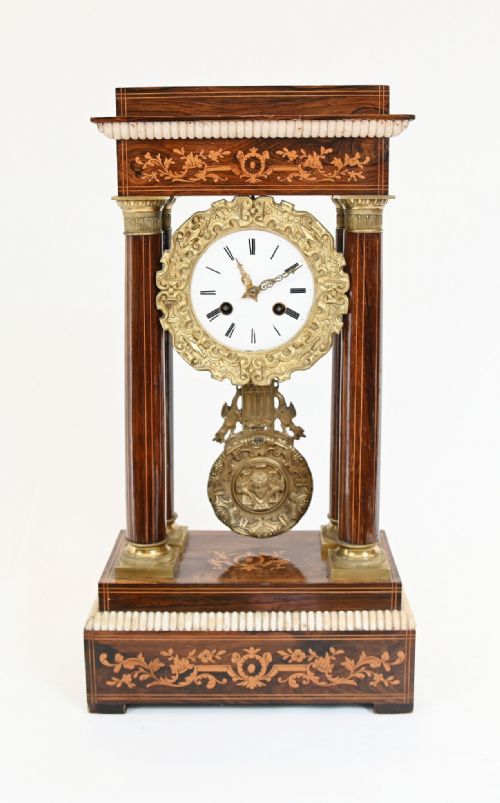


French Chiming Mantel Clock
These French chiming mantel clock examples combine precise mechanical movement with ornate nineteenth-century styling, offering both striking performance and decorative presence for the home.
French Chiming Mantel Clock
A french chiming mantel clock sits on a fireplace surround, sideboard, or bracket shelf, recording time while sounding the hours and quarters across the room. These pieces span the nineteenth century, with Victorian examples and various Revival styles dominating the selection.
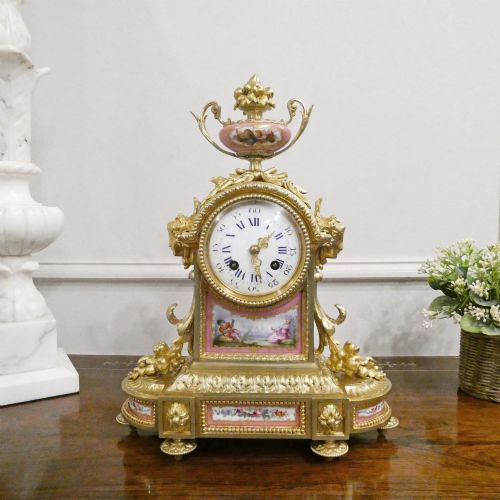
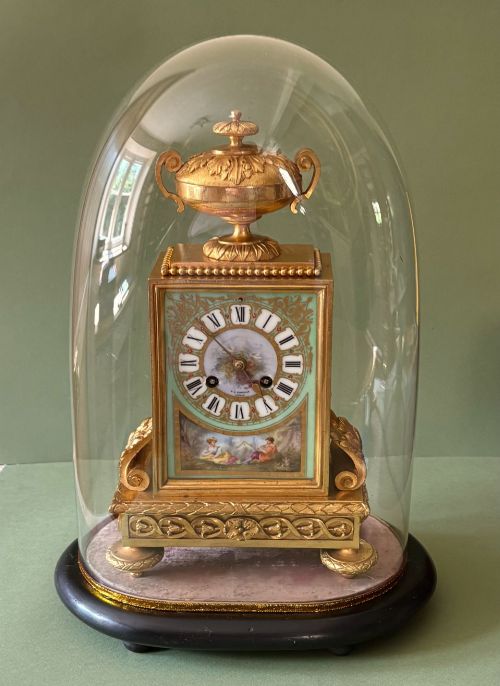
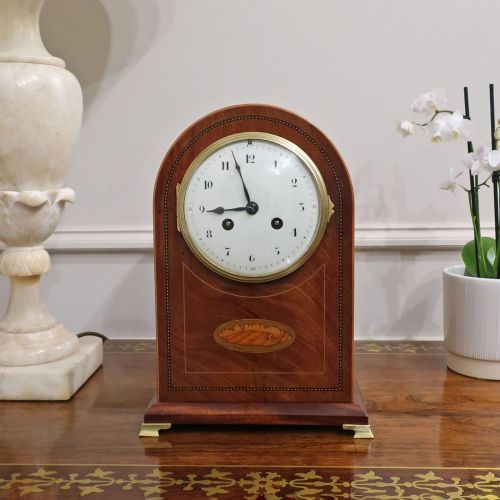
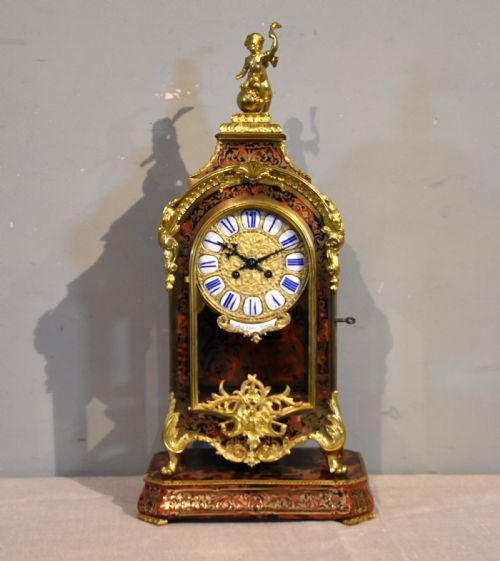
The form appears in several distinct designs, from classic marble and slate architectural cases to elaborate gilt bronze, ormolu, and porcelain mounts. Buyers encounter everything from tall portico clocks to heavy slate bodies and Boullework marquetry.
Originating largely from French workshops and Parisian makers during the 1800s, these clocks reflect distinct decorative movements such as Louis XV and Louis XVI revivals, Belle Epoque elegance, and later Art Deco interpretations.
Distinctions in quality
The refinement of the casting and chasing on bronze, ormolu, and gilt brass mounts separates standard production from superior output. Crisp detailing in floral garlands, figural mounts, and architectural bezels indicates skilled hand-finishing.
The integration of materials determines overall weight and visual balance, particularly where porcelain plaques, enamel dials, and marquetry veneers meet stone or metal carcasses. Complex movements offering repeating carriage functions or grande sonnerie chiming represent advanced horological ambition.
Materials recur across multiple decades, pairing slate, white marble, and black marble with ormolu, gilt bronze, porcelain, and glass.
Japy Freres·Achille Brocot & Delettrez·Savory & Fils A Paris·Malecot of Paris
The French Chiming Mantel Clock Glossary
- Ormolu
- Gilded bronze, where a layer of gold amalgam is applied to a bronze base through heat processing. This technique yields a warm, durable metallic finish common on luxury French cases.
- Boulle
- A form of marquetry developed in France utilising tortoiseshell and brass inlay, named after cabinetmaker André-Charles Boulle. It creates striking contrasting patterns across wooden cases.
- Grande Sonnerie
- A complication in striking clocks that sounds both the hours and the quarters automatically on every quarter hour. It represents an advanced level of horological engineering.
- Portico clock
- A clock design modelled after classical architectural porticos, featuring supporting columns and a suspended pendulum swinging centrally. These pieces often date from the early nineteenth century.
- Porcelain mount
- Ceramic panels or dial surrounds, frequently associated with Sevres aesthetics, painted with floral or figural scenes and glazed. They provide colourful contrast against gilt bronze and marble.
French Chiming Mantel Clock: Frequently Asked Questions
How do I wind a french chiming mantel clock?
Winding requires inserting the appropriate key into the designated winding arbours on the dial face. Care must be taken not to overwind the mainsprings.
Clocks featuring chiming or striking trains usually possess separate arbours for timekeeping and sound functions. Each must be wound evenly to maintain accurate timing and correct acoustic output.
Where should I place a heavy marble mantel clock?
These pieces require a sturdy, level surface capable of supporting considerable weight, particularly specimens built from slate or marble. A firm mantelpiece or low sideboard provides ideal stability.
Placement should avoid areas exposed to direct sunlight, heavy drafts, or damp conditions, as temperature fluctuations can affect the wooden cases and delicate internal oils.
How do I identify a Louis XV style clock?
Louis XV style pieces exhibit characteristic asymmetry, scrolling foliage, and organic rococo curves inspired by nature. Gilt bronze mounts often cascade down the sides of wooden or marble carcasses.
Unlike rigid classical symmetry, these designs favour flowing lines and playful cartouche shapes around the enamel dial, reflecting mid-nineteenth-century revivals of eighteenth-century French aesthetics.
What is the difference between a striking clock and a chiming clock?
A striking clock sounds the exact hour count on a bell or gong when the hand reaches the top of the hour. Some models also strike once on the half-hour.
Chiming clocks play a short musical melody or multiple tones on quarters and hours, utilising more complex internal gear trains to execute the sequence.