
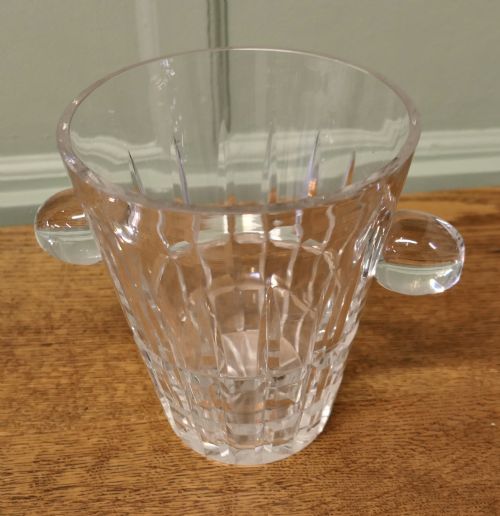
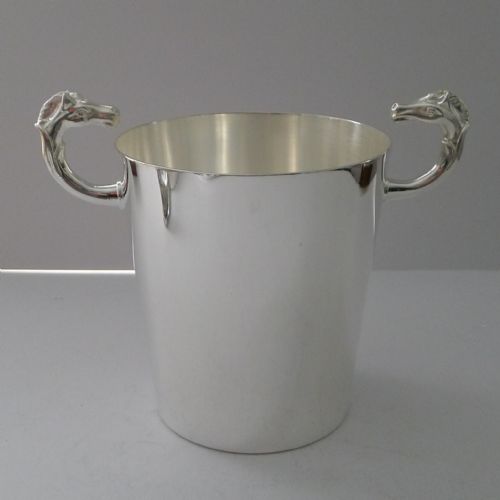
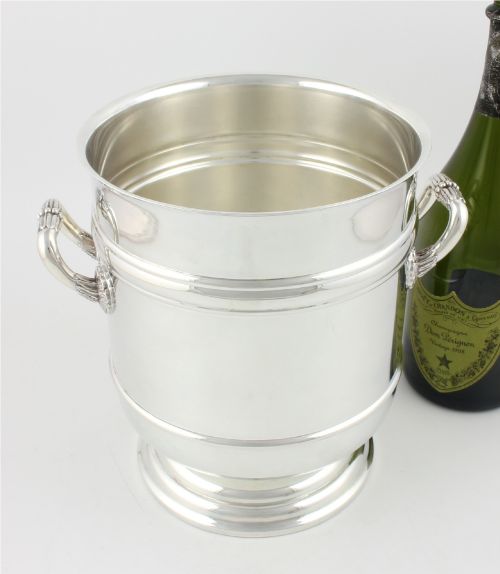
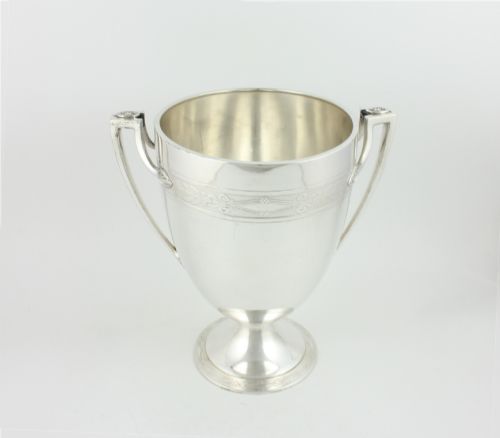


French Champagne Cooler
A french champagne cooler brings unmistakable tableside theatre, designed to chill fine bottles while anchoring a room with polished silver plate and sculptural form.
French Champagne Cooler
A french champagne cooler is a dedicated vessel for chilling wine and champagne at the dining table or sideboard, merging practical hospitality with decorative design. When you search for this phrase, you encounter substantial metal and silver-plated containers that vary from streamlined geometric forms to elaborate nineteenth-century creations.
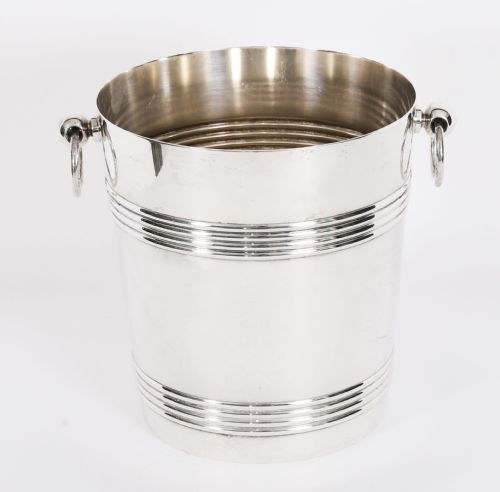
The pieces appearing here span distinct eras, with notable concentrations from the Art Deco period and mid-century decades alongside earlier nineteenth-century examples. Forms range from ring-handled buckets and lion-masked vessels to tall cylindrical coolers suited for single bottles or larger shared gatherings.
Origins remain firmly rooted in French ateliers and renowned Parisian silversmiths, producing items classified under barware, ice buckets and wine coolers. The majority of surviving specimens utilise silver plate over base metal, creating a bright metallic sheen designed to reflect candlelit dining rooms.
Materials and Construction
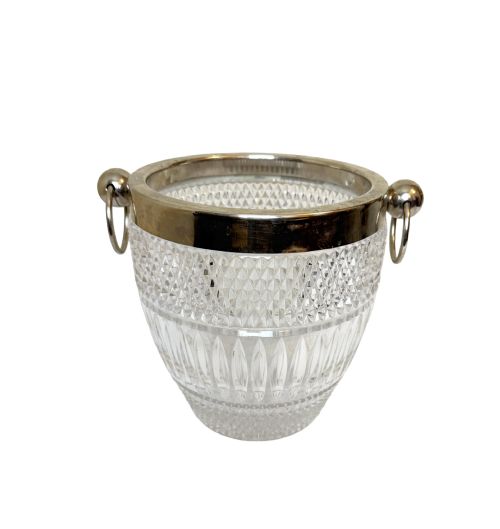
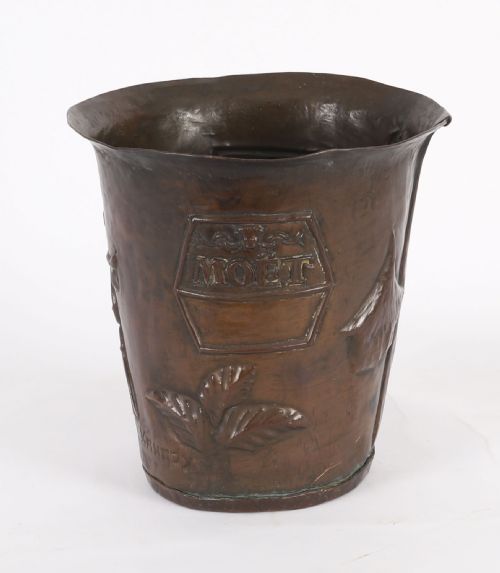
Makers construct these vessels predominantly from silver plate applied over durable base metal, creating a substantial weight that sits securely on dining tables and sideboards. Certain examples incorporate brass, copper, or glass elements to achieve contrasting textures and functional durability.
Manufacturing techniques combine heavy metal spinning, casting, and soldering to form watertight bodies capable of holding ice and water for hours. Handles, decorative rings, and heraldic mounts are cast separately and securely joined to the main body before final plating and polishing.
Retail Price Guide 2026
Typical UK retail prices for french champagne cooler, calculated from the Sellingantiques database of over a million retail prices indexed since 2003. This retail price guide relies exclusively on Sellingantiques data; no external sources or auction records are used, so the figures do not describe the wider market.
One enormous mixing bowl found a second life keeping champagne cold, proving that French copper pots multi-task.
Judging Quality
Quality rests heavily upon the reputation of the maker and the crispness of the chased or cast ornament, distinguishing standard production items from distinguished Parisian workshop commissions. The thickness and durability of the silver plate over the underlying base metal dictate how well the piece survives centuries of polishing.
Proportion and architectural balance separate finer examples from simpler utilitarian vessels, particularly within the Art Deco and French Empire styles where clean lines or classical motifs demand precision. The weight of the metal and the secure attachment of cast handles reveal the original standard of craftsmanship.
Christofle·Ercuis·St Medard·Puiforcat·Cailar and Bayard·Berger
The French Champagne Cooler Glossary
- Silver Plate
- A thin layer of pure silver fused or electroplated onto a base metal core such as copper, brass, or nickel silver. This technique allowed makers to achieve the luxurious appearance of solid silver at a more accessible cost.
- Art Deco
- A design style emerging in the 1920s and 1930s characterised by geometric symmetry, stylised motifs, and sleek streamlined forms. It heavily influences many mid-century champagne coolers.
- French Empire
- A neoclassical design style drawing inspiration from the grandeur of the ancient Roman Empire, featuring laurel wreaths, sphinxes, and classical proportions. Pieces from this aesthetic project formal architectural dignity.
- Gallia
- A specific high-grade silver plate alloy and trademark introduced by the Christofle firm around the turn of the twentieth century. It denotes superior manufacturing standards within Parisian metalwork.
Frequently Asked Questions
Can I use these for modern bottles?
Most standard champagne and wine bottles fit comfortably within these historical vessels alongside ice and water, though very oversized modern prestige cuvées may require careful measuring.
Traditional proportions were designed for standard nineteenth and twentieth-century bottle diameters, which remain close in size to modern counterparts.
How do I date an Art Deco cooler?
Examine the geometric austerity, stepped handles, and maker stamps, which typically point towards production between the wars in the 1920s and 1930s.
Maker hallmarks stamped into the base often provide precise chronological markers when cross-referenced with Parisian silversmith registry records.
Where should I display a cooler?
Place your piece on a sideboard, drinks trolley, or dining table where its reflective silver-plated surface can catch the light and anchor the room.
When not serving wine at dinner parties, they function effectively as sculptural vases for floral arrangements or simply as standalone decorative objects.