





French Cassolette Urns
French cassolette urns are reversible decorative vessels that turn from lidded urns into candle holders, bringing classical elegance to a mantelpiece.
French Cassolette Urns
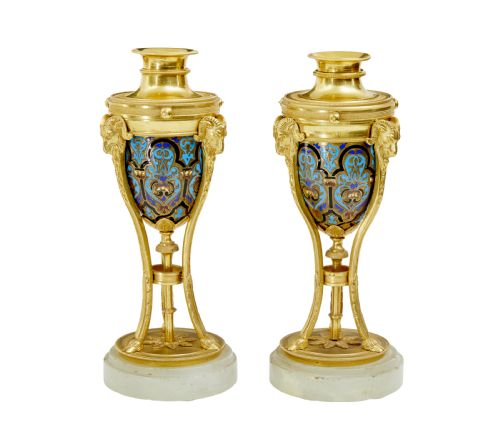
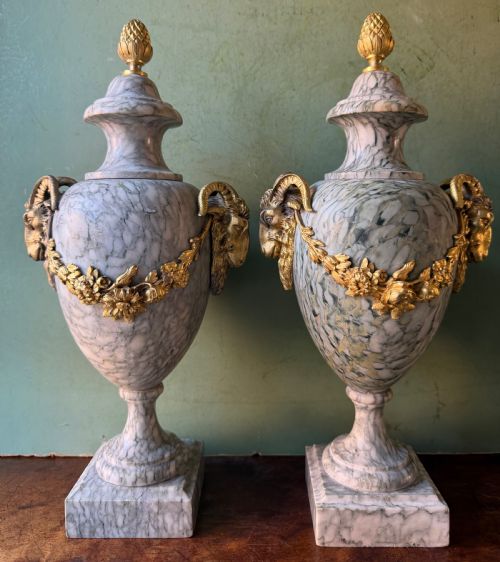
French cassolette urns are distinctive decorative vessels engineered with a reversible lid that transforms a closed urn into a socketed candle holder. These pieces frequently appear in pairs from the nineteenth century, reflecting periods such as the Victorian era and the late nineteenth century.
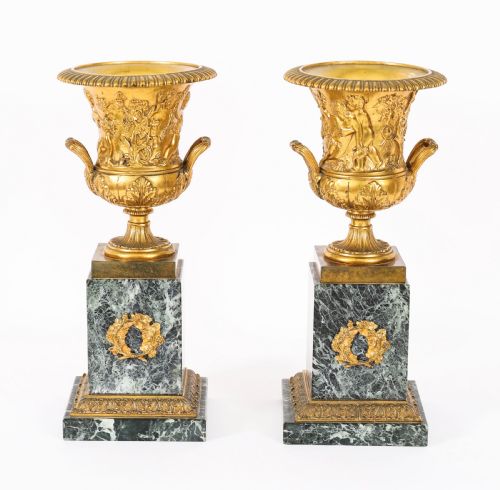
The forms span classical amphora shapes, decorative vases, and components of larger clock garnitures. Surviving examples often display the influence of French Neoclassical, Louis XVI, and French Empire styles.
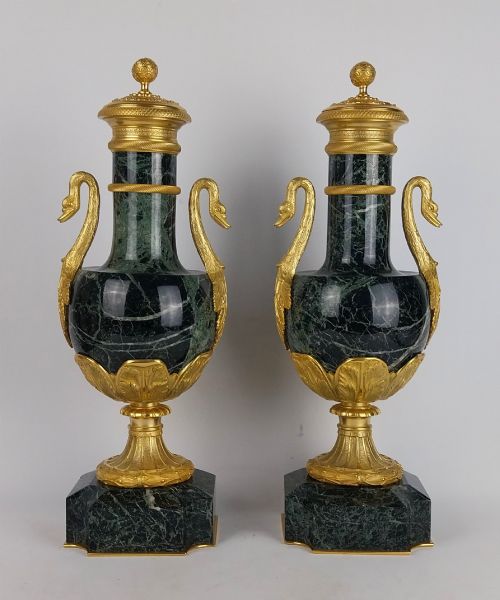
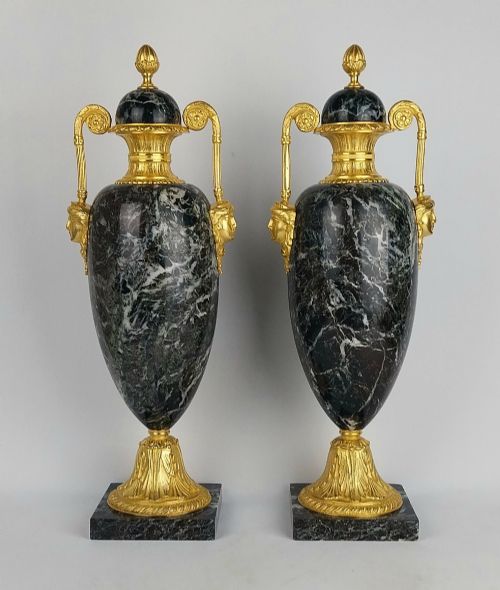
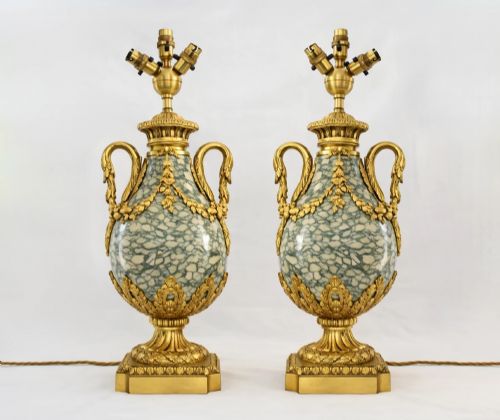
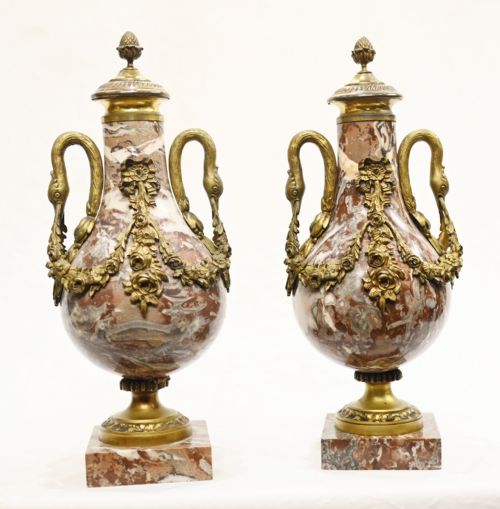
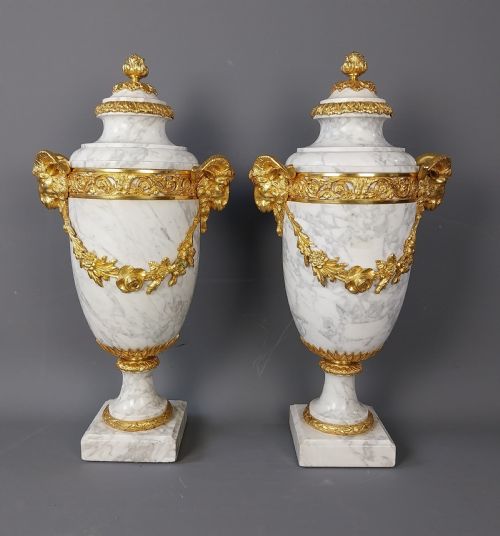
Makers utilised various stones and metals to create these dual-purpose ornaments. The most common manifestations on this page combine turned marble bodies with cast metal mounts.
What varies in quality
Quality in these vessels rests upon the crispness of the metal chasing and the selection of the stone. Finer examples display deeply articulated ormolu mounts with sharp leaf and beaded detail, whereas lesser pieces show softer, shallower casting.
The choice and figuring of the marble also dictate the grade of the piece. Highly figured grey and green veined campan vert or clean white marble elevate the stature of the object compared to plain or heavily flawed stone.
French Cassolette Urns Retail Price Guide 2026
Typical asking prices for french cassolette urns among the pieces listed under this phrase on Sellingantiques today, from the lower quarter to the upper quarter. They describe what is for sale here now, not the wider market.
Listings feature items spanning the nineteenth century, including pieces specifically dated to 1870, 1890, and 1900.
Auguste Cain
The French Cassolette Urns Glossary
- Cassolette
- A vessel with a reversible lid that functions as an urn on one side and a candle holder on the other. This dual purpose defined domestic display pieces in formal rooms.
- Ormolu
- Gilt bronze produced by applying a mercury and gold amalgam to cast bronze. This technique created a durable, rich golden surface finish popular in French furniture and decorative hardware.
- Champlevé enamel
- A technique where troughs are dug into the surface of a metal object and filled with vitreous enamel paste before firing. The resulting design sits flush with the surrounding metal partitions.
- Grand Tour
- A cultural journey undertaken by wealthy young Europeans to study classical antiquities. Objects acquired during these travels heavily influenced nineteenth-century British and French decorative arts.
- Campan vert
- A distinctive deep green and grey veined marble quarried in the Pyrenees. It was favoured by French makers for its dramatic, variegated patterning.
- Clock garniture
- A set comprising a mantel clock flanked by matching decorative objects such as urns or cassolettes. These matched sets created a symmetrical arrangement on a fireplace mantel.
French Cassolette Urns: Frequently Asked Questions
What is a french cassolette urn?
A french cassolette urn is a decorative vessel featuring a double-sided lid that flips to reveal a candle nozzle. This clever engineering allowed the same object to serve as a static ornament or a light source.
Most surviving examples date from the nineteenth century and reflect classical design revivals. They are typically found in pairs designed to flank a central mirror or clock.
How do you use them as candle holders?
To convert the urn, you lift the lid from its collar and turn it upside down. The reverse side holds a candle socket designed to catch dripping wax.
In period settings, owners would alter the function of the mantelpiece depending on the time of day or the occasion. Today, most collectors prefer to display them in their closed urn configuration.
What materials were used?
These vessels combine turned natural stone with cast and gilded metals. White marble, onyx, and veined green marble form the primary bodies, paired with mounts of ormolu, gilt bronze, or brass.
Some variants incorporate coloured champlevé enamel or majolica porcelain panels into the design. The contrast between polished stone and bright metal creates a rich visual texture.
How do I date these pieces?
Dating relies on stylistic cues, manufacturing techniques, and the character of the bronze casting and marble turning. Nineteenth-century pieces frequently draw on Louis XVI and French Empire motifs.
Examination of the interior construction, screw threads, and the wear patterns on the metal helps distinguish period pieces from later reproductions. The presence of specific stones like campan vert also points to particular nineteenth-century manufacturing preferences.