

French Brown Chest
A french brown chest brings rich timber tones and refined proportions into a room, offering practical storage disguised as fine furniture.
French Brown Chest
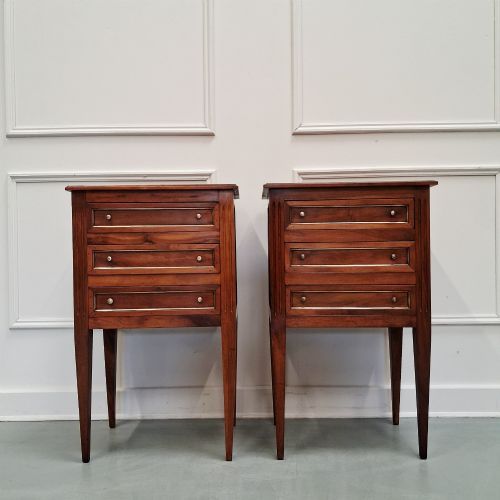
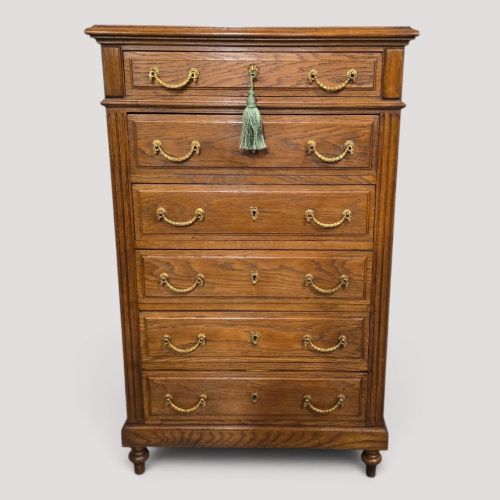
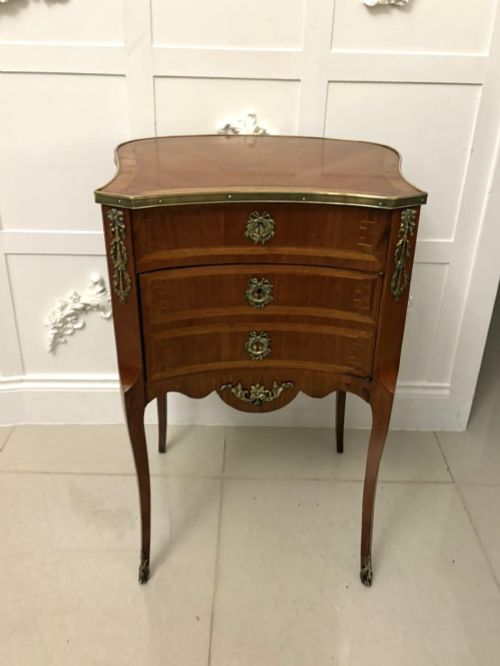
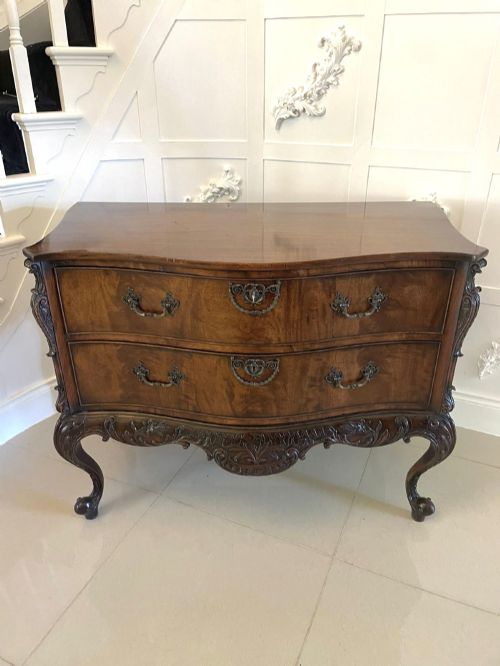
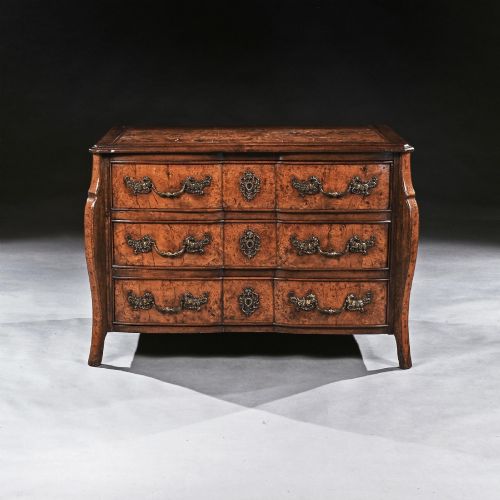
A french brown chest encompasses a variety of storage forms, from formal commodes to provincial walnut cupboards and bedside cabinets. Buyers seeking these items will encounter pieces spanning the eighteenth to the early twentieth centuries, reflecting diverse regional tastes across France.
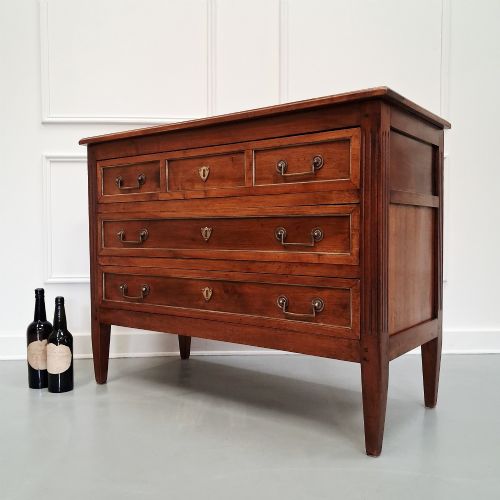
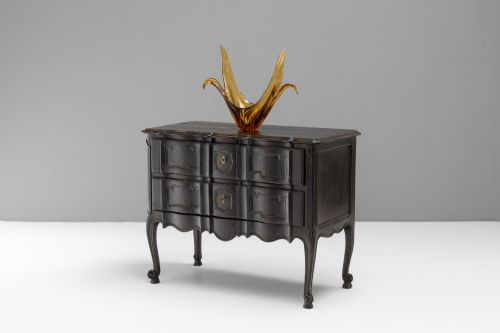
The selections on this page lean heavily towards classical revival designs and provincial country pieces, often incorporating local hardwoods like walnut, oak, and cherry. These items serve as functional storage units that double as decorative centrepieces in traditional and modern interiors alike.
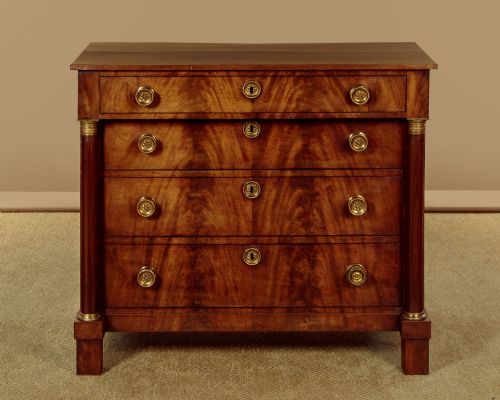
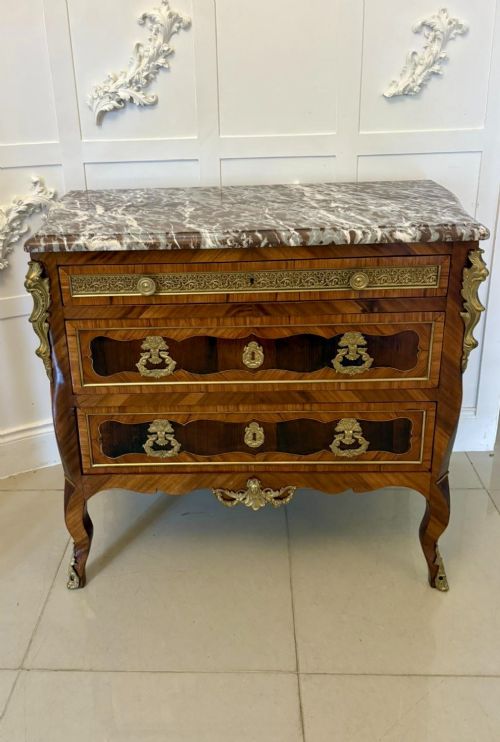
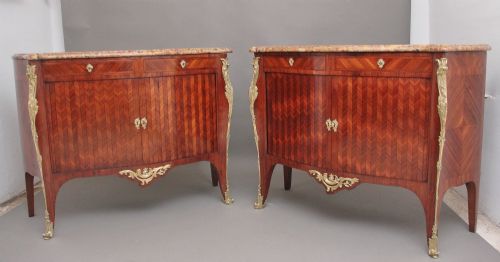
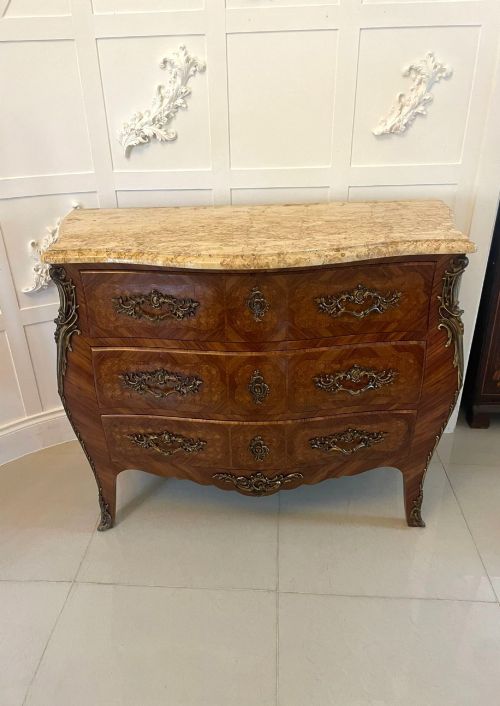
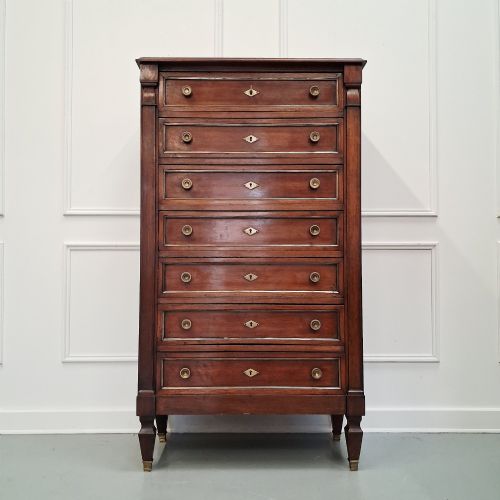
Commodes and chests of drawers dominate the selection, frequently paired with contrasting marble tops or intricate parquetry patterns. Whether looking for a tall semainier or a low bedside cabinet, the range captures the enduring utility of continental cabinetmaking.
Materials and construction
Cabinetmakers relied on dense native and exotic timbers such as walnut, mahogany, and kingwood, often laid as veneers over sturdy oak or pine carcases. Marquetry and parquetry patterns required precise geometry, setting contrasting woods into geometric or floral arrangements across the drawer fronts and sides.
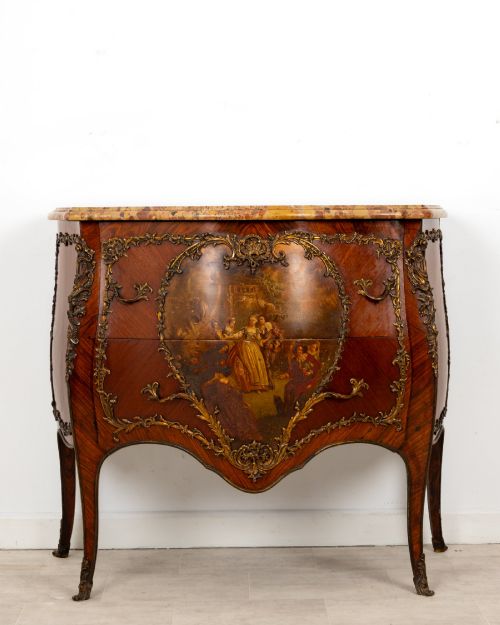
Metal mounts in brass and ormolu reinforced corners and framed drawer sections, complementing the natural warmth of the timber surfaces. Marble tops, frequently chosen in white or grey varieties, provided a durable and cool surface finish for commodes and bedside tables.
Some nineteenth-century pieces secretly store weeks of laundry while looking entirely too graceful to handle mundane chores.
Judging execution and finish
Quality rests upon the crispness of the timber grain matching and the precision of the joinery within the drawer construction, such as hand-cut dovetails. Superior examples display seamless veneer matching across multiple drawers and intact, original bronze or brass mounts that fit their contours precisely.
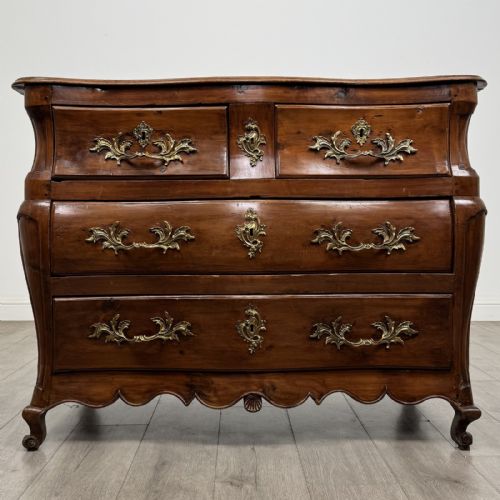
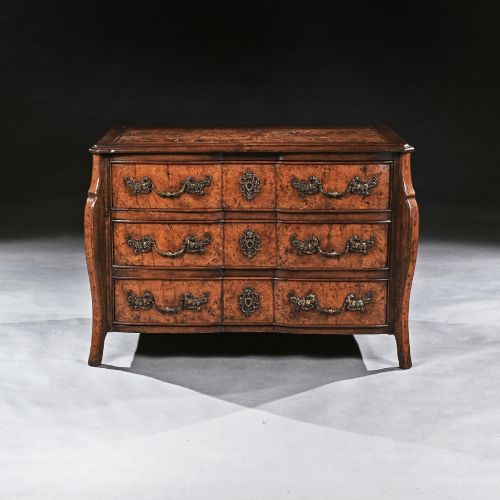
The depth of colour and patination achieved through decades of polishing distinguish finer commissions from simpler provincial work. Subtle details like shaped serpentine fronts and well-preserved marquetry panels elevate a piece beyond standard utility.
The French Brown Chest Glossary
- Commode
- A low chest of drawers or cabinet originating in France during the seventeenth century. They typically feature multiple drawer tiers and often stand on cabriole or tapered legs.
- Parquetry
- A geometric mosaic of wood pieces used for decorative floors and furniture surfaces. It creates sharp patterns using contrasting tones of timber like walnut and kingwood.
- Ormolu
- Gilded bronze used for decorative mounts on furniture. It provides bright metallic contrast against dark brown timber surfaces.
- Semainier
- A tall, narrow chest of drawers traditionally designed with seven tiers, one for each day of the week. This form maximises vertical storage space in bedrooms.
- Bombe
- A swelling, outward-curved contour found on the sides and fronts of eighteenth-century furniture. This shape demands advanced woodworking skill to achieve balanced proportions.
French Brown Chest: Frequently Asked Questions
How do I style a french brown chest?
These pieces anchor a room visually, working well beneath large mirrors or artwork in living spaces and hallways.
Their warm timber tones pair naturally with neutral walls, while the flat tops provide practical display surfaces for lamps and decorative objects.
Are these chests suitable for modern bedrooms?
The generous drawer capacities make them practical for clothing storage in contemporary homes.
Their varied heights and widths allow them to fit easily beside beds or along hallway walls as functional storage.
What is the difference between a commode and a standard chest?
A commode generally denotes a continental piece with ornamental mounts, shaped fronts, and elegant leg forms.
Standard chests of drawers often emphasise straight lines and utilitarian storage capacity rather than decorative carving.
How do I identify eighteenth-century provincial pieces?
Provincial pieces often utilise regional timbers like cherry, chestnut, or burr elm rather than imported luxury veneers.
Their construction shows robust local craftsmanship with simpler lines compared to court-commissioned Paris furniture.