



French Bronze Maiden
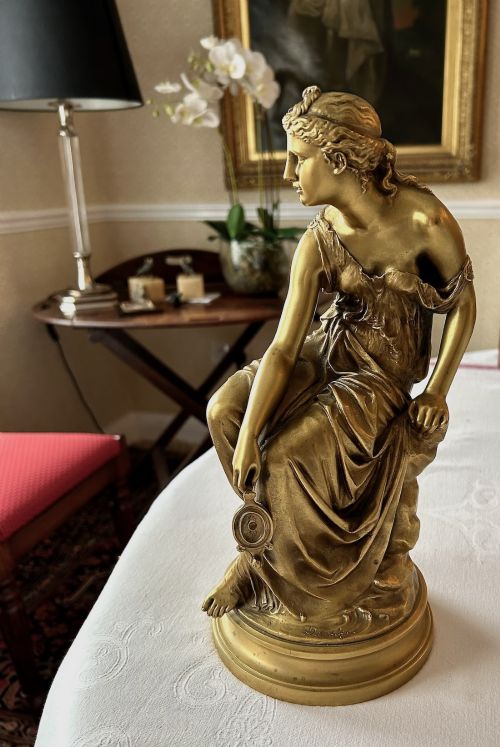
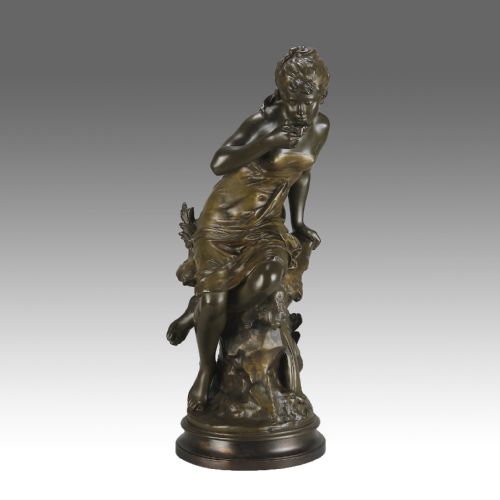
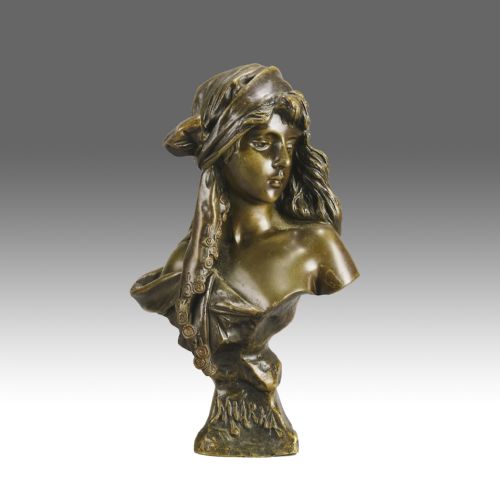
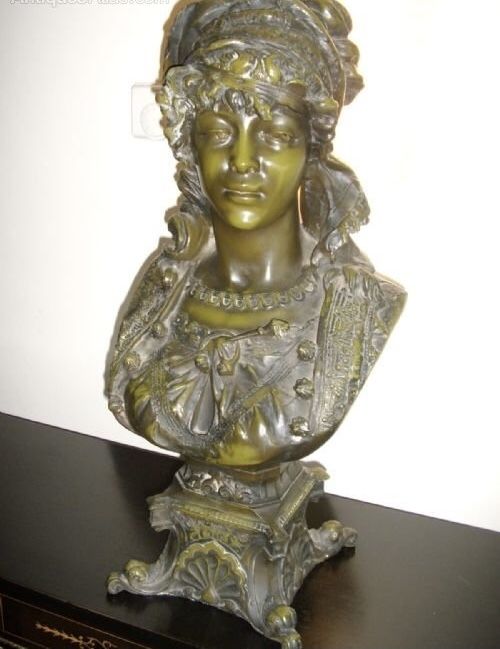
These french bronze maiden figures combine classical drape and foundry skill, bringing nineteenth-century cast metal into domestic rooms as lamps, clocks, and standalone sculptures.
French Bronze Maiden
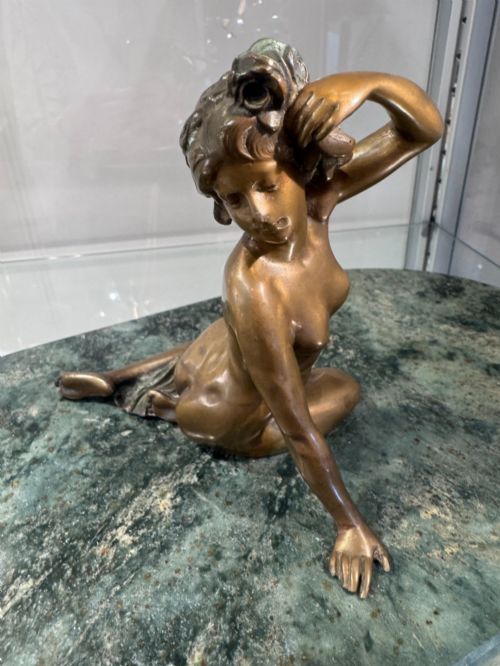
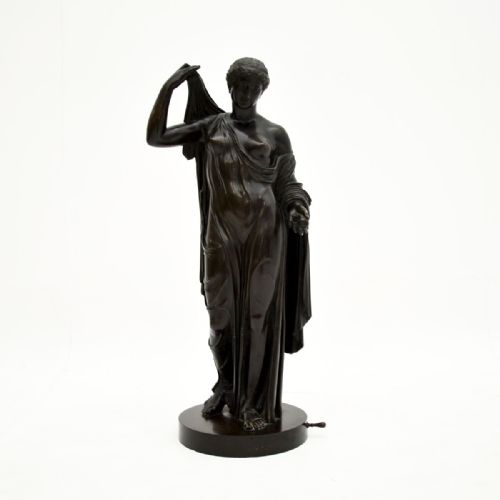
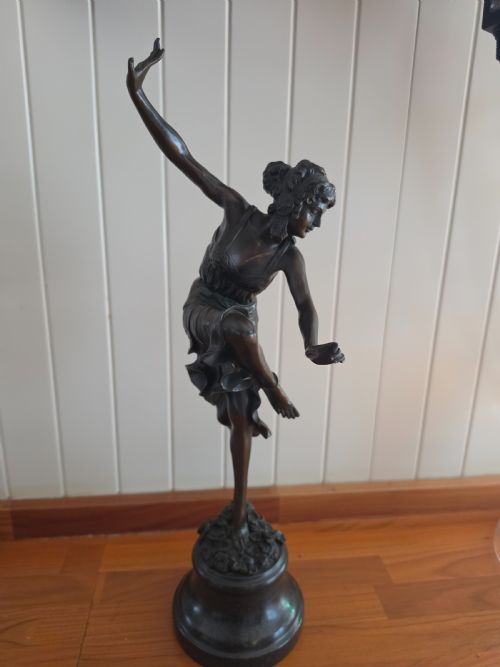
A french bronze maiden represents female figures rendered in cast metal, frequently taking the form of classical robed ladies, dancers, and allegorical subjects such as spring or specific literary characters. These pieces span the nineteenth and early twentieth centuries, appearing across periods from Victorian to Art Nouveau and Art Deco.
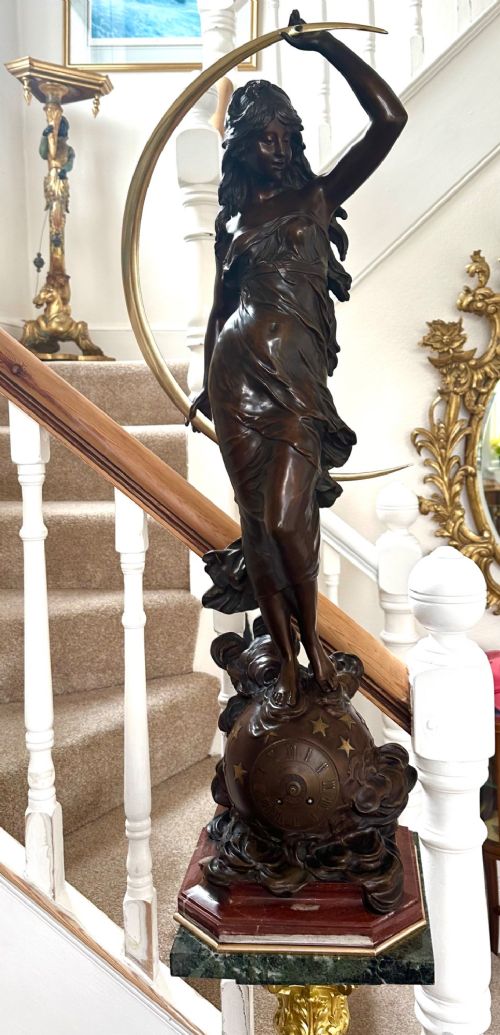
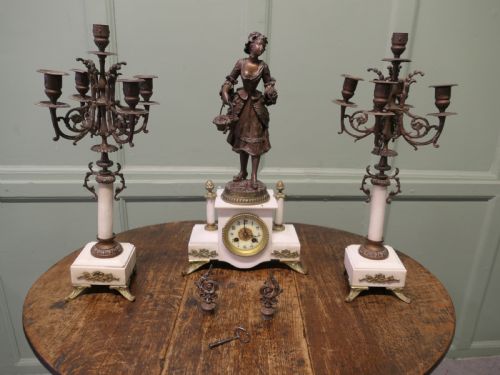
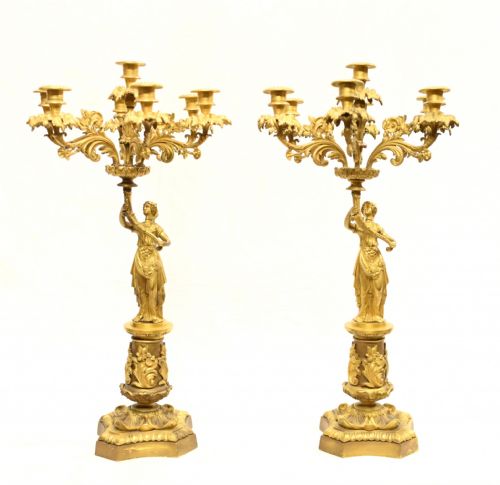
Buyers encounter these subjects integrated into utilitarian objects as well as independent statuary. The forms on this page include mantel clocks, clock garniture sets, candelabras, figural table lamps, and vases alongside free-standing sculptures.
The aesthetic shifts according to the prevailing taste of the workshop and year of production. Neoclassical examples draw on ancient drapery and architectural rigour, whereas Art Nouveau pieces display whiplash curves and floral motifs.
How They Were Made
Surface treatments define the visual character of these works, employing patination liquids to achieve dark brown or greenish tones, or applying fire gilding (ormolu) to create bright golden finishes. Many figures incorporate carved marble bases or plinths to provide weight and contrast to the metal.
Listings feature periods spanning from the Victorian era through Art Nouveau and Art Deco, utilising bronze, marble, and gilt bronze.
What Varies in Quality
The crispness of the chasing determines how much definition survives in fingers, facial expressions, and folds of drapery after casting. Superior pieces retain sharp linear accents where lesser castings appear soft and smoothed over from worn moulds.
The depth and subtlety of the patination or the evenness of the gilt layer separate standard commercial castings from works produced by leading French foundries and signed artists.
Etienne-Henri Dumaige·Moreau Family·August Moreau·Mathurin Moreau·Emmanuel Villanis·Zoldan Kovats·S. Kinsburger·Clodion·Claudius Marioton·Charles Korschann·Georges Van Der Straeten·Guillot·Maurice Bouval·H. Moreau·Houdebine·Jean Jacques Pradier·Victor Paillard·Devaulx·Charlotte Monginot·Henri Honore Ple
The French Bronze Maiden Glossary
- Ormolu
- A technique of applying finely ground high-carat gold amalgam to bronze objects, creating a durable golden surface. This finish appears frequently on candelabras and clock mounts.
- Patina
- The surface colour and texture acquired by bronze through chemical treatment or age. Artists controlled this layer to accentuate shadows and depth.
- Caryatid
- A sculpted female figure serving as an architectural support or decorative pillar. These appear frequently on clock cases and candelabra stems.
- Garniture
- A set of decorative matching objects, usually a mantel clock accompanied by flanking candelabras or urns. They formed centrepieces for nineteenth-century mantelpieces.
- Spelter
- An alloy of zinc and lead used as a less costly alternative to bronze. It takes patination well but possesses lower tensile strength than bronze.
French Bronze Maiden: Frequently Asked Questions
How do I clean a bronze sculpture?
Dust the surface regularly with a soft, dry brush to prevent particulate accumulation. Avoid using water, soap, or chemical polishes, which strip the patination.
Apply a very thin coat of microcrystalline wax occasionally if the metal appears dry, buffing it gently with a clean cloth.
Are these pieces solid bronze?
Many figures are cast as hollow forms to save weight and metal, utilising the lost-wax or sand-casting method. Solid casts do occur, particularly in smaller decorative items such as miniature desk pieces or seals.
Base materials may also include spelter or brass, which offer different weights and magnetic properties compared to copper-alloy bronze.
How do I identify Art Nouveau examples?
Art Nouveau pieces display asymmetrical compositions, whiplash floral stems, and flowing hair that mimics natural plant growth. These figures frequently date from the late nineteenth or early twentieth century.
Neoclassical pieces, by contrast, rely on symmetrical balance, restrained drapery, and strict geometric proportions inspired by antiquity.
What is a clock garniture?
A clock garniture consists of a central mantel clock accompanied by matching side pieces such as candelabras or urns. These sets were designed to sit together as a unified decorative scheme on a fireplace mantel.
The figural maiden often serves as the central column of the clock or as the support for the flanking candle branches.