




French Bronze Hound Figure
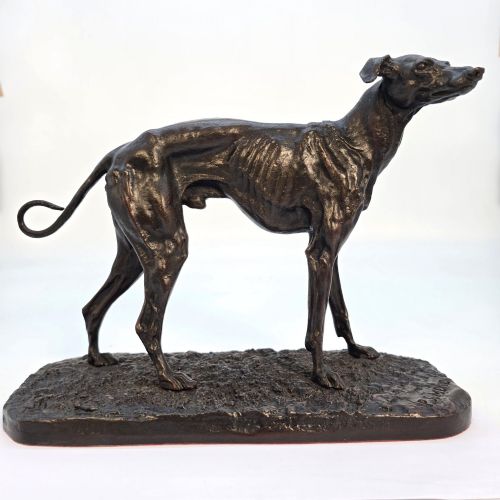
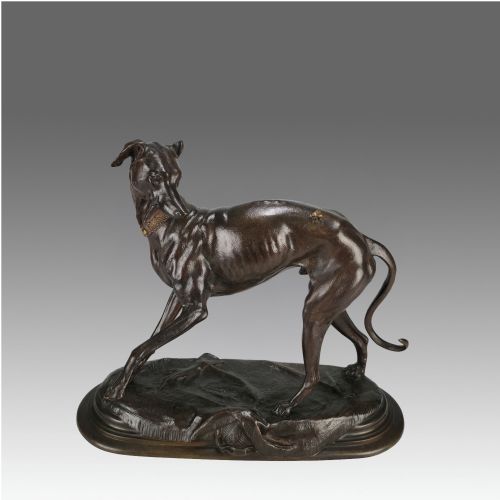
A french bronze hound figure captures the muscular tension of a hunting dog, cast in metal and mounted on marble or onyx.
French Bronze Hound Figure
When you search for a french bronze hound figure, you encounter sculptural works depicting greyhounds, sighthounds, setters, and hunting dogs in various poses. These pieces emerge predominantly from nineteenth-century animalier traditions as well as later twentieth-century art deco designs.
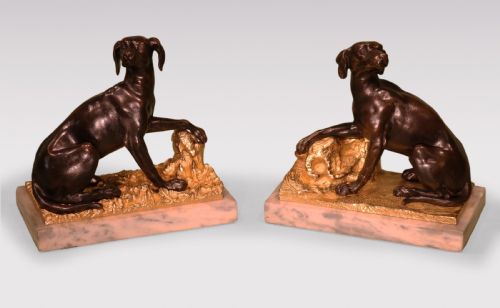
The objects take the form of tabletop sculptures and statues, often featuring hounds alone or interacting with birds, balls, and prey. Many are mounted upon heavy stone bases made of marble or onyx to provide stability and visual contrast to the metal.
Nineteenth-century examples frequently display naturalistic canine anatomy modelled by prominent animalier sculptors. Twentieth-century iterations tend towards stylised forms associated with the art deco period, occasionally incorporating human figures alongside the dogs.
How they were made
These figures are produced through metal casting techniques, primarily utilising bronze or spelter to shape the animal forms. Patination processes are applied to the metal surfaces to create varied tone and depth, sometimes accented with ormolu details.
Many sculptures are finished with hand-chiselling to refine the texture of the dog's coat and musculature after casting. The completed metal figures are then secured onto bespoke bases of polished marble or onyx.
Listings feature works spanning the nineteenth century through to the nineteen-thirties, constructed in bronze, spelter, marble, and onyx.
What varies in quality
The fidelity of the canine anatomy and the crispness of the fur texture dictate the refinement of a casting. Finer works preserve the tension in the sinew and the alert expression of the hound without softening the details.
The choice of base materials also influences the character of the piece, with dense marbles and well-fitted stones providing a solid foundation. Furthermore, the subtlety of the patination contributes to the visual depth of the metal.
Alfred Barye·Pierre Jules Mene·Arthur Waagen·Geo Maxim·Christophe Fratin·Dubucand
The French Bronze Hound Figure Glossary
- Animalier
- A nineteenth-century artistic movement focused on the realistic depiction of animals. Sculptors in this tradition studied live specimens closely to capture authentic movement and anatomy.
- Patinated Bronze
- Bronze treated with chemical solutions to produce a specific surface colour and tone. This finish protects the metal and highlights sculptural contours.
- Spelter
- A zinc-based alloy commonly utilised as a cost-effective alternative to bronze in decorative figures. It is softer than bronze and frequently carries a painted or patinated finish.
- Ormolu
- Gilded bronze produced by applying a mixture of mercury and gold to the metal base. The process creates a rich golden surface often used for decorative highlights.
- Sighthound
- A type of dog bred to hunt by sight and speed, including greyhounds and similar lean breeds. These animals are frequent subjects in nineteenth-century sculpture due to their distinct silhouettes.
French Bronze Hound Figure: Frequently Asked Questions
What is an animalier bronze?
An animalier bronze is a sculpture created by artists who specialised in realistic animal studies during the nineteenth century. These works focus on capturing the natural behaviour and anatomy of creatures.
Such pieces range from solitary hounds to complex groups involving prey or human figures, cast with detailed attention to texture and form.
How do I identify art deco hounds?
Art deco hound figures, dating around the nineteen-thirties, often feature stylised geometry and sleek lines rather than strict nineteenth-century naturalism. They frequently appear alongside human figures or on geometric marble bases.
These later sculptures reflect the modern aesthetic of the interwar period while maintaining the subject of the hound.
Why are marble bases used?
Marble and onyx bases provide necessary weight and stability for metal sculptures while framing the composition visually. They offer a contrasting texture and colour to the patinated bronze or spelter above.
Many nineteenth and twentieth-century animalier bronzes were permanently mounted to these stone plinths as part of their original design.
What is the difference between bronze and spelter?
Bronze is a durable alloy of copper and tin that accepts fine detail and rich patination. Spelter is a softer zinc alloy utilised as an alternative metal for decorative figures.
Spelter pieces are generally lighter and require careful handling to avoid surface wear compared to solid bronze sculptures.