


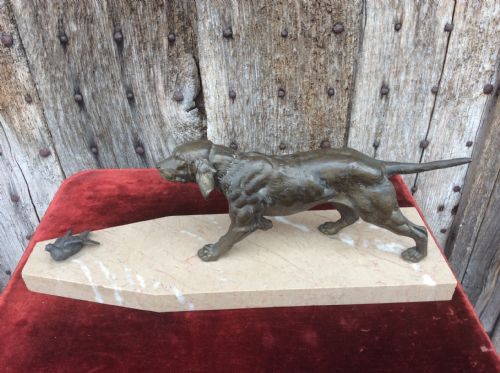
Antique Sporting Dog Figurine
An antique sporting dog figurine captures the energy of the field in bronze, earthenware, or parian ware, bringing hounds, setters, and gundogs into the room.
Antique Sporting Dog Figurine
An antique sporting dog figurine is a sculptural study of working hounds, setters, and gundogs engaged in the chase or resting after the hunt. These figures capture the distinct physical traits of hunting breeds through varied sculptural interpretations from the nineteenth and early twentieth centuries.
The versions most commonly met on this page span the Victorian era up to the nineteen-twenties, frequently taking the form of animalier bronzes or earthenware figures. Subjects range from solitary setters with rabbits to group bronzes of hounds putting up pheasants or retrieving game.
Makers and sculptors of the period rendered these dogs with keen attention to anatomy and sporting action, whether mounted on marble plinths or modelled as fireside statues. The selection reflects both French animalier artistry and British Staffordshire pottery traditions.
Materials and methods
Bronze stands out as the primary metal medium, cast using traditional techniques to capture the musculature and coats of the working dogs. Cold painted finishes and enamel paint add naturalistic colour to selected bronzes, while other pieces utilise lead glaze over earthenware.
Parian ware and biscuit porcelain offer a bright, matte ceramic alternative for sculptural representations of hunting dogs. Marble plinths frequently provide a sturdy, polished base for heavier bronze works, grounding the dynamic poses of the hounds.
Listings feature works spanning the nineteenth century up to nineteen-twenty, utilising bronze, marble, earthenware, and parian ware.
Judging quality and character
Quality rests upon the fidelity of the canine anatomy and the expressive detail captured in the metal or clay. Finer works display meticulous chasing on bronze fur and convincing tension in the muscles of a hound on point.
The strength of the composition distinguishes the work, particularly in complex groupings of dogs and game such as a hound and bird or multiple gundogs flushing a pheasant. The integration of the sculpture with its base, whether cast bronze or marble plinth, also marks the distinction of the piece.
Jules Moigniez·Delabrierre·Auguste Nicholas Cain·P J Mene
The Antique Sporting Dog Figurine Glossary
- Animalier
- A nineteenth-century artistic movement dedicated to the realistic depiction of animals, particularly predators and sporting dogs. Practitioners mastered dynamic poses and detailed textures.
- Parian ware
- A fine-grained, unglazed porcelain resembling white marble, developed during the nineteenth century. It lent itself well to smooth, sculptural figures.
- Cold painted bronze
- Bronze sculpture finished with paint applied without heat after the casting process. This technique added lifelike colour to fur and surroundings.
- Lead glaze
- A glossy coating containing lead compounds applied to earthenware pottery before firing. It created a smooth, protective surface standard on nineteenth-century ceramic figures.
- Biscuit porcelain
- Unglazed ceramic fired once to a porous, matte finish. It provides a tactile surface that highlights the modelled contours of animal sculptures.
Antique Sporting Dog Figurine: Frequently Asked Questions
What is an animalier bronze?
An animalier bronze is a nineteenth-century sculpture focused specifically on the realistic portrayal of animals. These pieces often depict working dogs in dynamic field poses.
French sculptors led this movement, creating detailed studies of hounds and setters that captured both anatomical accuracy and sporting character.
How do I care for bronze figures?
Bronze figures require minimal intervention, needing only an occasional dusting with a soft, dry cloth to prevent grime accumulation. Avoid using chemical polishes or modern cleaning agents, which can strip historic patinas.
Keeping the pieces away from excessive moisture and direct heat sources preserves the metal and any cold painted or enamel finishes.
Where were these figures displayed?
In nineteenth-century interiors, sporting dog figures frequently appeared on library mantels, desk tops, and fireside hearths. Larger statues stood directly on the floor near fireplaces.
They served as decorative tributes to field sports, reflecting the owner's interest in hunting, shooting, and prized working hounds.
How are bronze and ceramic figures told apart?
Bronze figures feel heavy and cool to the touch, often showing rich brown or dark patinas with fine chisel work in the metal. Ceramic examples, such as parian ware or earthenware, display smoother, uniform surfaces and lack metallic resonance when tapped gently.
Ceramic dogs also frequently feature glazes or matte porcelain textures distinct from cast metal.