


French Bronze Dog Figure
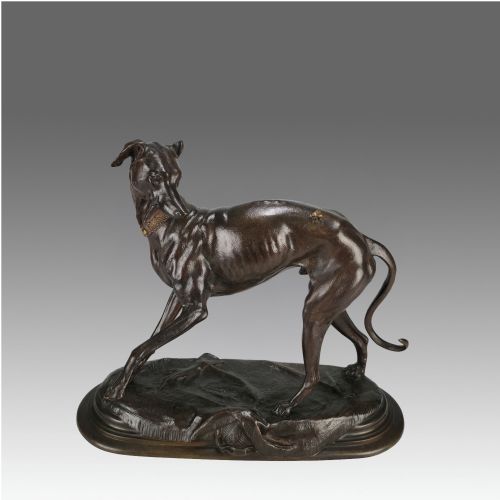
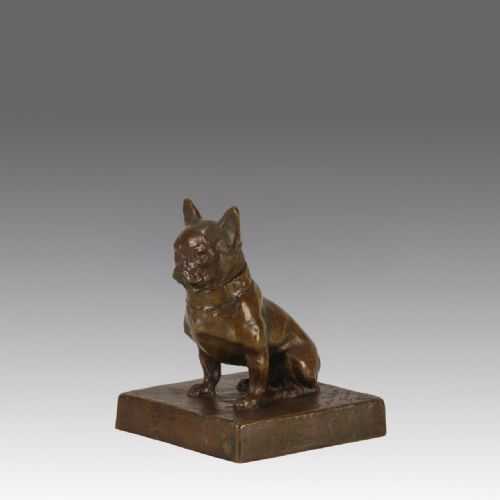
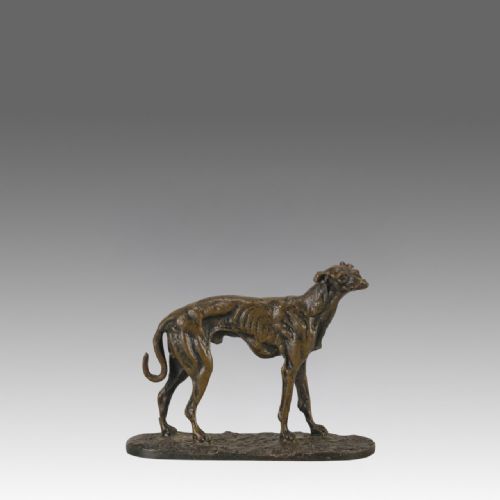
These pieces are a french bronze dog figure, capturing hounds, gundogs and companions through the skilled eyes of nineteenth and twentieth-century animalier sculptors.
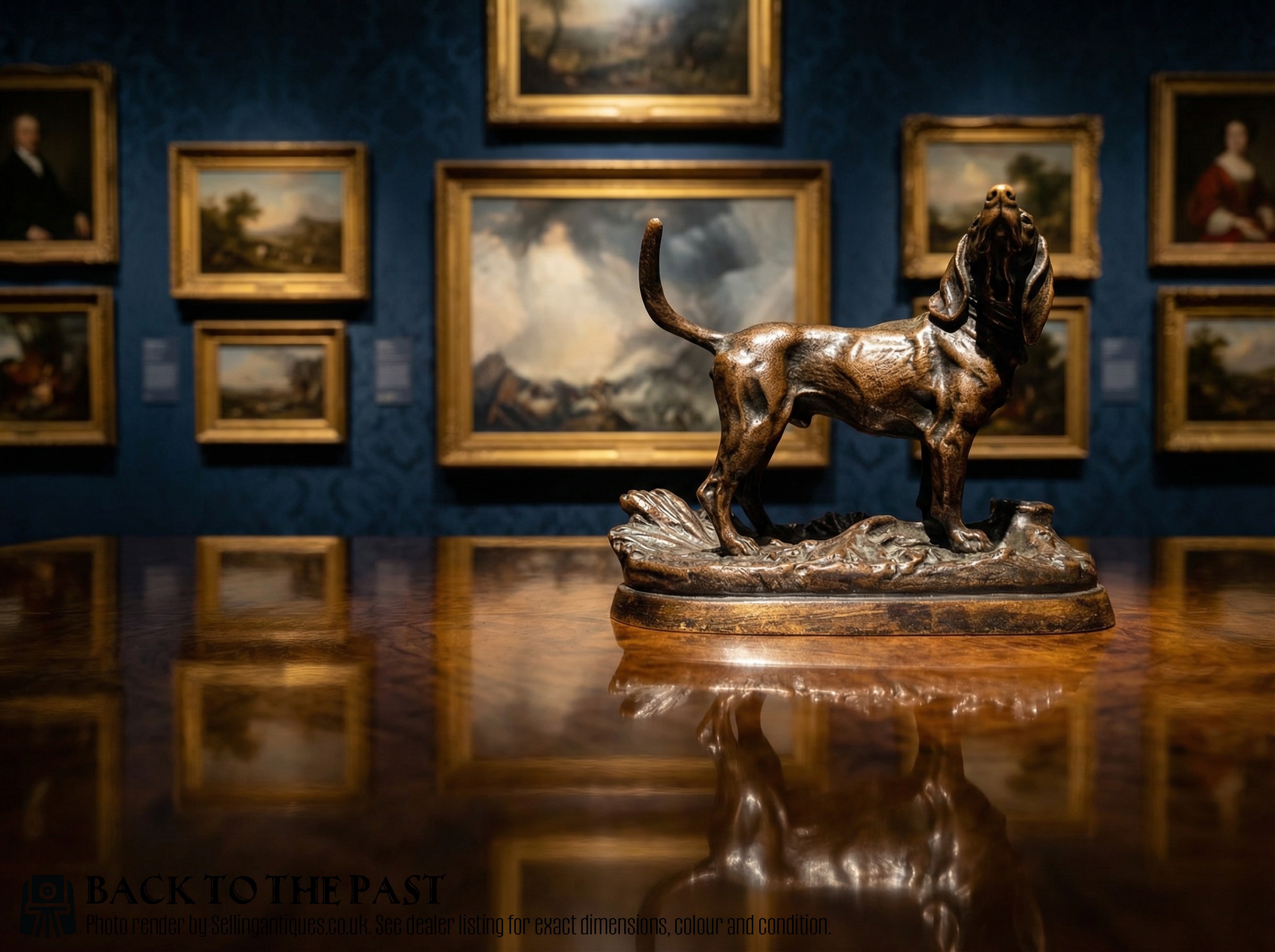
French Bronze Dog Figure
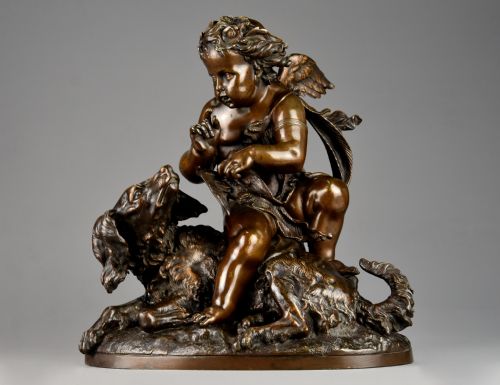
A french bronze dog figure typically depicts hounds, gundogs, or companion breeds cast during the nineteenth and early twentieth centuries. The selection on this page ranges from realistic greyhounds and setters to playful spaniels and poodles.
Most examples belong to the animalier tradition, which focused on the accurate anatomy and spirited movement of animals. You will also encounter pieces set onto marble bases, functioning as bookends, paperweights, or elements of fireplace accessories.
The objects span multiple decades, moving from nineteenth-century realism through to twentieth-century Art Deco interpretations. The subjects include working dogs retrieving game, resting hounds, and pets captured in everyday postures.
What separates the best from the rest
The quality of the patina and the integration of the figure with its base reveal the care taken during production. Finer sculptures show subtle tonal variations across the metal surface and secure, well-fitted mountings.
The sculptural subjects span multiple breeds, including greyhounds, poodles, spaniels, German Shepherds, setters, and Alsatians.
Alfred Barye·Pierre Jules Mene·Prosper Lecourtier·Jules Moigniez·Louis Riche
The French Bronze Dog Figure Glossary
- Animalier
- A nineteenth-century artistic movement dedicated to the realistic portrayal of animals, particularly in sculpture. Practitioners focused on capturing creatures in motion or repose with anatomical accuracy.
- Patina
- The surface coloration and sheen developed naturally over time or applied chemically to bronze. It protects the metal and defines the visual depth of the sculpture.
- Spelter
- A zinc alloy commonly utilised as a less expensive alternative to bronze during the late nineteenth and early twentieth centuries. It often received a bronze-effect coating to mimic more costly metals.
- Ormolu
- Gilt bronze produced by applying a finely ground high-carat gold mercury amalgam to a bronze base. This decorative technique imparts a rich golden lustre frequently seen on mounts and decorative objects.
- Lost-wax casting
- A traditional method of metal casting where a wax model is melted out of a ceramic mould to create a cavity for molten bronze. This process preserves the finest details of the original artist's work.
French Bronze Dog Figure: Frequently Asked Questions
How do I identify animalier bronzes?
Animalier bronzes are identified by their naturalistic depiction of animals, showing close attention to musculature, posture, and realistic behaviour. They were predominantly produced in France during the nineteenth century.
Look for foundry marks, artist signatures cast directly into the base, and the characteristic heavy weight of solid cast metal rather than hollow alternatives.
What is the difference between bronze and spelter?
Bronze is a durable alloy of copper and tin that takes a deep patina and rings softly when tapped. Spelter is a softer, lighter zinc-based metal that was often used for more affordable decorative figures.
Underneath a worn surface, spelter appears greyish-white, whereas bronze reveals a golden-brown or reddish copper tone beneath the patina.
How should I clean a bronze dog figure?
Bronze sculptures require minimal intervention to preserve their historic patination. Dust the piece gently with a soft, dry brush and avoid abrasive cloths or chemical cleaners.
Applying a very light coat of microcrystalline wax can protect the surface from moisture and handling, provided the metal is completely clean and dry beforehand.
Why are some figures mounted on marble?
Marble bases provided stability for heavier metal sculptures and served as an architectural frame for the artwork. They became especially popular during the late nineteenth century and the Art Deco period.
The type of marble or onyx used can often help date the piece, as certain stones and geometric styles align with specific design eras.