



French Bronze Compote
A french bronze compote brings nineteenth-century dining grandeur to a sideboard, pairing classical casting with rich garniture.
French Bronze Compote
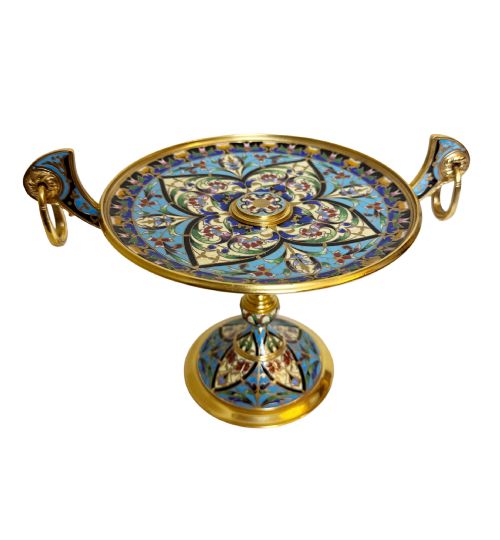
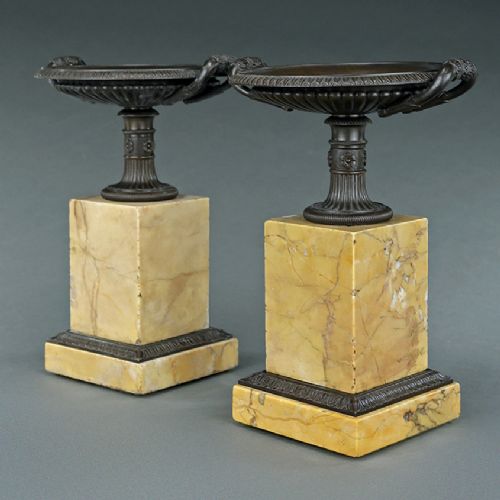
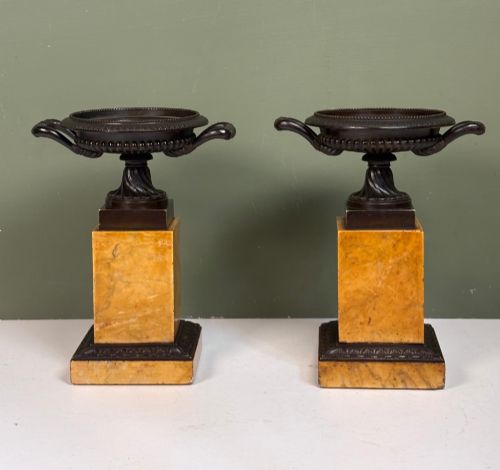
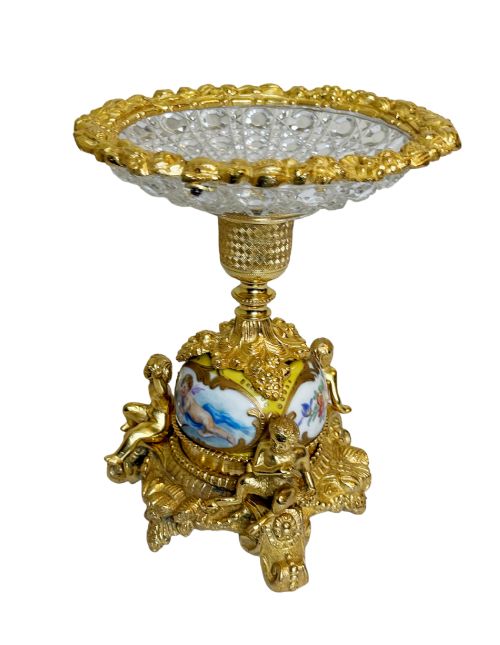
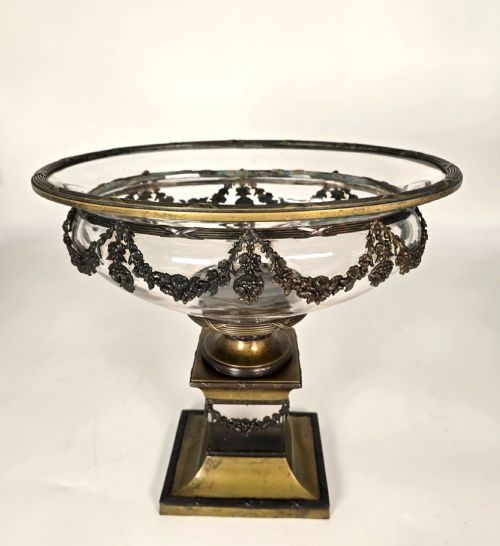
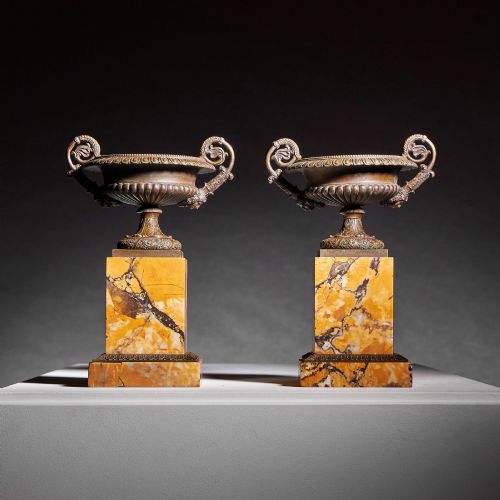
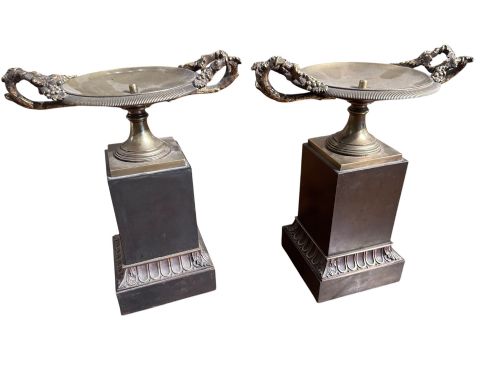
A french bronze compote takes the form of a decorative pedestal bowl, tazza, or centrepiece designed to elevate fruit or floral arrangements upon a formal table. These pieces emerge predominantly across the nineteenth century, drawing on French Empire, Regency, and Rococo Revival aesthetics.
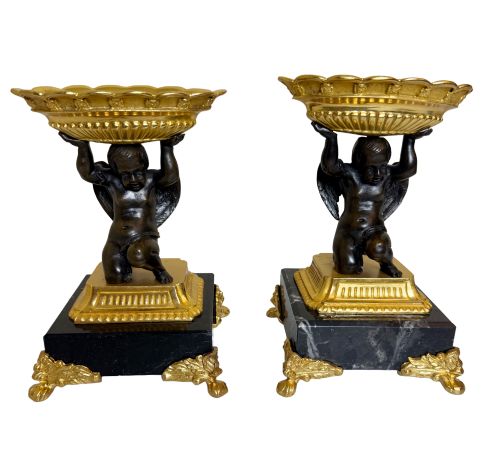
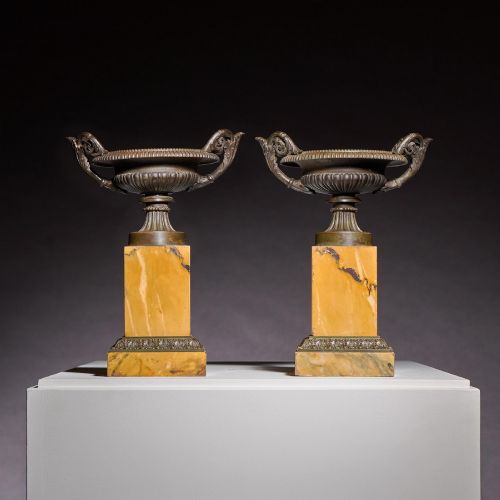
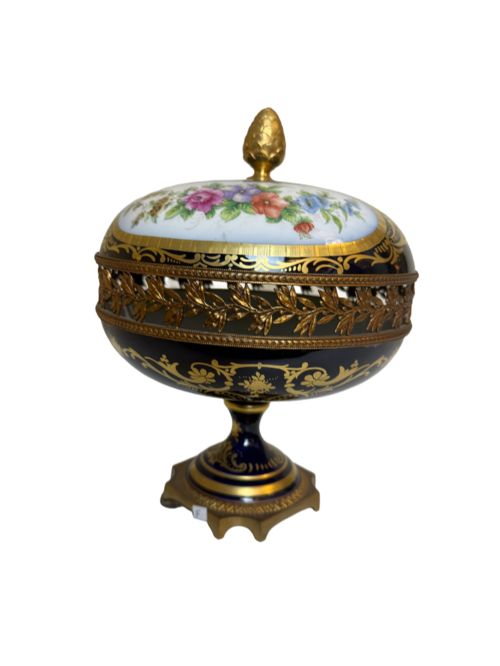
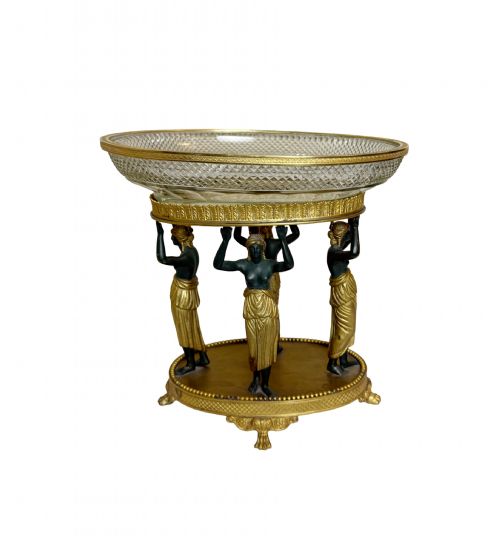
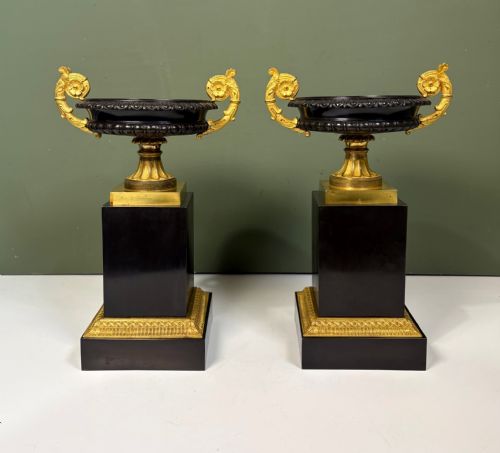
The most common examples encountered here pair cast bronze or ormolu with contrasting materials such as Siena marble, cut crystal, porcelain, and onyx. Makers combined patinated and gilded surfaces, often incorporating cherubs, mermen, or classical figures into the supporting stems.
Formats range from single monumental urns to balanced pairs of tazzas and lidded dishes intended for central display. They reflect a period of exceptional decorative ambition in French metalwork and porcelain mounting.
Distinctions in Execution and Material
Materials recorded across the inventory include cut crystal, Siena marble, malachite, and champlevé enamel mounted in bronze.
Christofle·Christofle et Cie·Samson
The French Bronze Compote Glossary
- Tazza
- A shallow bowl or vase set upon a high foot, frequently utilised as a centrepiece or compote in nineteenth-century interiors. The form derives from classical antiquity.
- Ormolu
- Gilded bronze produced by applying a gold amalgam to a bronze base and heating it to drive off the mercury. The technique yields a distinctive warm lustre.
- Champlevé
- An enamelling technique where troughs or cells are hollowed out of the metal surface and filled with vitreous enamel powder before firing. It creates vibrant decorative patterns across bronze mounts.
- Garniture
- A set of three or more matching decorative objects, typically comprising a central urn or compote flanked by matching vases or smaller vessels.
- Grand Tour
- The cultural journey undertaken by wealthy young Europeans in the nineteenth century, prompting the acquisition of classical bronzes and marbles in Italy and France.
French Bronze Compote: Frequently Asked Questions
What was a french bronze compote used for?
These elevated vessels served primarily as decorative centrepieces on dining tables and sideboards during the nineteenth century. They held fruit, flowers, or sweetmeats for formal meals and evening receptions.
Beyond dining utility, they functioned as sculptural ornaments that displayed the wealth and refined taste of the household through classical motifs and costly materials.
How do I style a compote in a modern room?
Place a single bronze and marble tazza on a dining table or console as a focal point, leaving it empty to showcase the cast detail. Alternatively, fill it with seasonal fruit or dried botanicals to mirror its historical purpose.
Paired compotes work effectively when balanced symmetrically on a mantelpiece or flanking a large mirror, echoing nineteenth-century garniture arrangements.
How can I tell an Empire compote from a Regency one?
French Empire pieces, produced around the early nineteenth century, lean heavily on strict classical Roman motifs, military trophies, and crisp ormolu mounts against dark patinated bronze. They exhibit severe architectural lines and formal symmetry.
Regency examples, though contemporary, often incorporate idiosyncratic British interpretations of classical themes, sometimes featuring exotic figures, rich coloured marbles, and distinctively bold scrollwork.
What is the difference between a compote and a tazza?
In historical terminology, the two terms frequently overlap when describing nineteenth-century serving vessels. A tazza specifically denotes a shallow cup or bowl elevated on a single central foot, originating from Renaissance and classical tableware.
A compote is a broader North American and modern term for any footed dish or bowl used for fruit or compotes, though antique dealers often use both names interchangeably for these bronze pieces.