
French Brass Marquetry Table
A french brass marquetry table brings together rich timbers and metallic inlay, offering practical surface space combined with traditional craftsmanship.
French Brass Marquetry Table
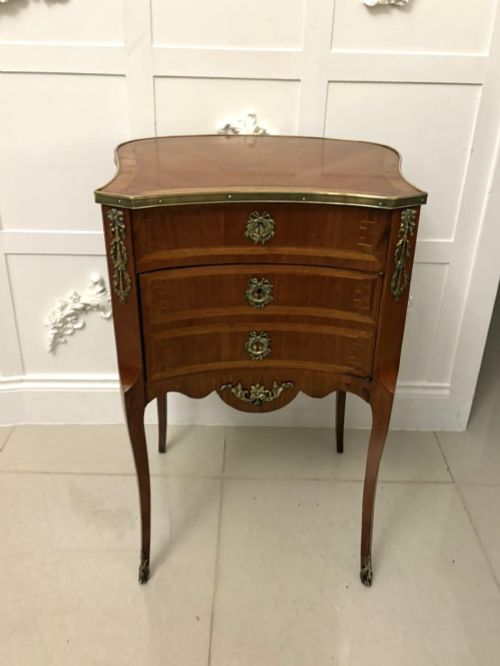
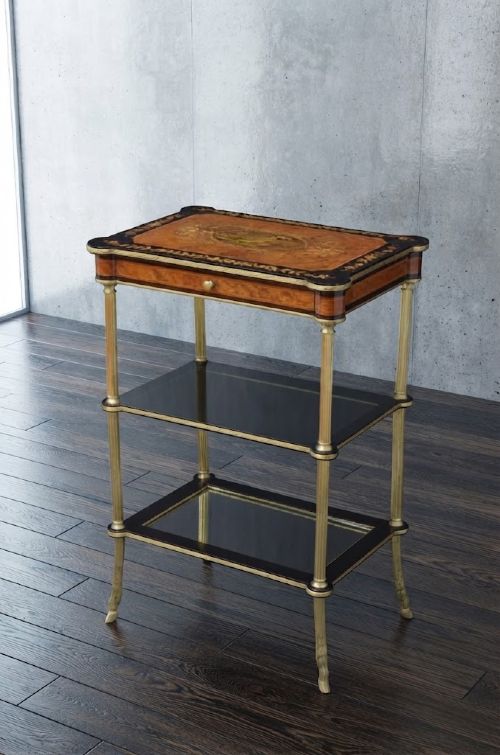
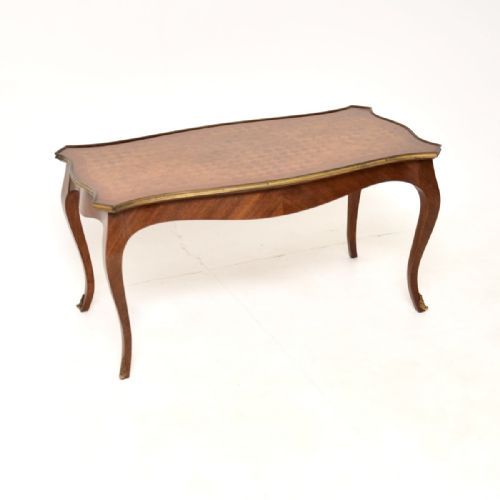
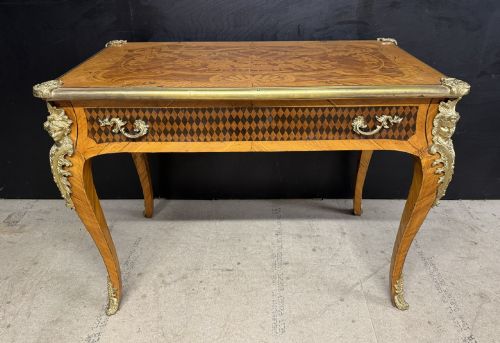
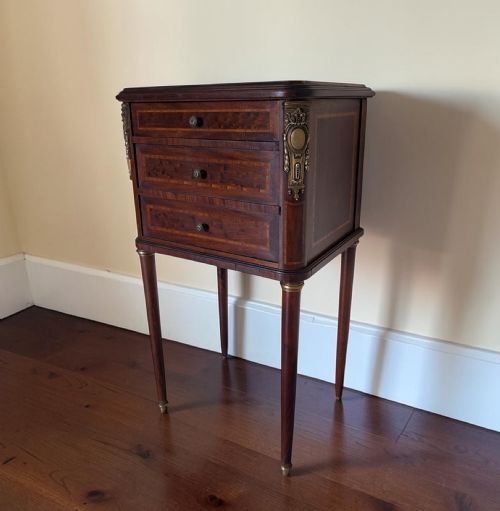
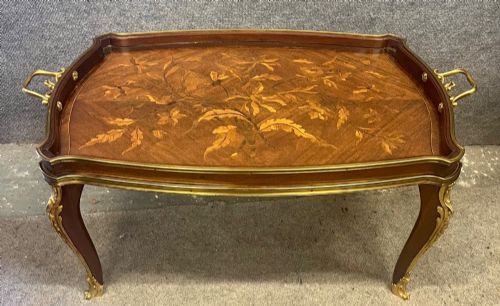
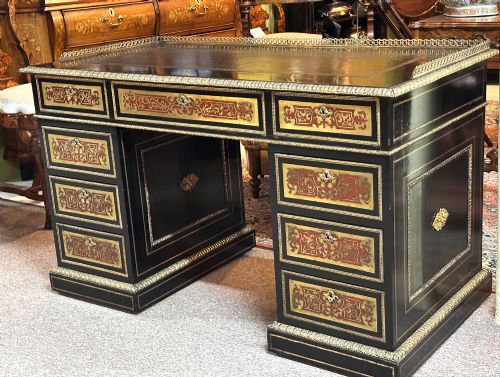
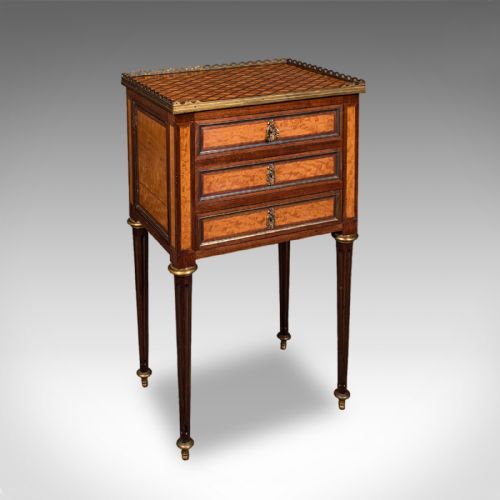
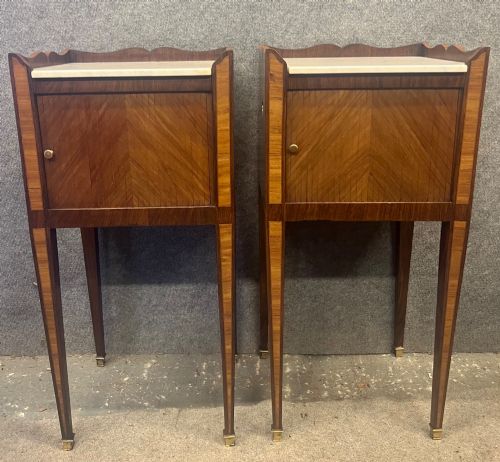
A french brass marquetry table appears in several utilitarian and decorative formats across this collection, ranging from centre tables and side tables to coffee tables and occasional pieces. These items originate from periods spanning the nineteenth and twentieth centuries, employing designs rooted in revivalist aesthetics.
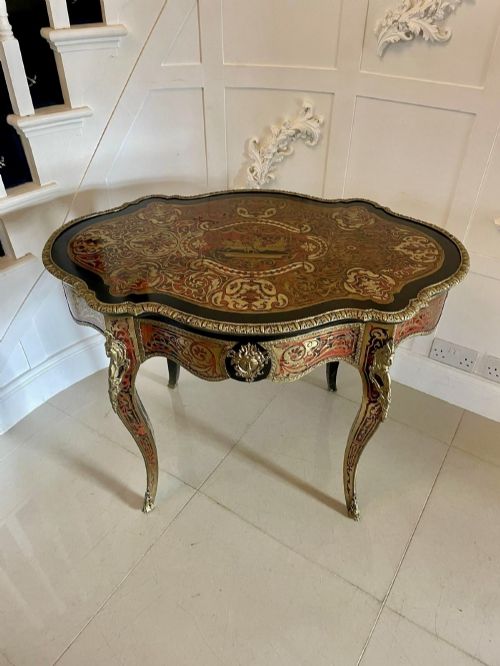
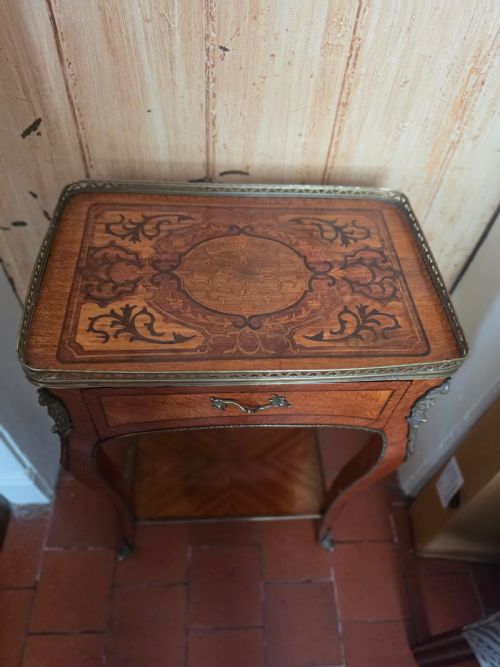
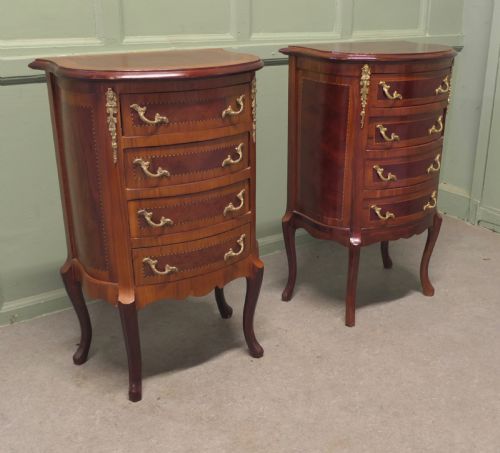
The version most commonly met on this page is the occasional or centre table, often featuring shaped legs and detailed surface patterns. Such pieces serve functional roles in domestic interiors while displaying the decorative traditions associated with continental workshops.
Materials and Technique
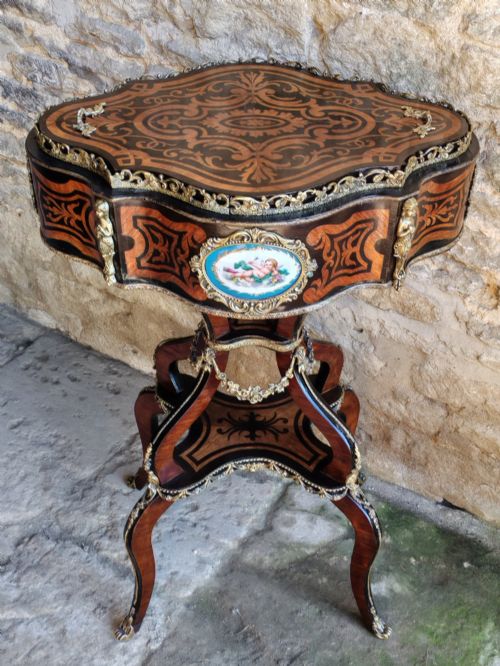
These items rely on a foundation of dense hardwoods such as walnut, kingwood, rosewood, and mahogany, frequently enhanced by ebonised sections or contrasting veneers. Artisans cut intricate patterns into the timber surface to receive fine brass inlay and ormolu mounts.
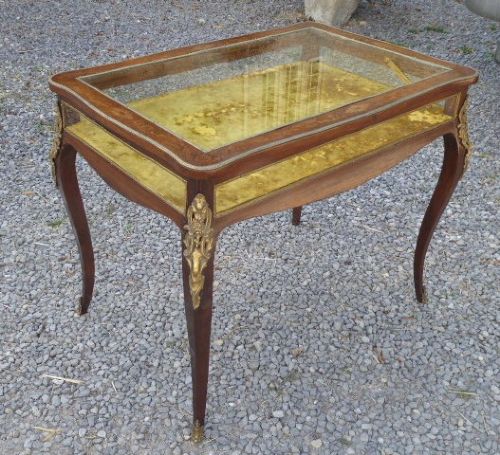
Brass elements and gilt-bronze mounts are secured to frame structures and tabletops, completing the decorative scheme. The combination of timber, metal, and glass components requires precise cabinetmaking techniques to ensure stability and alignment.
Several pieces double as wine coolers and jardinières, proving that nineteenth-century hosts took entertaining plants and beverages very seriously.
Quality and Execution
The standard of execution depends heavily on the precision of the brass inlay work and the choice of underlying timber veneers. Superior examples display tight joints, crisp metalwork, and carefully matched grain patterns across the tabletop.
Finer items also feature more substantial ormolu mounts and refined carving on the wooden frames, distinguishing them from simpler production pieces. The depth of colour in the rosewood or kingwood further indicates the grade of materials selected by the maker.
François Linke·Tehan·A Hugnet Paris
The French Brass Marquetry Table Glossary
- Marquetry
- Decorative veneer work forming pictures or geometric patterns using various woods and metals. This technique adorns tabletops and cabinet fronts.
- Ormolu
- Gilt-bronze mounts applied to furniture for decorative enrichment. These metallic elements accent the corners, legs, and aprons.
- Parquetry
- Geometric mosaic woodwork arranged in repeating patterns such as cubes or chequers. It differs from marquetry by using strict geometric grids.
- Boulle
- A specific style of marquetry using tortoiseshell and brass inlay, named after a royal cabinetmaker. It creates high-contrast metallic patterns.
- Etagere
- A set of open display shelves supported by columns or slender uprights. These tiered units hold small decorative objects.
- Gueridon
- A small circular table supported by a central column or multiple legs. Originating in earlier centuries, these serve as accent furniture.
French Brass Marquetry Table: Frequently Asked Questions
What is a french brass marquetry table used for?
These tables function as surface furniture in sitting rooms and hallways, holding lamps, clocks, or decorative objects. Their decorative tabletops also allow them to stand as central decorative focal points within a room.
They provide accessible display space while introducing period character to an interior. Owners often place them beside seating or in reception rooms where the inlaid details remain visible.
How do I care for brass and timber surfaces?
Maintenance involves dusting with a soft cloth and avoiding excessive moisture or direct sunlight that might fade the timber veneers. The brass and ormolu elements require gentle cleaning without abrasive polishes.
Applying occasional wax preserves the finish of walnut, rosewood, and mahogany surfaces. Keeping the environment stable protects the wood and metal components from expansion and contraction.
How can I tell the period of a table?
Dating relies on examining the timber species, construction methods, and stylistic revival influences present in the design. Nineteenth-century examples often display heavier ormolu mounts and dense hardwoods like kingwood.
Later revival pieces from the early twentieth century adopt similar decorative motifs but feature distinct internal construction techniques. Comparing the specific inlay patterns helps distinguish mid-nineteenth-century work from later interpretations.
Are these tables sturdy enough for daily use?
Most centre and occasional tables are built with robust hardwood frames designed for regular domestic placement. However, delicate brass inlay and veneered surfaces require careful handling to prevent scratching or impact damage.
Placing items gently on the surface ensures the marquetry and polish remain intact. Their structural integrity suits normal household activities when handled with reasonable care.