

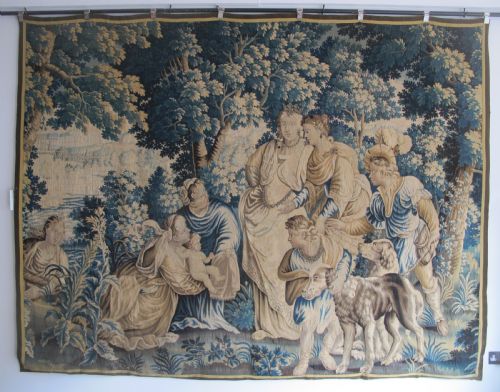


French Baroque Wall Hanging
A french baroque wall hanging brings dramatic 17th and 18th-century presence into a room through rich textiles and gilded frames.
French Baroque Wall Hanging
When you search for a french baroque wall hanging, you encounter a distinct group of textiles and framed mirrors originating from the 17th, 18th, and 19th centuries. The selection spans grand tapestries, verdure panels, silk velvet hangings, and carved giltwood mirrors.
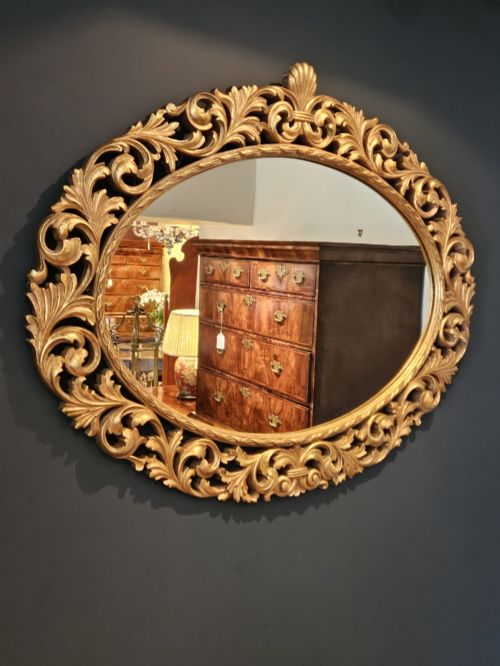
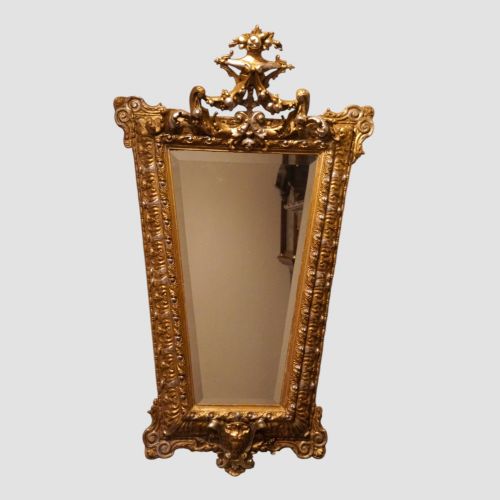
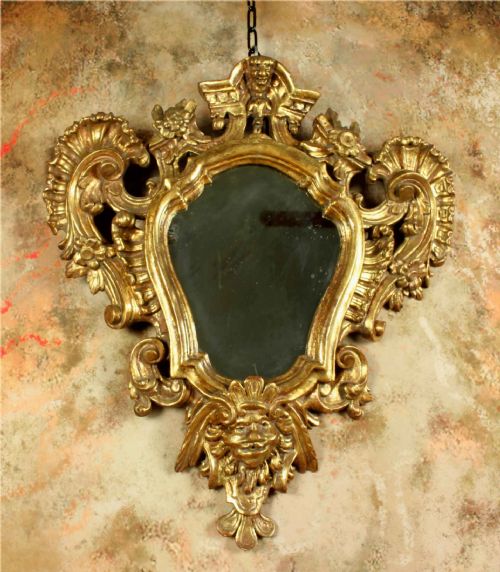
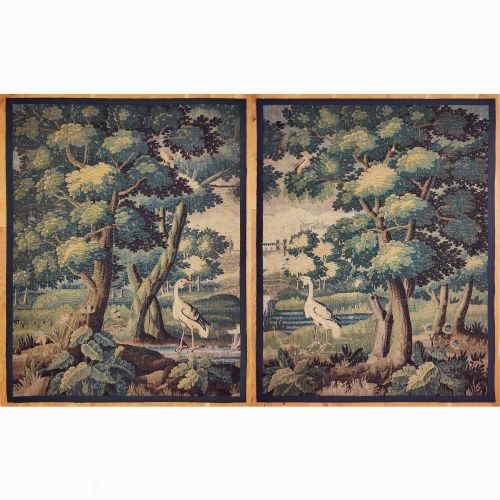
The textile pieces include Aubusson verdure works and needlework panels, alongside velvet hangings and tapestry cushion covers. Mirror forms take trapezoidal, oval, and cushion-framed shapes, often featuring elaborate crests, decorative masks, and cherubs.
Origins stretch from the late 1700s back to the 1600s, with later revival interpretations appearing from the Edwardian era and the early 20th century. These works serve as substantial wall art and architectural focal points within domestic interiors.
How they were made
Makers constructed the mirrors using carved timber, gesso, and wood bases finished with gold leaf, silver-gilt, and original mercury plates. Giltwood frames often exhibit deep relief carving and applied sculptural details like lion heads.
Textile panels employ wool, silk, and ciselé silk velvet woven on looms or worked by hand as needlework. Aubusson workshops utilised specialised weaving techniques to produce verdure and biblical scenes with layered depth.
Among the gilded timber and botanical wools, a cheerful wooden cherub hangs quietly waiting to watch the room.
What varies in quality
Quality rests upon the depth of the hand-carving in the wooden frames and the preservation of the original mercury glass plates. Superior giltwood examples display crisp gesso work and well-defined decorative elements rather than softened, recut details.
In the textiles, the fidelity of the wool and silk weave determines the distinction of a piece. Finer verdure tapestries and ciselé velvet panels retain stronger colour saturation and intact structural integrity across the fibre.
The French Baroque Wall Hanging Glossary
- Giltwood
- Wood carved and coated with gold leaf. This finish defines the reflective frames common to the period.
- Verdure tapestry
- A woven wall hanging depicting plants, trees, and foliage. These landscapes frequently include distant architectural elements or animals.
- Mercury plate
- A glass mirror backed with a tin-mercury amalgam. This historical silvering method creates a mottled, dark reflection.
- Ciselé velvet
- Velvet with a pattern created by cutting some pile loops and leaving others uncut. This technique produces contrasting textures on a silk ground.
French Baroque Wall Hanging: Frequently Asked Questions
How do I hang a heavy giltwood mirror?
These wooden frames require robust wall fixings anchored directly into structural studs or masonry. Professional installation ensures the substantial weight of the timber and glass is supported safely.
Position the piece at eye level to reflect light across the room, avoiding damp walls that could degrade the gesso and gold leaf over time.
Can antique tapestries handle direct sunlight?
Wool and silk fibres fade permanently when exposed to strong, direct ultraviolet light. Protect textile panels by placing them on shaded walls away from unshaded windows.
Rotate pieces periodically if ambient light in the room varies significantly to maintain even preservation of the dyed yarns.
How do I clean an antique mirror plate?
Use a soft, dry microfibre cloth to gently remove dust from the glass surface. Avoid liquid cleaners and harsh chemicals, which can seep behind the edges and damage the fragile mercury backing.
Keep moisture entirely away from the carved giltwood frame during maintenance to preserve the historic finish.
What is the difference between an Aubusson and a verdure panel?
Aubusson refers to the specific French town and weaving tradition known for pictorial and figurative compositions. Verdure panels specifically focus on lush botanical landscapes and foliage scenes.
Both categories utilise wool and silk threads, but verdure designs concentrate primarily on natural forest imagery rather than human narratives.