




French Art Glass Bowl
A French art glass bowl brings tangible weight and luminous colour to a table, spanning the decorative heights of the 19th and 20th centuries.
French Art Glass Bowl
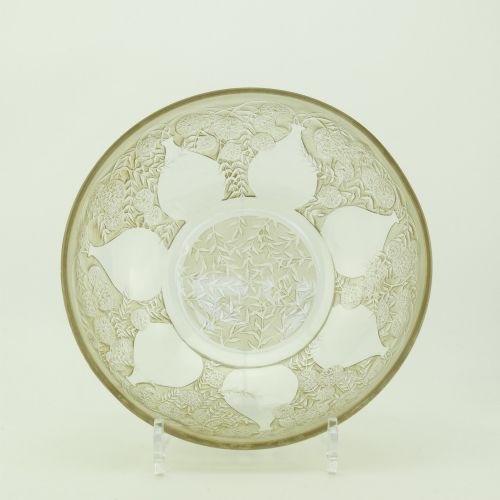
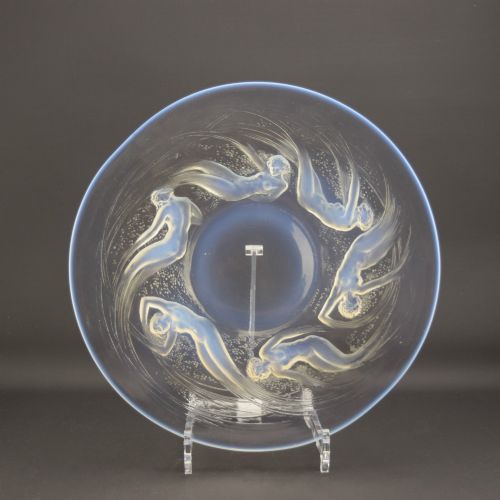
A search for a french art glass bowl leads directly to decorative vessels shaped during the height of the Art Nouveau and Art Deco periods. These works range from shallow opalescent coupes and heavy chargers to footed centrepieces bearing moulded floral or aquatic motifs.
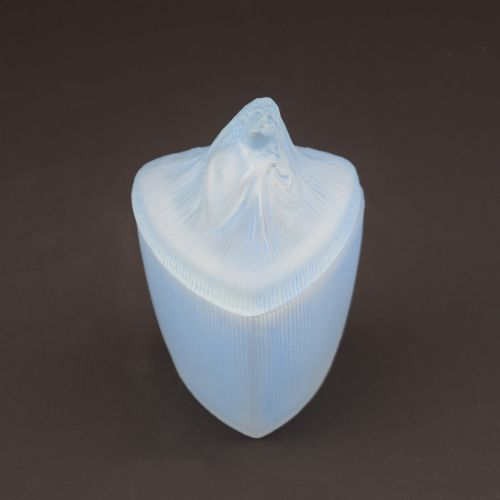
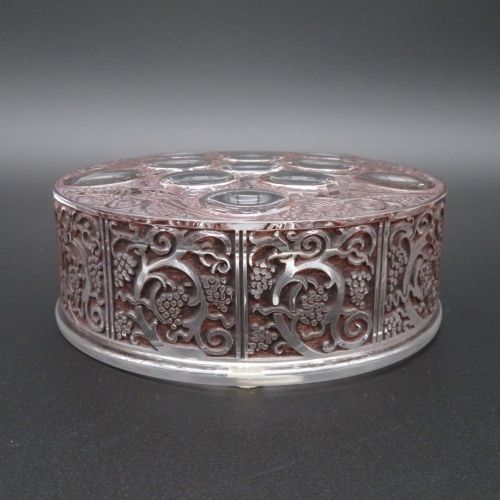
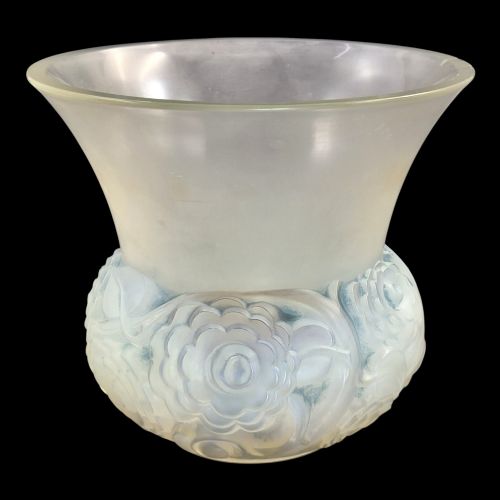
The most common examples on this page date from the 1920s and 1930s, reflecting the widespread embrace of modernist geometry and stylised nature. Alongside open bowls, buyers encounter related forms such as powder boxes, plates, and vases created by prominent Parisian and regional glasshouses.
How they were made
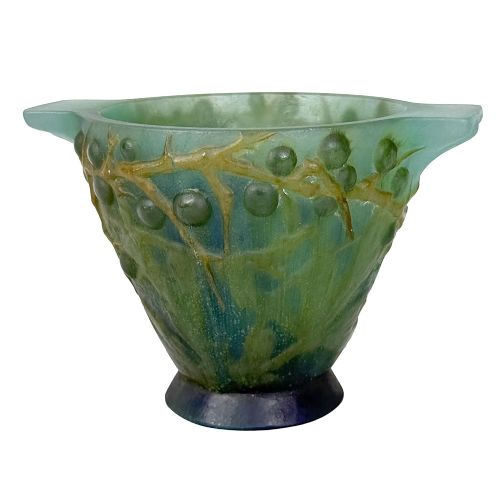
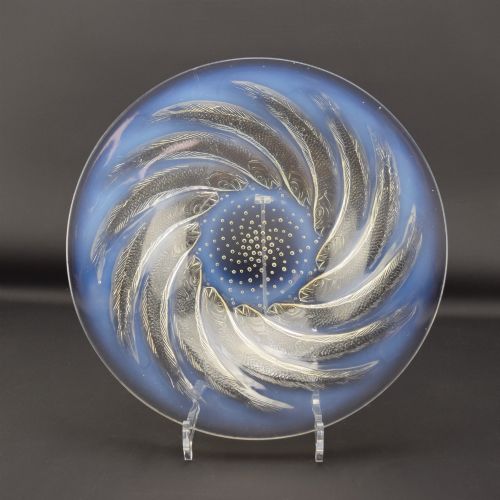
Makers utilised various techniques including press-moulding, heavy crystal cutting, and intricate pâte de verre, where powdered glass is fused in a kiln to achieve dense, tactile colour. Opalescence was achieved through specific chemical additions that caused the glass to scatter light, appearing milky blue in daylight and warm amber against direct illumination.
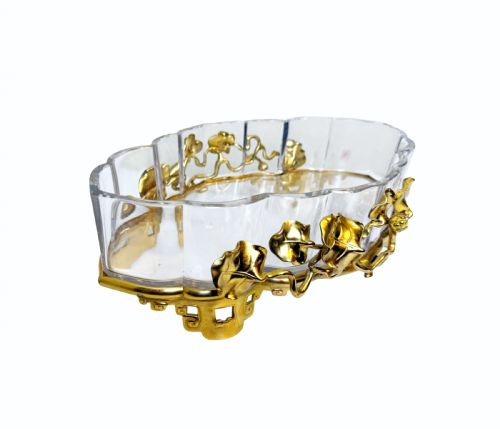
Surface detailing frequently involved enamelling, grey staining, or gilt bronze mounts that framed the glass body. The interaction between frosted or clear glass surfaces and low-relief moulding defined the visual depth of these pieces.
Listings span from the 1850s Baccarat works to 1930s Art Deco opalescent bowls, uniting pressed glass, crystal, and pâte de verre.
What varies in quality
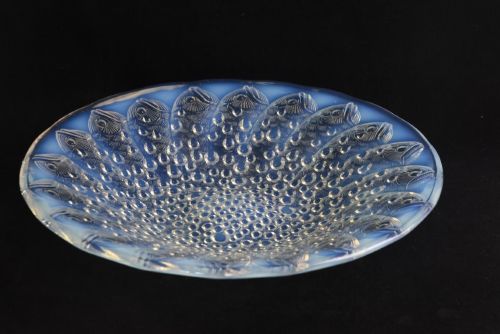
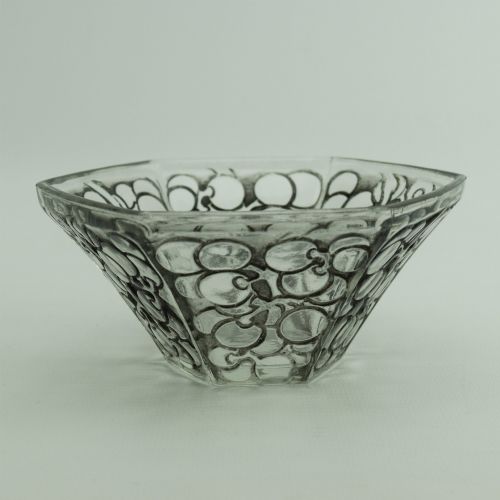
Depth of relief and clarity of the moulded detail separate standard production pieces from the finest studio achievements. Sharpness in floral petals, fish scales, or geometric facets demonstrates the precision of the original metal matrices.
The sophistication of the chemical reaction in opalescent pieces creates subtle blue and orange shifts that lesser formulations miss entirely. Weight, thickness, and the finesse of any hand-finished staining or fire-polishing also dictate the standing of an individual vessel.
Rene Lalique·Amalric Walter·G Vallon·Etling·Baccarat
The French Art Glass Bowl Glossary
- Opalescent Glass
- Glass that diffuses light so that it appears milky or bluish when viewed from the side, yet warm orange when light passes through it. This optical effect defined much of the output during the interwar years.
- Pâte de Verre
- A kiln-casting method using crushed glass paste fused inside a mould. This technique yields dense, textured vessels with rich, mottled colourations.
- Coupe Ouverte
- An open bowl or shallow dish designed for display or table service. These pieces frequently carry moulded motifs around the exterior rim.
- Latticinio
- Blown glassware incorporating fine opaque white or coloured glass threads within clear glass. This traditional Venetian method occasionally appeared in French domestic vessels.
- Plafonnier
- A ceiling light or bowl fixture suspended flush against the interior surface. These lighting elements share the same moulded glass aesthetics as table bowls.
French Art Glass Bowl: Frequently Asked Questions
How do I identify opalescent glass?
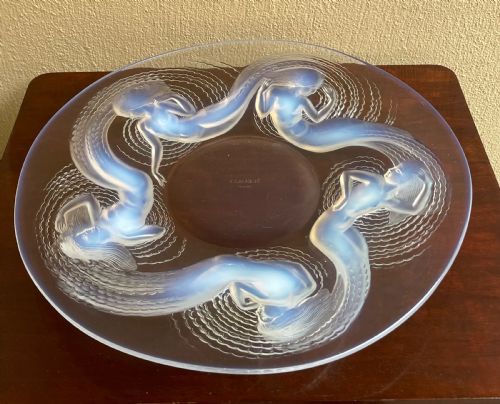
Opalescent glass displays a characteristic milky-blue haze across its raised surfaces when lit from the front. When you hold the piece up to direct light, the translucent areas shift to a warm amber or yellow tone.
This dual colour behaviour results from specific chemical agents added to the molten batch during manufacturing. It remains a primary indicator of interwar French production.
Were these bowls used daily?
Most surviving decorative bowls served primarily as centrepieces, fruit dishes, or dressing table accessories rather than rugged kitchenware. Their heavy press-moulded construction gave them practical durability, though their artistic value meant careful placement.
Over decades of domestic life, owners utilised them to hold potpourri, loose trinkets, or simply as standalone display items on sideboards.
What is pate de verre?
Pâte de verre translates literally as glass paste, describing a kiln-fusion process rather than traditional glassblowing. Artists packed powdered glass mixed with a binder into a refractory mould, then fired the assembly until the particles fused together.
This technique produced thick-walled vessels with distinctive sugary textures and complex colour gradients that cannot be replicated by blowing.
How do I date a piece?
Dating relies on stylistic markers, signature formats, and manufacturing techniques recorded across different eras. Pieces from the 1900s often show organic Art Nouveau plant forms, while 1930s examples lean towards rigid symmetry and geometric abstraction.
Signatures also evolved from painted cursive names to moulded block capitals embedded directly into the base glass during the pressing stage.