


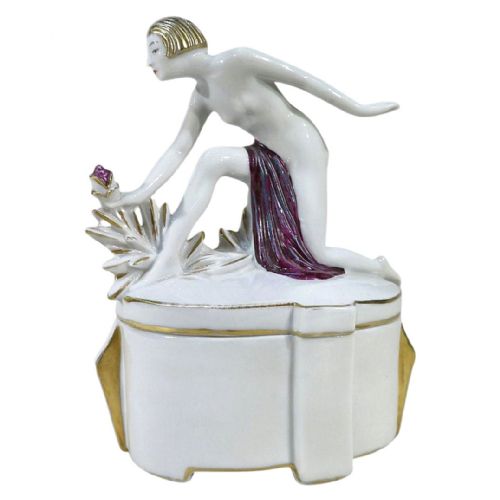


French Art Deco Porcelain
French art deco porcelain brings sculptural form and functional design together in pieces that define a distinct twentieth-century aesthetic.
French Art Deco Porcelain
French art deco porcelain encompasses a range of decorative and functional objects produced predominantly around the nineteen-thirties, capturing the modernist spirit of the era. Buyers seeking french art deco porcelain encounter powder boxes, table lamps, cigarette strikers, and figural sculptures that display characteristic geometric lines and stylised motifs.
The objects frequently take the form of half doll powder box bowls, perfume lamps, and animal sculptures such as elephants and pheasants. These items combine utility with display, serving as dressing table accessories or interior ornaments.
Materials and construction
The pieces rely on porcelain, ceramic, and earthenware bodies shaped into sharp angles and smooth curves typical of the style. Makers applied gloss glazes, enamel finishes, and occasional gold leaf glaze highlights to accentuate the contours of the modelled forms.
Some works incorporate mixed media bases, such as marble mantel clock housings paired with porcelain animal figures. The firing and glazing techniques achieved either crisp white surfaces or rich, coloured sheens.
Elephants appear across multiple decades, marching from nineteenth-century marble clocks straight into nineteen-twenties Parisian perfume lamps.
Assessing quality
Quality rests upon the crispness of the moulding in figural works, particularly in detailed items like flapper girl half dolls and animal sculptures. Softer lines in the ceramic or uneven glaze pooling diminish the sharpness intended by the designer.
The distinction between standard production items and finer pieces involves the precision of hand-painted enamel details and the application of gold leaf. Maker attribution, such as works associated with Limoges or specific Parisian workshops, also marks a higher tier of production.
Limoges·Argilor·Le Manceau
The French Art Deco Porcelain Glossary
- Powder box
- A decorative container with a fitted lid used on dressing tables to hold cosmetic powder. These often feature figural lids such as flapper girls.
- Perfume lamp
- A specialised night light or lamp designed to diffuse scented oils through heat from the bulb. They frequently take animal or human figurine shapes.
- Half doll
- A porcelain figure modelled from the waist up, traditionally mounted on the fabric skirts of powder boxes or tea cosies. They are characteristic of early twentieth-century vanity items.
- Bonbonniere
- A small ornamental box intended for holding sweets or confectionary. These vessels showcase decorative glazes and fitted lids.
- Cigarette striker
- A small tabletop accessory featuring an abrasive surface designed for striking matches. They often incorporate novelty ceramic figures.
French Art Deco Porcelain: Frequently Asked Questions
What is a perfume lamp?
A perfume lamp is a functional lighting object that doubles as a room fragrance diffuser. Heat from the light warms scented oil placed in a small reservoir.
These pieces often depict animals or human figures, serving as decorative ornaments during daylight hours.
How do I date these pieces?
Dating relies on stylistic markers of the nineteen-twenties and nineteen-thirties, combined with manufacturer marks where present. The geometric forms and specific figural subjects offer clear chronological clues.
Earlier nineteenth-century items, such as mid-nineteenth-century marble clocks, display different decorative vocabularies compared to the art deco period.
Where were these objects used?
Most items served domestic roles in bedrooms, dressing rooms, and parlours. Powder boxes and half dolls belonged on dressing tables, while lamps and bonbonnières occupied living spaces.
Tabletop accessories like cigarette strikers functioned in social areas for entertaining guests.
Are these items purely decorative?
While highly ornamental, many pieces retained practical functions. Powder boxes stored cosmetics, bonbonnières held sweets, and lamps provided illumination.
Figural sculptures and mantel clocks served primarily as interior decor, combining utility with visual appeal.