


Vintage Ceramic Vanity Dish
A vintage ceramic vanity dish gathers the small treasures of the dressing table, offering both practical storage and sculptural charm.
Vintage Ceramic Vanity Dish
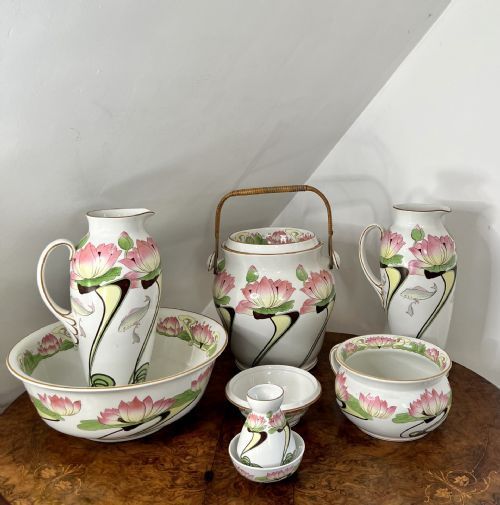
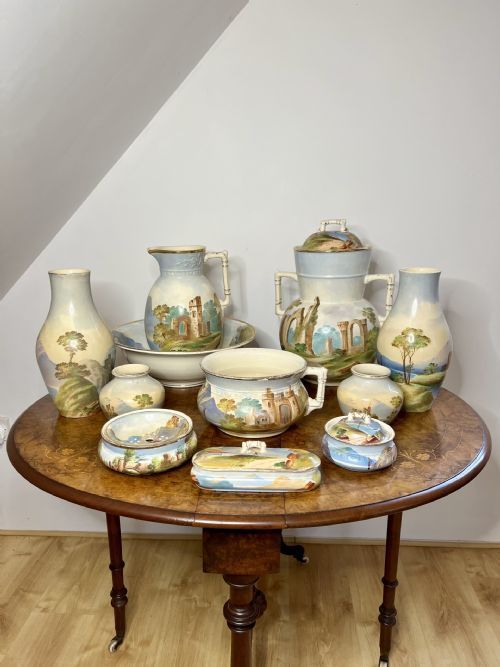
A vintage ceramic vanity dish encompasses dressing table accessories, powder boxes, and trinket bowls designed to hold cosmetics and small personal items. These pieces span several decades, shifting from formal Victorian and Edwardian wash sets to playful Art Deco figural designs.
The most common examples on this page are Art Deco powder boxes and bowls from the nineteen-thirties, frequently featuring half dolls, flapper girls, and novelty characters. French and German makers feature prominently among these porcelain and earthenware containers.
Materials and methods
These items rely on ceramic bodies formed from porcelain or earthenware, shaped into basins, jars, and figural lids. Potters applied smooth glazes to seal the porous clay and provide a glossy surface for painted decoration.
Details were hand-painted or transferred onto the ceramic body, occasionally incorporating enamel highlights or gilt and gold leaf accents to accentuate the rims and figural motifs.
Several powder boxes feature a jaunty puppy dog keeping watch beside a flapper girl.
Distinguishing quality in vanity pieces
Quality rests in the modelling of the ceramic form, particularly on figural lids where the expression and detail of a half doll or animal define the piece. Crisp lines and careful painting separate standard production items from finer studio or factory work.
The application of glaze and gilding also indicates standard; even coverage without pooling shows disciplined kiln work. Fine porcelain bodies demonstrate a more refined finish than heavier earthenware alternatives.
Meissen·Limoges
The Vintage Ceramic Vanity Dish Glossary
- Porcelain
- A fine, hard ceramic fired at high temperatures, known for its dense white body and smooth finish.
- Earthenware
- A porous pottery body that requires a complete glaze to become impermeable to liquids.
- Half doll
- A ceramic figure modelled from the waist up, frequently used as a decorative lid for powder boxes and brushes during the early twentieth century.
- Gilt
- A thin layer of gold applied to the surface of ceramics or metal to provide decorative highlights.
- Chinoiserie
- European decorative style inspired by Chinese art and design, often seen on porcelain containers.
Vintage Ceramic Vanity Dish: Frequently Asked Questions
What were these powder bowls used for?
These bowls held loose face powder and puff applications on dressing tables before modern compacts became common.
They also served to contain hairpins, rings, and small trinkets when the dressing routine ended.
How do I date an Art Deco powder box?
Look to the styling of the figures, such as flapper girls, pierrots, and jesters, which point directly to the nineteen-thirties.
Marks on the base from French and German potteries also help anchor the exact decade of manufacture.
Can I use these dishes in a modern bathroom?
These decorative containers hold cotton buds, jewellery, and small accessories on contemporary vanity surfaces.
Care should be taken with older glazes and delicate gilding when placing them in damp environments.
What is the difference between porcelain and earthenware here?
Porcelain provides a thinner, whiter, and more resonant body that resists staining and wear over time.
Earthenware tends to feel heavier and thicker, representing more utilitarian wash set components from earlier periods.