

French Art Deco Glasses
These French art deco glasses and drinking vessels bring striking twentieth-century form and tactile weight to any table.
French Art Deco Glasses
French art deco glasses represent the glassware produced during the modernist decades of the early twentieth century, particularly the nineteen-twenties and nineteen-thirties. Buyers searching this phrase look for functional drinking vessels as well as decorative glass objects that capture the geometric or organic motifs of the period. The selection includes tableware suites, decanters, and occasional stemware made across France.
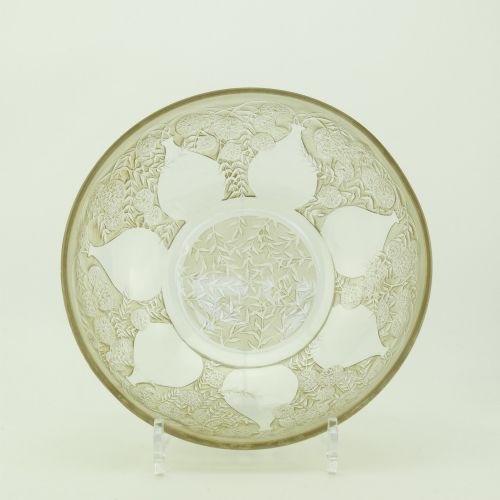
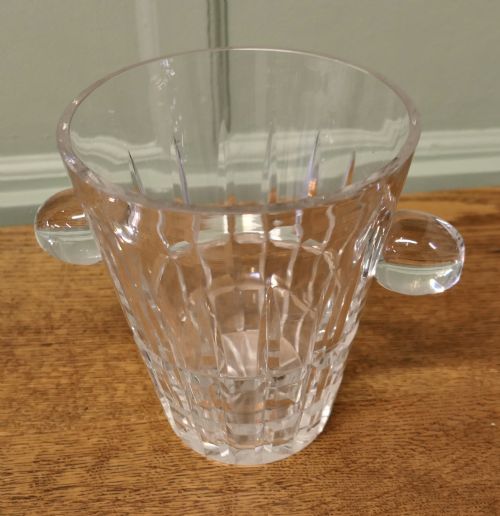
Vessels on this page span clear crystal, heavy hand-cut wine coolers, and matched dining suites with engraved decoration. Pieces often emerge from notable studios or larger industrial production lines operating under the stylistic influence of the interwar era. Simpler moulded forms sit alongside elaborately cut crystal service items designed for formal dining.
How They Were Made
Glassmakers utilised pressing, blowing, and moulding techniques to achieve the characteristic thick walls and relief patterns of the era. Molten material entered heavy metal moulds or underwent manual blowing before artisans applied wheel-cutting or chemical frosting to create contrast.
Clear crystal and coloured glass served as primary mediums, sometimes combined with silver-plate mounts, brass, or wrought iron bases. Workshops often employed acid-etching or enamelling to accentuate surface designs on bowls, decanters, and drinking vessels.
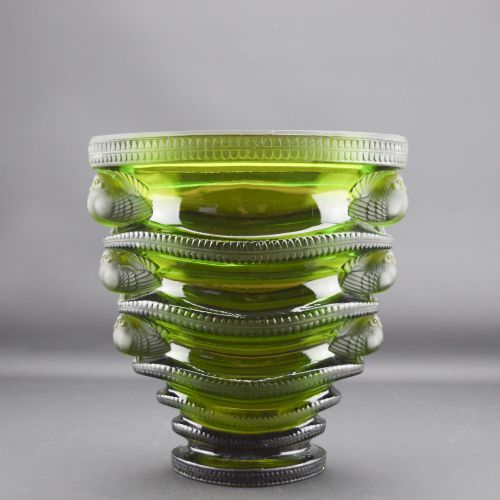
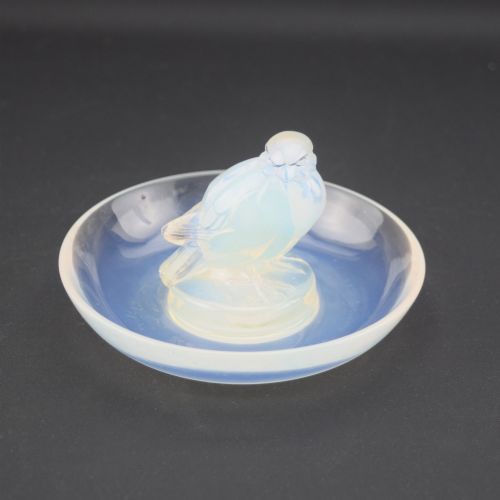
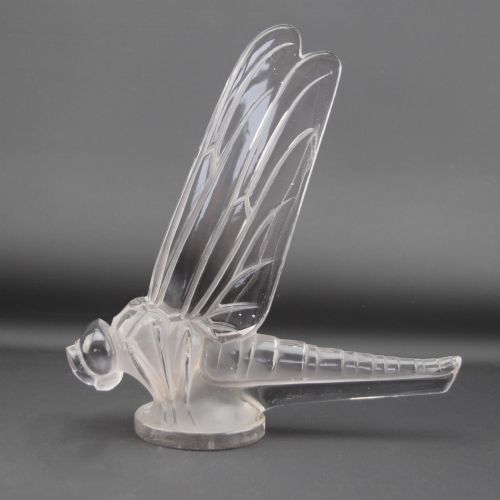
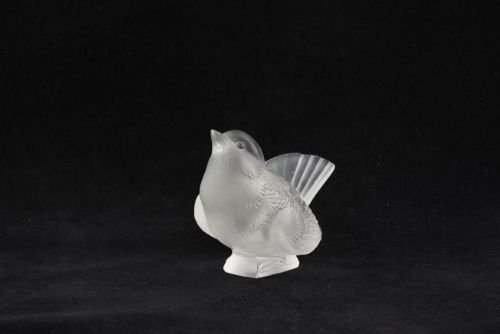
Several mischievous glass sparrows and lovebirds sit quietly among the lighting and tableware.
What Varies in Quality
Quality rests upon the crispness of the moulding and the depth of any hand-engraved or cut decoration. Superior examples display sharp relief, polished pontil marks, and balanced weight without distracting bubbles or surface distortion.
The reputation of the maker and the complexity of the glass formulation heavily influence desirability. Dense crystal with precise resonance and clear colour saturation distinguishes finer dining suites from standard commercial production.
Rene Lalique·Baccarat·Daum·Amalric Walter·Charles Schneider
The French Art Deco Glasses Glossary
- Opalescent glass
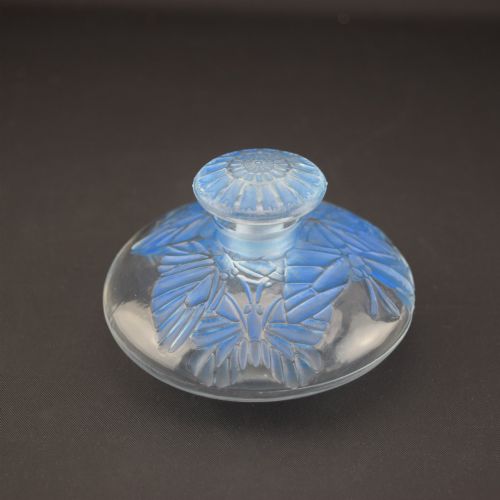
- A milky, translucent glass that reflects blue light in illumination and appears amber or warm when lit from behind. It was widely utilised by major French glassmakers for decorative vessels.
- Moulded glass
- Glass formed by pressing molten material into a metal or wooden matrix to create three-dimensional surface patterns. This technique allowed workshops to produce consistent relief designs.
- Pontil mark
- The rough scar left on the base of a vessel where the punty rod was snapped away after blowing. Its presence indicates manual finishing rather than entirely automated production.
- Crystal
- Glass containing a proportion of metal oxides that increases weight, clarity, and brilliance. It allows for deeper, sharper facet cutting on drinking vessels.
French Art Deco Glasses: Frequently Asked Questions
How do I clean antique crystal glasses?
Wash delicate crystal drinking vessels by hand in warm water using a mild, unscented detergent. Avoid sudden temperature changes to prevent thermal shock.
Place a folded towel at the bottom of the sink to cushion the base and rim during washing. Dry immediately with a lint-free linen cloth to maintain clarity.
Are these glasses safe for daily use?
Many sturdy cut crystal pieces suit regular dining if handled with appropriate care. Thin-walled or historical decorative items require more cautious handling.
Inspect rims and bases for tiny nicks before use. Hand washing remains essential for preserving older glass surfaces.
How can I identify French art deco glassware?
Look for characteristic design motifs such as geometric repeats, stylised florals, and clean symmetrical silhouettes. Heavy weight and deep relief moulding also point toward the era.
Examine the base for signature etchings or moulded factory marks. Stylistic context often provides the strongest clue when signatures are absent.