
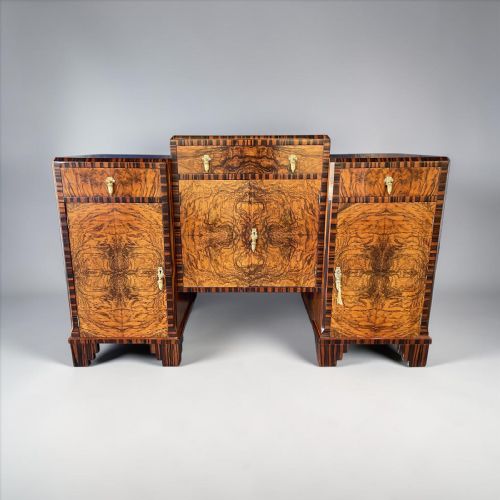
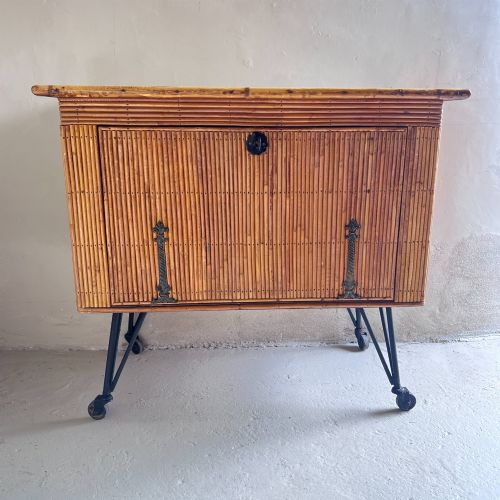
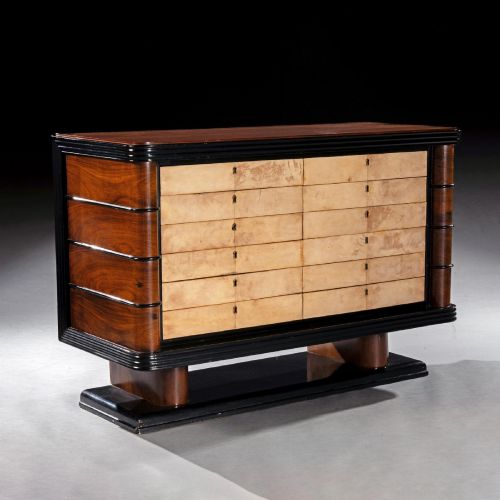
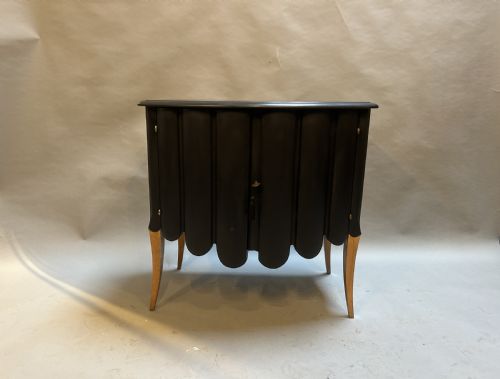


French 1930s Sideboard
These French 1930s sideboards combine bold geometry and luxurious veneers, offering serious storage capacity with distinct period character.
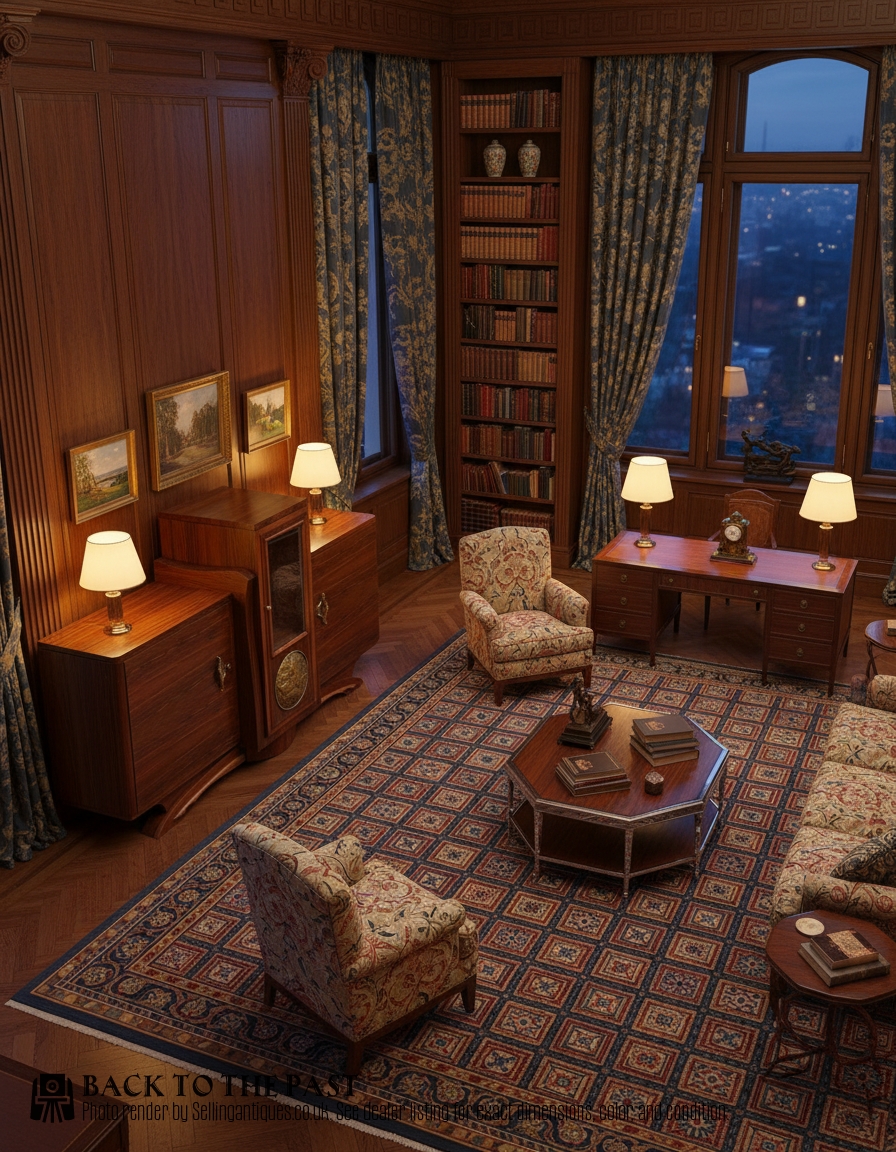
French 1930s Sideboard
When you search for a french 1930s sideboard, you encounter low, horizontal cabinet forms primarily rooted in the Art Deco style, alongside occasional interpretations drawn from Louis XV or French Provincial traditions. The pieces appearing here span the 1920 and 1930 periods, presenting substantial wooden carcasses designed to anchor a dining room or salon.
Most examples function as sideboards and buffets, while related forms include drinks cabinets, side cabinets, commodes, and credenzas. These storage pieces generally sit low to the ground with heavy proportions, frequently incorporating shelved cupboards flanked by drawers or drop-front sections.
Originating predominantly from Parisian workshops and regional French makers, these items reflect the transition from traditional craftsmanship to modernist restraint. The typical piece balances geometric massing with decorative veneers, serving as both a functional store for tableware and a dominant visual centrepiece.
Materials and construction
Cabinet makers built the structural carcasses using solid timbers such as walnut, oak, and ebonised wood, upon which they applied elaborate decorative veneers. The surface treatments rely on high-figure exotic woods like burr walnut, palisander, calamander, macassar, and ebony to create striking visual contrast and grain patterns.
Many high-end variants incorporate contrasting details such as parchment-covered drawer fronts, intricate parquetry tops, and inset marble slabs. Metalwork plays a supporting structural and decorative role, with brass hardware, cast-iron legs, and occasional bronze mounts completing the assembly.
Listings feature walnut, burr walnut, macassar, calamander, and ebony veneers combined with marble and brass.
Judging quality and finish
The distinction between ordinary and exceptional pieces lies in the selection and application of timber veneers. Superior examples display book-matched grain patterns that flow seamlessly across doors and drawers, whereas lesser pieces use flat, repetitive surfaces without depth.
Hardware integration and secondary materials also dictate the tier of the piece. Heavy marble tops, precise parquetry alignment, and genuine parchment or metal inlays separate standard production items from bespoke or attributed studio works.
Étienne Kohlmann·Alexandre Kelety
The French 1930s Sideboard Glossary
- Art Deco
- A design style spanning the 1920s and 1930s characterised by streamlined geometric forms, stylised motifs, and luxurious materials. It replaced the organic curves of Art Nouveau with symmetry and modern industrial influences.
- Macassar
- A dense, highly figured tropical ebony timber featuring distinctive dark brown and golden stripes. Cabinet makers prized this wood for high-end decorative veneering.
- Parquetry
- A geometric mosaic of wood pieces used for decorative floors and furniture surfaces. It requires precise cutting and fitting of contrasting timbers.
- Serpentine
- A furniture front shape that curves inward in the centre and outward at the sides, resembling a snake. This contour demands advanced woodworking skill to shape accurately.
- Commode
- A low chest of drawers or cabinet with multiple tiers of storage. In French furniture history, it evolved from a heavy chest into an elegant living area storage piece.
French 1930s Sideboard: Frequently Asked Questions
How do I clean the marble top?
Wipe the marble surface regularly with a soft damp cloth and mild neutral soap to prevent staining from spilled liquids or oils. Avoid acidic cleaners, vinegar, or harsh abrasives that will etch the polished stone finish over time.
Dry the surface thoroughly with a clean microfibre cloth to maintain its natural sheen and prevent water spots from forming on the polished stone.
Where should I place a drinks cabinet?
Position the drinks cabinet away from direct sunlight and strong heat sources such as radiators to prevent the exotic wood veneers from drying out, warping, or cracking. A dining room or living space with stable ambient temperature and humidity provides the ideal environment for preserved timbers.
Ensure the floor is level so that heavy doors and internal drop-front compartments align properly during daily use without putting undue stress on the hinges.
How do I identify Art Deco style?
Look for clean geometric lines, symmetrical compositions, and stepped architectural forms rather than floral curves or excessive carving. The aesthetic prioritises bold silhouettes combined with rich, contrasting surface materials.
Examine the hardware and feet for stylised metal details, such as brass or cast-iron elements, which complement the dark walnut, macassar, or ebonised wood carcasses typical of the period.
Can I use furniture polish on veneers?
Apply traditional wax polish sparingly and buff with a soft cloth to nourish old timber veneers without building up a heavy, cloudy residue. Avoid silicone-based sprays, as they penetrate open grain structures and damage the historic French polish or lacquer finish.
Test any maintenance product on a small, hidden area underneath the sideboard first to ensure the historic finish reacts favourably to the treatment.