

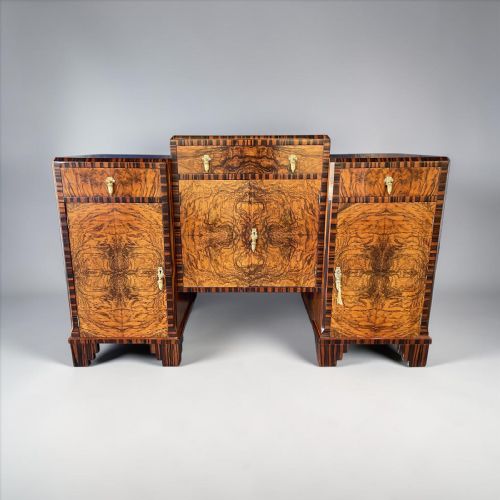

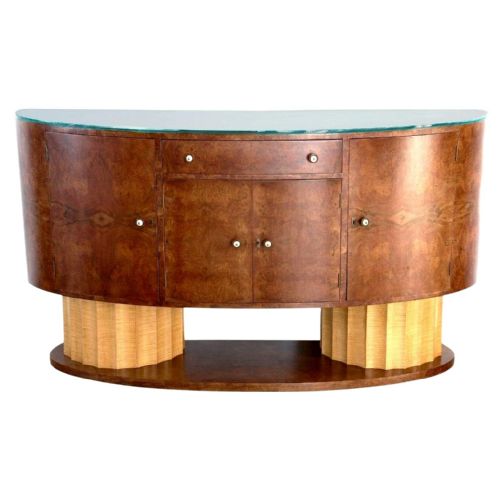


Art Deco Walnut Credenza
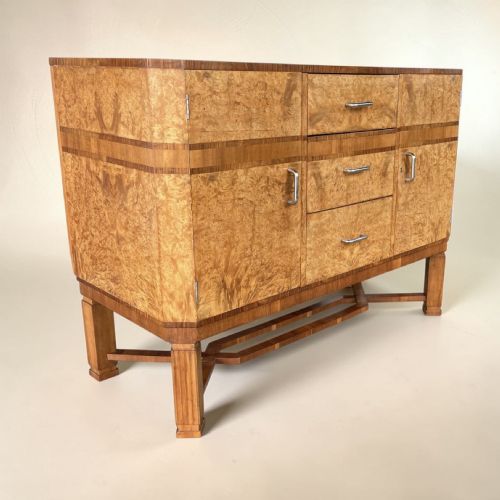
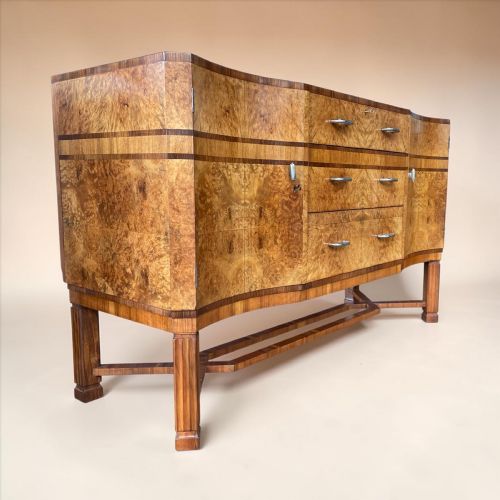
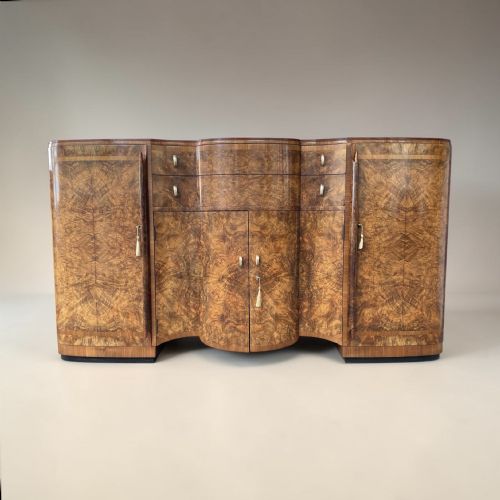
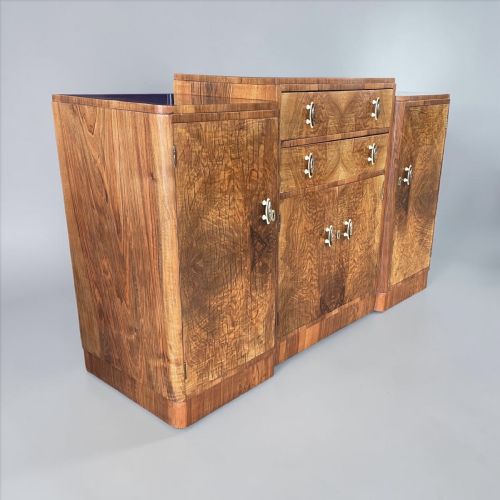
An art deco walnut credenza brings striking geometric presence and rich timber grain to a modern interior.
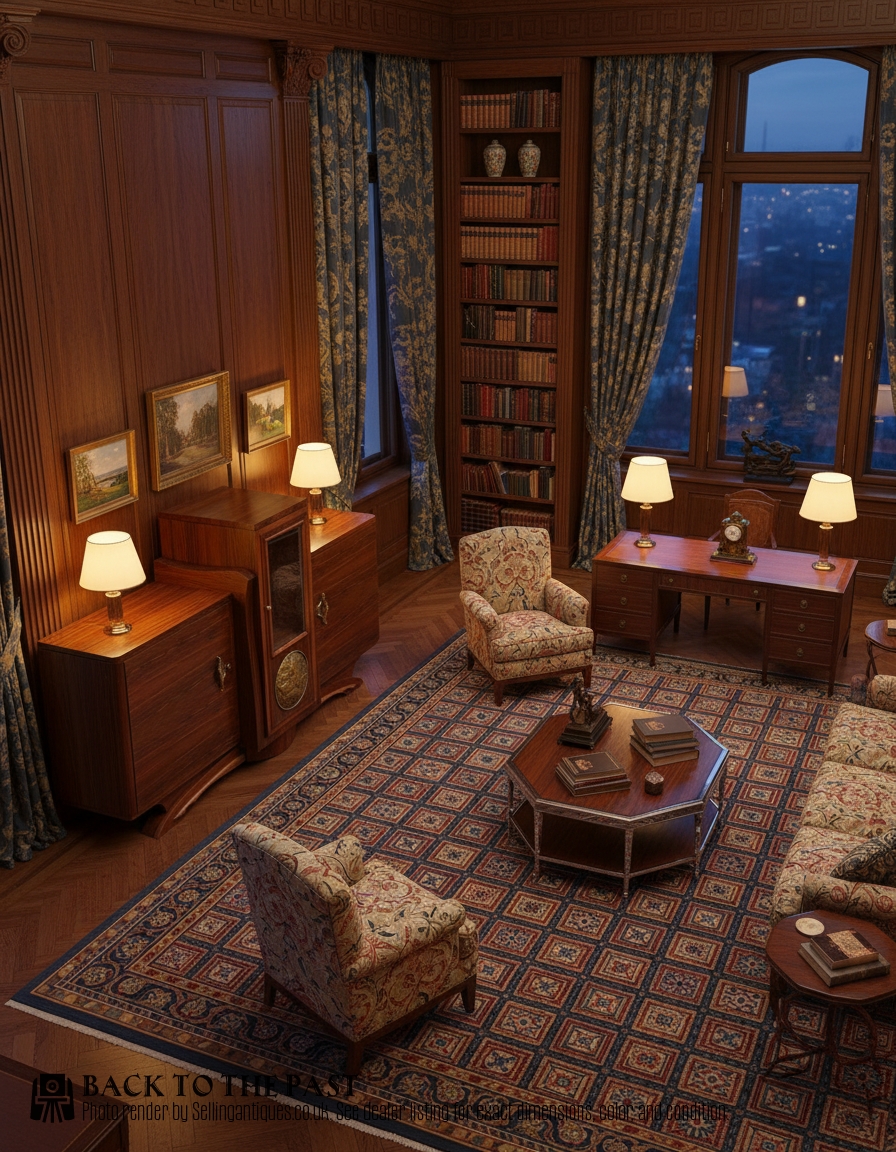
Art Deco Walnut Credenza
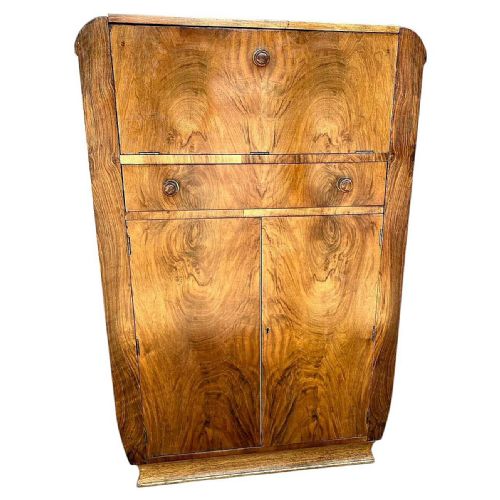
An art deco walnut credenza is a substantial storage piece designed during the 1920 and 1930 decades, combining bold geometric forms with functional interior compartments. Buyers searching for an art deco walnut credenza will find pieces that double as sideboards, buffets, and cocktail cabinets.
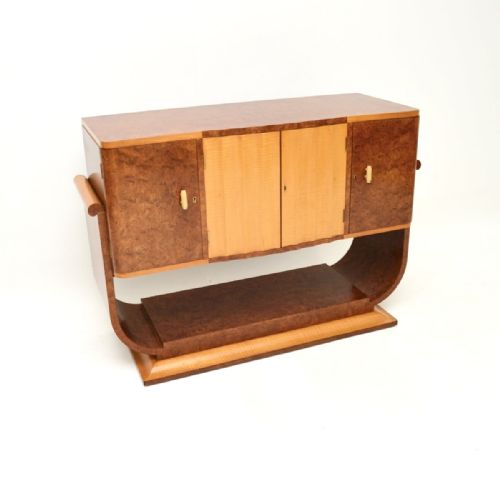
The version most commonly met on this page is the side cabinet or sideboard originating from the 1930 period, often standing on short plinths or legs with fitted interior shelving and drawers. These forms serve dining rooms and living spaces equally well, providing surface area and enclosed storage.
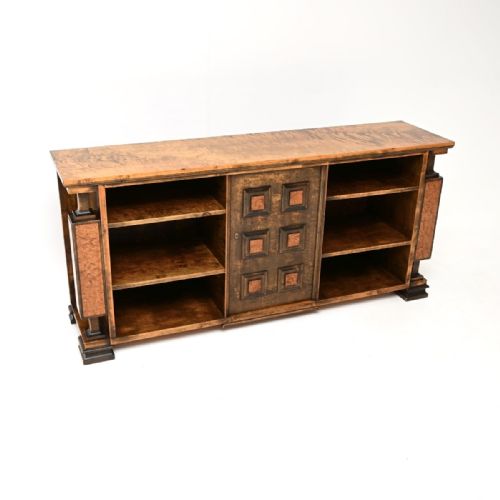
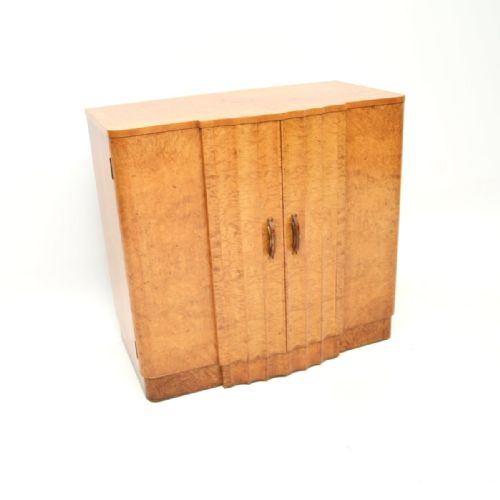
Origins span British workshops alongside French, Swedish, and Italian makers, each bringing distinct interpretations to the style. French and Italian examples frequently employ serpentine fronts and contrasting maple or mahogany, whilst British pieces focus heavily on figured timber grains.
How they were made
Cabinet makers constructed these pieces using solid timber carcasses overlaid with high-grade veneers, principally burr walnut and plain walnut, to create dramatic patterned surfaces. Sycamore and satin birch often appear as contrasting interior or banding elements.
Metal and glass components provide structural and decorative contrast, utilising brass handles, mirrored backs inside drinks compartments, and occasional bakelite details. Veneers were carefully matched across drawer fronts and doors to achieve symmetrical grain patterns.
The listings span the 1920 and 1930 periods, incorporating walnut, burr walnut veneer, brass, mirror, glass, and bakelite across various sideboard and cabinet formats.
What varies in quality
Quality rests heavily on the selection and matching of the walnut veneer, where master workshops achieved mirror-image grain patterns across large cabinet doors. Lesser examples display plain timber or haphazard grain alignment that lacks the visual rhythm characteristic of the period.
The sophistication of the internal fittings and hardware sets the upper tier apart from standard production. Fitted cocktail interiors with mirrored surfaces, glass shelving, and heavy brass or chromed mounts denote superior workshop output.
Maurice Adams·Harry and Lou Epstein·Hille·Hamptons of Pall Mall London·The Bowman Brothers
The Art Deco Walnut Credenza Glossary
- Burr walnut
- A prized timber harvested from tree growths that produces swirling, intricate grain patterns. It forms the primary decorative surface on upper-tier cabinets and sideboards.
- Veneer
- A thin layer of superior wood glued to a stable secondary timber core. This technique allowed makers to display dramatic grain without warping solid sections.
- Cocktail cabinet
- A specialised storage form featuring a drop-down serving flap, mirrored interior, and glass holders for entertaining. These drinks cabinets represent a distinct subset of the sideboard family.
- Serpentine front
- A furniture front curving outward in the centre and inward at the sides in an 'S' shape. This shape appears frequently on continental European case pieces.
- Art Deco
- The dominant design style of the 1920 and 1930 eras characterised by stylised motifs, clean lines, and geometric symmetry. It guides the overarching aesthetic of these cabinets.
Art Deco Walnut Credenza: Frequently Asked Questions
How do I use an art deco credenza today?
These cabinets function effectively as sideboards in dining areas or as media units and drinks stations in living rooms. Their internal shelving and drawers accommodate modern tableware, glassware, and household items with ease.
The flat top surfaces provide an ideal stage for lamps, sculptures, or decorative objects. Placing them away from direct heat sources helps preserve the delicate timber veneers.
Were these cabinets made for drinks?
Many of the pieces designed during the 1930 period served specifically as cocktail cabinets or drinks furniture. They often feature pull-down flaps, mirrored backs, and dedicated glass storage.
Standard sideboards focused on cutlery and dining storage, though the overarching aesthetic remained unified across all variants. Interiors of drinks cabinets frequently include pull-out glass-topped mixing slides.
How do I tell British and continental pieces apart?
British workshops like Epstein and Hille tended to focus on bold burr walnut veneers and rectilinear or subtly curved carcases. Their construction prioritises heavy timber presence and symmetrical grain layouts.
Continental pieces from France and Italy often introduce serpentine shapes, contrasting maple or mahogany details, and lighter satin birch elements. Swedish cabinets frequently combine walnut with satin birch for a paler, restrained palette.
What is the difference between a sideboard and a credenza?
In this period, the terms often overlap to describe low storage furniture with cupboards and drawers. Sideboards typically emphasise dining utility with cutlery drawers and serving surfaces.
Credenzas and side cabinets share similar forms but may incorporate glass display sections or specialised cocktail interiors. Both terms describe low-profile storage designed to anchor a room.