



Freestanding Towel Horse
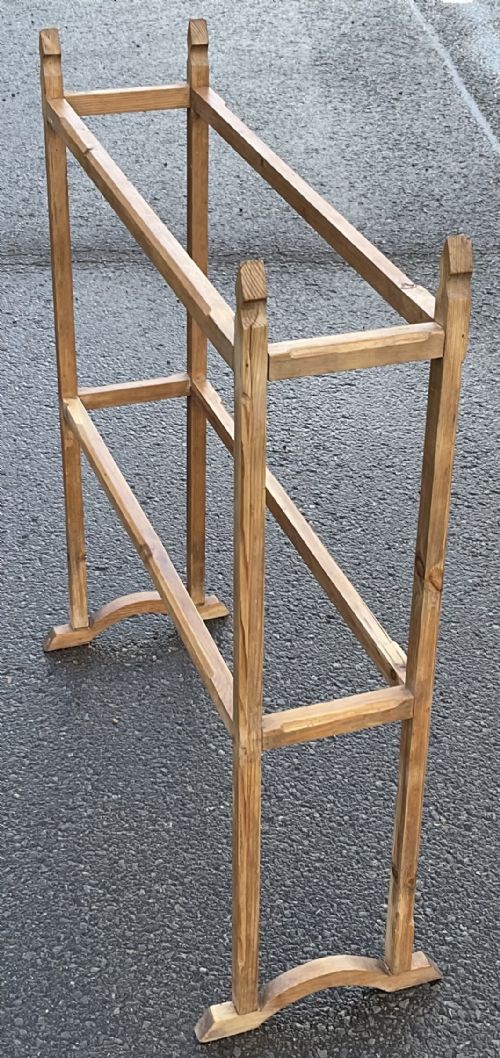
A freestanding towel horse brings practical warmth to a room, offering a moveable frame for linens in polished mahogany, oak or pine.
Freestanding Towel Horse
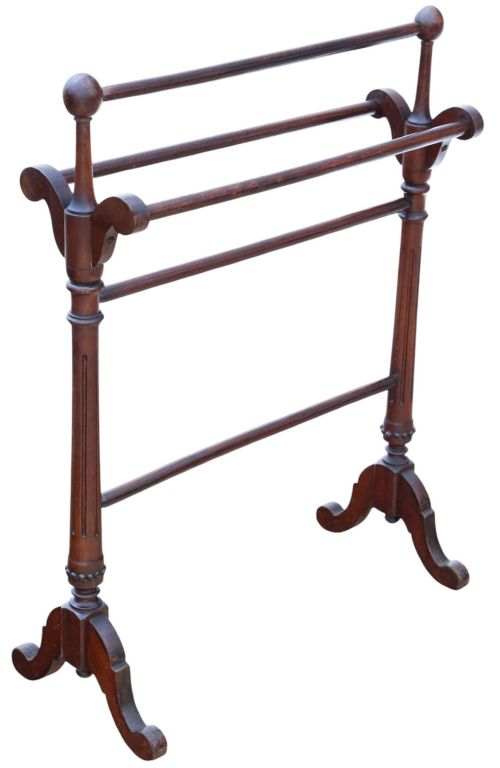
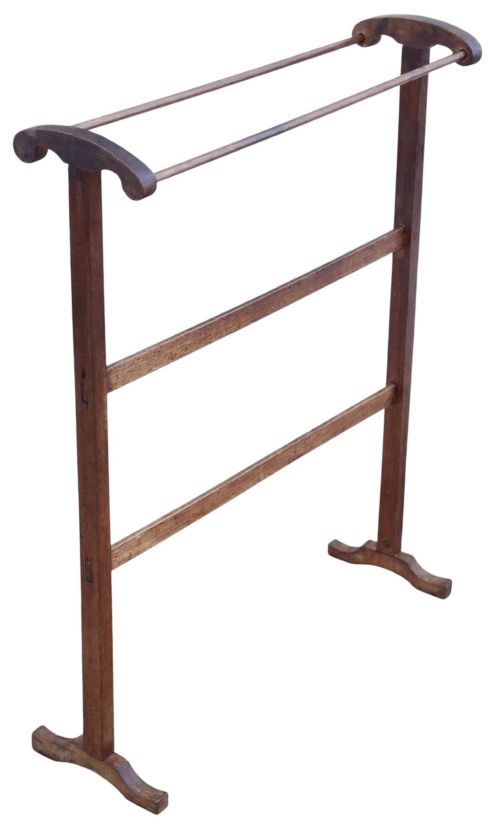
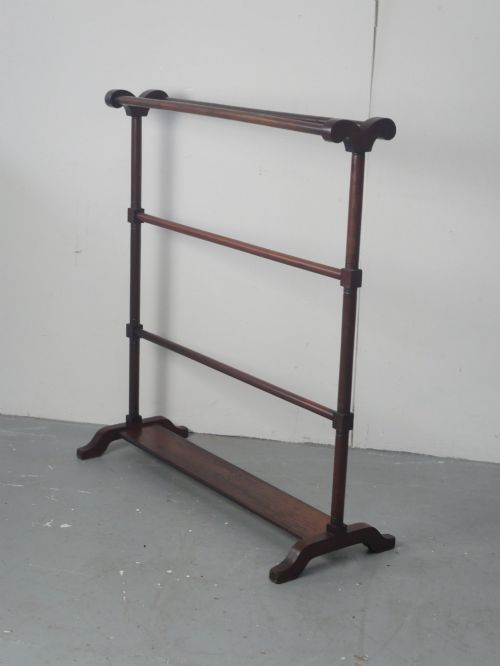
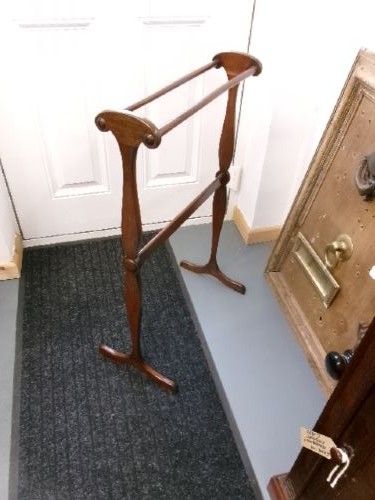
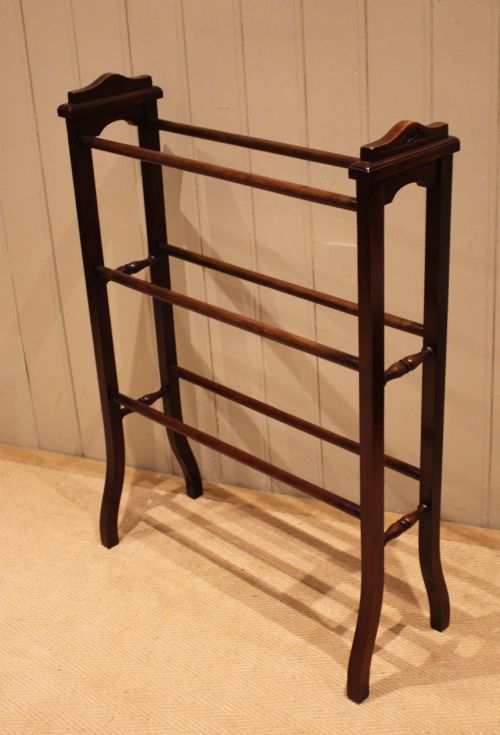
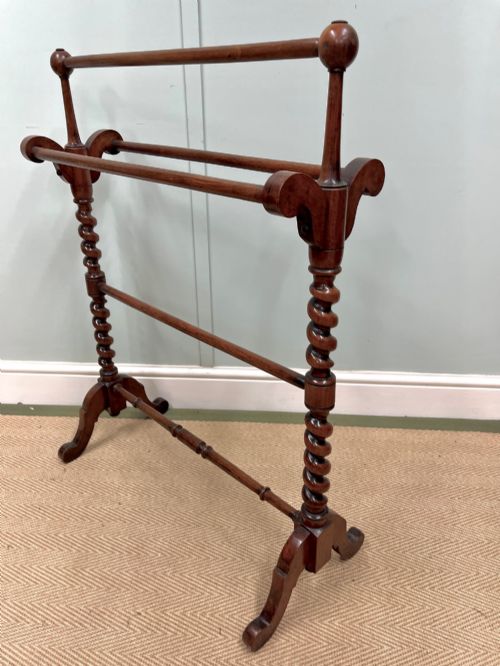
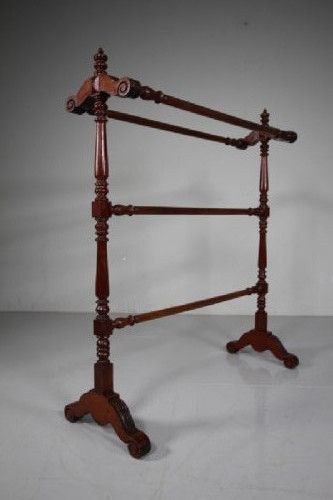
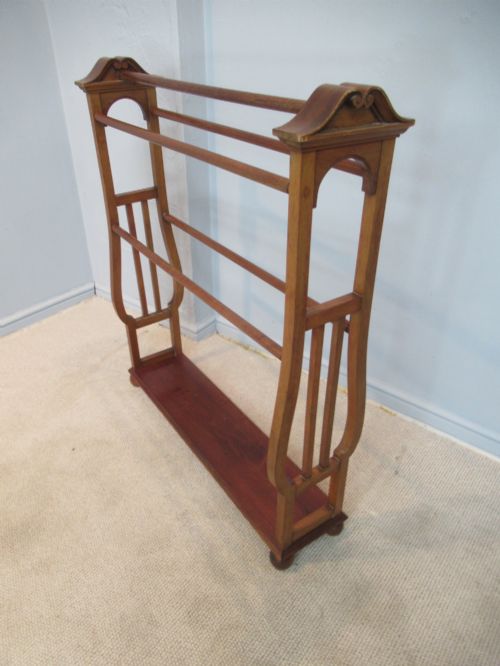
A freestanding towel horse serves as a moveable drying rack and display frame for linens, appearing primarily in mahogany, oak and pine across this selection. These pieces date from the Regency period through to the Edwardian era, spanning the nineteenth and early twentieth centuries.
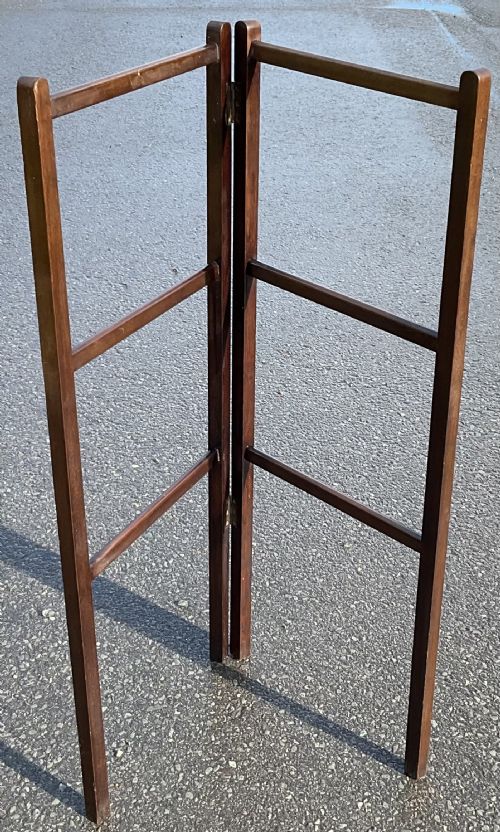
Most examples on this page take the form of standing rails and airers, including folding cheval designs and multi-bar frames. Buyers encounter large oversized clothes airers alongside compact variants intended for domestic chambers.
Stylistic variations range from simple utilitarian pine stands to ornate Victorian Gothic Revival walnut pieces and inlaid Arts and Crafts creations. The traditional wooden furniture reflects the domestic needs of period country houses and town residences alike.
Judging quality
Quality rests upon the selection of timber and the integrity of the joinery, particularly at the joints and hinges of folding multi-bar frames. Dense mahogany and figured walnut denote superior craftsmanship compared to basic utility pine.
Proportion and decorative restraint separate standard production items from finer examples, such as those featuring inlaid details or Gothic Revival architectural flourishes. Generous proportions and balanced rail spacing indicate careful workshop design.
Some five-bar models fold away so flat they could practically hide behind a Victorian butler.
The Freestanding Towel Horse Glossary
- Cheval rail
- A standing frame designed with a pivoting or folding mechanism that allows the rails to swing or adjust. This form provides multiple hanging tiers while maintaining a compact footprint.
- Airer
- A wooden frame built specifically for drying and airing household linens near a heat source. These utility pieces range from simple single rails to large oversized clothes stands.
- Ebonised wood
- Timber treated with a dark stain or finish to imitate ebony. This technique creates a dense black surface popular on decorative stands.
- Gothic Revival
- A nineteenth-century design style drawing on medieval architectural motifs. Pieces in this manner feature pointed arches, cusping and heavy carved details.
- Arts and Crafts
- A movement prioritising traditional craftsmanship and simple utility over mass-produced ornamentation. Oak stands from this tradition emphasise honest construction and natural grain.
Freestanding Towel Horse: Frequently Asked Questions
How do I date a towel horse?
Dating relies on timber choice, construction methods and stylistic markers visible in the feet and uprights. Regency and early nineteenth-century examples often display heavy mahogany turned supports, while Edwardian pieces lean towards lighter inlaid frames.
Period details such as brass hardware and joinery techniques further clarify the era of manufacture. Comparing the turning and rail configuration to documented pieces helps confirm the decade.
Are these rails sturdy enough for daily use?
Most solid hardwood frames remain robust and functional for everyday household tasks. Folding mechanisms and hinges should be checked to ensure smooth movement without undue stress on the uprights.
Heavier garments and wet towels require larger oversized rails built from dense mahogany or oak. Pine and lighter Edwardian versions suit moderate everyday use.
What is the difference between a towel rail and an airer?
Towel rails generally feature fixed horizontal bars designed for hanging bathroom linens in domestic spaces. Airers often span larger proportions and include multi-fold panels intended for drying textiles near a hearth.
Both forms utilise freestanding timber frames, though airers frequently provide four or five parallel bars. The distinction often relates to the scale and intended utility within the period home.
How do I care for antique mahogany and pine?
Routine maintenance involves dusting with a dry cloth and occasional application of appropriate beeswax to nourish the timber. Avoiding direct sunlight and excessive moisture preserves the finish and prevents wood splitting.
Hardware components require gentle cleaning without harsh chemical polishes. Maintaining stable room humidity protects both hardwood and softwood structures.