




Victorian Towel Rail
A victorian towel rail brings practical nineteenth-century domestic metalwork and cabinet-making into daily use, offering sturdy rails for linens in any room.
Victorian Towel Rail
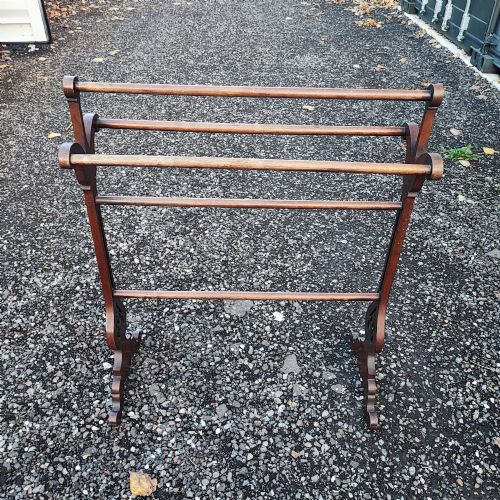
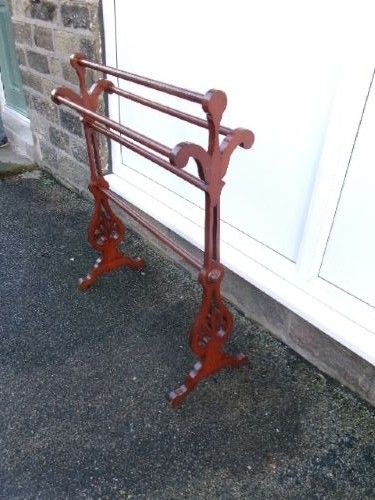
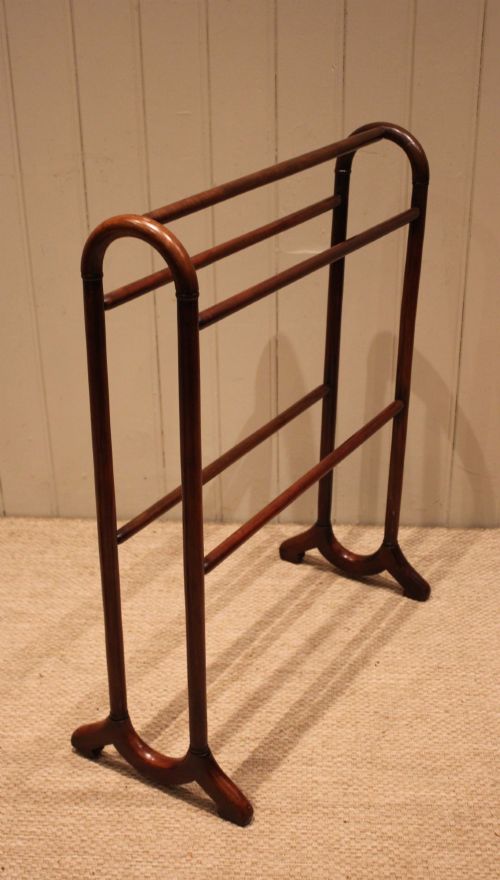
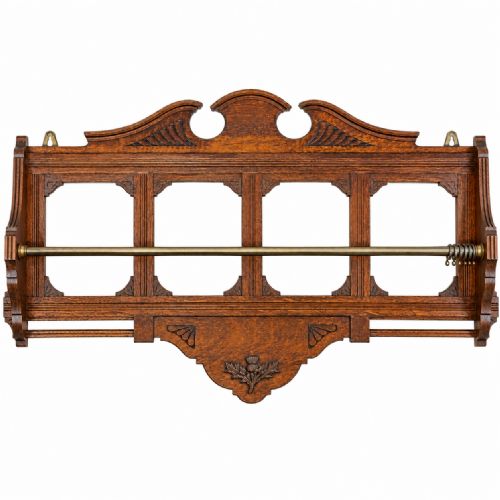
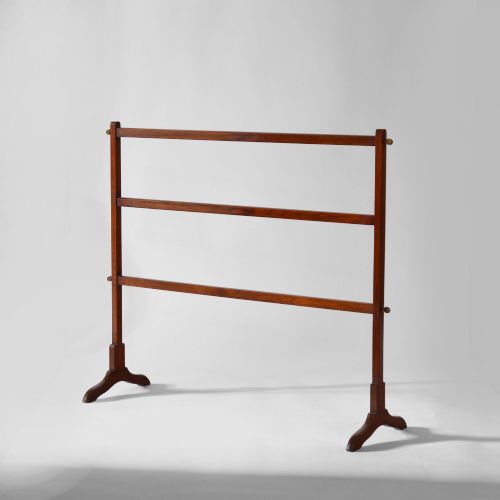
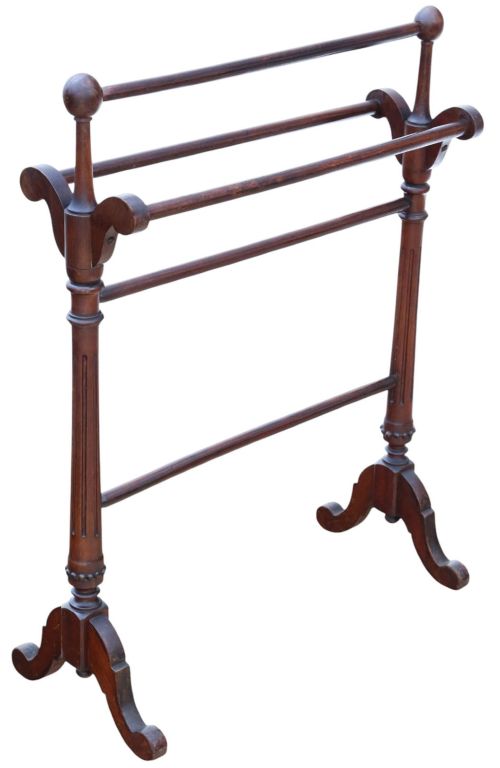
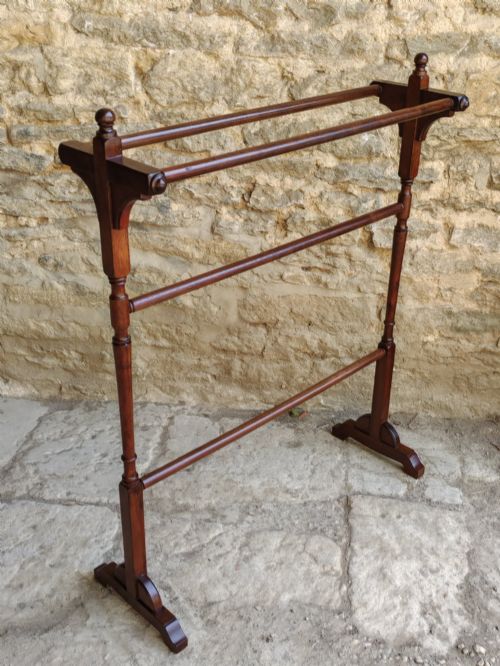
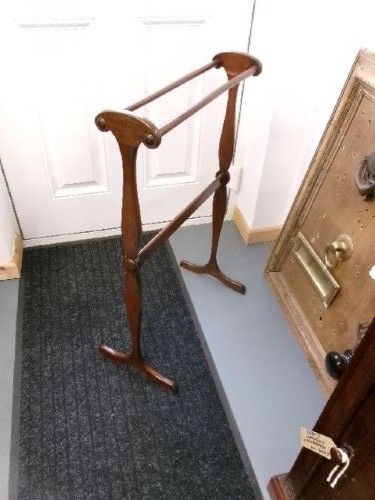
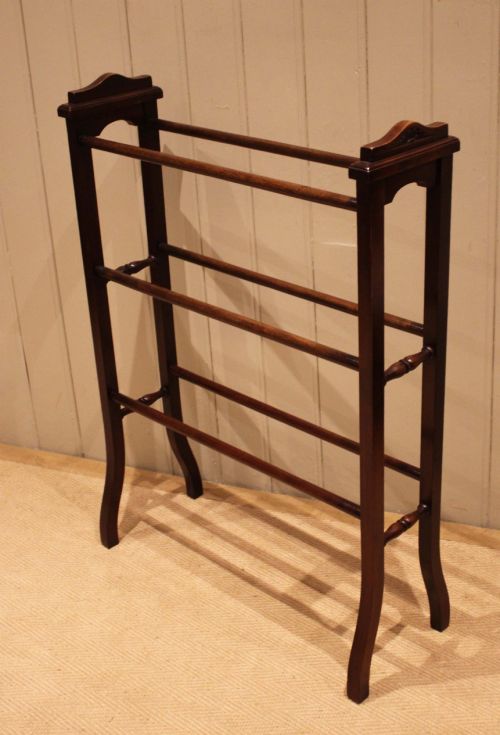
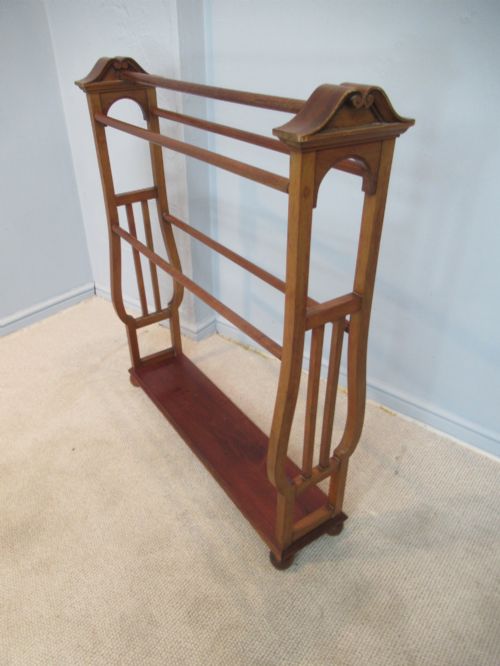
A victorian towel rail is a functional nineteenth-century household stand designed for drying and hanging linens in bedrooms and dressing rooms. Buyers searching this phrase encounter freestanding wooden frames, folding cheval designs, and wall-mounted brass fixtures spanning the nineteenth century and the early twentieth century.
Mahogany forms the mainstay of these pieces, alongside walnut, pine, and ebonised wood, reflecting the domestic utility of the period. Forms range from simple single rails to large folding multi-rail airers and elaborate bedroom suite components.
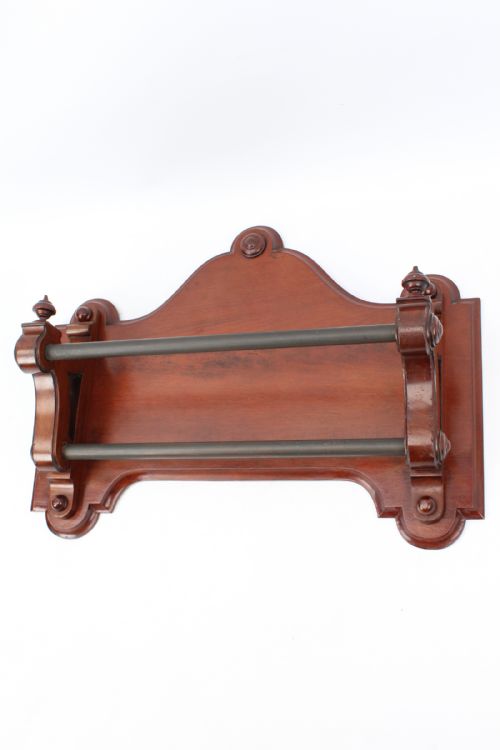
The prevailing styles bridge standard nineteenth-century cabinet-making, Gothic Revival, Arts and Crafts, and Aesthetic Movement designs. Pieces appear in various formats including standing frames, hanging double rails, and three-fold configurations.
How they were made
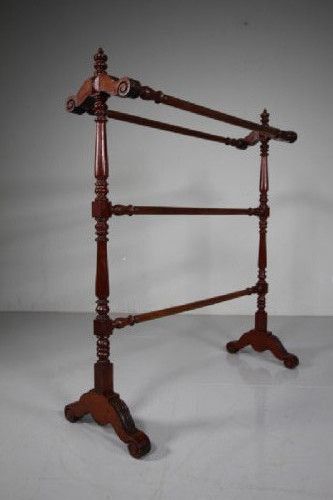
Cabinet-makers constructed these items primarily in solid timbers such as mahogany and walnut, employing traditional jointing methods to ensure stability during daily use. Turned components, barley twists, and bobbin details required skilled lathe work to shape the uprights and cross-bars.
Alternative materials include brass for folding branch rails and mounted racks, alongside pine and ash for simpler utility pieces. Surface decoration utilised ebonising, bone inlay, marquetry, and occasional satinwood finishes to elevate the appearance of bedroom furniture.
Victorian Towel Rail Retail Price Guide 2026
Typical asking prices for victorian towel rail among the pieces listed under this phrase on Sellingantiques today, from the lower quarter to the upper quarter. They describe what is for sale here now, not the wider market.
Periods represented include Regency, William IV, Victorian, Arts and Crafts, and early twentieth-century Edwardian pieces.
What varies in quality
Quality in a victorian towel rail rests on the selection of timber and the solidity of its construction rather than surface ornamentation alone. Figured mahogany, rich walnut, and intricate marquetry distinguish finer cabinet-maker output from plain utility pine or beech pieces.
Proportion and mechanical execution dictate desirability, particularly in folding cheval formats and multi-rail stands where hinges and joints endure repeated stress. Refined turning, such as barley twists or bobbin work, indicates superior workshop attention compared to basic turned uprights.
The Victorian Towel Rail Glossary
- Cheval rail
- A freestanding framed towel airer mounted on pivots or side supports allowing the central rails to tilt or fold. This design provides adjustable hanging space.
- Barley twist
- A spiral turning resembling a twisted barley sugar stick, frequently used on upright supports during the nineteenth century. It adds decorative depth to turned woodwork.
- Ebonised wood
- Timber treated with a dark stain or finish to imitate ebony. This technique was popular in Victorian and Aesthetic Movement furniture.
- Marquetry
- Decorative veneer applied to a furniture surface in pictorial or geometric patterns. It showcases skilled woodworking using contrasting woods.
Victorian Towel Rail: Frequently Asked Questions
How were Victorian towel rails used?
These rails stood in bedrooms and dressing rooms to air and dry household linens and garments.
Folding designs allowed users to adjust the spread of the rails and store the stand compactly when not needed.
Are these rails sturdy enough for daily use?
Most solid mahogany and walnut examples remain robust and functional for contemporary bathrooms or bedrooms.
Careful handling of older folding joints ensures the timber frame endures regular hanging requirements.
What woods were used for these rails?
Mahogany predominates across the surviving inventory, accompanied by walnut, pine, ash, and ebonised hardwood.
Finer pieces incorporate decorative elements like bone inlay, satinwood, or brass fittings.
How do I identify a Victorian piece?
Look for traditional timber construction methods, characteristic nineteenth-century wood choices, and styles like Gothic Revival or Arts and Crafts.
Turned details such as bobbin work and barley twists often point directly to Victorian workshop practices.