

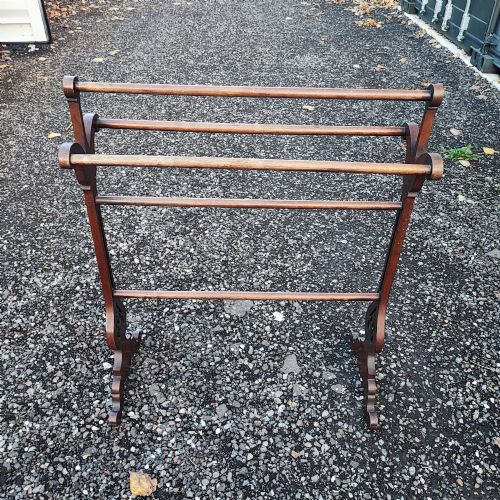
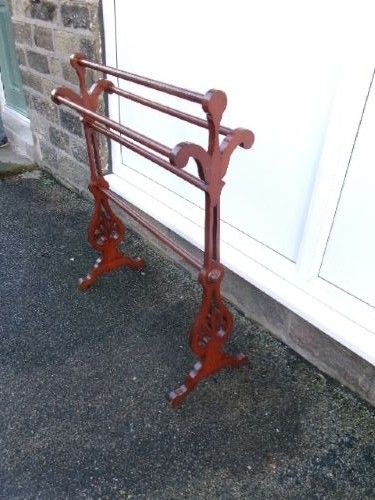
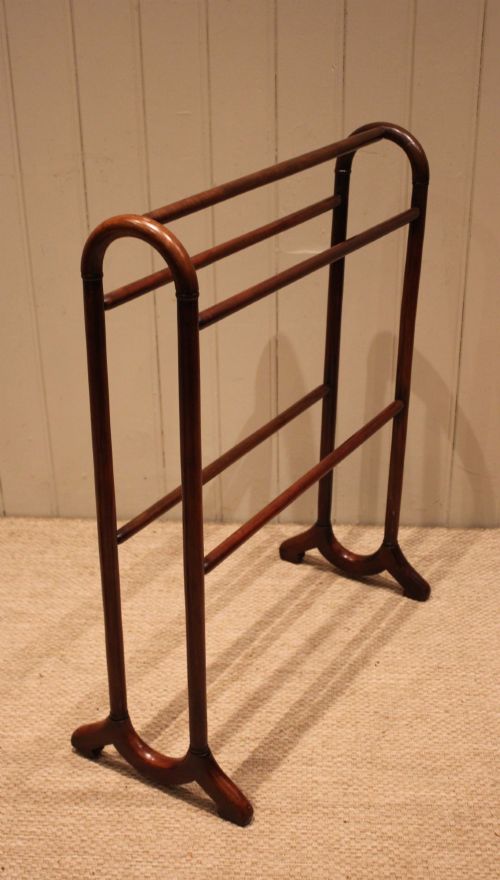
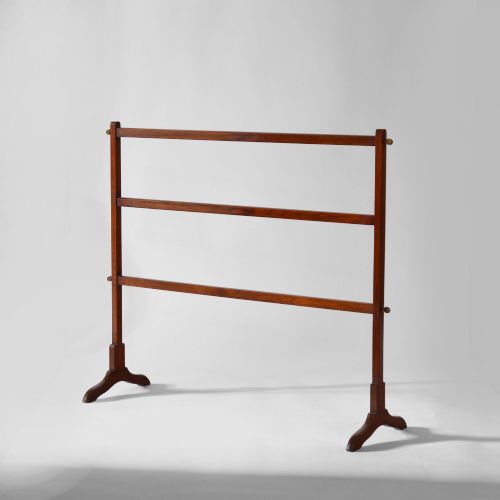
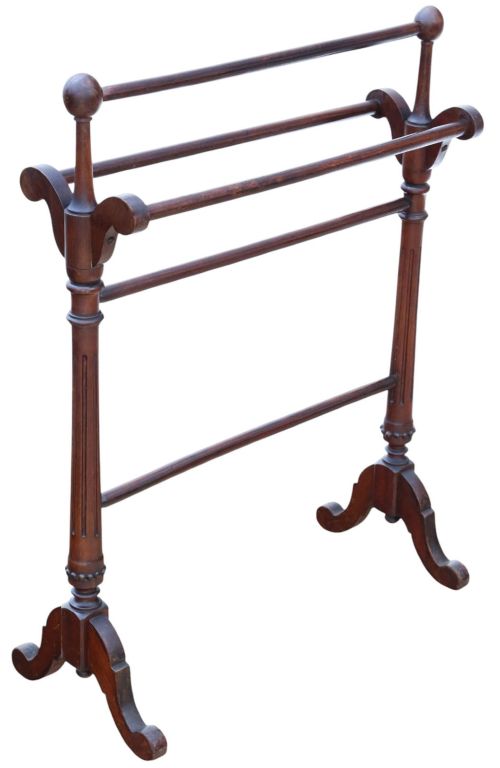
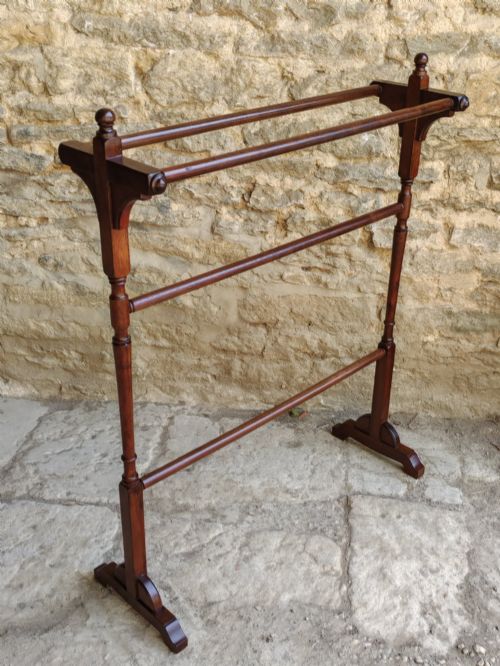
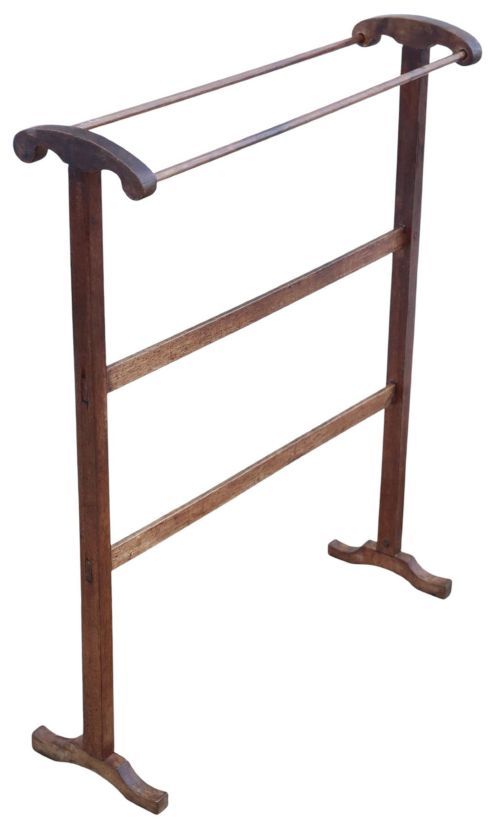
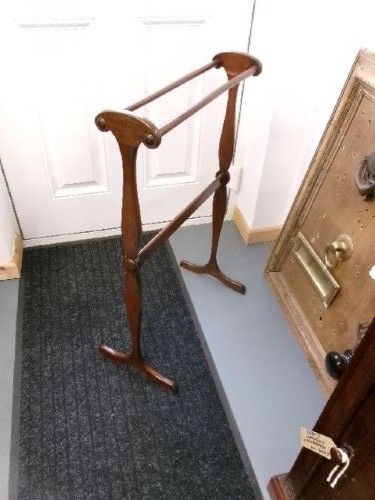


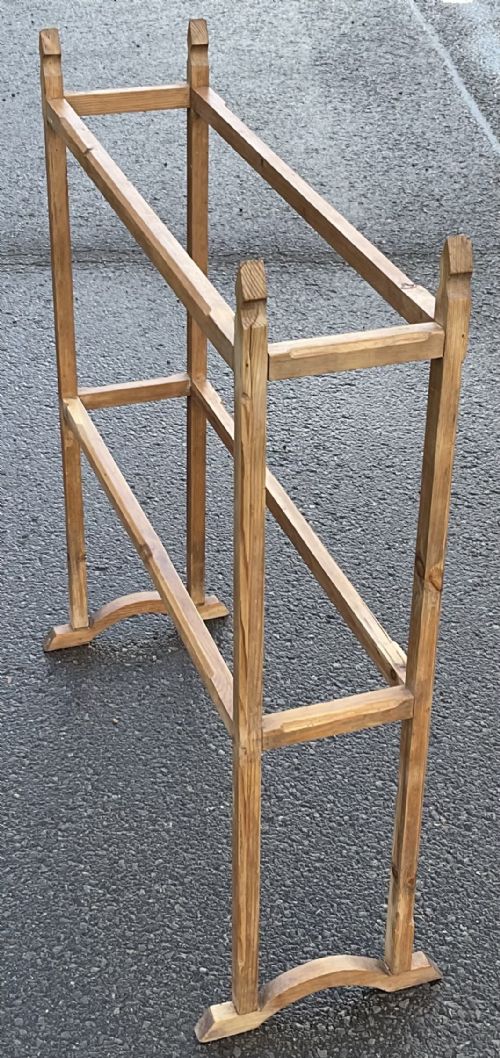

Freestanding Wooden Towel Horse
A freestanding wooden towel horse is a practical domestic fixture that brings period warmth and functional utility to a bathroom or bedroom.
Freestanding Wooden Towel Horse
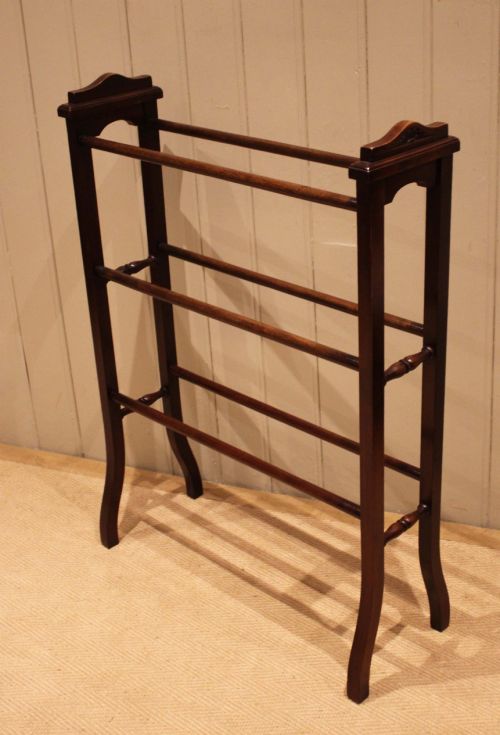
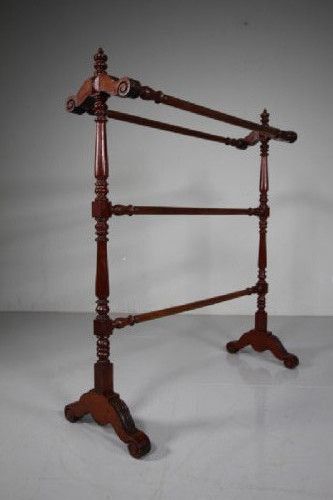
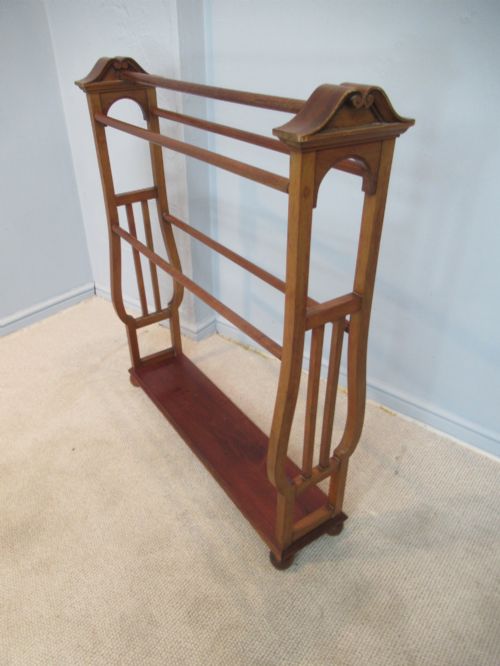
When you search for a freestanding wooden towel horse, you encounter domestic items designed to dry and display linens across various historic periods. The pieces appearing here span the nineteenth century through the Edwardian era, taking the form of standing rails, airers, and folding stands.
Mahogany forms the most common timber encountered among these listings, supplemented by oak, walnut, pine, and ebonised wood. Examples range from simple Edwardian pine pieces to substantial William IV and Regency formats with generous proportions.
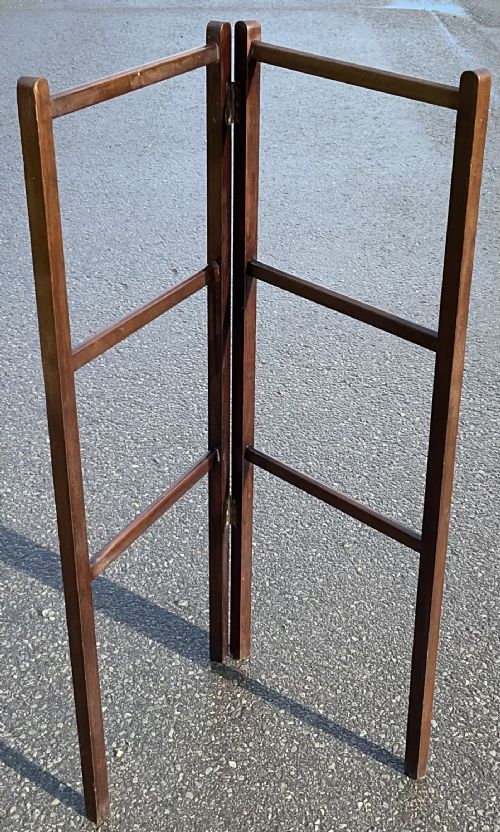
Folding formats, including three-fold and cheval designs, appear frequently alongside fixed multi-rail stands. Pieces such as the five-bar Edwardian iterations demonstrate how cabinetmakers adapted these frames for domestic laundry and garment storage.
Materials and construction methods
Cabinetmakers utilised solid hardwoods like mahogany, walnut, and oak alongside softer utility timbers such as pine to build these frames. Turned uprights and joined rails provide the structural skeleton necessary to bear damp linens without warping.
Detailing on finer examples includes boxwood stringing, brass fittings, and ebonised finishes applied to the timber surfaces. Folding models rely on pivoting joints and hinged sections to allow the framework to collapse when not in active use.
Freestanding Wooden Towel Horse Retail Price Guide 2026
Typical asking prices for freestanding wooden towel horse among the pieces listed under this phrase on Sellingantiques today, from the lower quarter to the upper quarter. They describe what is for sale here now, not the wider market.
Mahogany is the predominant timber across these listings, appearing alongside pine, oak, walnut, boxwood, and ebonised wood.
Distinguishing quality in period frames
The choice of primary timber and secondary woods establishes the foundational grade of the piece, with dense mahogany and figured walnut sitting above utilitarian pine. Robust joinery at the feet and upright junctions ensures stability under the weight of wet textiles.
Decorative embellishments, such as Gothic Revival carvings, inlaid boxwood, or brass hardware, separate standard utility stands from grander country house furniture. Proportion and scale also dictate quality, ranging from small domestic rails to oversized clothes airers.
The Freestanding Wooden Towel Horse Glossary
- Cheval rail
- A pivoting frame design mounted on floor-standing supports that swings independently within its outer structure. This format allows the rails to adjust angles for optimal airflow.
- Ebonised wood
- Timber treated with chemical stains or dark finishes to imitate expensive ebony. Makers utilised this technique on nineteenth-century stands to achieve a sharp, contrasting appearance.
- Gothic Revival
- An architectural and decorative style popular during the Victorian period characterised by pointed arches and medieval motifs. Pieces from this movement display heavier structural forms and pointed detailing.
- William IV
- A design era spanning the early nineteenth century defined by robust proportions and classical influences. Stands from this period often present generous sizing and substantial timber turning.
Freestanding Wooden Towel Horse: Frequently Asked Questions
How do I date a wooden towel rail?
Dating relies on identifying the timber species, construction joints, and stylistic markers such as Regency curves or Edwardian inlay. Examining the wear patterns and turnings provides further context regarding the decade of manufacture.
Simpler pine variations typically point towards the late nineteenth or early Edwardian periods, whereas dense mahogany frames with hand-cut joints often indicate earlier nineteenth-century origins.
Are these rails strong enough for heavy towels?
Period wooden rails were built for daily household laundering and possess sturdy frames designed to hold substantial linen weight. Hardwood versions in mahogany and oak offer particular structural resilience for daily use.
However, delicate antique joints require careful handling and should not be subjected to excessive force when folding or repositioning the stand.
Where should I place a freestanding rail?
These versatile stands suit bedrooms, dressing rooms, and bathrooms where extra hanging space or period character is desired. Their freestanding nature allows them to move freely without permanent wall fixings.
Care should be taken to keep wooden frames away from direct, continuous moisture sources to protect the historic timber and finish.
What is the difference between a rail and an airer?
The terms are often used interchangeably, though airers frequently incorporate multiple folding sections or larger frames designed to spread garments out for drying. Standard rails tend to feature fixed or simpler multi-bar horizontal setups.
Both categories served the same fundamental purpose in the historic home for managing laundry before modern heating.