



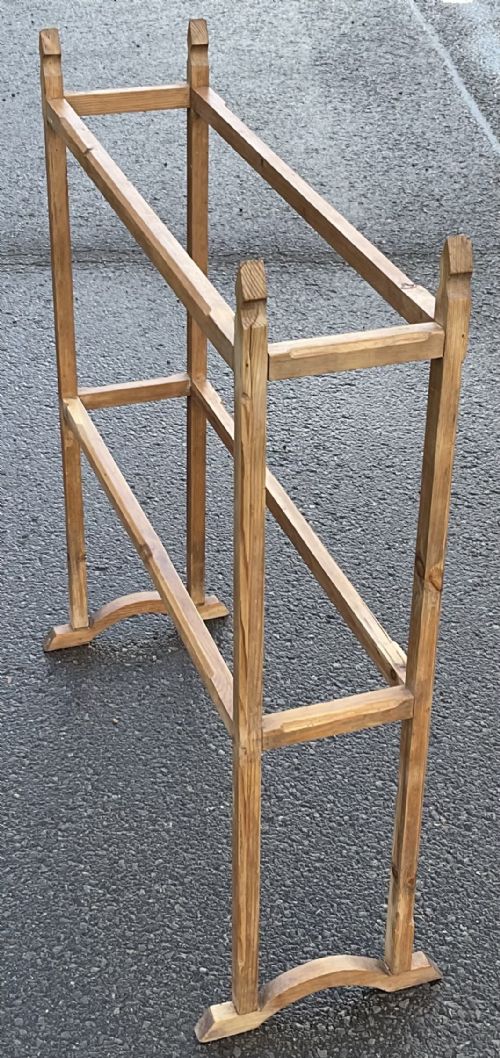

Antique Towel Horse
An antique towel horse provides practical bedroom and bathroom storage while displaying the rich grain of Victorian and Edwardian timbers.
Antique Towel Horse
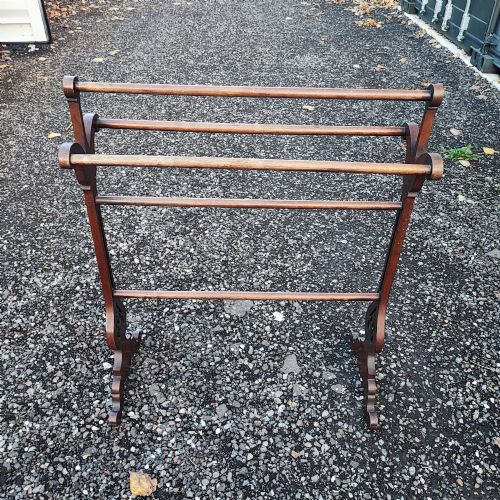
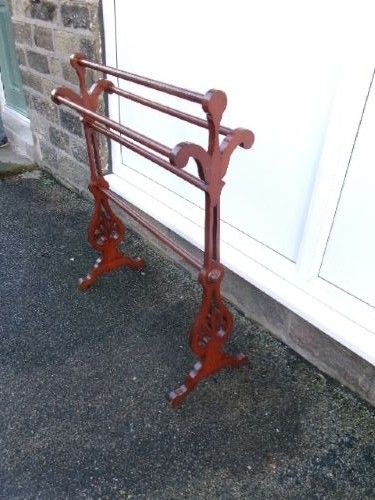
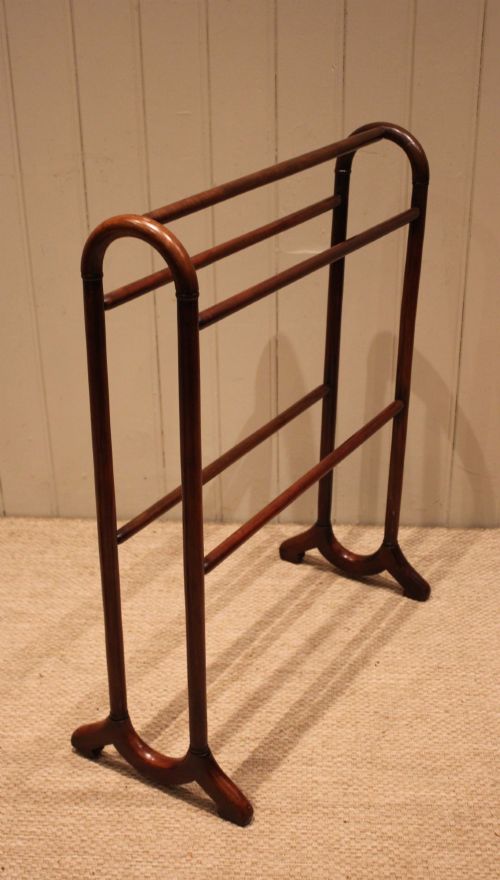
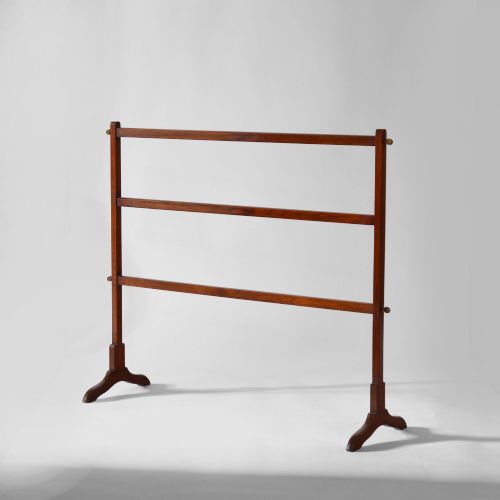
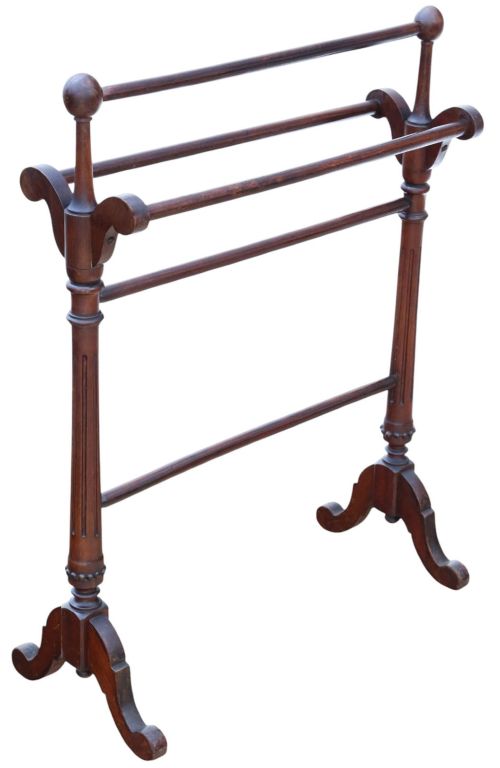
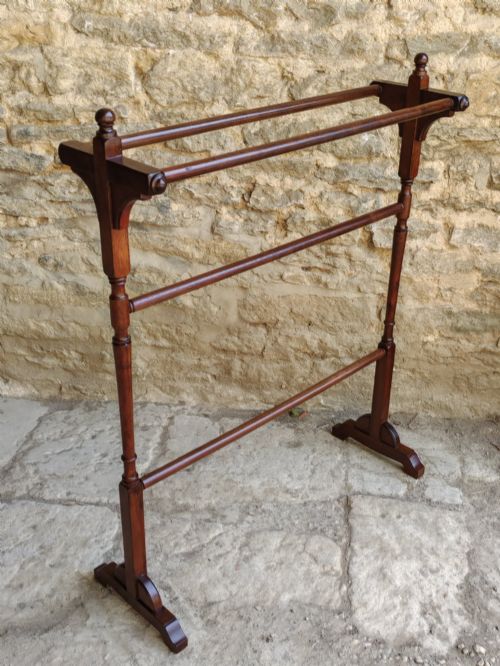
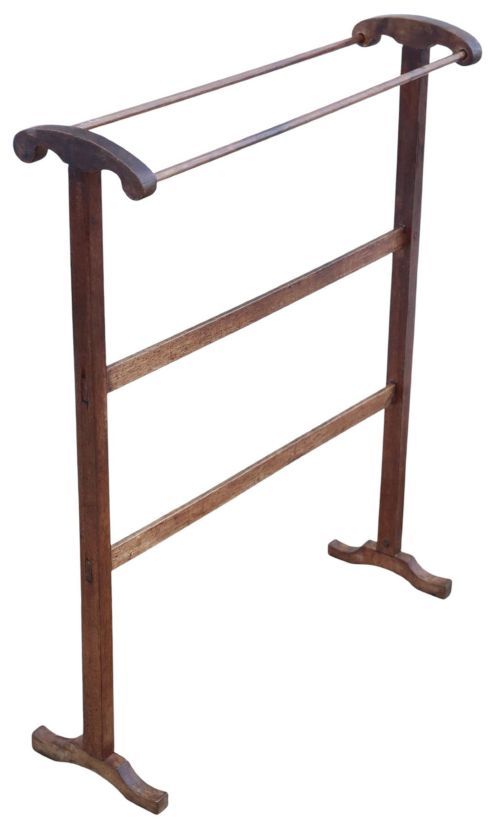
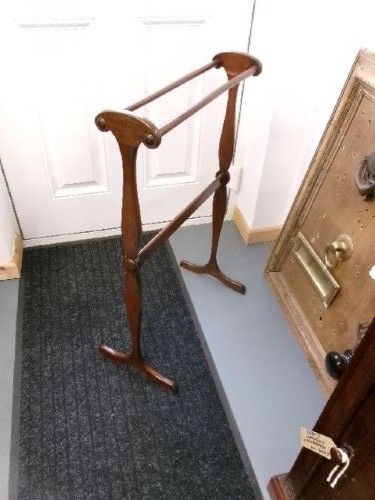
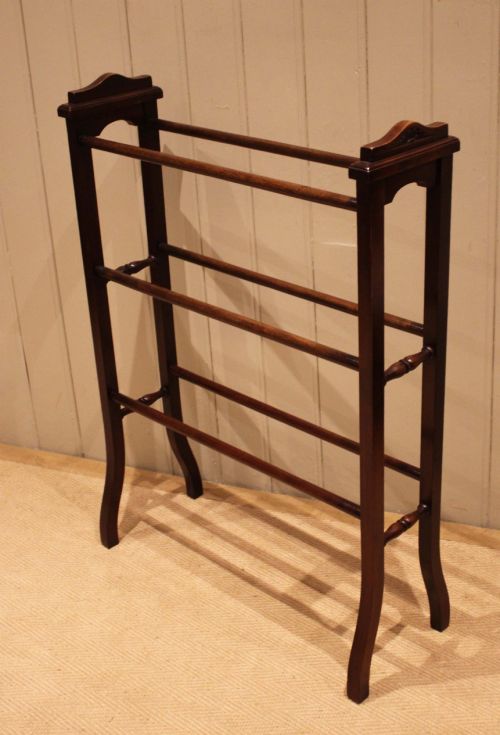
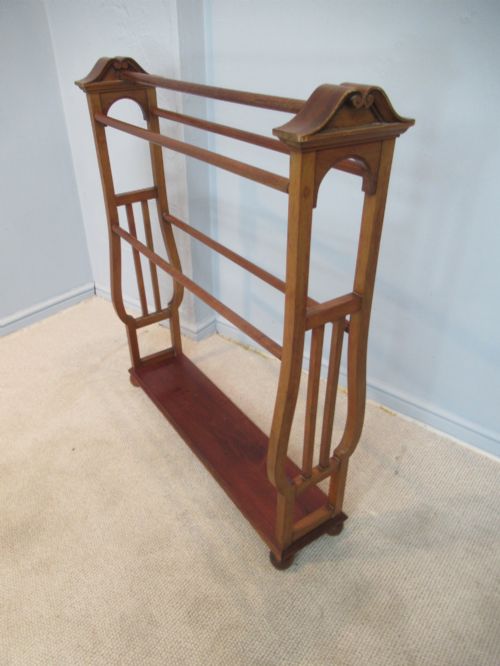
When searching for an antique towel horse, you encounter sturdy wooden stands designed for drying and airing linens in period homes. The version you are most likely to meet on this page is a mahogany, oak, or pine standing frame dating from the Victorian and Edwardian eras, often featuring multiple horizontal rails.
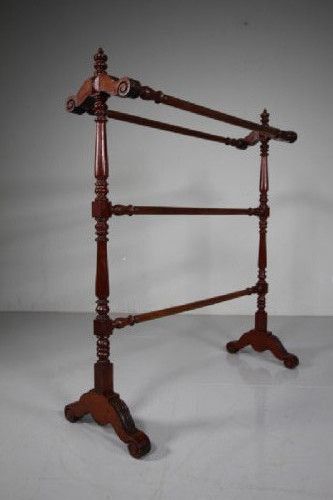
These pieces range from compact folding cheval rails to large oversized clothes horses and robe stands spanning the nineteenth and early twentieth centuries. Styles stretch from plain country pine and Arts and Crafts oak to formal Regency pieces and ornate Victorian Gothic Revival designs in walnut.
Materials and construction methods
Carpenters constructed these frames primarily using hardwoods like mahogany, oak, and walnut, alongside utilitarian softwoods such as pine. Many examples incorporate brass fittings, satinwood inlay, and ebonised wood finishes to elevate their appearance for domestic interiors.
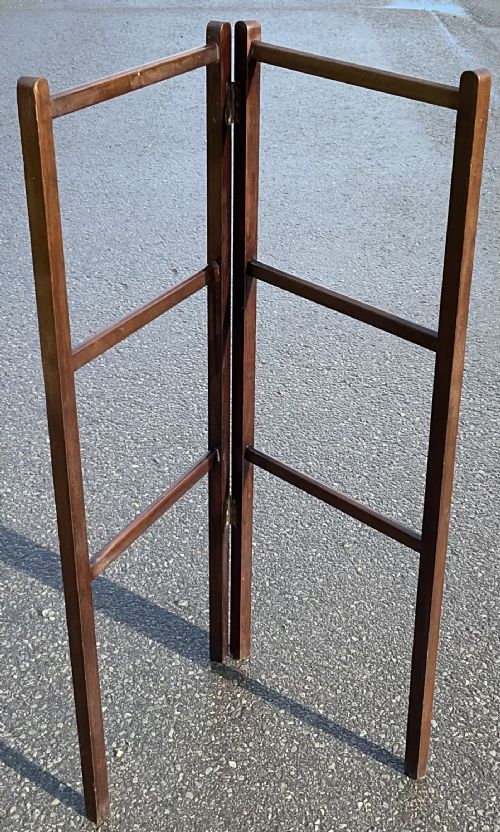
Joinery techniques focused on stability to support damp linens and heavy garments across multiple rails. Stands were built either as fixed floor-standing frames or hinged folding multi-fold structures that allowed the unit to adjust its footprint.
Antique Towel Horse Retail Price Guide 2026
Typical asking prices for towel horse among the pieces listed under this phrase on Sellingantiques today, from the lower quarter to the upper quarter. They describe what is for sale here now, not the wider market.
Listings feature pieces spanning the nineteenth century through to the Edwardian era, constructed in mahogany, oak, pine, walnut, and ebonised wood.
Judging quality and proportion
The distinction between standard utility items and finer pieces lies in timber selection, decorative detailing, and scale. Superior examples display carefully chosen mahogany or oak grains, complemented by inlaid satinwood, brass accents, or thoughtful turning on the uprights.
Proportion and structural integrity also separate tiers of quality, with larger country house pieces, generous Regency proportions, and robust Gothic Revival framing demonstrating more ambitious cabinetmaking than simple pine bedroom stands.
The Antique Towel Horse Glossary
- Cheval rail
- A standing frame designed to swing or pivot on upright supports, allowing easy access to the rails. This format provides stability while offering a flexible footprint for hanging textiles.
- Clothes horse
- A larger slatted frame used for airing garments and linens near a heat source. These utility items often feature multiple folding sections of generous proportions.
- Gothic Revival
- A nineteenth-century design style drawing inspiration from medieval architecture. Pieces in this idiom feature pointed arches, heavy mouldings, and robust walnut or oak construction.
- Satinwood inlay
- A decorative technique where contrasting light-toned wood is fitted into recesses on a dark mahogany surface. This ornamentation appears frequently on Edwardian stands.
- Ebonised wood
- Timber treated with a dark stain or chemical process to imitate ebony. This finish provides a sharp contrast on turnings and rails dating around nineteen hundred.
Antique Towel Horse: Frequently Asked Questions
What is an antique towel horse used for?
These pieces served in bedrooms, dressing rooms, and nurseries for drying and airing household textiles before central heating existed. Their horizontal rails held damp linens away from walls while garments hung ready for daily wear.
Today, owners utilise them in bathrooms and bedrooms for hanging towels, quilts, and clothes. They provide functional storage while introducing period character to domestic spaces.
How do I tell Victorian pieces from Edwardian ones?
Victorian examples often employ dense mahogany or walnut, sometimes incorporating Gothic Revival details, heavy turnings, or darker finishes. They tend to feel substantial and architectural in presence.
Edwardian stands frequently feature lighter mahogany frames, satinwood stringing, and simpler lines. Pine versions from this later period show a lighter, more utilitarian country aesthetic.
Are folding towel rails stable?
Multi-fold designs utilise hinges to connect several wooden frames, allowing the stand to angle outwards for stability and balance. When positioned correctly, the geometry of the joined sections keeps the piece upright under the weight of damp linens.
While fixed standing rails offer rigid support, well-constructed folding models distribute weight effectively across their hinged panels without tipping.
Where should I place a towel horse at home?
Bathrooms and master bedrooms remain traditional placements where the rails function practically for daily textile storage. Their narrow footprint allows them to sit neatly against walls or in alcoves without dominating the room.
In guest bedrooms, they provide a decorative spot for spare blankets and quilts. The open wooden frame also works well in utility rooms for airing laundry.