


Victorian Towel Rack
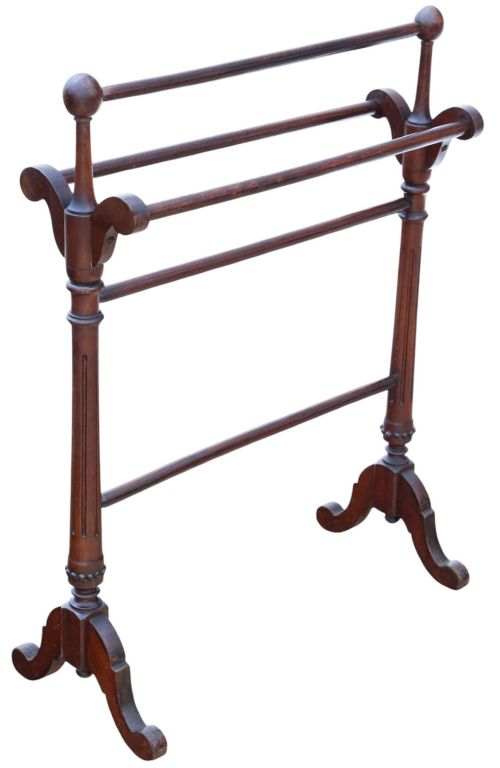
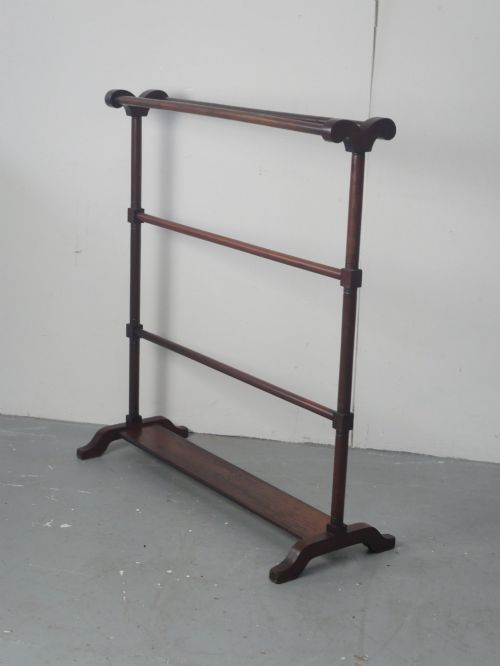
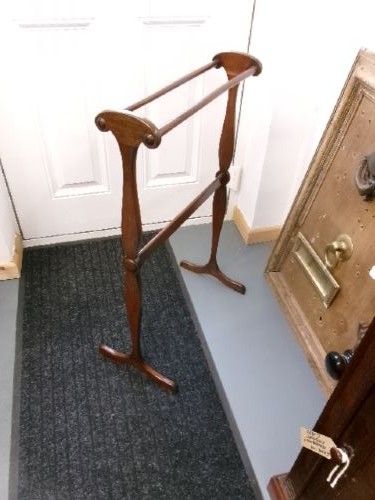
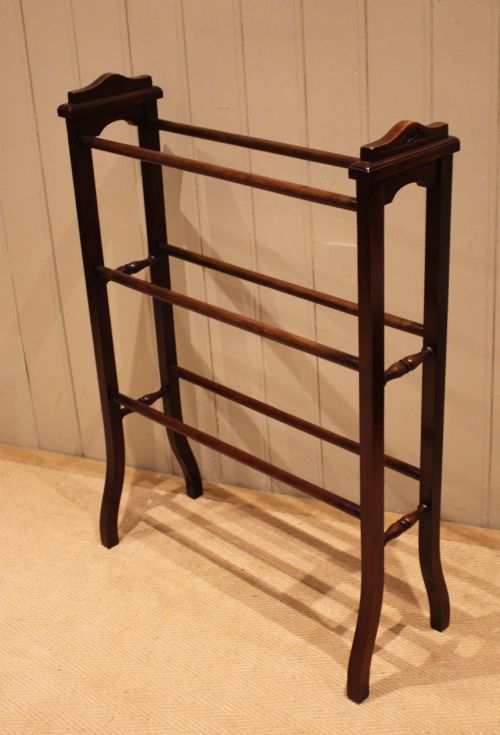
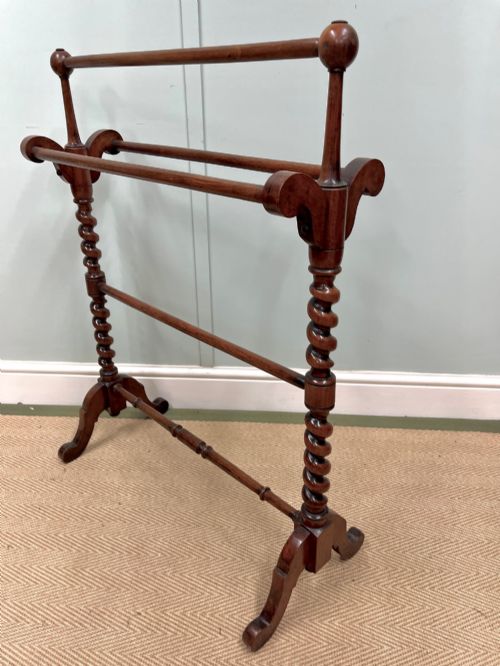
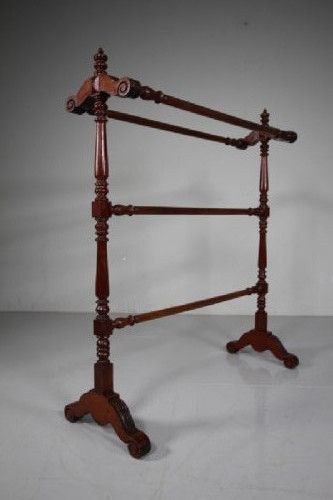
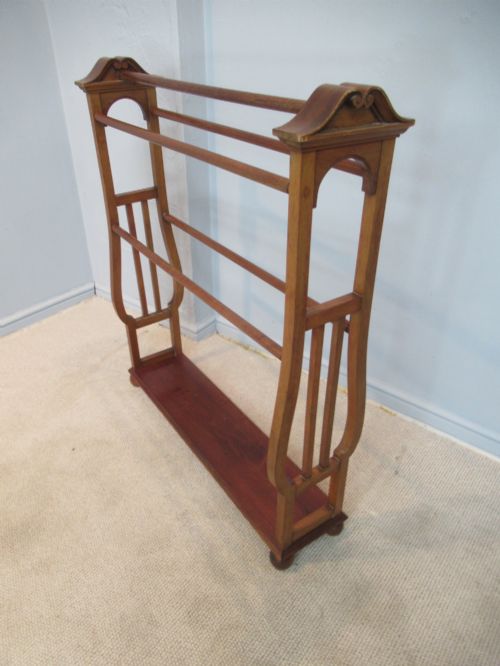
These mahogany and walnut pieces known as a victorian towel rack are sturdy wooden bathroom helpers designed to keep linens aired.
Victorian Towel Rack
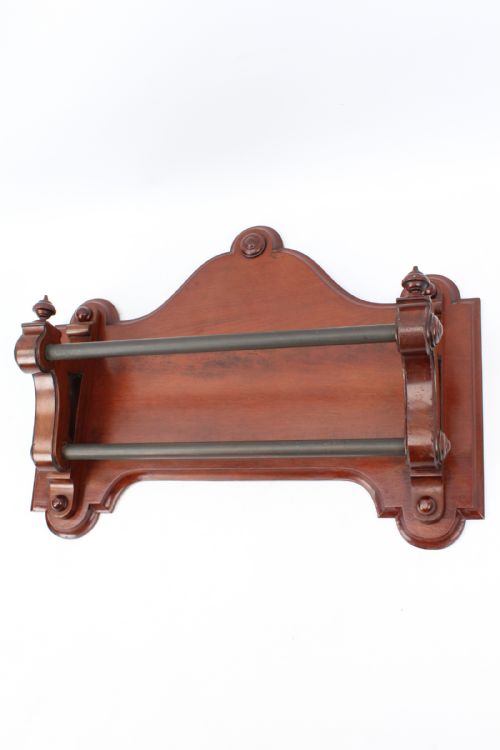
A victorian towel rack is a domestic wooden frame designed for airing and hanging laundry, washcloths and linens in bedrooms or washrooms. These pieces range from modest wall-mounted fixtures to large floor-standing clothes airers with multiple rails.
Mahogany is the dominant timber seen across these listings, alongside walnut, pine, oak, and ebonised wood. Buyers frequently encounter folding cheval designs, three-fold units, and heavy standing rails spanning the nineteenth century.
The selection also includes related items such as brass wall hooks and smaller mounted racks. Pieces extend from early nineteenth-century examples through to Edwardian interpretations.
How they were made
Cabinet makers utilised dense hardwoods such as mahogany and walnut, turning upright supports and shaping horizontal rails for daily domestic use. Softer timbers like pine appear painted or decorated, while oak serves sturdier Arts and Crafts workshop requirements.
Metal components play a supporting role in construction, utilising brass for hooks, hinges, and mounting brackets. Porcelain knobs and glass elements occasionally accent brass fixtures on wall-mounted variations.
Materials utilised across these stands include mahogany, walnut, pine, oak, ebonised wood, and brass.
What varies in quality
The distinction between standard utility items and finer examples rests upon the selection of timber and the complexity of the frame. Larger oversized formats, multi-rail folding stands, and Gothic Revival styling elevate a piece beyond basic domestic utility.
Finishing touches separate workshop outputs, ranging from plain pine washstand accessories to chased brass hooks and ebonised surfaces. Structural complexity, such as three-fold configurations and cheval mechanisms, indicates more ambitious original manufacture.
The Victorian Towel Rack Glossary
- Cheval towel rail
- A standing towel rail designed with a pivoting or freestanding frame reminiscent of a cheval mirror. This configuration allows multiple rails to angle outwards.
- Ebonised wood
- Timber treated with a dark finish to imitate expensive ebony. This treatment appears on nineteenth-century stands.
- Gothic Revival
- A nineteenth-century design style drawing inspiration from medieval architecture. Pieces in this taste display pointed arches and heavier mouldings.
- William IV
- A transitional stylistic period bridging Regency and early Victorian eras. Furniture from this time employs heavy proportions and rich mahogany timbers.
Victorian Towel Rack: Frequently Asked Questions
Where were these placed?
These utility stands found use in bedrooms, dressing rooms, and near washbasins to dry household textiles.
Larger folding airers stood freely on the floor, while smaller racks attached directly to walls.
How do I date a rail?
Dating relies upon timber choice, joinery methods, and stylistic markers such as Gothic Revival or Arts and Crafts influences.
Mahogany and walnut predominate in nineteenth-century examples, while pine and oak span into the Edwardian period.
Are all pieces floor standing?
Most examples are standing racks, including folding cheval formats and three-fold clothes horses.
A selection of items comprises wall-mounted brass hooks and glass or porcelain accessory racks.
What woods were utilised?
Mahogany is the primary timber found across these nineteenth-century listings, supported by walnut, pine, and oak.
Ebonised wood also appears on turn-of-the-century stands alongside secondary brass and porcelain fittings.