

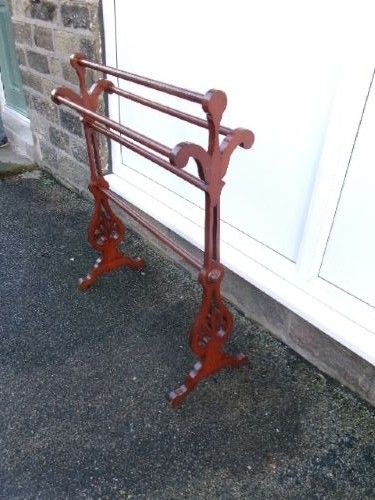
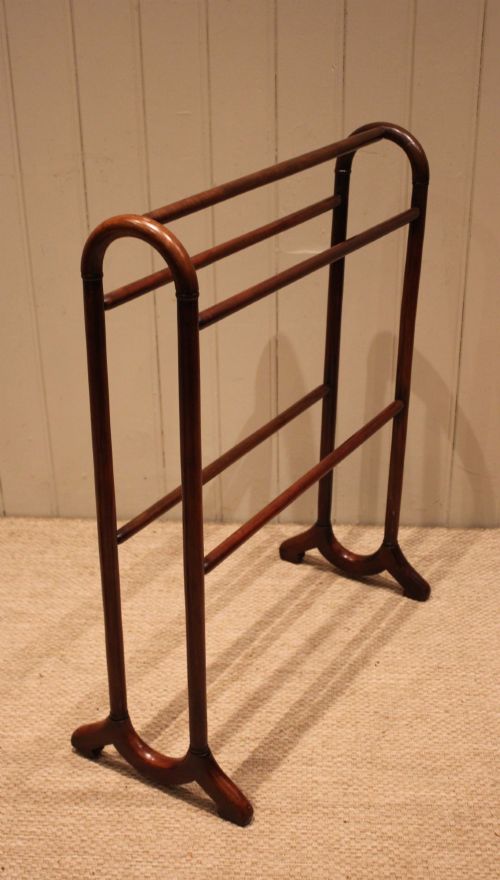
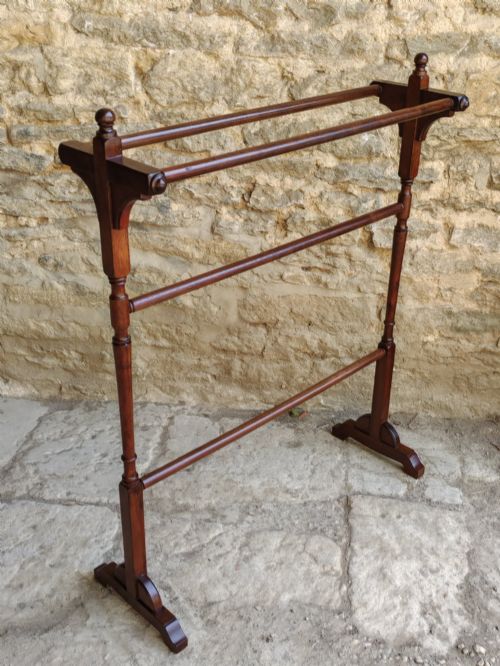
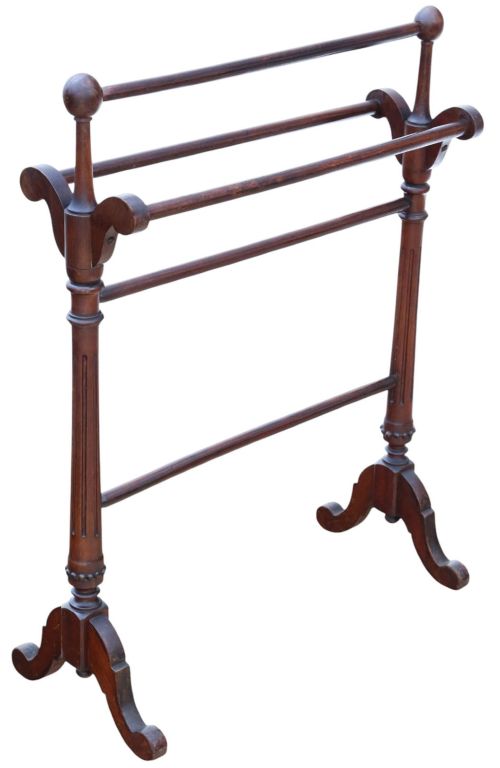


Victorian Mahogany Towel Horse
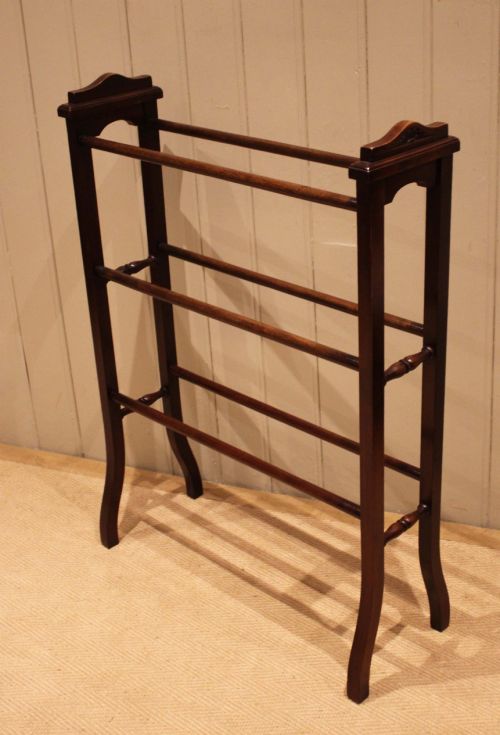
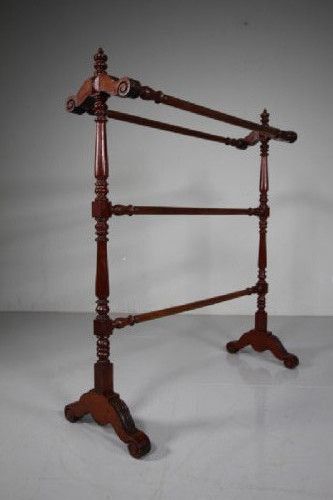
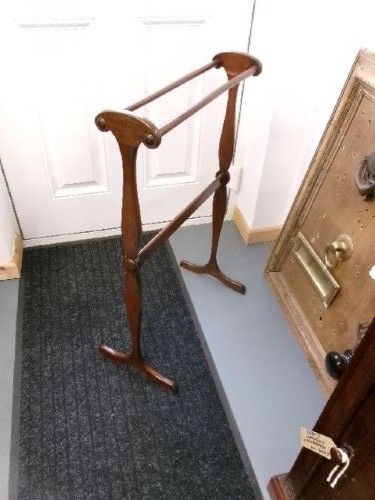
A victorian mahogany towel horse brings warmth and practical utility to a bathroom or bedroom.
Victorian Mahogany Towel Horse
A victorian mahogany towel horse provides sturdy rails for hanging laundry or linens in domestic spaces. These pieces span the nineteenth century, including Regency, William IV, and Edwardian iterations.
The inventory on this page shows standing forms, folding cheval designs, and three-fold configurations. Most examples date from the Victorian period through to nineteen ten, constructed from rich timber.
Materials and construction methods
Makers utilised mahogany and hardwood to build durable frames capable of holding damp fabrics. Some pieces incorporate brass fittings to secure the pivoting joints on folding rails.
Joinery techniques from the nineteenth century ensured the uprights and crossbars remained stable under daily weight. Timber was turned or planed to form smooth rails that protected delicate linens.
Victorian Mahogany Towel Horse Retail Price Guide 2026
Typical asking prices for victorian mahogany towel horse among the pieces listed under this phrase on Sellingantiques today, from the lower quarter to the upper quarter. They describe what is for sale here now, not the wider market.
Listings feature mahogany, hardwood, and brass across nineteenth-century styles including Regency, William IV, and Edwardian periods.
Assessing craftsmanship and proportion
Quality rests on the depth of the mahogany grain and the solidity of the frame construction. Larger oversized or folding formats demonstrate more ambitious carpentry than simple single-rail stands.
Proportion and stability distinguish standard utility items from finer domestic furnishings. Finer examples retain smooth action in their folding mechanisms and rich patination on the timber surfaces.
The Victorian Mahogany Towel Horse Glossary
- Mahogany
- A dense tropical hardwood prized for its deep reddish-brown colour and durability. It forms the primary material for these nineteenth-century stands.
- William IV
- A stylistic period bridging the Regency and early Victorian eras. Furniture from this time typically displays heavier proportions and bold architectural details.
- Towel rail
- A freestanding wooden frame fitted with horizontal bars for airing textiles. These fixtures served bedrooms and dressing rooms before built-in plumbing.
Victorian Mahogany Towel Horse: Frequently Asked Questions
How were these towel rails used?
These items stood in bedrooms and dressing rooms to air and dry household linens. Families placed them near firesides or simply kept them ready for daily clothing organisation.
They offered a portable solution for managing fabric before modern heating and drying appliances existed. Their folding formats also allowed servants to tuck them away when not in use.
Where should I place one today?
A standing towel horse fits naturally in a traditional bathroom to hold bath sheets and hand towels. The upright wooden frame adds warmth and texture to tiled or painted walls.
Bedrooms also benefit from these pieces for laying out garments or blankets. Their slim profiles let them sit neatly against unused wall space without crowding the room.
How do I identify a Victorian piece?
Victorian examples display the characteristic deep reddish tones of solid mahogany timber. Construction often relies on traditional joinery techniques typical of the nineteenth century.
Comparing the turned uprights and foot designs helps distinguish mid-nineteenth-century work from later Edwardian reproductions. The weight of the hardwood also offers a strong clue to the period.