


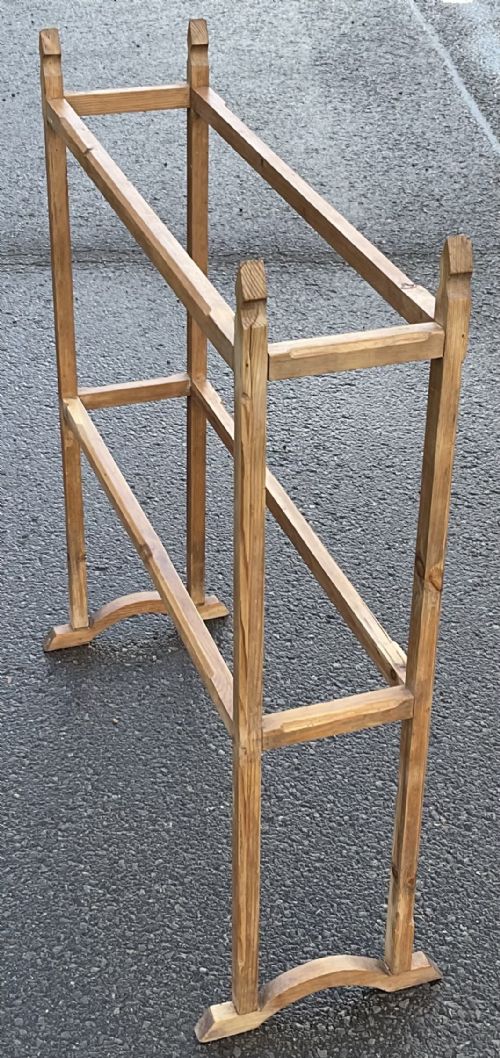


Edwardian Towel Horse
An Edwardian towel horse is a practical domestic fixture combining sturdy timber frames with multiple rails, offering a tidy place to air laundry.
Edwardian Towel Horse
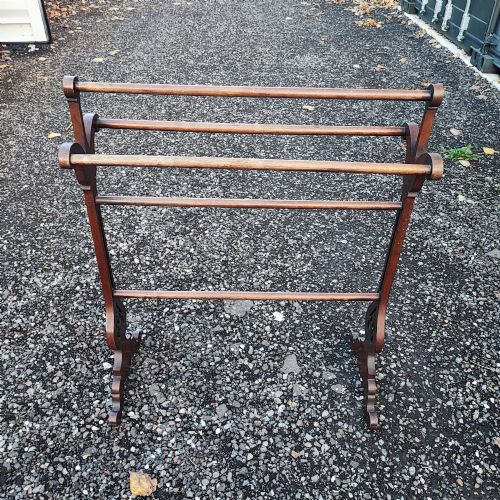
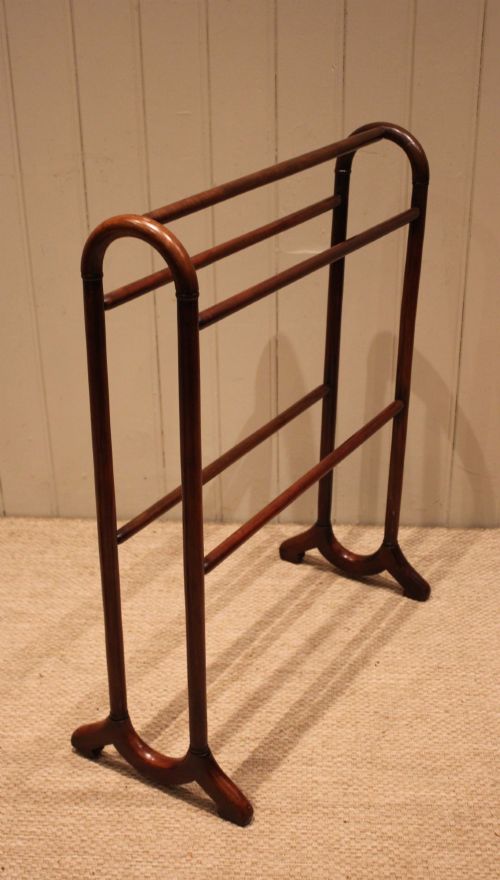
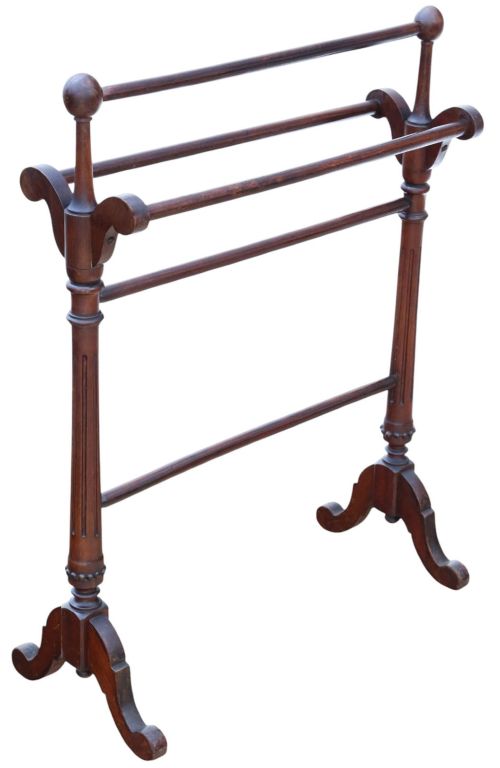
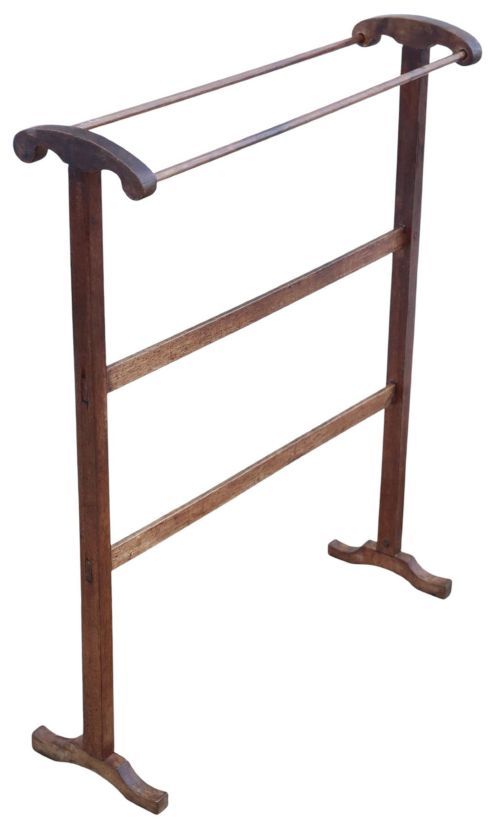
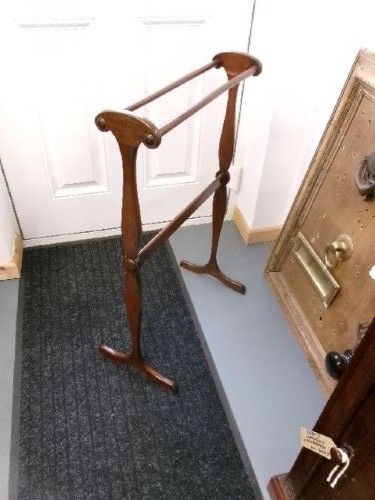
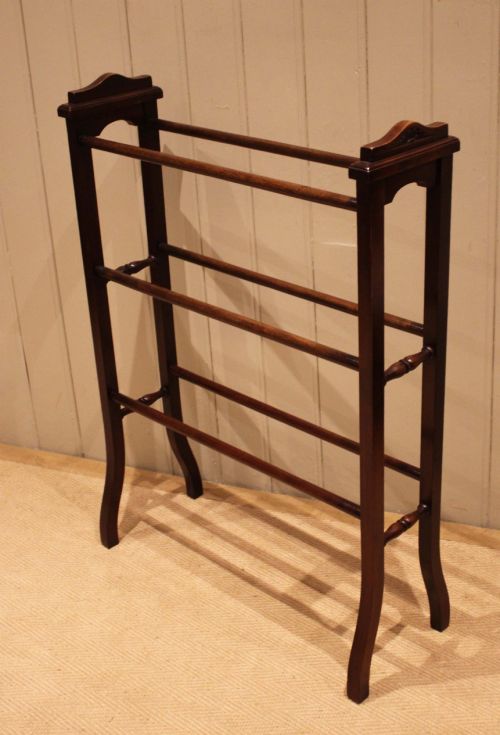
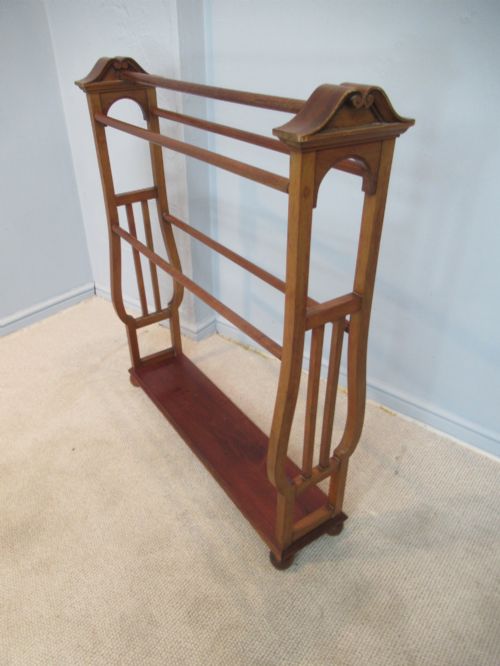
An Edwardian towel horse is a functional wooden frame designed to hold household linens and garments in bedrooms or bathrooms. These pieces appear most frequently in mahogany, oak, pine, and walnut, often taking the form of standing rails or folding airers.
Buyers browsing this selection encounter items spanning from the late nineteenth century through the Edwardian period, alongside occasional Victorian and Regency examples. The most common format on this page is the freestanding mahogany rail, sometimes featuring inlaid satinwood or folding gate-action mechanisms.
How they were made
Cabinetmakers constructed these frames using traditional timbers such as mahogany, oak, and pine, occasionally applying ebonised finishes or delicate satinwood inlay for decorative effect. Joinery relied on sturdy tenon joints and stable framing to withstand the daily weight of damp linens.
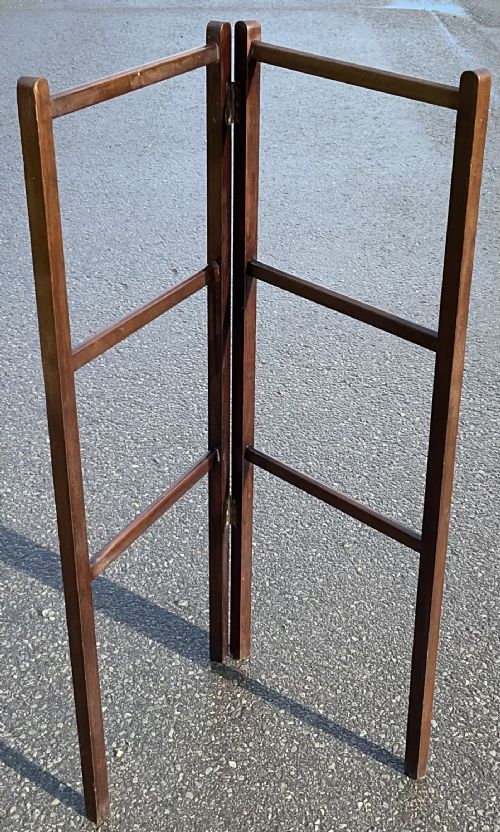
Folding versions incorporated functional hinges and gate-action mechanisms, allowing the frames to collapse flat when not in use. Surfaces received protective polishing or waxing to guard against moisture while highlighting the natural grain of the hardwood.
Edwardian Towel Horse Retail Price Guide 2026
Typical asking prices for edwardian towel horse among the pieces listed under this phrase on Sellingantiques today, from the lower quarter to the upper quarter. They describe what is for sale here now, not the wider market.
Listings feature mahogany, oak, pine, walnut, and ebonised wood across Victorian, Edwardian, and Regency styles.
What varies in quality
The distinction between standard utility items and finer pieces lies in timber selection and decorative detail, such as the inclusion of satinwood inlay or brass fittings. Superior examples utilise dense hardwoods like mahogany or quarter-sawn oak with robust, well-proportioned uprights.
Construction methods also set pieces apart, distinguishing simple workshop builds from refined country house furniture. Well-executed joints and smooth hinge mechanisms indicate a higher standard of craftsmanship that ensures longevity in daily use.
The Edwardian Towel Horse Glossary
- Edwardian
- Pertaining to the reign of King Edward VII, spanning from nineteen hundred to nineteen ten, characterised by lighter furniture designs. Pieces from this era often feature refined proportions and subtle decorative inlay.
- Gate-action
- A hinged folding mechanism allowing frames to swing open or close flat like a gate. This clever design saves space when the airer is stored away.
- Ebonised
- Timber treated with a dark finish to imitate expensive ebony wood. This technique was popular for achieving a sleek, formal appearance on domestic items.
- Satinwood inlay
- Decorative woodwork where contrasting pale satinwood is inserted into recesses in a darker primary timber. It adds subtle visual refinement to plain surfaces.
- Standing towel rail
- A freestanding wooden frame with horizontal bars designed to hold textiles upright off the floor. These items provide portable hanging space without requiring wall mounting.
Edwardian Towel Horse: Frequently Asked Questions
What is a towel horse?
A towel horse is a freestanding wooden frame equipped with multiple horizontal rails designed for drying or airing household linens. These pieces were standard bedroom and bathroom fixtures in period homes.
Today, they serve both decorative and practical purposes, providing portable hanging space for quilts, blankets, and towels in traditional interiors.
How do I use a towel horse at home?
Place the piece in a bedroom, guest room, or bathroom where extra hanging space is useful. Folding variants can be positioned near a heat source or collapsed when not in use.
Avoid placing damp items on untreated softer woods for extended periods to protect the antique finish. Regular dusting and occasional waxing will keep the timber in good condition.
How do I date an Edwardian towel horse?
Examination of the timber, construction style, and decorative elements helps establish the age of a piece. Edwardian examples often feature lighter mahogany frames and subtle inlay work compared to heavier Victorian predecessors.
Records show styles spanning from the nineteenth century through the Edwardian era, with distinct shifts from robust walnut and pine to refined inlaid mahogany.