

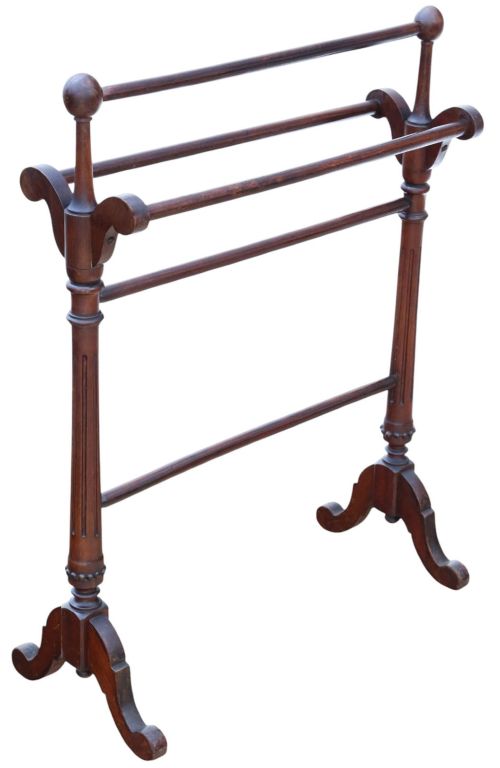
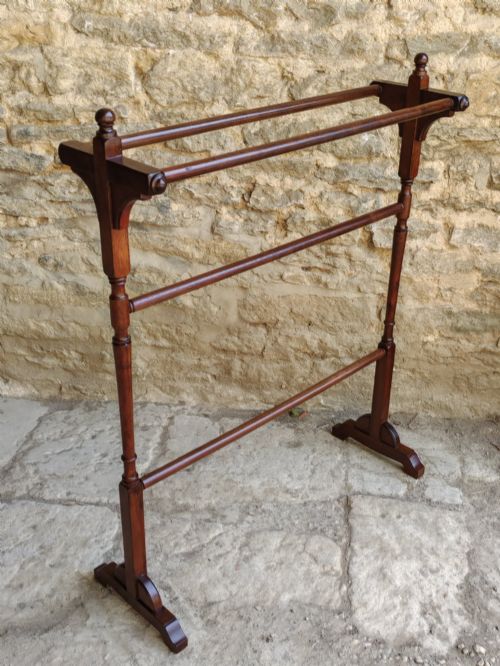
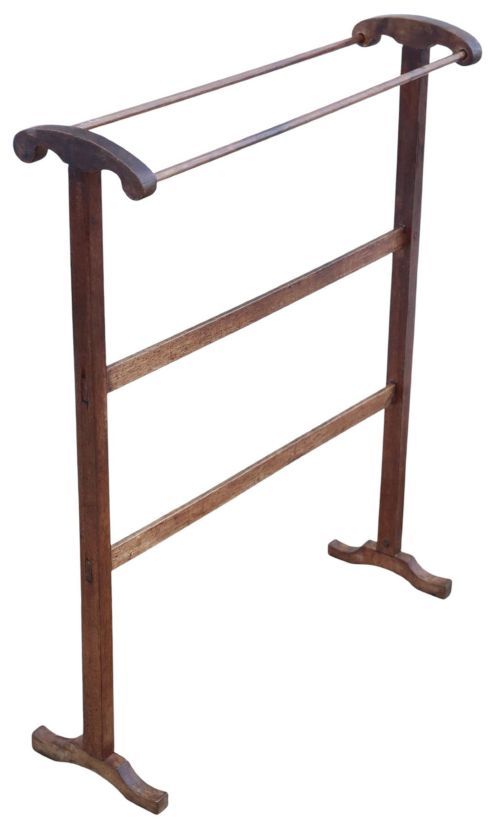
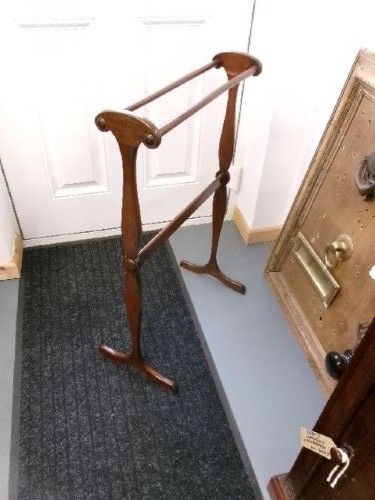


Antique Towel Stand
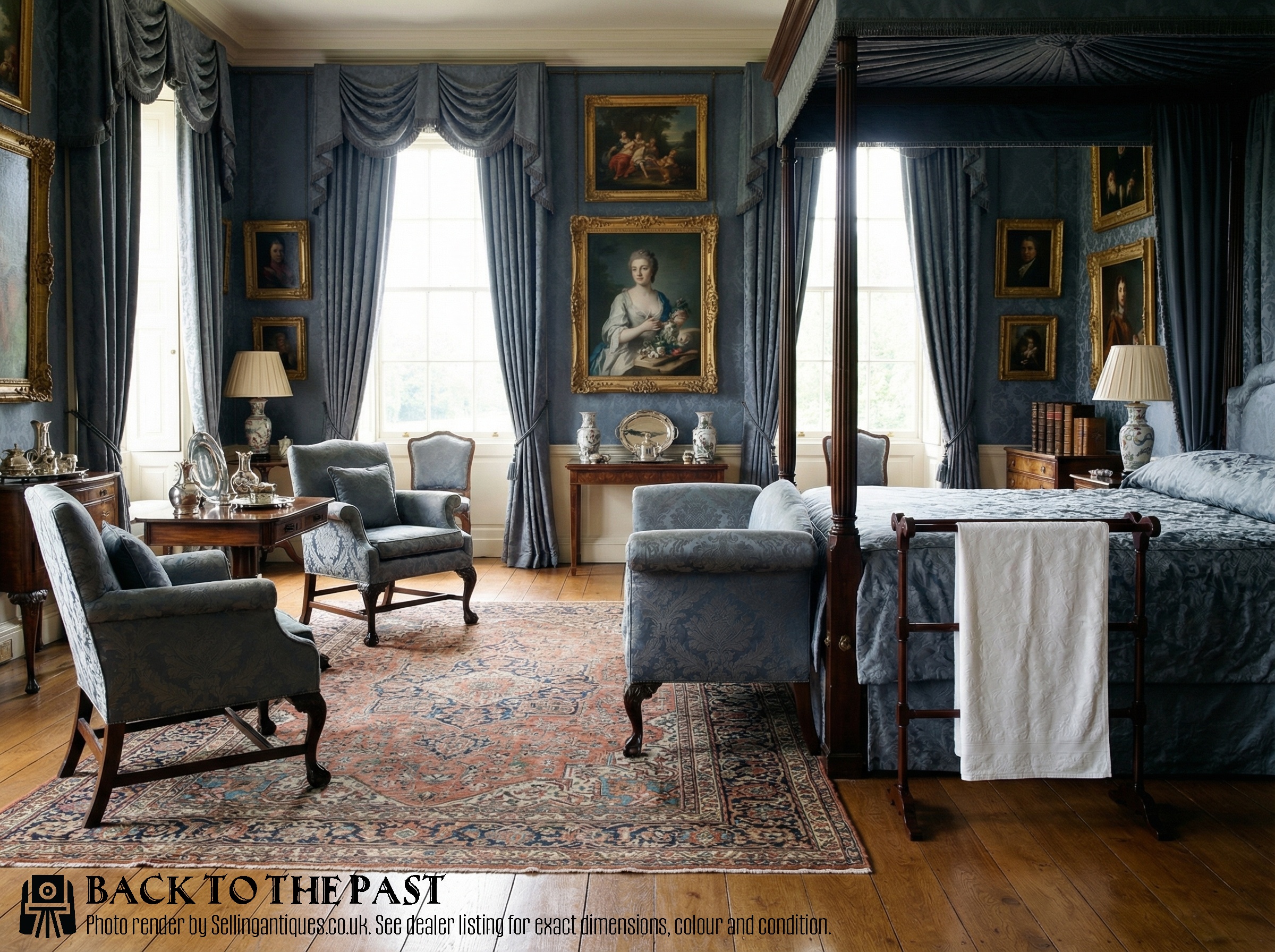
An antique towel stand brings practical nineteenth-century utility and warm domestic timber into a modern interior.
Antique Towel Stand
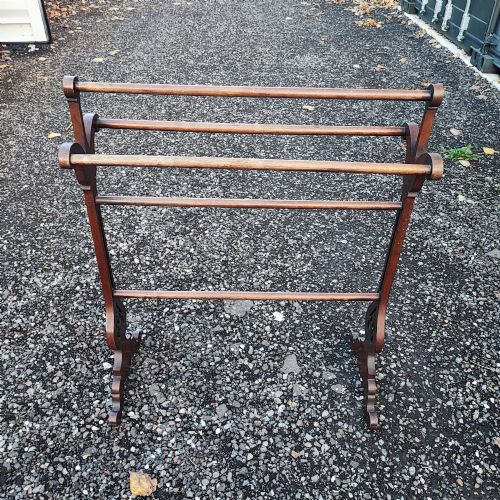
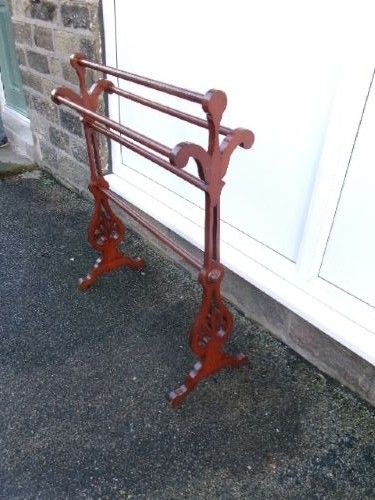
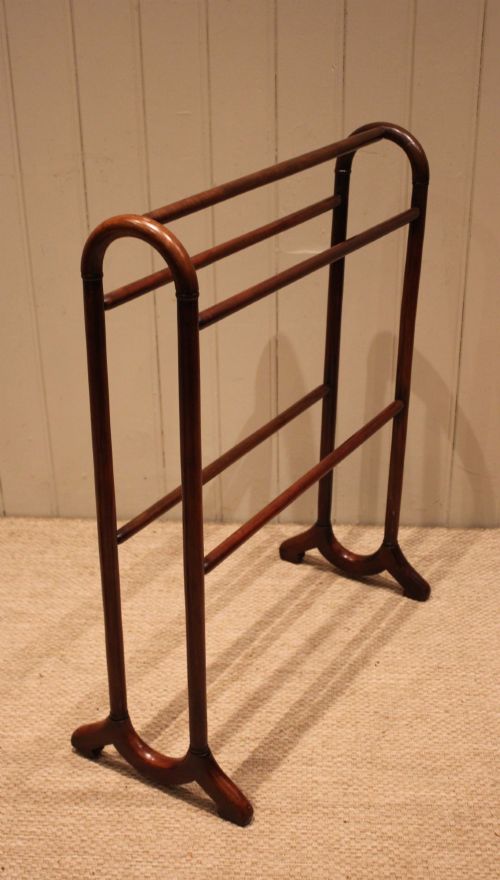
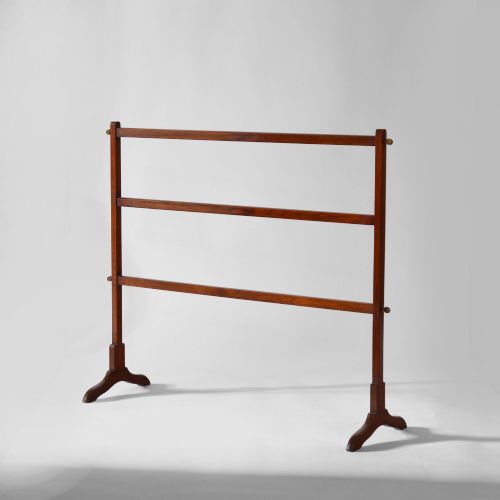
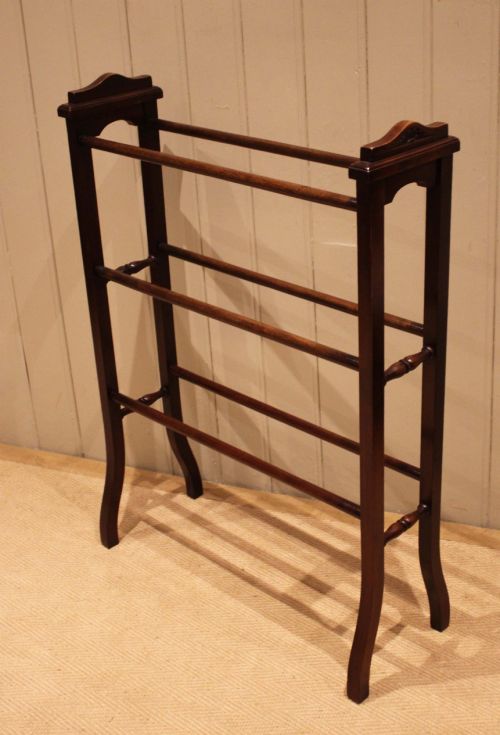
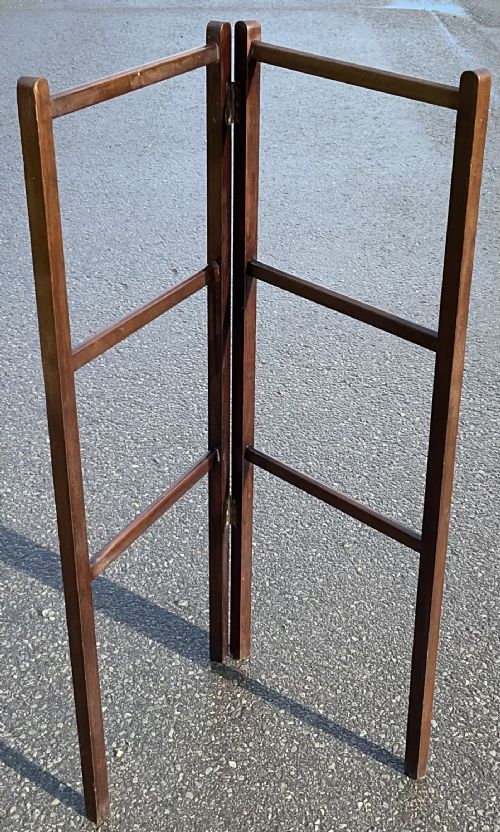
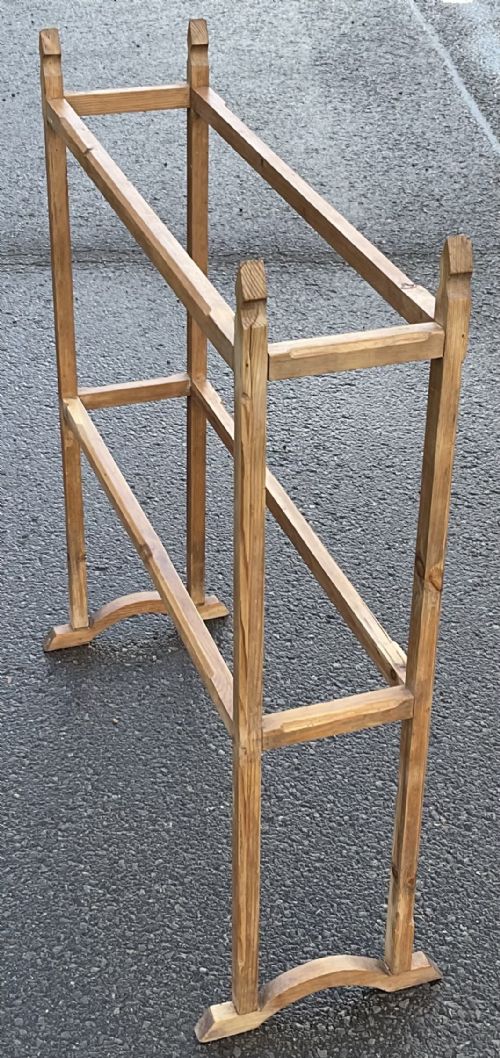
An antique towel stand serves to dry and display linens across domestic spaces, taking forms from simple floor-standing rails to multi-bar airers and folding frames. When searching for an antique towel stand, a buyer encounters pieces originating primarily from the nineteenth and early twentieth centuries, spanning Victorian, Edwardian, and Regency eras.
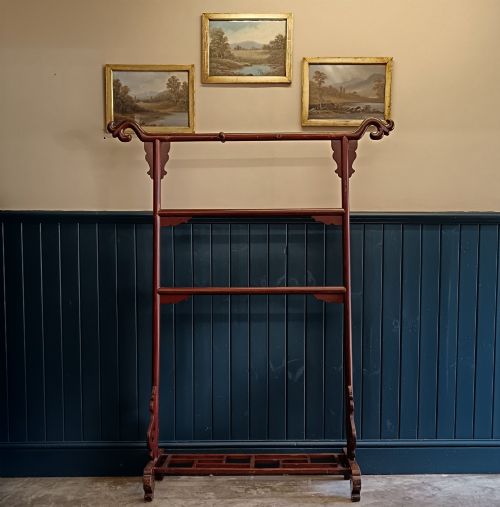
The selection frequently includes mahogany standing rails alongside oak, walnut, and painted pine examples produced for country houses and town residences. Alongside standard rails, related forms such as clothes racks, washstands, and Chinese lacquered robe stands appear within the available material.
Materials and Construction
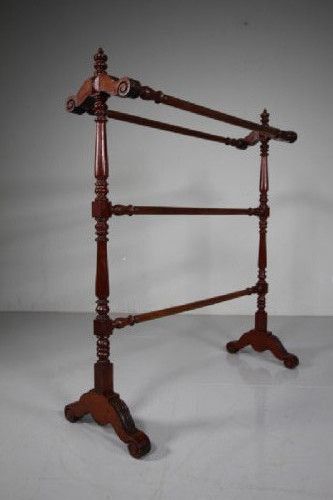
Cabinetmakers utilised hardwoods such as mahogany, walnut, and oak to construct the main frames, often turning upright supports on a lathe and joining cross-rails with mortise and tenon joints. Softer secondary woods like pine and beech appear in simpler country pieces or internal framing.
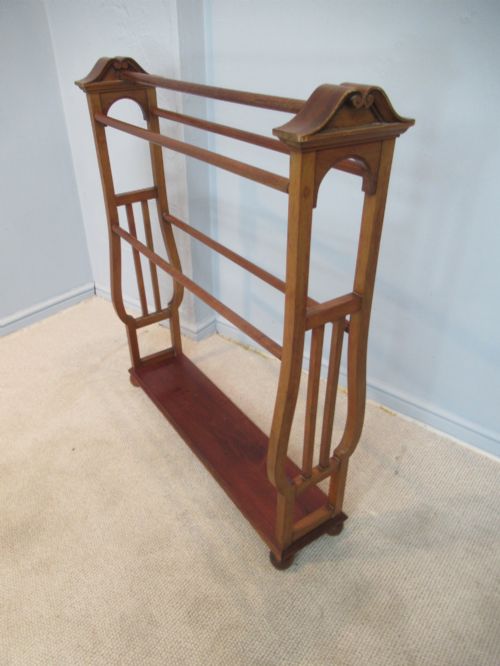
Surface treatments range from clear polish on figured mahogany to ebonised finishes, applied paint schemes, and carved or inlaid ornamentation found on Edwardian and Arts and Crafts examples.
Antique Towel Stand Retail Price Guide 2026
Typical asking prices for towel stand among the pieces listed under this phrase on Sellingantiques today, from the lower quarter to the upper quarter. They describe what is for sale here now, not the wider market.
Some nineteenth-century stands doubled as subtle indoor clothes dryers, saving household linens from unpredictable British weather.
Distinctions in Execution
The calibre of a piece rests upon the selection of timber, such as figured walnut or dense mahogany, and the robustness of its structural joinery. Heavier proportions and stable, well-balanced bases separate superior examples from lighter utility items.
Refined details like inlaid woodwork, carved motifs, and multi-bar configurations elevate certain items beyond straightforward utilitarian objects into considered decorative furnishings.
Gillows
The Antique Towel Stand Glossary
- Towel airer
- A freestanding wooden frame fitted with multiple horizontal rails designed for drying textiles.
- Clothes horse
- A hinged, multi-fold wooden rack used for airing garments and linens near a heat source.
- Marquetry
- Decorative veneer work forming pictorial or geometric patterns using various coloured woods.
- Ebonised
- Timber treated with a dark stain or finish to imitate expensive ebony wood.
- Washstand
- A chamber furniture piece incorporating surfaces, basins, and often integrated towel rails.
Antique Towel Stand: Frequently Asked Questions
Where were these stands used originally?
These pieces found their place primarily in bedrooms, dressing rooms, and nurseries to keep linens and garments aired and organised.
Larger country house iterations also served in entrance halls or utility spaces for damp outdoor wear.
How do I care for antique wood?
Maintain the timber by keeping the stand away from direct heat sources and sudden humidity changes that cause wood to split.
Apply a traditional beeswax polish periodically to nourish the surface and preserve the historic finish.
Are folding rails stable?
Multi-fold designs utilise hinged joints that allow the frame to angle outward for stability while standing on a floor.
Careful placement ensures the weight distributes evenly across the individual wooden arms.
How can I date a towel stand?
Dating relies on observing timber choices, construction methods, and stylistic cues like Victorian Gothic revival arches or Edwardian inlay.
Heavier turned members and mahogany point to earlier nineteenth-century origins, while lighter pine and oak often indicate the Edwardian period.