



Victorian Towel Stand
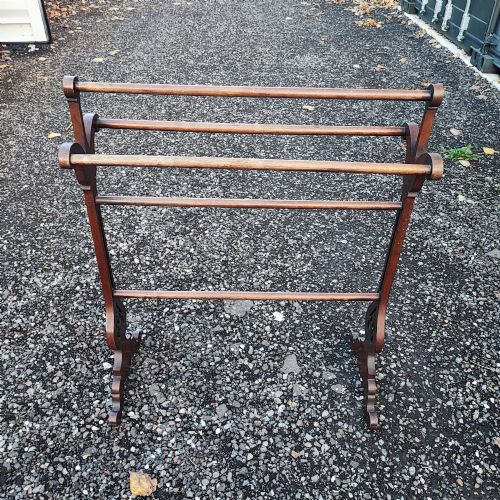
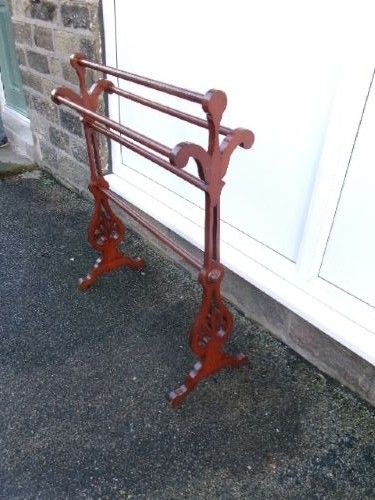
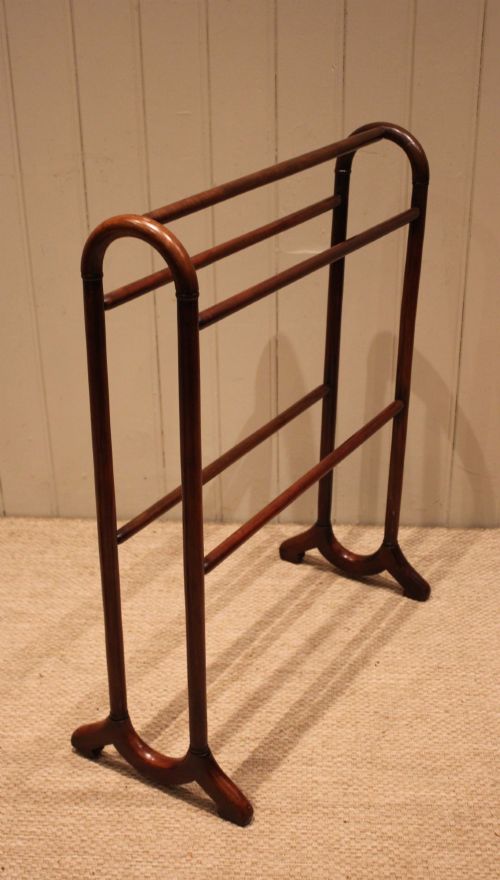
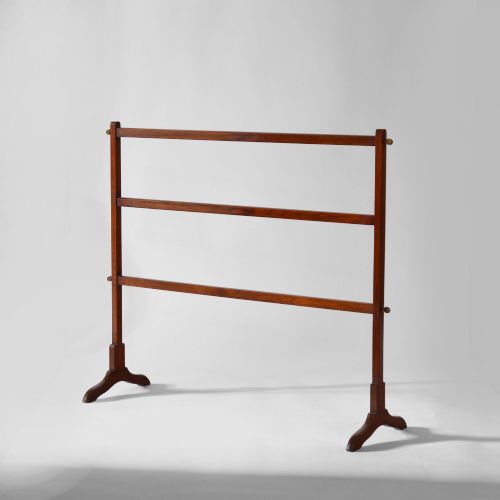
A victorian towel stand keeps chambers tidy with simple utility, offering upright rails for hanging linens in timber frames.
Victorian Towel Stand
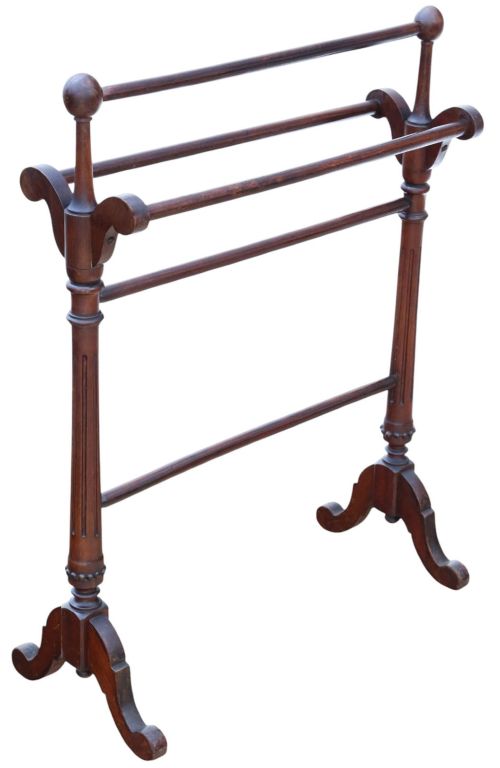
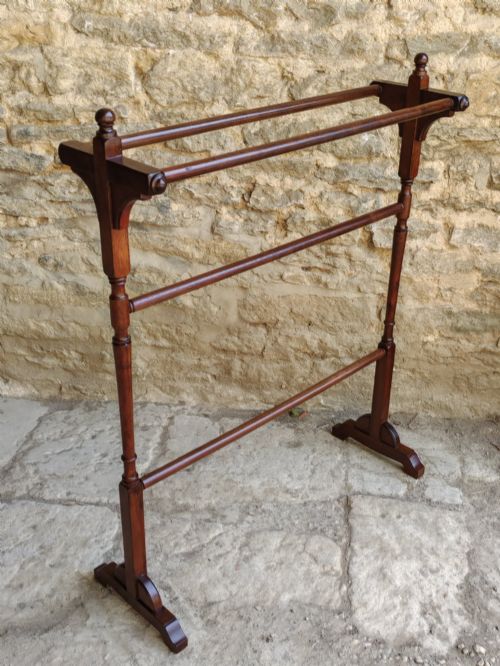
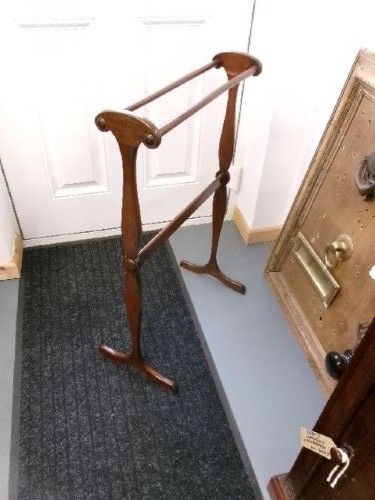
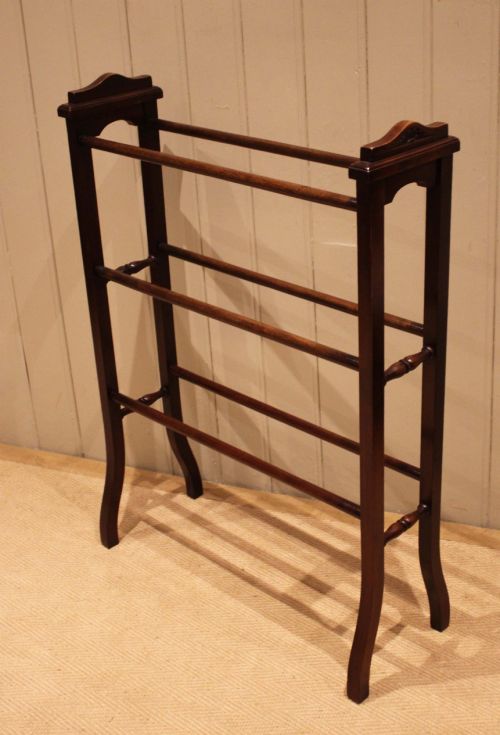
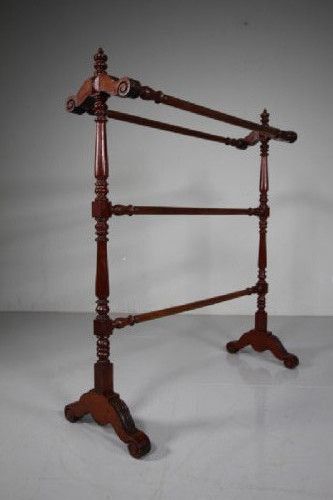
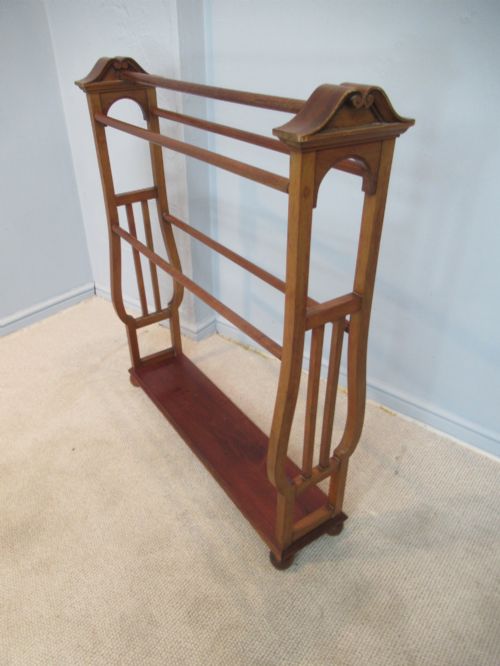
A victorian towel stand serves as a functional piece of bedroom or bathroom furniture designed to hold and air linens. These practical items appear most frequently in mahogany, echoing the dominant timber choices seen across the nineteenth century.
Buyers encounter various formats, ranging from simple standing frames to three-fold rails and washstand combinations. The selection spans standard domestic designs alongside heavier William IV, Gothic Revival, and Arts and Crafts interpretations.
Materials and construction
Cabinet makers utilised dense hardwoods like mahogany and walnut for structural stability, frequently turning wooden members on a lathe. Softer woods such as pine and beech also served domestic production, sometimes receiving an ebonised finish.
Joinery techniques involved secure tenons and pivots to support the weight of damp textiles across multiple horizontal rails. Certain examples incorporated ceramic inserts or brass fittings alongside the primary timber framework.
Victorian Towel Stand Retail Price Guide 2026
Typical asking prices for victorian towel stand among the pieces listed under this phrase on Sellingantiques today, from the lower quarter to the upper quarter. They describe what is for sale here now, not the wider market.
Several stands double as clothes airers and shaving stations, proving that nineteenth-century households loved a multi-tasking piece of furniture.
Distinguishing quality
The standard of a victorian towel stand rests upon the choice of timber and the sophistication of its turning. Figured walnut, floral marquetry inlay, and substantial proportions separate ambitious pieces from plain utility items.
Proportion and stability dictate the usefulness of a survivor, with well-balanced joints ensuring the frame withstands daily handling. Finer examples display careful attention to edge moulding and turned uprights rather than straightforward box construction.
The Victorian Towel Stand Glossary
- Mahogany
- A durable tropical hardwood prized for its reddish-brown tone and resistance to warping. It formed the primary material for high-end nineteenth-century furniture.
- Ebonised wood
- Timber treated with a dark chemical stain or paint to imitate expensive ebony. This dark surface finish gained popularity for decorative household items.
- Arts and Crafts
- A design movement valuing honest construction and traditional craftsmanship over mass production. Pieces from this ethos often highlight plain oak or unpretentious forms.
- Washstand
- A chamber furniture item incorporating surfaces for a jug and bowl, frequently fitted with side rails for drying textiles. It served a central role in period bedroom hygiene.
Victorian Towel Stand: Frequently Asked Questions
How were these stands used?
These pieces stood in bedrooms or dressing rooms to hold household linens and hand towels between uses. Their open frames allowed air to circulate around damp fabric.
They also served as clothes airers near fires or washing areas. Families relied on them to keep garments organised before fitted wardrobes became standard.
Where did they sit in the home?
Owners placed them close to washbasins or dressing tables for immediate access to dry cloths. They occupied corners of bedrooms where airflow aided drying.
Larger versions stood freely in guest chambers or dressing rooms. Their portable nature allowed servants to relocate them throughout the house as needed.
How do I spot a Victorian piece?
Look for dense hardwoods like mahogany or walnut paired with traditional hand-cut joinery. Turning styles on upright posts often follow nineteenth-century conventions.
Examine the wear patterns and timber oxidation around the main touch points. Construction methods lacking modern metal fasteners usually point to nineteenth-century origins.
What styles are available?
Standard Victorian designs feature turned mahogany frames with multiple parallel rails. Variations include Gothic Revival pointed details and Arts and Crafts oak construction.
Some examples incorporate folding sections or integrated washstand basins with ceramic bowls. William IV pieces offer heavier proportions and more robust timber dimensions.