


Antique Towel Rack
An antique towel rack is a domestic furnishing designed for drying and hanging textiles, appearing here in standing frames and wall-mounted formats.
Antique Towel Rack
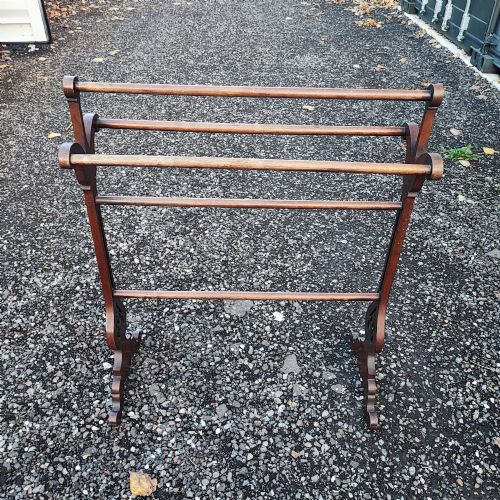
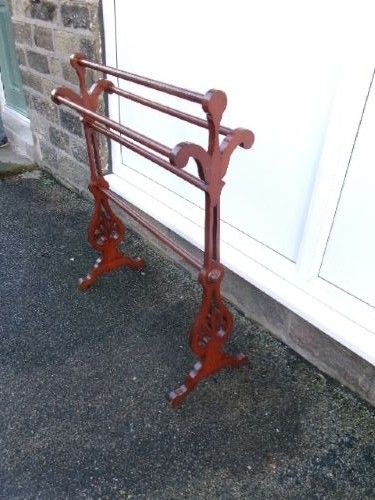
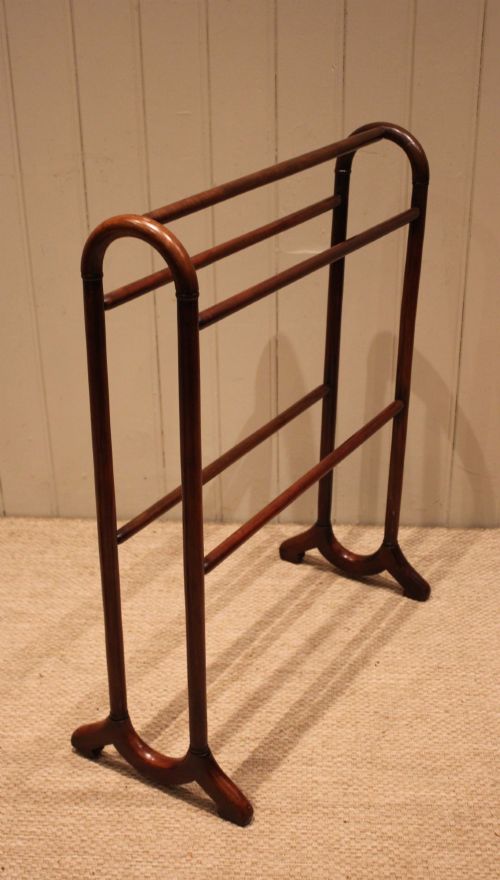
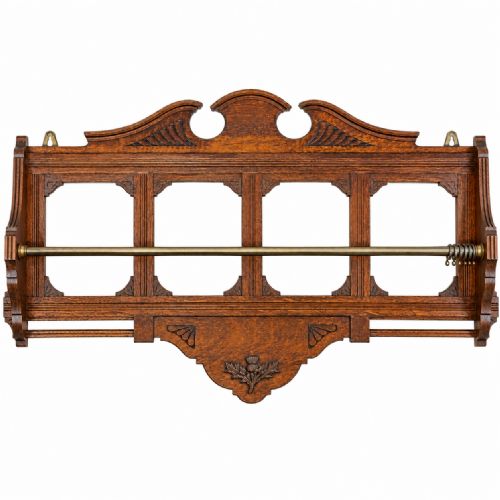
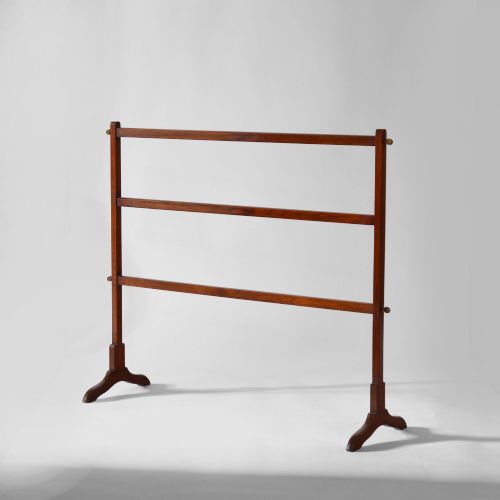
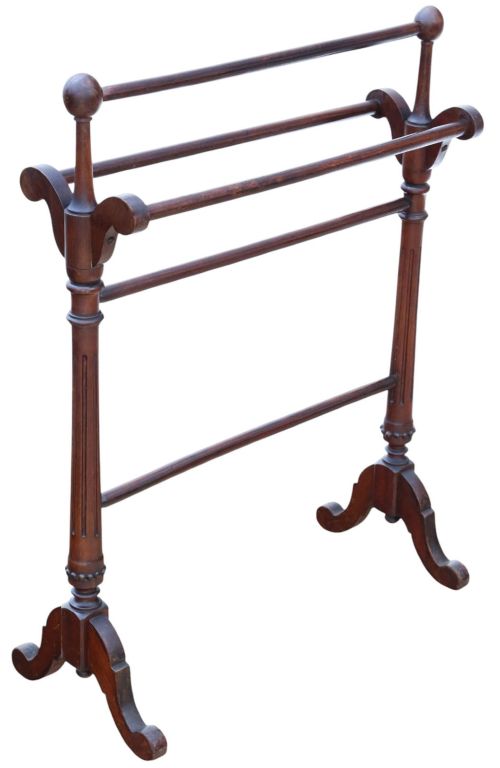
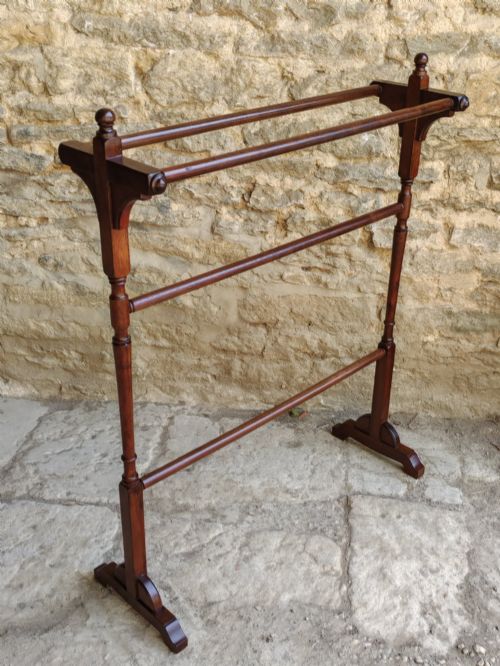
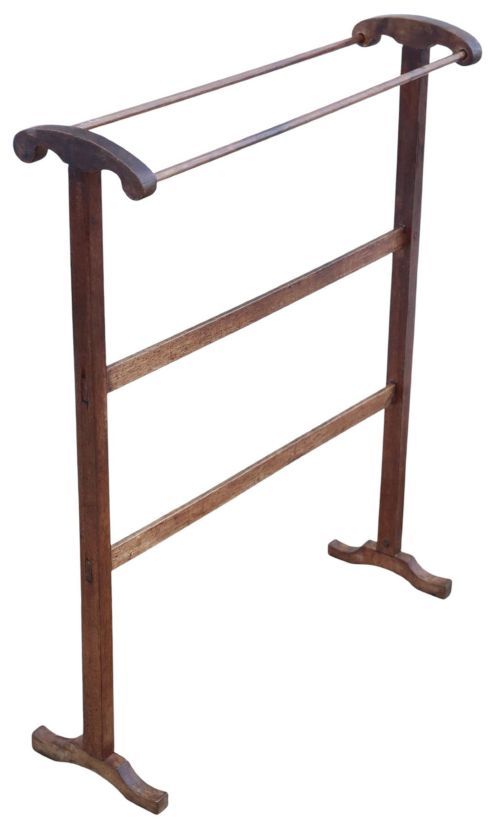
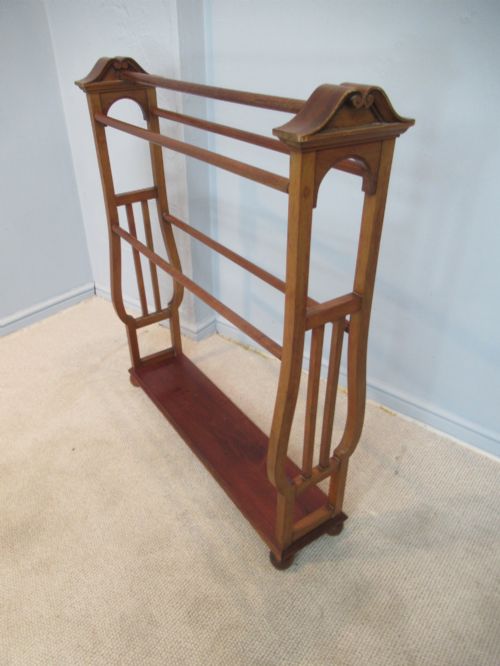
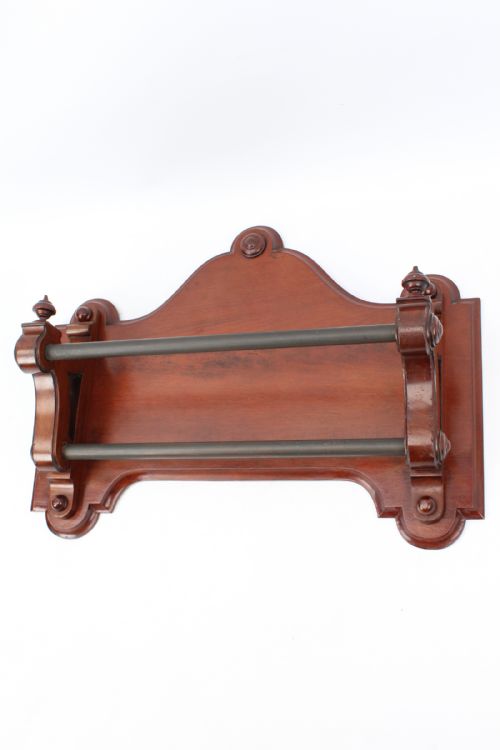
When you search for an antique towel rack, you encounter a variety of standing frames and wall-mounted fixtures intended for domestic utility. The pieces on this page span the nineteenth century through the early twentieth century, taking the form of floor-standing rails, clothes horses, and wall hooks.
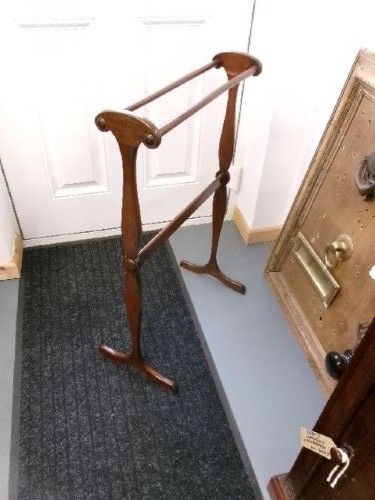
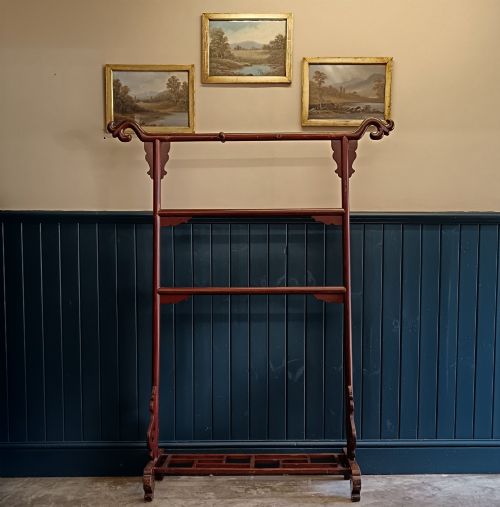
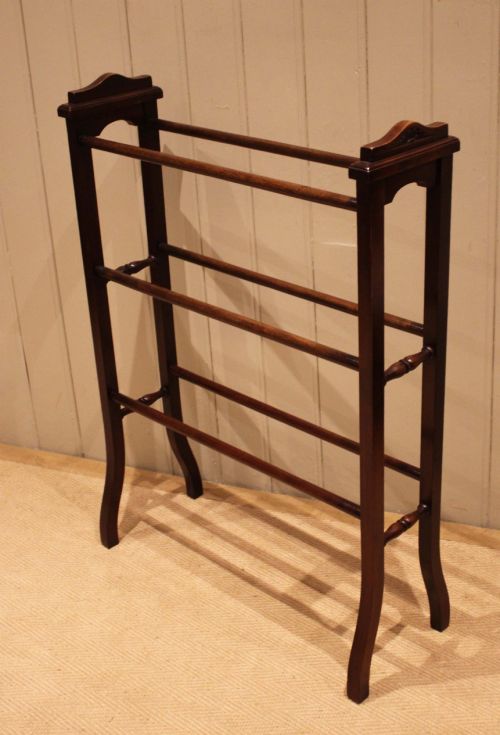
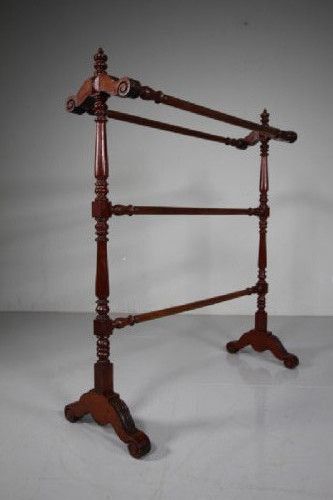
Mahogany standing rails dominate the selection, often featuring multiple bars for hanging textiles. You will also find pine, oak, walnut, and lacquered wood examples originating from English and Chinese workshops, alongside maritime designs and folding cheval configurations.
Materials and Construction
Cabinetmakers constructed these frames primarily using timbers such as mahogany, oak, pine, and walnut, frequently incorporating turned spindles and floor-standing supports. Joinery techniques varied from simple pegged frames to folding hinges and inlaid decorative details.
Wall-mounted variants and specific fittings utilise brass, glass, and chrome mountings. Lacquered wood and carved elements appear on Chinese robe stands, while British pieces often display ebonised finishes or inlaid wood.
Antique Towel Rack Retail Price Guide 2026
Typical asking prices for towel rack among the pieces listed under this phrase on Sellingantiques today, from the lower quarter to the upper quarter. They describe what is for sale here now, not the wider market.
Maritime ingenuity shines in the ship's towel rail, designed to keep drying textiles secure while the room rolls gently on the waves.
Design and Material Quality
Quality in these domestic pieces rests on the choice of timber and the execution of the joints. Finer examples display solid mahogany or quarter-sawn oak with substantial framing that supports daily use without wobbling.
Decorative touches such as inlay, turned wooden knobs, or carved details distinguish standard utilitarian pieces from more ambitious workshop productions. The integrity of folding mechanisms and the retention of original fittings also elevate a piece.
The Antique Towel Rack Glossary
- Cheval rail
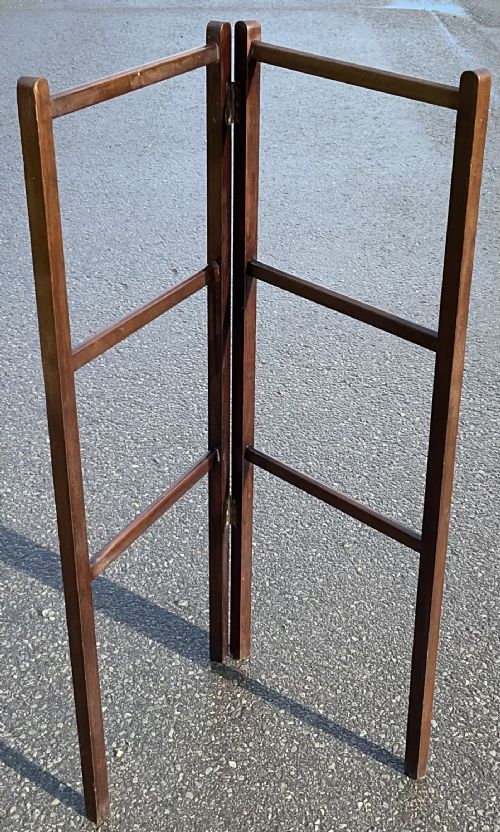
- A standing frame designed with pivoting or folding sections, allowing the rails to angle outward. This configuration facilitates air circulation around hanging textiles.
- Robe stand
- A vertical timber structure used for garments and linens, frequently associated with Chinese export items. These pieces often feature impressive scale and carved wooden members.
- Ebonised
- Wood treated with a chemical or stain to resemble ebony, producing a dense black finish. This technique appeared frequently on nineteenth-century domestic furnishings.
- Clothes horse
- A slatted folding frame used for drying laundry indoors near a heat source. They provide multiple parallel bars across expanding hinged panels.
- Gothic Revival
- A design style drawing on medieval architectural motifs, visible in pointed arches or heavy chamfered framing. Pieces from this movement display robust proportions and dark woods.
Antique Towel Rack: Frequently Asked Questions
How were antique towel racks used?
These pieces served in bedrooms, dressing rooms, and bathrooms for hanging and drying linens, towels, and garments. Standing frames were positioned near heat sources to air out laundry.
Wall-mounted versions provided compact storage for hand towels and scarves near washing basins. Folding designs allowed the racks to expand when needed and fold flat for storage.
How do I care for wooden towel rails?
Maintain the timber surfaces by dusting regularly with a dry cloth and occasionally applying a suitable beeswax or furniture polish. Avoid placing damp items directly onto unsealed wood for extended periods to prevent water marking.
Keep these furnishings away from direct heat sources and extreme humidity fluctuations to protect the original joints and polishes.
What periods do these pieces represent?
The selection spans the nineteenth century and the early decades of the twentieth century, including Regency, Victorian, Edwardian, and Art Deco eras. Victorian and Edwardian mahogany standing rails form the largest group.
Earlier examples from the early nineteenth century feature generous proportions in mahogany, while 1920s bathroom fixtures introduce glass and chrome.
Are these racks suitable for modern bathrooms?
Standing wooden rails provide practical hanging space without requiring permanent wall fixings. They suit modern bathrooms and bedrooms where freestanding furniture is preferred.
Care should be taken with damp textiles on antique wood, ensuring adequate room ventilation to protect the historic finish and timber.