
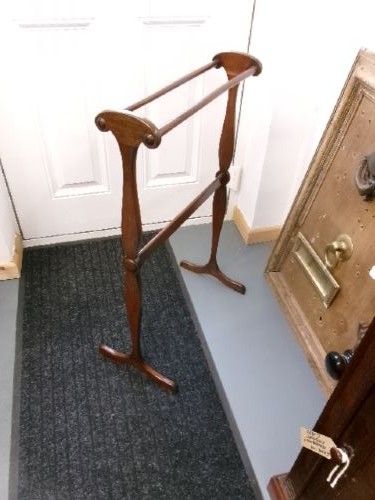
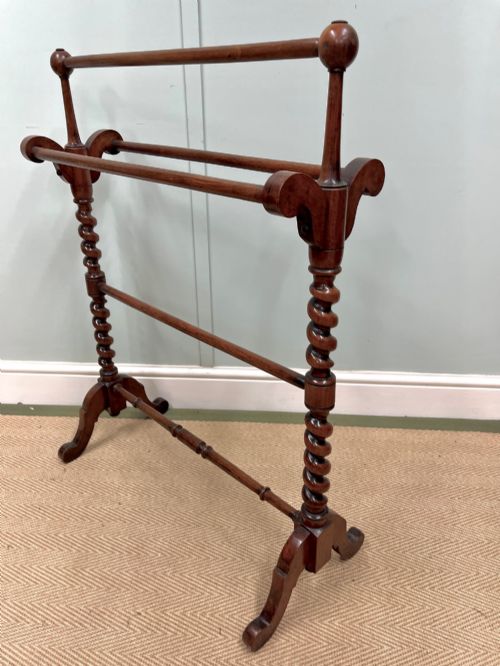


Brown Wooden Towel Rail
A brown wooden towel rail brings functional warmth to a bathroom, combining sturdy period timber with practical everyday utility.
Brown Wooden Towel Rail
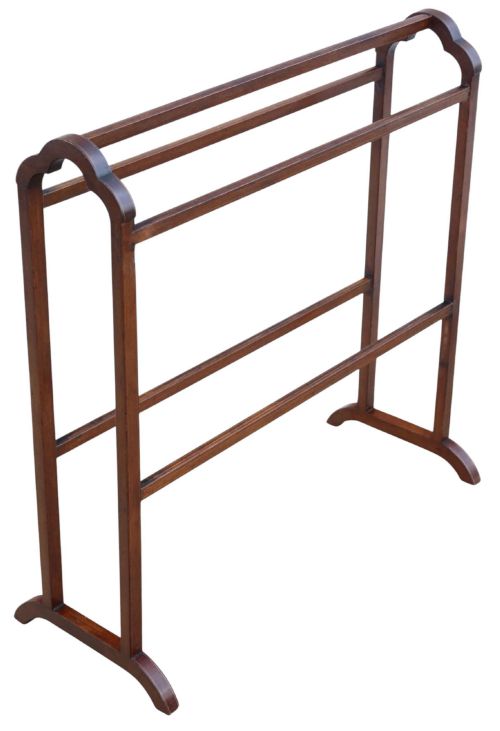
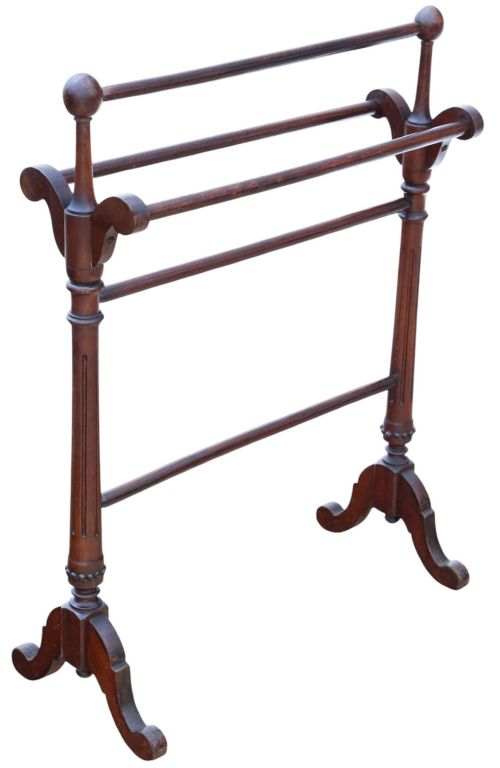
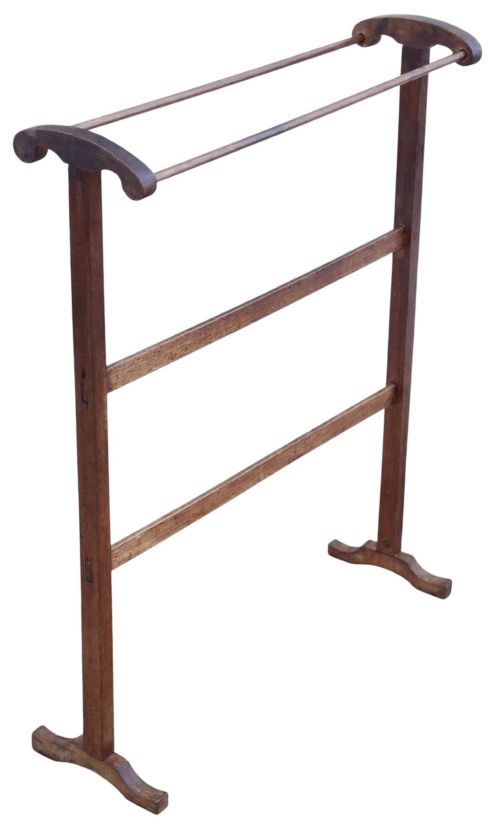
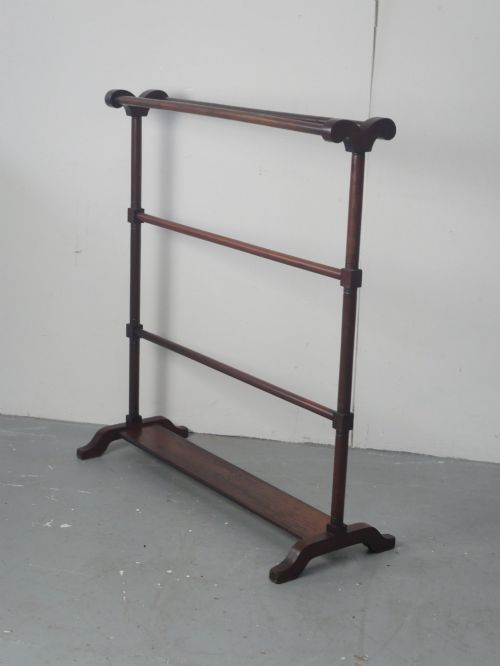
A brown wooden towel rail is a practical household stand designed for holding and drying linens across various historical periods. These pieces appear primarily as freestanding floor stands, often featuring multiple bars or folding sections to accommodate several items. Buyers searching this phrase encounter substantial items built to serve domestic needs in bedrooms and dressing rooms.
The examples gathered here span from the Regency era through to the Edwardian period, with a strong representation of Victorian designs. Forms range from simple three-fold frames to large standing racks and folding cheval formats. Mahogany and oak dominate the selection, frequently enhanced by period craftsmanship.
Most items on this page date from the nineteenth and early twentieth centuries, reflecting the solid construction methods of those decades. Pieces like the Arts and Crafts oak stands bring distinct regional character, while others showcase the polished formality of mahogany. Selecting one of these rails introduces period utility directly into a modern interior.
How they were made
Makers utilised dense timbers such as mahogany and oak to construct these rails, ensuring the frames could support damp linens without warping. Selected pieces incorporate contrasting details like boxwood and satinwood inlay, adding refined visual interest to the functional uprights and crossbars. Brass fittings occasionally appear as structural hinges or decorative elements.
Joinery methods rely on traditional carpentry suited to freestanding furniture that underwent regular handling and movement. Folding cheval and multi-fold formats required robust hinges and articulated joints to allow smooth operation over decades of daily use. Surface finishes highlight the natural grain of the hardwood rather than masking it.
Some rails boast five bars, proving that Victorian households took their linen organisation remarkably seriously.
What varies in quality
Quality in these rails rests upon the choice of timber and the stability of the frame construction. Heavier woods and thicker rails provide greater durability, whereas lighter or more slender examples demand careful handling.
Refinement in the woodwork distinguishes standard utility items from finer pieces. Subtle additions like string inlay, polished boxwood details, or well-turned uprights indicate a higher standard of manufacture from workshops of the period.
The Brown Wooden Towel Rail Glossary
- Cheval rail
- A freestanding pivoting towel rail supported on a frame, allowing the hanging section to rotate.
- Inlay
- A decorative technique where contrasting woods like satinwood or boxwood are inserted flush into the primary timber surface.
- Arts and Crafts
- A design movement prioritising simple forms, visible construction, and honest use of materials such as oak.
- Regency
- An architectural and decorative style spanning the early nineteenth century, known for classical proportions and rich mahogany.
Brown Wooden Towel Rail: Frequently Asked Questions
How do I clean a wooden towel rail?
Dust the timber regularly with a dry cloth to prevent dirt build-up in the joints and turnings. Avoid soaking the wood with water or harsh chemical cleaners, as excessive moisture damages historic finishes.
Apply a traditional beeswax occasionally to nourish the hardwood and maintain a soft, protective lustre. Keep the stand away from direct heat sources to prevent the timber from drying out or splitting.
Are these rails sturdy enough for daily use?
Period wooden rails were built for robust domestic service and generally handle daily towel hanging with ease. Tighter joints and heavier timbers provide the stability needed for regular handling in busy households.
Folding designs and multi-bar stands should be opened gently to protect the original hinges and wooden pivots. Checking the base connections ensures the frame remains balanced on uneven modern floors.
How do I date a wooden towel rail?
Examine the timber species, joinery techniques, and decorative style to narrow down the period of manufacture. Regency and early nineteenth-century pieces often feature heavier proportions and rich mahogany, while Edwardian examples can be lighter with subtle inlay.
Look for tool marks or construction methods characteristic of specific eras, such as hand-turned uprights or period brass hardware. Comparing the form against dated pieces helps confirm whether a rail belongs to the Victorian or Arts and Crafts eras.
Where should I place a standing rail?
These rails suit bathrooms, bedrooms, and dressing rooms where freestanding furniture adds character alongside utility. Placing the stand in a reasonably ventilated space helps damp linens dry efficiently without trapping moisture against the wood.
Ensure the rail has adequate clearance around it, particularly for folding formats that require space to expand. Positioning the piece away from steamy shower enclosures preserves the historic polish and timber integrity.