
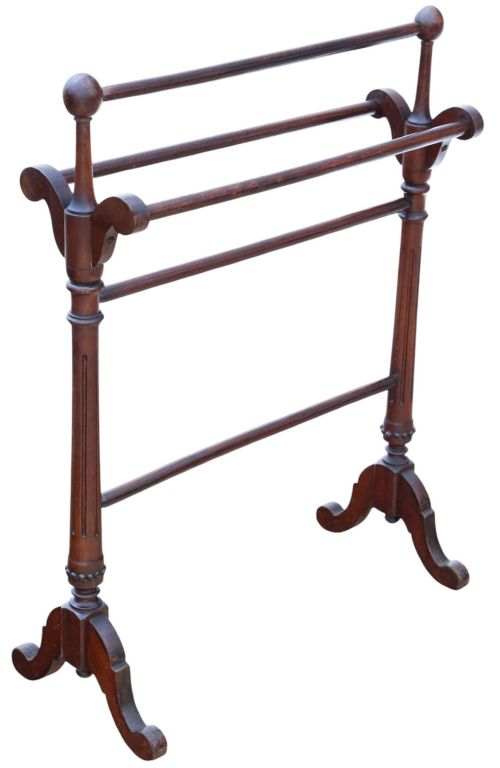
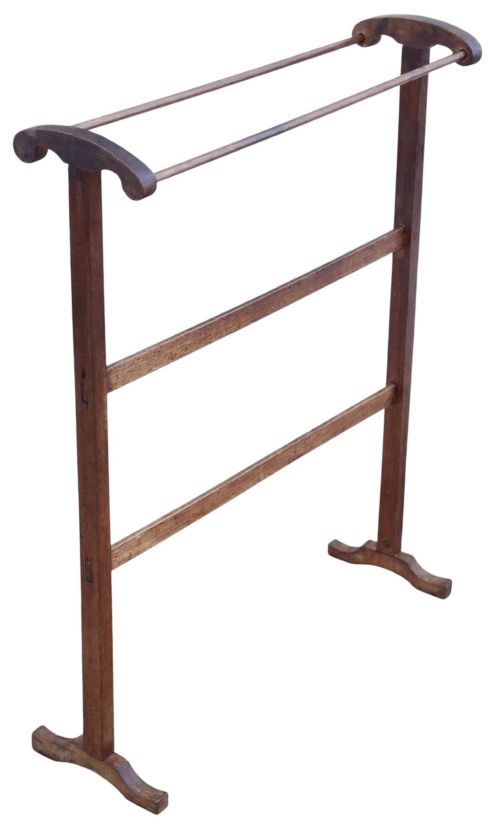
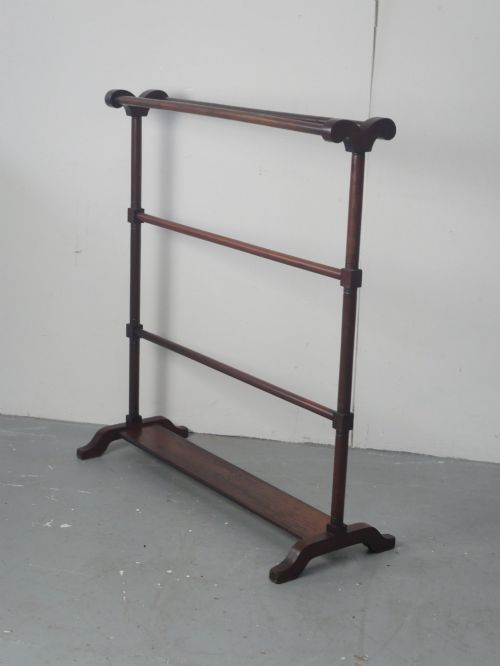
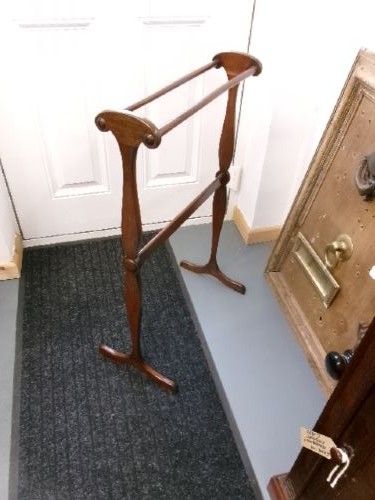
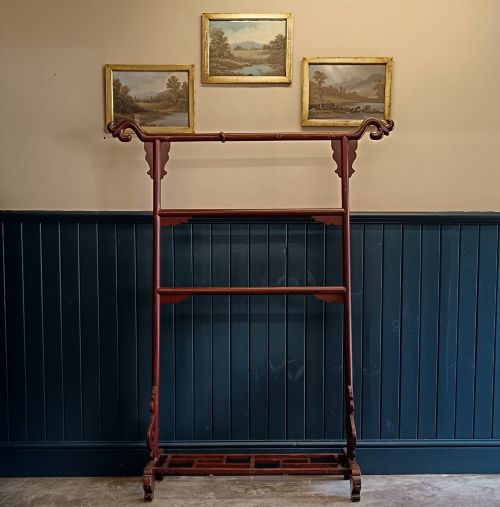
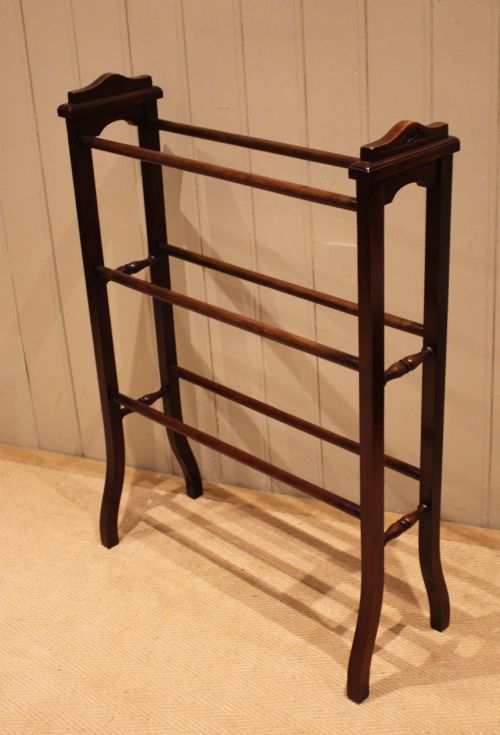
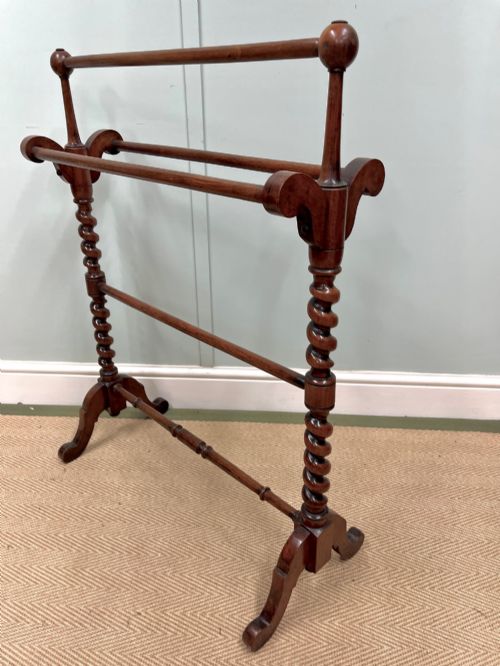
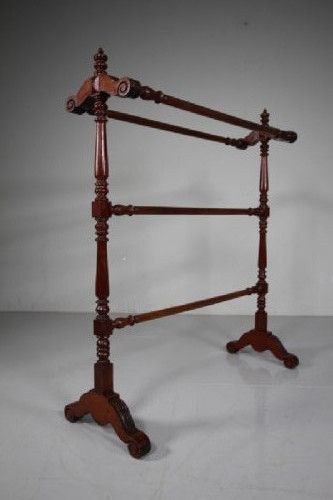


Freestanding Towel Stand
A freestanding towel stand brings practical elegance to a room, holding textiles on polished wood or brass frames.
Freestanding Towel Stand
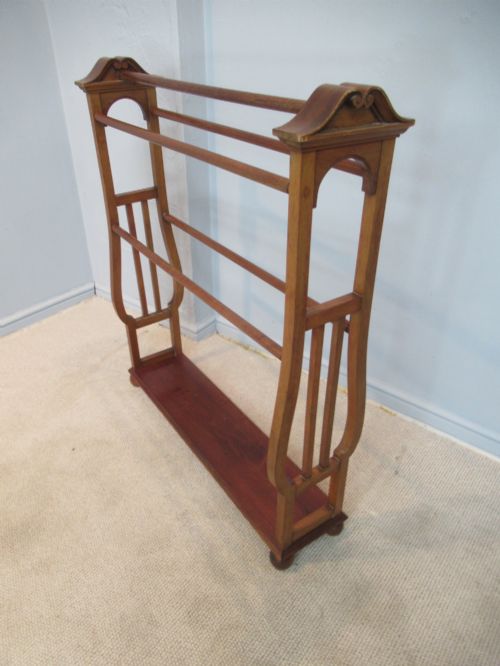
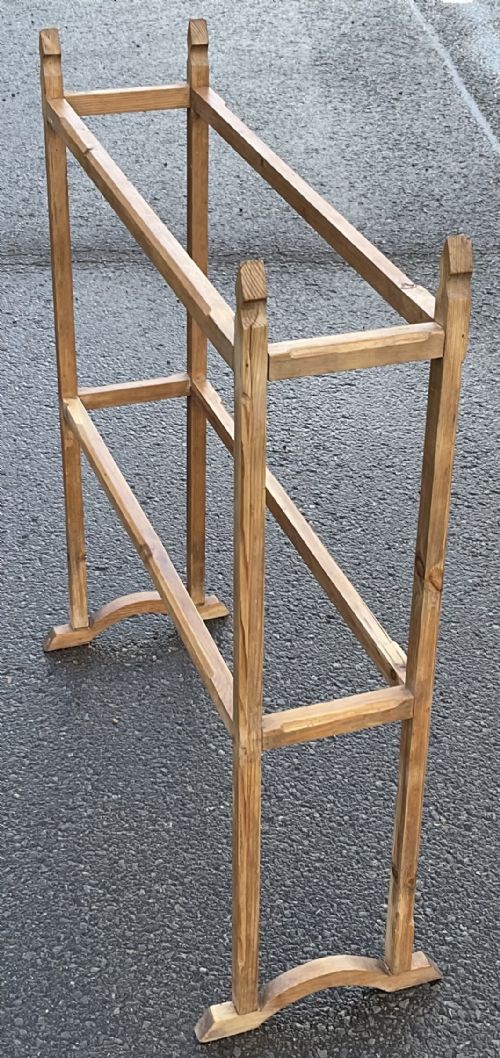
A freestanding towel stand is a portable piece of furniture designed to hold and air linens, garments, or towels without requiring wall fixings. When you search for this phrase, you encounter items intended to stand independently in bathrooms, bedrooms, or dressing rooms.
The selections span from the mid-nineteenth century through the Edwardian era, showing how domestic habits shifted towards dedicated bedroom furniture. Most examples date from the Victorian and Edwardian periods, constructed with multiple rails to accommodate household textiles.
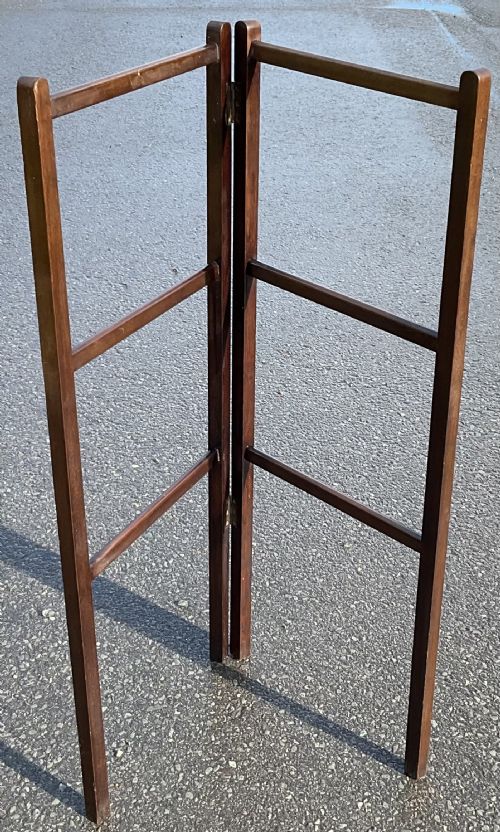
Forms vary from simple three-fold wooden airers to large oversized frames and elaborate robe stands. You also encounter regional and international variations, including Chinese lacquered clothes racks and carved hall stands that serve a similar domestic function.
Materials and construction methods
Timber selection dictates the character of these pieces, with mahogany appearing frequently alongside oak, walnut, pine, and hardwood. Cabinet makers turned columns, shaped side supports, and joined multiple horizontal rails to create rigid yet lightweight frames.
Surface treatments range from clear wax polishes that highlight the grain of mahogany and walnut to black ebonised finishes and decorative pigment. Brass fixtures occasionally provide structural support or pivoting joints on folding designs.
Listings feature woods such as mahogany, oak, walnut, and pine across nineteenth-century and Edwardian periods.
Distinctions in craftsmanship
Quality reveals itself in the joinery of the rails and the stability of the feet under daily weight. Finer examples utilise solid hardwoods with pegged joints rather than thin veneers prone to lifting in humid environments.
Design sophistication separates standard utility items from pieces showing considered turnery, inlay, or attribution to notable workshops. Proportions remain balanced on superior models, ensuring the loaded frame stays upright.
The Freestanding Towel Stand Glossary
- Towel rail
- A freestanding wooden or metal frame with horizontal bars designed for holding linens. These items allow damp textiles to dry through ambient air circulation.
- Robe stand
- A vertical frame utilised for hanging garments and robes in dressing areas. This form shares structural similarities with heavy clothes racks.
- Ebonised
- Wood treated with a dark finish to imitate expensive ebony. This technique was popular for achieving a formal black surface on nineteenth-century furniture.
- Three-fold
- A hinged construction consisting of three distinct panels connected by pivots. This design allows the frame to fold flat when not in active service.
- Turnery
- Timber shaped by being rotated on a lathe to create decorative columns and spindles. Skilled turnery adds structural rigidity and visual detail to upright supports.
Freestanding Towel Stand: Frequently Asked Questions
What is a freestanding towel stand used for?
These pieces serve as movable frames for drying and displaying towels or garments in bedrooms and bathrooms. They provide accessible hanging space without permanent wall mounting.
Their lightweight construction allows owners to reposition them near heat sources or windows as needed throughout the day.
How do I date a wooden towel rail?
Dating relies on observing timber choices, construction techniques, and stylistic markers recorded in the specific design. Victorian pieces often display heavier mahogany proportions, while Edwardian versions tend to feature lighter pine or inlaid mahogany.
Secondary woods used in unseen areas also help experts narrow down the manufacturing decade by matching regional carpentry standards of the period.
Where should I place a towel stand?
Position the stand in well-ventilated spaces where damp textiles can dry naturally without trapping moisture against walls. Bedrooms and dressing rooms benefit from the architectural presence of polished wood frames.
Ensure the room humidity remains moderate to protect antique timber and original wax or lacquered finishes from deteriorating over time.
What is the difference between an airer and a rail?
An airer typically refers to folding or multi-panel designs built specifically for drying laundry and textiles efficiently. A towel rail often describes a more rigid, permanent frame intended for display and daily bathroom use.
Both categories utilise horizontal bars, but airers prioritise multi-fold flexibility while rails focus on stable, stationary support.