

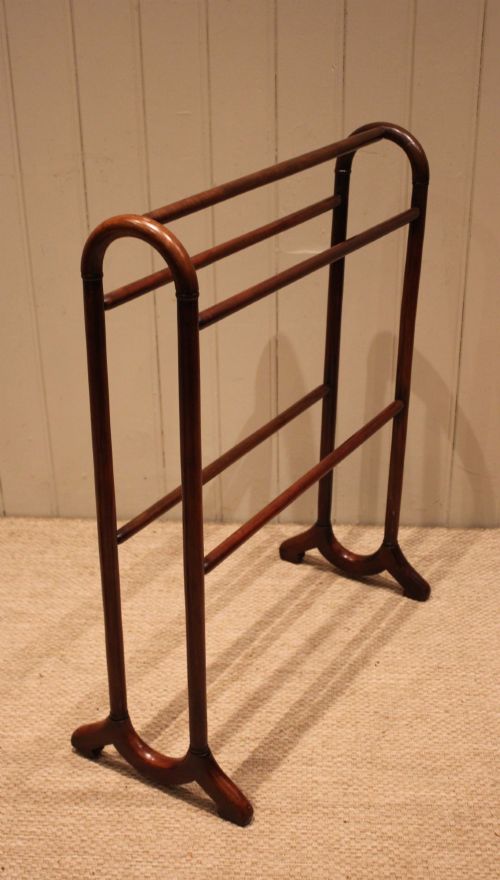
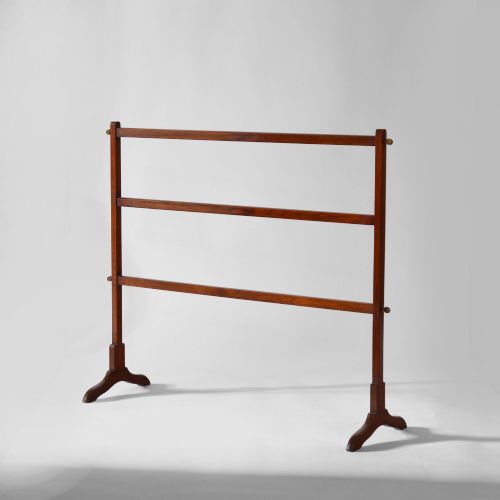
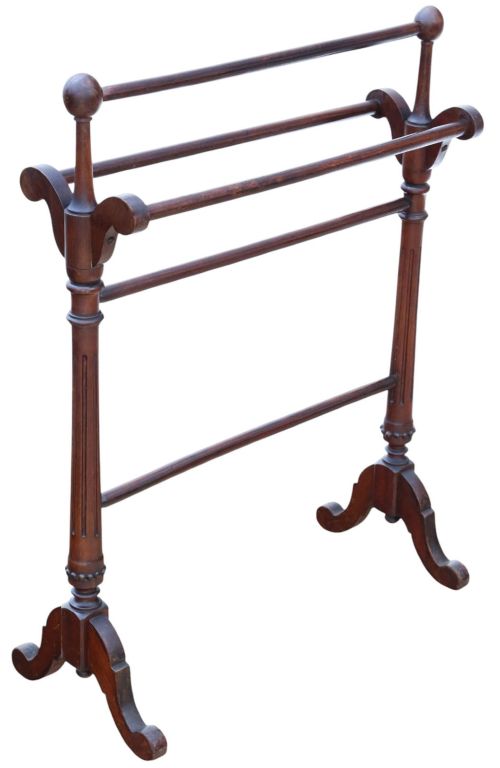
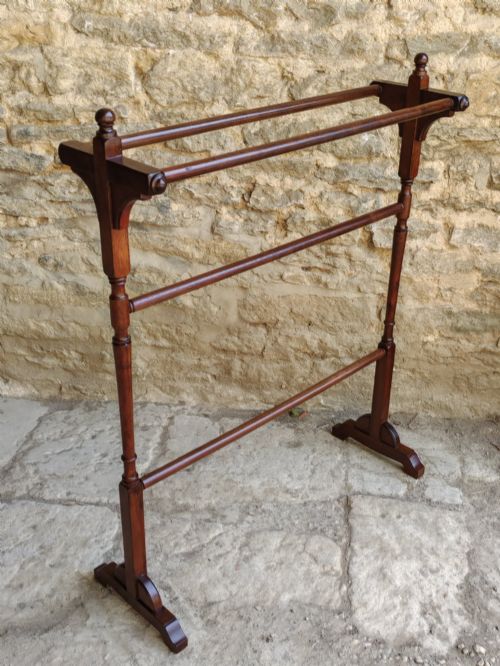
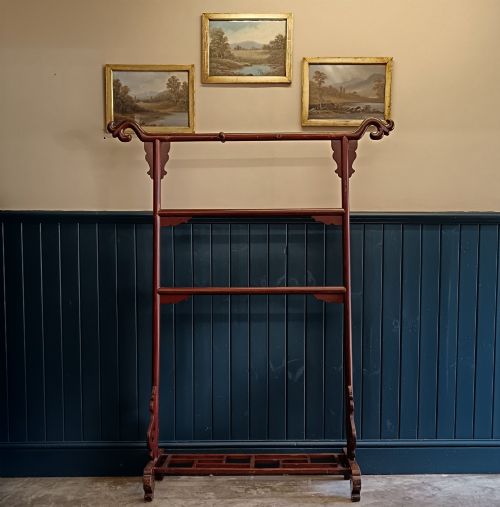

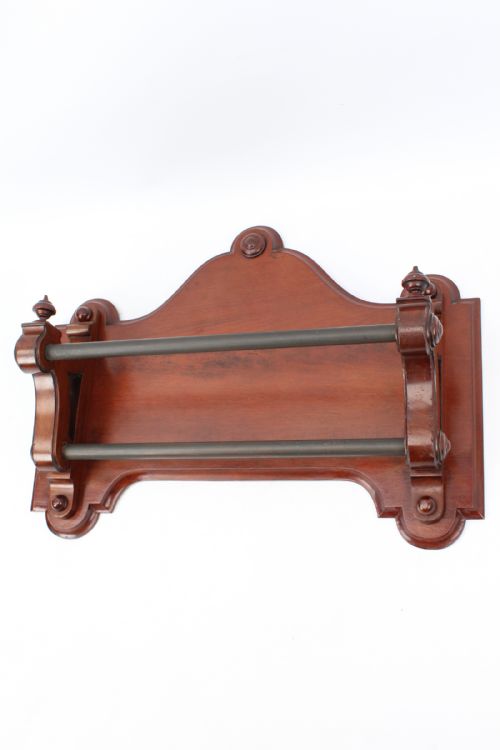


19th Century Towel Rail
These pieces are a 19th century towel rail, practical bedroom furnishings from the period that bring honest period timber and brass into a modern interior.
19th Century Towel Rail
A 19th century towel rail serves as a functional bedroom or dressing room accessory, designed for hanging and drying linens. Buyers searching this phrase meet freestanding stands, folding designs, and wall-mounted versions.
The evidence shows that mahogany dominates the surviving examples, alongside walnut, pine, ash, and lacquered wood. Forms range from simple single bars to multi-fold rails and hanging stands.
Many items date across the Victorian and Regency periods, while some pieces connect to broader bedroom suites or Chinese robe stands. They function well today for organising textiles in a bathroom or bedroom.
Materials and construction
Cabinet makers utilised dense hardwoods such as mahogany, walnut, and ebonised wood for durability and fine appearance. Softer woods like pine, pitch pine, and ash appear frequently in country house and utility pieces.
Construction techniques include folding hinges, turned uprights, and wall brackets, sometimes enhanced with brass fittings, bone inlay, ceramic tiles, or pigment decoration.
19th Century Towel Rail Retail Price Guide 2026
Typical asking prices for 19th century towel rail among the pieces listed under this phrase on Sellingantiques today, from the lower quarter to the upper quarter. They describe what is for sale here now, not the wider market.
Listings show materials ranging from solid brass and marble to ceramic tiles, bone inlay, and pigment-painted pine.
Judging quality
Quality rests upon timber selection and the robustness of the joints. Heavy mahogany or walnut frames with secure folding mechanisms sit at the top of the range.
Detailing such as turned twist columns, fine inlay, or attribution to notable workshops like Gillows separates standard utility items from exceptional examples.
Gillows
The 19th Century Towel Rail Glossary
- Cheval towel rail
- A freestanding rail that swings within a supportive floor frame, allowing adjustments to the angle of the hanging bars.
- Folding towel rail
- A multi-section design with hinged frames that collapses flat or extends to hold several linens at once.
- Robe stand
- A tall freestanding wooden rack used for garments and robes, often seen in Chinese export forms alongside British bedroom furniture.
- Roller towel
- A continuous loop of fabric fastened over a single horizontal rail, designed to rotate for continuous drying.
- Ebonised wood
- Timber treated with a dark stain or finish to imitate expensive ebony, popular during the Victorian era.
19th Century Towel Rail: Frequently Asked Questions
Where were these towel rails used?
These rails belonged primarily in bedrooms, dressing rooms, and country house cloakrooms where linens required drying or airing.
Today they fit easily into modern bathrooms or bedrooms to hold towels and textiles.
How do I tell a Regency rail from a Victorian one?
Regency pieces often display restrained classical lines and rich mahogany, reflecting earlier nineteenth-century cabinet making.
Victorian examples frequently introduce heavier proportions, turned twist columns, or decorative painted pine finishes.
Are folding rails sturdy?
Folding rails rely on wooden hinges and secure side frames to stay upright while holding wet or dry linens.
Heavier hardwood versions provide greater stability than lighter pine or ash alternatives.
What woods are most common?
Mahogany appears most frequently across the surviving archive, valued for its strength and deep colour.
Walnut, pine, pitch pine, and ash also feature regularly in country house and regional pieces.