

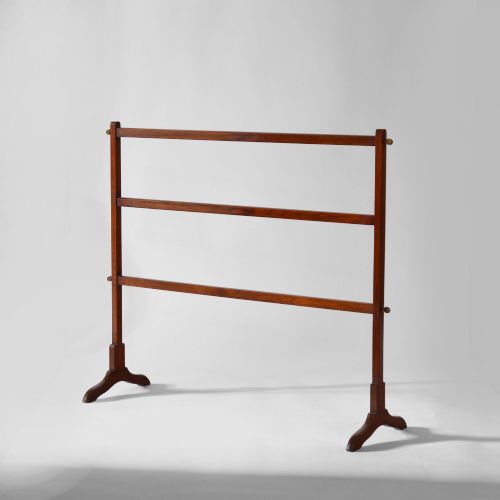
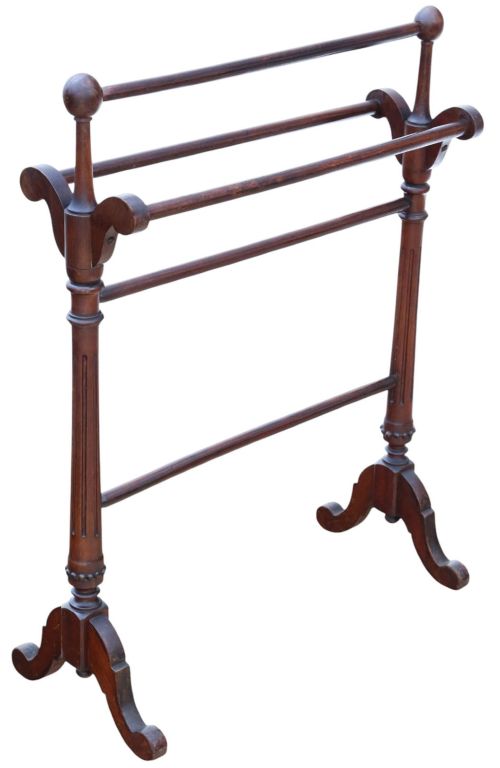
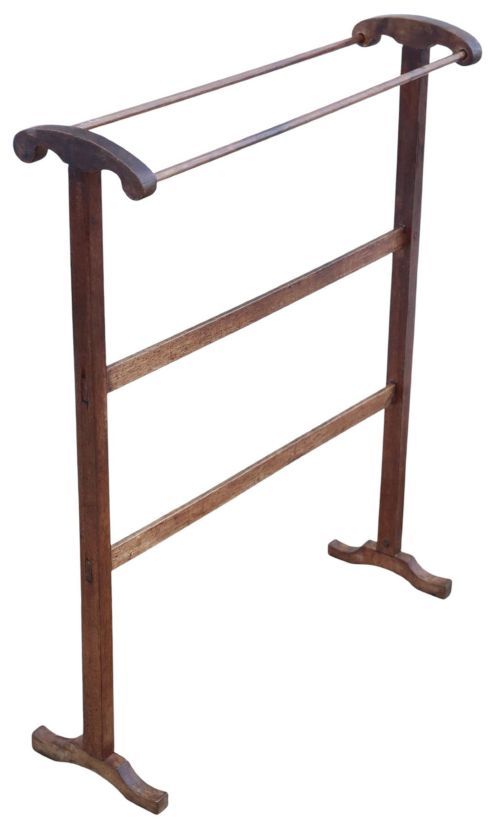
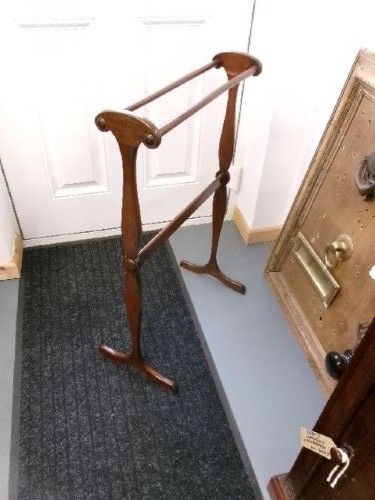


Brown Wooden Towel Horse
A brown wooden towel horse offers practical utility with period charm, giving bedrooms and bathrooms a warm, traditional place to air linens.
Brown Wooden Towel Horse
When you search for a brown wooden towel horse, you encounter standing rails designed to hold and dry textiles in the home. These items range from simple floor-standing frames to larger multi-rail versions suited for period interiors.
The pieces on this page span the Regency, Victorian, and Edwardian eras, with many examples originating from around nineteen hundred. You will find standard standing formats alongside folding cheval designs and multi-bar configurations.
Mahogany and oak dominate the selection, often appearing in forms that served bedrooms and dressing rooms alike. These functional items reflect the domestic habits of the nineteenth and early twentieth centuries.
Materials and construction
Cabinet makers utilised dense hardwoods such as mahogany and oak to build sturdy frames capable of supporting wet linens without toppling. These timbers provided both structural strength and a rich natural colour.
Details such as boxwood and satinwood inlay occasionally enrich the surface of Edwardian and nineteenth-century examples. Brass fixtures and fittings appear to secure joints and folding mechanisms on specific variants.
Brown Wooden Towel Horse Retail Price Guide 2026
Typical asking prices for brown wooden towel horse among the pieces listed under this phrase on Sellingantiques today, from the lower quarter to the upper quarter. They describe what is for sale here now, not the wider market.
Assessing quality and finish
Quality in a brown wooden towel horse rests in the solidity of its joinery and the selection of timber grain. Better examples feature heavier construction and careful turning on the uprights.
Subtle decorative choices, such as inlaid stringing or contrasting wood combinations, distinguish refined country house pieces from utilitarian workshop output.
The Brown Wooden Towel Horse Glossary
- Cheval rail
- A standing towel rail designed with a pivoting or folding frame that resembles a cheval mirror. This construction allows the piece to adjust its footprint.
- Inlay
- A technique where contrasting materials like boxwood or satinwood are inserted into recesses within the primary wood surface. It creates decorative patterns along the rails or uprights.
- Arts and Crafts
- A design movement prioritising traditional handcraftsmanship and simple functional forms. Pieces from this style often display honest oak construction.
- Regency
- A stylistic period spanning the early nineteenth century known for classical restraint and elegant proportions. Items from this era show refined turning and dark timber.
Brown Wooden Towel Horse: Frequently Asked Questions
How do I date a towel rail?
Dating relies on observing timber choices, construction methods, and decorative styles present in the piece. Victorian examples often feature heavy mahogany, while Edwardian versions may include inlay work.
Comparing the turning on the uprights and the presence of brass hardware helps narrow down whether a piece originates from the Regency era or the twentieth century.
Were these used in bathrooms?
These items were traditionally kept in bedrooms, dressing rooms, or nurseries rather than modern damp bathrooms. They stood near washstands or fires to keep linens warm and dry.
Placing one in a contemporary home works well in dry areas where textiles need an airing space or an attractive display.
What styles are available?
The selection includes simple standing rails, multi-fold configurations, and larger country house pieces. Styles range from plain Regency designs to inlaid Edwardian examples.
Arts and Crafts pieces emphasise solid oak and straightforward construction, whereas Victorian versions often showcase polished mahogany and turned uprights.